
Case Study ARF Construction Takes on a New Dimension ...
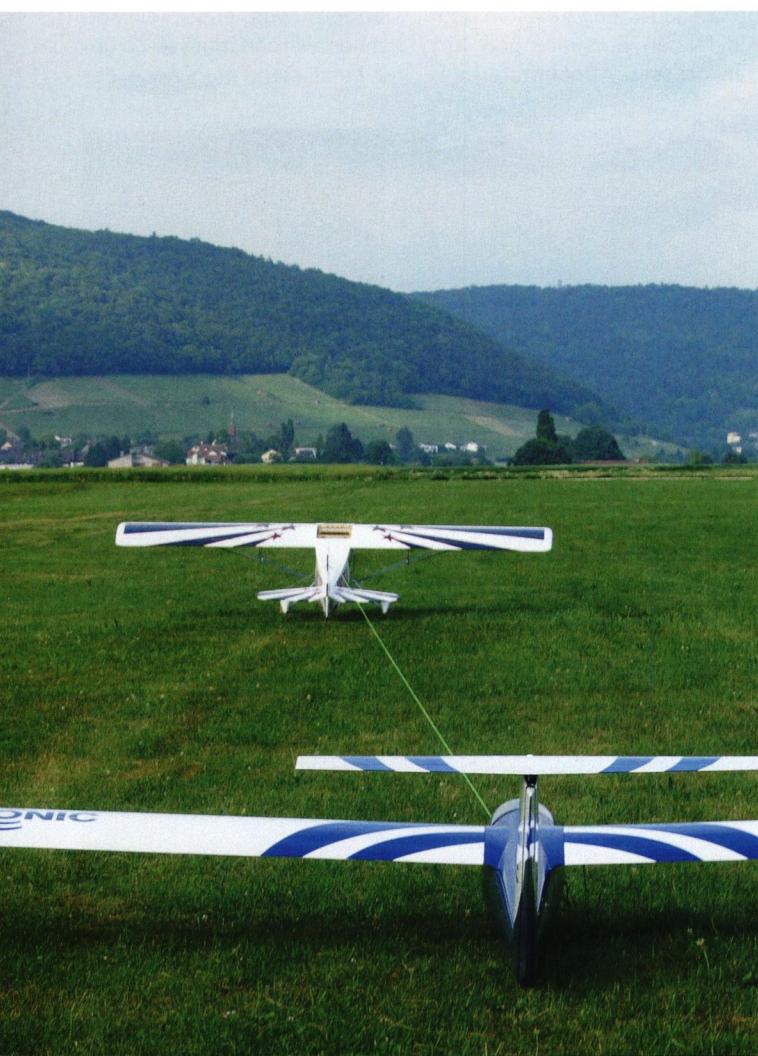
With the 2010 flying season—which was coming to an end but had been fantastic—nearing its close, I needed something new for the winter so I could make good use of the long, cold winter days. I’d always wanted to build a tow plane that not only flies well but also accurately reflects the scale of the ever-larger gliders. My target scale was 1:2.5 to 1:2.
In addition to price, the degree of prefabrication also played a decisive role. For example, I didn’t want to buy a complete ready-to-build kit, but rather a high-quality ARF kit—which, given all my requirements and the size of the model, didn’t seem easy to find.
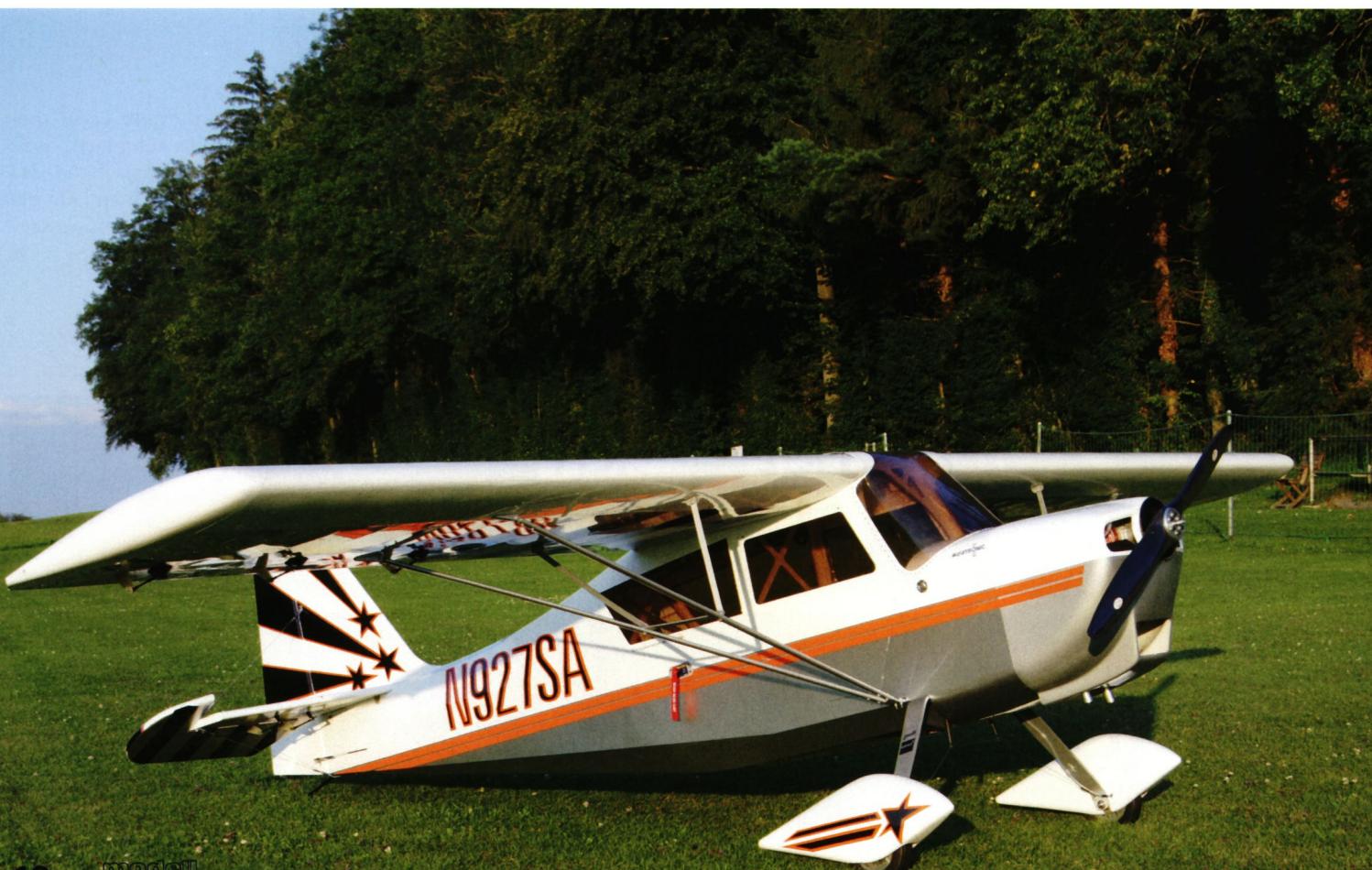
I finally found what I was looking for thanks to a tip from my friend Peter Richner. The manufacturer is www.Pilot-RC.com from China. This young company employs staff with many years of experience and delivers outstanding quality in terms of both price and performance. For all parts—from the rudder to the cowl—emphasis was placed on both weight and a sturdy construction. The neatly glued-in rudder hinges underscore the high degree of prefabrication in Pilot RC models. They don’t skimp on accessories either! High-quality fiberglass control horns, play-free ball joints, and many small details that make assembling the model easier are included as standard. Customers can also choose from four different standard designs. On
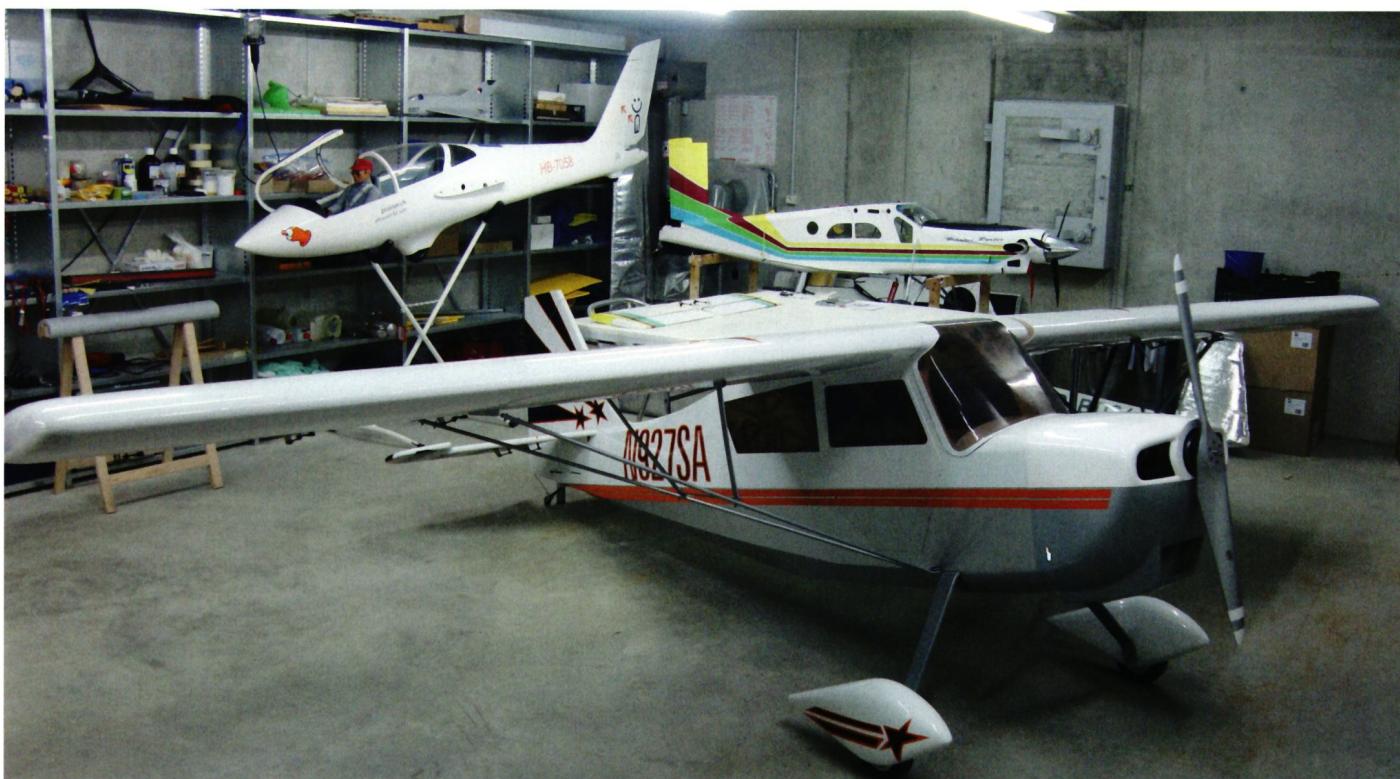
What awaited me and my friend Attilio Boetsch (aka Don Attilio) far exceeded our wildest expectations. So, after taking a first look, we couldn’t resist the temptation and
set up the machine late that evening. It was a breathtaking sight and also very well-crafted.
After we had stowed the machine away in our workshop basement, we carefully checked all the parts once again and remained convinced of the quality of the kit. The only thing was
Now it was time to put together the RC components, choose the motor, the receiver system, and so on... According to the manufacturer’s specifications, it should be possible to achieve a weight under 30 kg, but that didn’t seem realistic to Don Attilio and me. So we carefully weighed all the parts and arrived at an empty weight of 24.5 kg. It quickly became clear that it wouldn’t work—and if it did, it would only be possible with major cutbacks, which wasn’t the goal of the project. After all, I wanted a tow plane that wasn’t just large, but also had enough power to handle even the largest of all model gliders. For the motor, I ultimately chose a 3W-275xiB2-TS-CS model motor
I opted for a 3W-Modellmotoren engine with matching dampers. According to the manufacturer’s specifications, it delivers 27.5 PS (20.22 kW) and weighs 7.03 kg. With the right propeller, it achieves a static thrust of approximately 55 kg, which should be more than enough. For controlling the control surfaces, I opted for Hitec digital servos. In total, I’m using
12 HS-7945SH servos (QR, HR, SK, throttle) and 3 HS-5805 MG servos (SR). For the redundant receiver system, including an integrated battery switch, I’m using a Weatronic 12-22R Gyro III operating at 2.4 GHz. I’ve been flying with this manufacturer for many years and have always had good experiences. When it comes to batteries, I always rely on LiPo.
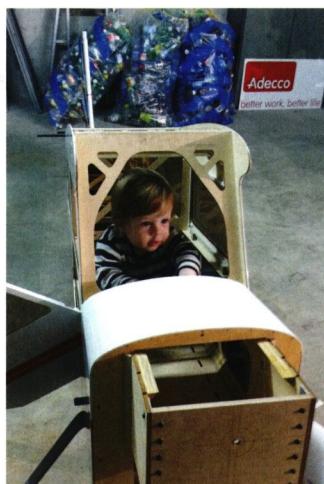
While new shipments arrived week after week, I set to work building the machine together with my friends Don Attilio, Heinz Küng, and Lukas Niedermann. First, we carefully glued all the rudder horns in place and soldered all the cable harnesses. It’s truly fascinating how much cable goes into such large machines. I’m especially familiar with this from my numerous tall ships. I can’t even remember how many times I’ve ordered new spools of cable—
had to do. Once the engine arrived, we set about installing it. For safety reasons, we decided to reinforce the already very sturdy engine dome with layers of fiberglass and carbon fiber. After a few minor adjustments to the engine dome and muffler tunnel, the entire assembly was installed relatively quickly and neatly.
We then moved on to building the landing gear. However, since we knew that our Bellanca had to be certified by the Federal Office of Civil Aviation (FOCA), and we were required to install a functional wheel brake system for safety reasons, adjustments to the wheel axles and wheels were necessary. However, since the existing wheels could not be retrofitted with a suitable brake system, we were forced to turn to a product from another manufacturer. We found what we were looking for
After we had modified the landing gear to meet our specifications, we moved on to installing the servos. This actually went off without a hitch. We had more work, however, with the linkages, which were precisely calibrated to the millimeter. We wanted them this way to prevent any potential synchronization of the various servo groups (3 servos per aileron, 2 servos per elevator
and 3 servos on the rudder). We succeeded very well in this, and only a few minor adjustments were needed during testing. During the construction phases, we also had the idea of installing an automatic tow rope winch in the aircraft—a little highlight, so to speak. There are now several manufacturers on the market. We opted for a winch from Bernd Dauer—www.schleppseilwinde.de. Although it was an ARF kit,
it all took a little longer than expected—but who hasn’t experienced that with all the ARF kits out there these days? In the end, though, it was a huge pleasure.
Since the certification test was still a mandatory appointment and we had to wait some time for it due to the weather, we used this time to thoroughly test the aircraft and its functions and make the final adjustments in preparation for the big certification test
. For the certification, we opted for a rating for basic aerobatics. This means the aircraft is tested at 6 G. With a “fighting weight” of just under 45 kg, each wing was weighted down with 100 kg of sand to simulate the forces involved. On Saturday, April 16, 2011, shortly before 12:00 p.m., we had it in writing—the Bellanca had successfully passed the certification, which we then had to celebrate. Last but not least, there was still the
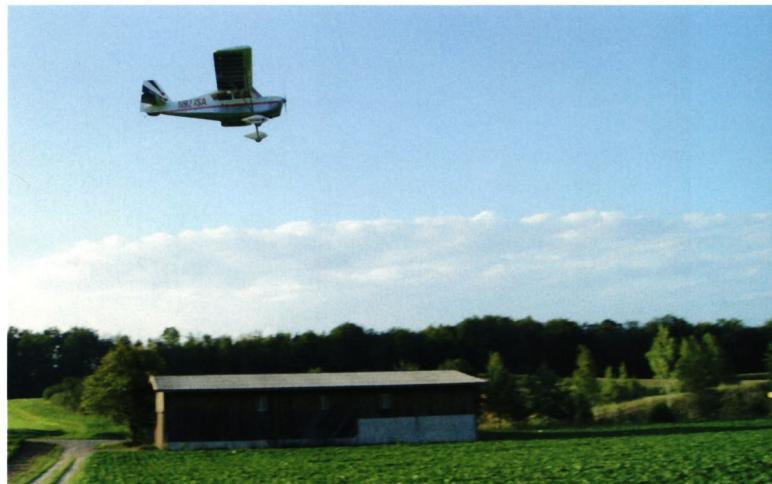
As expected, only a few trim adjustments were needed. The flight characteristics, the handling—simply everything—are incredible. The Bellanca flies like a large trainer and, despite the lack of landing flaps (which, by the way, the original doesn’t have either), can be landed at walking speed—simply fantastic.
You can find a comprehensive photo gallery documenting the model’s construction, along with a few videos, on our website at www.die-modellflie
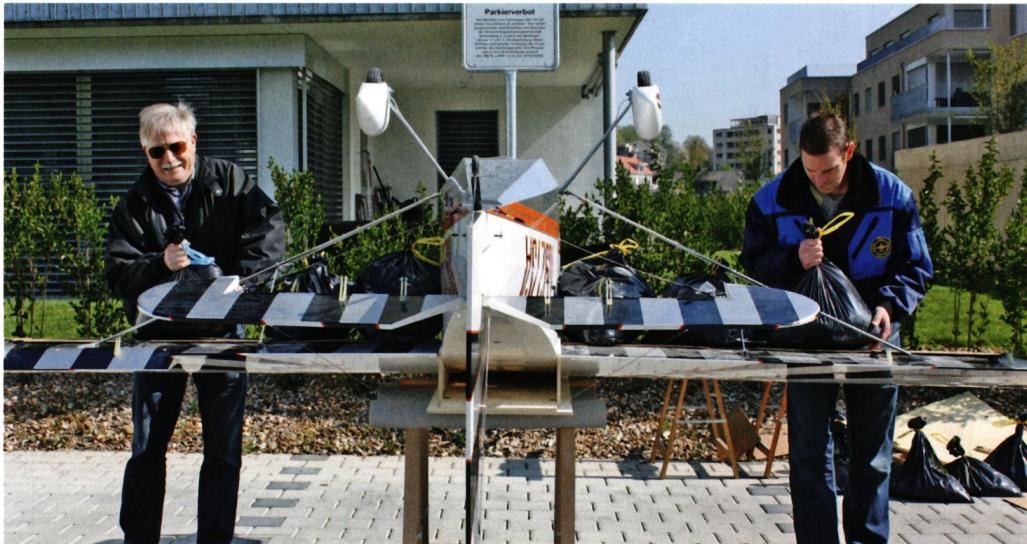
I’d like to thank Lukas Niedermann. Thanks to his active help, we were able to put together an ARF model that’s a bit out of the ordinary. I’d also like to thank my wife Nicole and my son Tizia—
no, who have supported me with their patience. Thanks also go to some of the manufacturers mentioned here.
Fabio Fontana


News from HEBU

TEAM MANAGER "THIS" BOSSHARD
 Rodito Nussbaumer

YOU KNOW WHAT I MEAN? 125 YEARS OF THE SWISS AERO CLUB
 Emil Giezendanner

F3A EUROPEAN CHAMPIONSHIPS IN ST-MACAIRE, FRANCE
 Matthias Bosshard

SUMMER FUN 2026 AT MG USTER
Martin Wunderli
TRY-OUT DAY AT MFV WETTINGEN
Urs Keller
52. 2026 ALPS CUP
Emil Giezendanner
BY YOUTH, FOR YOUTH
Lorena Betschen
ATOM, THE NEW DOUBLE-DECKER FROM CPLR
Matthias Bosshard
CORSAIR F4U – A WARBIRD WITH A MEMORABLE LOOK
Jürgen Rosenberger, Jürgen Prinz
SMALL, MODEL-LIKE SAILBOATS
Res Dauwalder
What's New at Leomotion.com

TWIN TOWN PARTNERSHIP
Wolfgang Voeller
PRIDE AND GOOD IDEAS
 Markus Nussbaumer

EURO CONTEST GLIDER ACRO TOUR AUSTRIA 2026

INSIGHTS INTO THE HISTORY OF SEAPLANES

34th HAHNENMOOS ALPINE MODEL AIRPLANE CAMP
Res Dauwalder
WELCOME, NEW MEMBER!
Andrea Bolliger
HORIZON HOBBY/LEMACO NEWS: MICRO OV-10 BRONCO 645 MM BY E-FLITE

FREE FLIGHT IN THE MIDDLE OF SUMMER
Urs Muntwyler
COUPE DES ALPES – OBSERVE AND LEARN
Rodito Nussbaumer
THE PC-21 STORY
Emil Giezendanner
NEWS FROM HEBU
 Julia Bucher

FROM 0 TO 100
Markus Nussbaumer
MEMORIES
Wolfgang Völler
NOS REGION – A HUB FOR ELECTRIC AVIATION
Emil Giezendanner
Have you almost forgotten about aircraft that take off and land vertically?
Emil Giezendanner
DO YOU KNOW WHAT I MEAN IN THE LAND OF SMILES?
Emil Giezendanner