
Tuning weights made of tungsten
Gliding has become a high-performance sport with national and international competitions. Take F3B RC gliding, for example—a three-part competition consisting of time, distance, and speed flights. Jens Buchert, F3B team world champion, reports: “To achieve optimal results, however, it’s also important to use the right materials for each component. After all, the larger and heavier the gliders become, the greater the impact on their flight dynamics.” Model builders typically use high-tech materials such as carbon-fiber-reinforced plastics (CFRP) for their models to achieve maximum strength with the lowest possible weight. However, materials like lead are also used to make trim weights to achieve optimal trim. Until recently, Buchert also used lead for trim and had to take special safety precautions because of the material’s toxicity—for example, the lead weights had to be painted or encased in synthetic resin. “About five
years ago, I was looking for a more suitable material for trim weights so I could do without lead while still meeting the high standards required for competitions,” says Buchert. “In the process, I discovered that tungsten, due to its high density, is particularly well-suited as an alternative. Since I was already in contact with Bayerische Metallwerke and Gesellschaft für Wolfram Industrie mbH for professional reasons, my idea was easily put into practice with their support.”
Due to tungsten’s high density, the trim weights can also be manufactured smaller than would be possible with another metal of the same weight. For example, a steel trim weight is about 2.5 times larger than a tungsten piece of the same weight. Thanks to the use of tungsten instead of steel or lead, these trim weights take up less space, and the ballast compartment can consequently be built smaller. This makes it possible to design the fuselage to be more aerodynamic, which
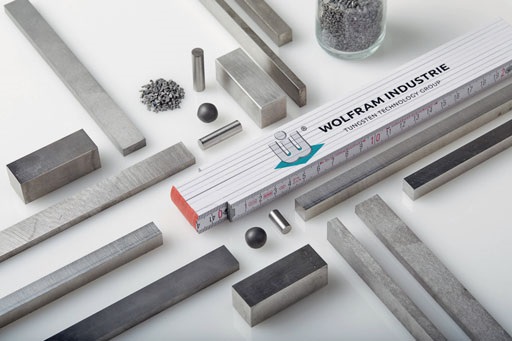
This reduces air resistance and optimizes flight stability. “The use of tungsten is also conceivable in other areas of model building,” Buchert concludes. “For example, special high-tech materials are already being used in model race cars to achieve greater realism and ideal handling. Tungsten can also help achieve the lowest possible center of gravity in these models, which significantly improves the model car’s road holding.”
For more information, visit:
www.wolfram-industrie.de



News from HEBU

TEAM MANAGER "THIS" BOSSHARD
 Rodito Nussbaumer

YOU KNOW WHAT I MEAN? 125 YEARS OF THE SWISS AERO CLUB
 Emil Giezendanner

HORIZON HOBBY/LEMACO NEWS: MICRO OV-10 BRONCO 645 MM BY E-FLITE

PRIDE AND GOOD IDEAS
 Markus Nussbaumer

34th HAHNENMOOS ALPINE MODEL AIRPLANE CAMP
Res Dauwalder
TRY-OUT DAY AT MFV WETTINGEN
Urs Keller
F3A EUROPEAN CHAMPIONSHIPS IN ST-MACAIRE, FRANCE
 Matthias Bosshard

52. 2026 ALPS CUP
Emil Giezendanner
ATOM, THE NEW DOUBLE-DECKER FROM CPLR
Matthias Bosshard
SUMMER FUN 2026 AT MG USTER
Martin Wunderli
What's New at Leomotion.com

COUPE DES ALPES – OBSERVE AND LEARN
Rodito Nussbaumer
TWIN TOWN PARTNERSHIP
Wolfgang Voeller
BY YOUTH, FOR YOUTH
Lorena Betschen
CORSAIR F4U – A WARBIRD WITH A MEMORABLE LOOK
Jürgen Rosenberger, Jürgen Prinz
SMALL, MODEL-LIKE SAILBOATS
Res Dauwalder
WELCOME, NEW MEMBER!
Andrea Bolliger
FREE FLIGHT IN THE MIDDLE OF SUMMER
Urs Muntwyler
EURO CONTEST GLIDER ACRO TOUR AUSTRIA 2026

INSIGHTS INTO THE HISTORY OF SEAPLANES

THE PC-21 STORY
Emil Giezendanner
NEWS FROM HEBU
 Julia Bucher

FROM 0 TO 100
Markus Nussbaumer
MEMORIES
Wolfgang Völler
NOS REGION – A HUB FOR ELECTRIC AVIATION
Emil Giezendanner
DO YOU KNOW WHAT I MEAN IN THE LAND OF SMILES?
Emil Giezendanner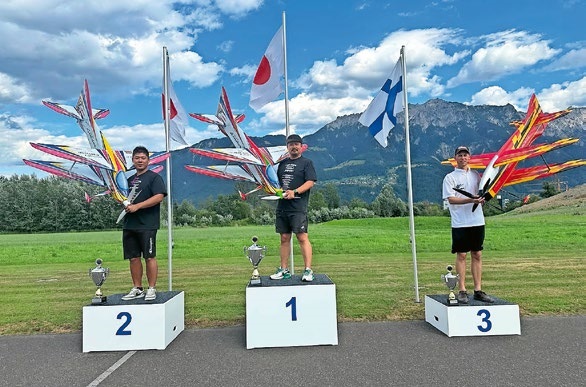
A SPECTACULAR F3A WORLD CUP IN THE PRINCIPALITY OF LIECHTENSTEIN
Emil Giezendanner