
The Many Facets of the F3A World Championships in Bern
Reportedly prepared well in advance, the F3A World Championship officially began on September 9 At 10:30 a.m., practice began, and shortly thereafter, the first serious mishap occurred when Bruno Giezendanner’s A-model was knocked out of the sky during its first flight by the active transmitter of a fellow competitor operating on the same frequency.
If there’s one aspect of an event like this that deserves special attention, it’s certainly the transmitter check. The fact that this mishap happened to the host—of all people—and not to a top favorite who had traveled from afar helped ease the situation somewhat. But then other pilots also reported interference, which led to a massive scramble to change crystals, and the start lists had to be redrawn accordingly. It certainly would have been worth the minimal effort to conduct a thorough frequency check at the airfield in advance—over a period of time—to at least identify stationary sources of interference and take corrective action or warn the pilots. If this was neglected, it could have been interpreted as indifference toward the efforts and equipment of the competition participants. While it’s true that some systems weren’t precisely tuned to our frequency grid, they were well-known brands whose use had to be anticipated.
On the first day of the competition, the beautifully situated airfield was graced with ideal weather. However, two potential medal contenders immediately struggled with their engines: Tetsuji Okumura couldn’t get his OS 60 started at all, and Bruno Giezendanner’s model ran out of steam during the forward loops.
From the start, the top pilots took the lead and were able to hold their positions for the rest of the competition, with only minor shifts. Unfortunately, the weather didn’t cooperate on the following two days: storms, rain, and a combination of both forced temporary interruptions. The pilots who were scheduled to fly just before the event was called off were the unlucky ones. At the same time, a massive muddy mess formed around the festival tent and parking lots, and a boot sales stand would have been a gold mine, since the organizers simply put up with the situation.
Nevertheless, flying continued; the weather gods relented, and on Saturday we were treated to glorious Föhn weather. Perhaps that’s why the computer suddenly started acting up, and the results had to be recalculated by hand. This led to constant changes in the rankings, so that rearranging the roughly 80 scoreboards at the totalizer became a Sisyphean task and was ultimately abandoned.
Undeterred, the competition continued, and we were treated to performances of almost unbelievable precision. The judges put in a considerable amount of work, and as far as I’m able to judge, the very best pilots shared the top ranks, even if a few unlucky souls ended up a bit too far down the list. For the new world champion, Wolfgang Matt, this victory certainly represents the magnificent and well-deserved crowning achievement of a model-flying career that is unparalleled in its consistency, and he secured this triumph in a commanding manner, with each of his individual flights also earning the highest scores.
As satisfying as the result was, the award ceremony on the field was rather lackluster. The beautiful weather would have allowed for at least a few minutes of celebration, and the celebration could not be made up for in the evening anyway due to limited admission to the banquet. If only they had managed to announce the top three finishers correctly the first time around...
As spectators, we were in constant suspense about who would fly where and when. Since the announcer, contrary to his expectations, did not receive any information on this matter, he was unable to provide updates and had to seek solace in Veltliner wine after having to familiarize himself with the sound system in a self-taught crash course because (for cost-saving reasons?) had sent the installer away as quickly as possible.
The official finale was the banquet in the Kornhauskeller. No sooner had the participants gathered than a band began blaring with unheard-of endurance, dramatically demonstrating to those present just how quiet our model engines are—even with the most heavily drilled-out mufflers. It was practically impossible to have a reasonable conversation even in our own language (Huh?!), so the event was limited to eating and the presentation of the remaining medals.
The following Sunday, a large air show took place, but exactly one minute after it began, a torrential downpour set in and showed no signs of letting up. It was truly impressive what the pilots managed to put on display—with electric model helicopters, curiosities, and glider and motorized models of every kind and type—despite the terrible weather.
Unfortunately, this report contains all sorts of negative observations. Of course, it’s always easy to criticize in hindsight, and there’s no doubt that a great deal of good work was done, and the World Championships were able to proceed as planned. But just as a dress rehearsal is necessary before a theater premiere, a dry run with all the officials here wouldn’t have hurt either. No reasonable person expects an organization of this scale to run smoothly right off the bat. But it’s also not nice to use participants—who are already under a lot of stress and, in some cases, have traveled halfway around the world—as guinea pigs. In any case, we Swiss will have to be very cautious in the future with our judgments of similar competitions organized elsewhere. H. Steiner
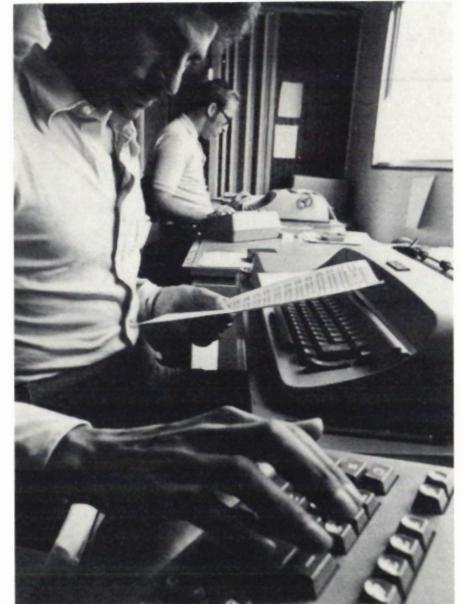
Data processing at a World Cup is a great thing—but it can also become a source of concern.
| RANK | NAME | IMAT | ST-NO | 1 | 2 | 3 | TOTAL |
|---|---|---|---|---|---|---|---|
| 1. | M. MATT | LIE | 27. | 4755 | 5060 | 5015 | 14,830 |
| 2. | H. PRETTNER | AUT | 29. | 4785 | 4660 | 4760 | 14,205 |
| 3. | D. BROWN | USA | 74. | 4505 | 4490 | 4670 | 13,665 |
| 1. America | 39960 |
| 2. Liechtenstein | 39,115 |
| 3. Japan | 38,100 |
| 4. Federal Republic of Germany | 37,930 |
| 5. Austria | 37,385 |
| 6. Switzerland | 36,475 |
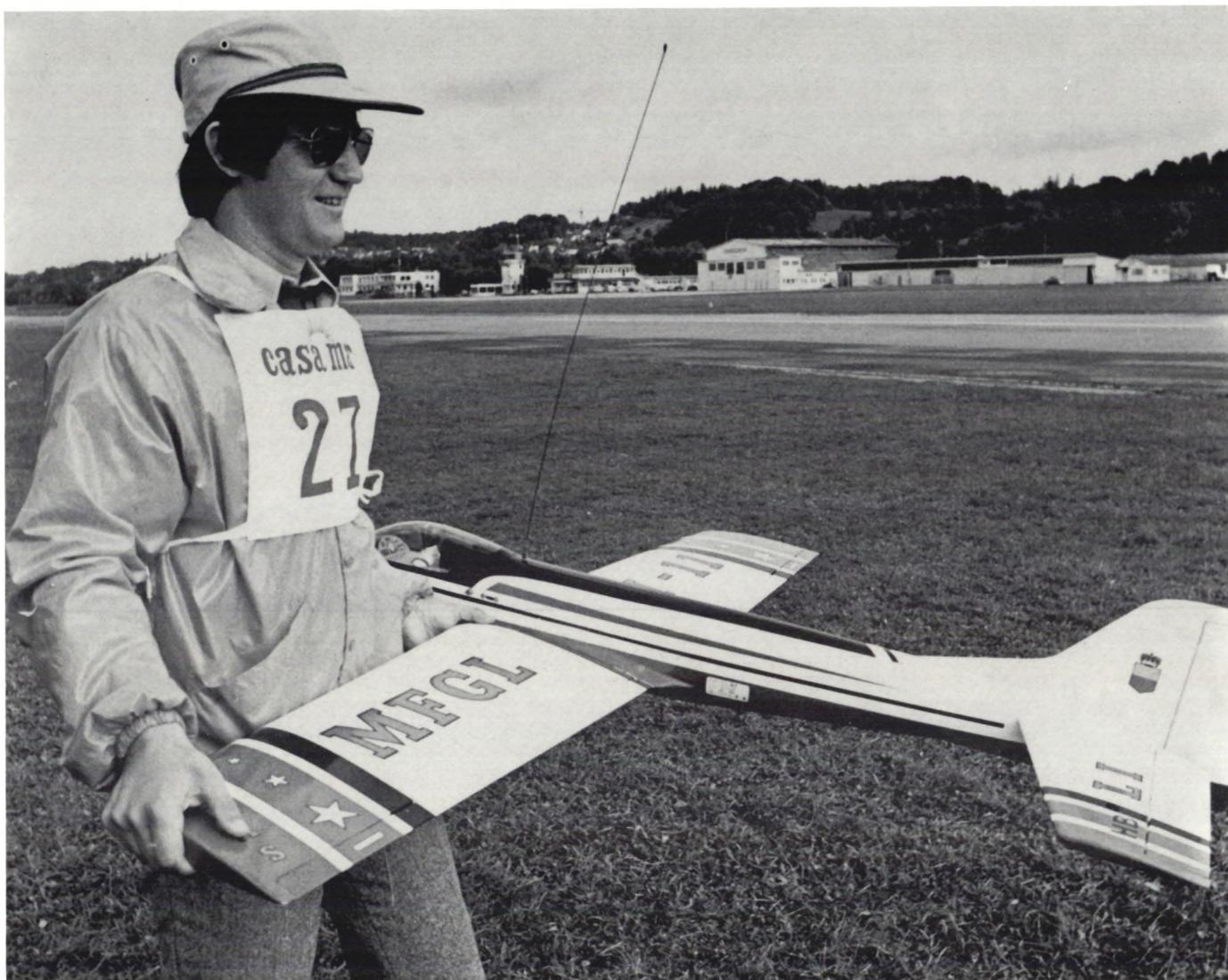
Wolfgang Matt and his ATLAS finally did it. After nearly losing his model during Monday’s practice (due to radio interference) and having to interrupt a scoring flight because of interference as well, luck was still on his side.


News from HEBU

TEAM MANAGER "THIS" BOSSHARD
 Rodito Nussbaumer

YOU KNOW WHAT I MEAN? 125 YEARS OF THE SWISS AERO CLUB
 Emil Giezendanner

PRIDE AND GOOD IDEAS
 Markus Nussbaumer

ATOM, THE NEW DOUBLE-DECKER FROM CPLR
 Matthias Bosshard

SUMMER FUN 2026 AT MG USTER
Martin Wunderli
F3A EUROPEAN CHAMPIONSHIPS IN ST-MACAIRE, FRANCE
Matthias Bosshard
52. 2026 ALPS CUP
Emil Giezendanner
HORIZON HOBBY/LEMACO NEWS: MICRO OV-10 BRONCO 645 MM BY E-FLITE

TWIN TOWN PARTNERSHIP
Wolfgang Voeller
CORSAIR F4U – A WARBIRD WITH A MEMORABLE LOOK
Jürgen Rosenberger, Jürgen Prinz
TRY-OUT DAY AT MFV WETTINGEN
Urs Keller
WELCOME, NEW MEMBER!
Andrea Bolliger
COUPE DES ALPES – OBSERVE AND LEARN
Rodito Nussbaumer
EURO CONTEST GLIDER ACRO TOUR AUSTRIA 2026

BY YOUTH, FOR YOUTH
Lorena Betschen
INSIGHTS INTO THE HISTORY OF SEAPLANES

34th HAHNENMOOS ALPINE MODEL AIRPLANE CAMP
Res Dauwalder
SMALL, MODEL-LIKE SAILBOATS
Res Dauwalder
What's New at Leomotion.com

FREE FLIGHT IN THE MIDDLE OF SUMMER
Urs Muntwyler
THE PC-21 STORY
Emil Giezendanner
NEWS FROM HEBU
 Julia Bucher

FROM 0 TO 100
Markus Nussbaumer
MEMORIES
Wolfgang Völler
NOS REGION – A HUB FOR ELECTRIC AVIATION
Emil Giezendanner
Have you almost forgotten about aircraft that take off and land vertically?
Emil Giezendanner
DO YOU KNOW WHAT I MEAN IN THE LAND OF SMILES?
Emil Giezendanner