
London for Aviation Enthusiasts
London and the surrounding area are well worth a visit, especially for classic aircraft enthusiasts and, by extension, scale model builders, since many of the most famous aircraft can be seen in museums or even in flight within a 40-mile radius. I’d like to introduce you to these museums and their highlights and give you a brief overview.
Central London is home to the Science Museum and the Imperial War Museum. First, the Science Museum:
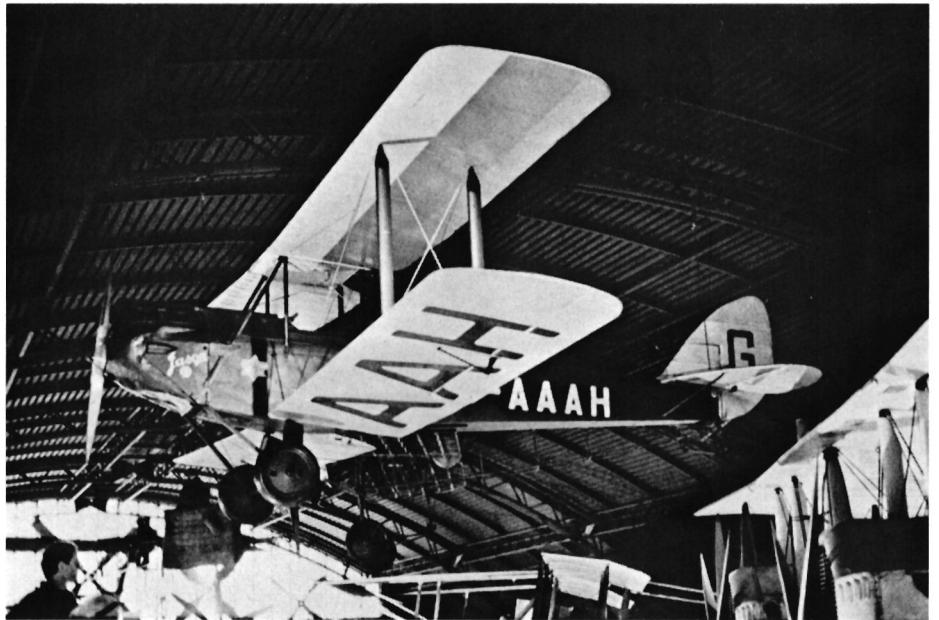
As part of its overview of humanity’s technological achievements, it features an aviation section with over 20 aircraft, as well as parts and models. Its highlights include the Gloster E 28/39, the first British jet aircraft; the Vimy, in which Alcock and Brown made the first transatlantic crossing in 1919; the Supermarine S6B Schneider Trophy aircraft, with which Great Britain won the Schneider Trophy for the third and final time, and—to my particular surprise—Prof. Piccard’s 1932 stratospheric gondola.
A Fokker E-III in its uncovered state is also likely to be of great interest to model builders.
The Imperial War Museum houses, among other things, a He-162 Salamander, an FW-190, and a few other aircraft from World War I and World War II.
However, the majority of its aircraft are housed in the museum’s aviation section in Duxford, which I’ll discuss later.
The best-known museums, the RAF Museum and the Battle of Britain Museum, are located in the London suburb of Hendon and are accessible by subway.
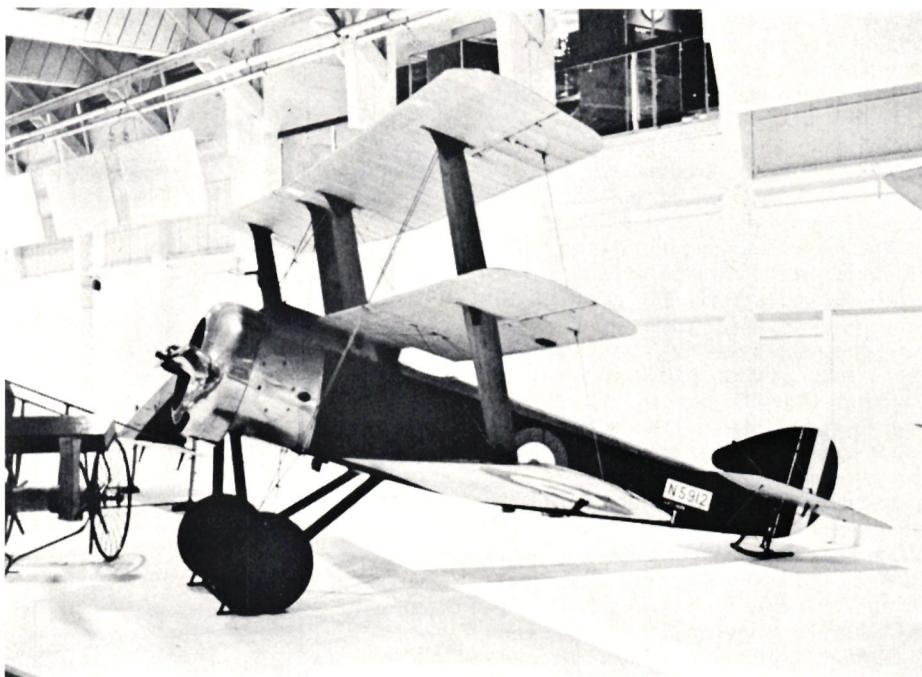
The RAF Museum’s collection ranges from manned observation kites to the Mach 2 Lightning fighter. From World War I, in addition to British Sopwith and SE5a aircraft, there are also German Fokker aircraft and French models on display.
The interwar period is represented by various Hawker biplanes, while the collection from World War II itself includes large bombers such as the Wellington and Lancaster, as well as rarer aircraft like the Beaufighter and the Meteor.
These aircraft are complemented by British standard fighters, a large Short Sunderland Mk V flying boat, and several liaison aircraft.
At Duxford Airfield, visitors can admire over 60 aircraft from the Imperial War Museum as well as several privately owned aircraft. Among the jet aircraft are several French Mystère models, a Saab Draken, a massive Victor bomber, a Concorde prototype, and several other British prototypes. Also on display is a particularly rare Saunders Roe A1 flying boat jet fighter, tested in 1947 but never put into series production because it was too slow. This aircraft is currently undergoing restoration but can still be viewed.
The postwar section features, among other things, the first prototype of the Harrier vertical takeoff aircraft and a Canberra.
Of course, there’s more than just aircraft on display—you’ll also find accessories, uniforms, and many other items related to military aviation.
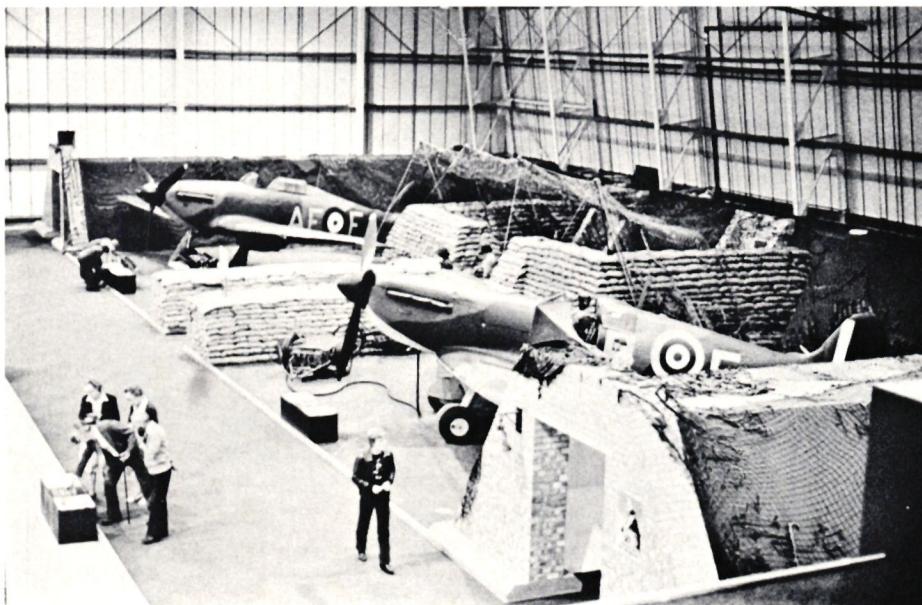
The museum shop is sure to be a real treasure trove for scale model fans; I’ve never seen such a vast selection of books, posters, magazines, and publications about vintage aircraft. Directly across from the RAF Museum is the Battle of Britain Museum. Its highlights include three night fighters: a Me 110 and a Ju 88—both featuring the characteristic antenna “antlers”—as well as a Defiant, several bombers such as the Ju 87, He 111, Blenheim, and two particularly rare biplanes that were already obsolete by the start of the war: the Gloster Gladiator and the Fiat Cr 42 Falco from Italy.
From World War II, there is a beautiful Mustang, a rare Seafire, and American B-17 and B-29 bombers on display. In addition, many trainer and liaison aircraft are on display, while World War I is scarcely represented, with the exception of an RE-8.
In addition to the official exhibition, there are many privately owned vintage aircraft at Duxford. Some of them are airworthy and are often demonstrated at air shows, such as two Harvard trainers, a Yak 11, a French version of the Fieseler Storch, and a Beech Staggerwing. All of these aircraft belong to a group of highly dedicated vintage aircraft enthusiasts who call themselves The Fighter Wing Display Team. They have made it their mission not only to maintain the existing aircraft but also to restore others to flying condition. As a visitor, you have the unique opportunity to watch the restoration of a Mustang and a Hawker Hurricane. A Spitfire is also being completely restored from the ground up, while a Me 109—once the star of the aviation film *The Battle of Britain*—is nearly finished. You can stroll around the workshops at your leisure and will immediately find someone who’s happy to show you everything and explain it to you. In addition, air shows take place at Duxford several times a year.
Thorpe Park is a leisure and amusement park, making it a particularly suitable destination for aviation enthusiasts visiting with their families. One of the park’s main attractions is its aircraft, all of which are faithful replicas. They are divided into two thematic categories: World War I and the Schneider Trophy.
From World War I, the Allied side is represented not only by the Camel, SE5a, and Spad, but also by a D.H.2 lattice-tail aircraft with pressurized propellers and a Bristol M1C monoplane.
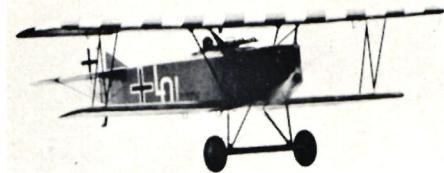
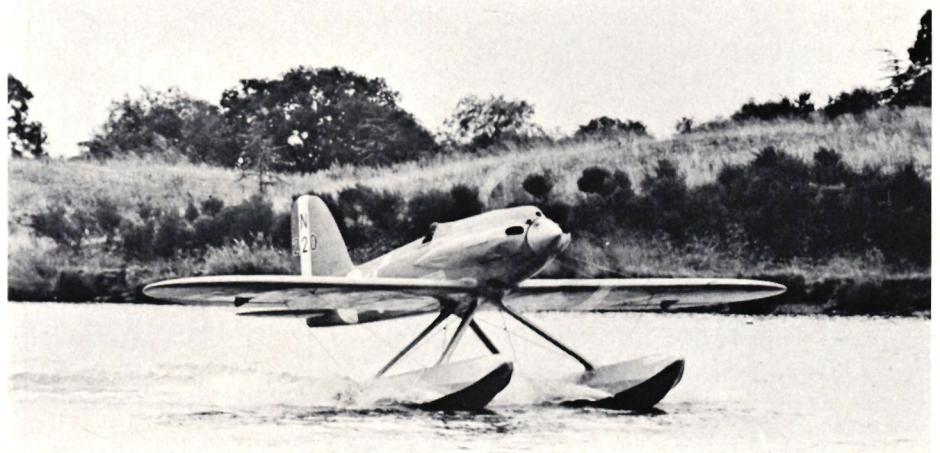
The German Air Force is represented by Fokker Dr. 1 triplanes, DVII biplanes, DVIII monoplanes, and an Albatros Va. The Schneider Trophy Collection is a seaplane collection that is unique in Europe. In chronological order, it includes: a Deperdussin monoplane from 1913, a Sopwith Tabloid biplane from 1914, and an Army Curtiss R3C-2 from 1923.
The year 1926 is represented by a Macchi M39, and the years 1927–1931 by two Supermarine aircraft.
The aircraft are mostly on static display but are flown a few times a year.
To conclude our brief overview, I’d like to introduce you to the absolute highlight of aviation history: the world-famous Shuttleworth Collection in Old Warden. It consists entirely of original aircraft that are still airworthy and are flown once or twice a month during the summer. The highlight of these events is always the Military Air Pageant, which features in-flight demonstrations of military aircraft ranging from World War I to the jet age, including many aircraft that are not part of the collection itself. Among the oldest pieces in the collection
Includes a Blériot of the same type as the one that crossed the English Channel.
World War I is well represented with the Sopwith Camel and Pup, the SE5a and Bristol F2B, as well as an LVG II C—a particularly rare find, as it is the only airworthy example of a German aircraft from that era.
Hawker and Bristol aircraft from the 1930s are just as present as the Spitfire and Gladiator from World War II. All in all, the collection includes over 30 original aircraft, most of which are airworthy.
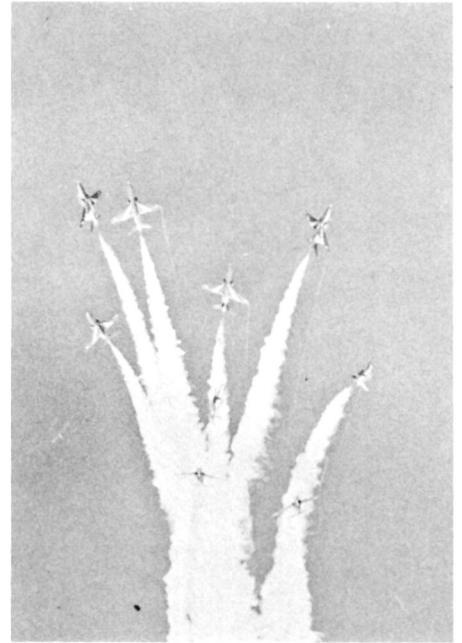
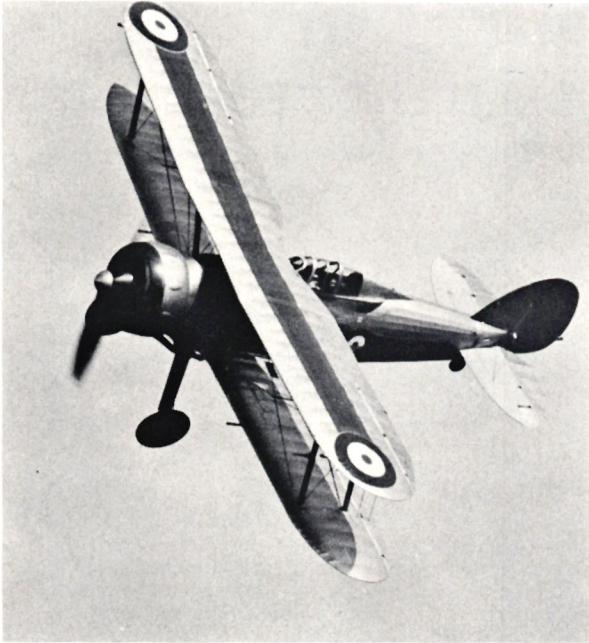
As mentioned, there is especially much to see at the Military Air Day, where the display ranges from the models listed—dating back to around 1915—all the way to the Red Arrows. Particularly impressive are the Battle of Britain Memorial Flight—a three-plane formation consisting of a Spitfire, a Hurricane, and a Lancaster—as well as the Harvard trainers and Gladiator aircraft with their roaring radial engines. I was particularly taken with the Gloster Gladiator. It’s a powerhouse of a biplane that flew against the superior aircraft of the Axis powers in the early years of the war. Also very interesting are the veteran British jet aircraft and, of course, the Red Arrows.
Below, I would like to provide you with the addresses and opening hours of the museums mentioned. For the dates of the air shows in Old Warden, Duxford, and Thorpe Park, it is best to contact the organizers directly. In this context, I highly recommend the British magazine “Aeroplane Monthly,” which publishes a complete calendar of all aviation events each year, along with the addresses and details of all British aircraft museums.
The Science Museum
, Exhibition Road, London SW7 2DD
Open: Mon–Sat 10 a.m.–6 p.m., Sun 2:30 p.m.–6 p.m.
The Imperial War Museum
, Lambeth Road, London SE1 6HZ
Open: Mon–Sat 10 a.m.–5:50 p.m., Sun 2:00 p.m.–5:50 p.m.
The RAF Museum, The Battle of Britain Museum
Hendon, London NW9 5LL
Accessible by subway
Open: Mon–Sat 10 a.m.–6:00 p.m., Sun 2:00 p.m.–6:00 p.m.
The Imperial War Museum
Duxford Airfield, Cambridge CB2 4QR
Accessible from London by train on the Liverpool Street–Cambridge line, either to Whittlesford Station, approx. 2.4 km
away, or to Cambridge, from where buses run directly to the airfield.
Open: Mid-March through November 1, daily 11 a.m.–5:30 p.m.
Thorpe Park
Staines Lane, Chertsey, Surrey KT16 8PN
Accessible from London Victoria Station via Green Line buses, which connect London with the surrounding area.
Open: Mid-April through late September, daily from 10 a.m. to 6:00 p.m.
The Shuttleworth Collection
Old Warden Aerodrome, near Biggleswade, Bedfordshire
Biggleswade, located 3 miles from the airfield, is accessible from London by train from King’s Cross Station; on flying days, British Rail offers a full transfer service from London directly to the airfield.


News from HEBU

TEAM MANAGER "THIS" BOSSHARD
 Rodito Nussbaumer

YOU KNOW WHAT I MEAN? 125 YEARS OF THE SWISS AERO CLUB
 Emil Giezendanner

F3A EUROPEAN CHAMPIONSHIPS IN ST-MACAIRE, FRANCE
 Matthias Bosshard

SUMMER FUN 2026 AT MG USTER
Martin Wunderli
TRY-OUT DAY AT MFV WETTINGEN
Urs Keller
52. 2026 ALPS CUP
Emil Giezendanner
BY YOUTH, FOR YOUTH
Lorena Betschen
ATOM, THE NEW DOUBLE-DECKER FROM CPLR
Matthias Bosshard
CORSAIR F4U – A WARBIRD WITH A MEMORABLE LOOK
Jürgen Rosenberger, Jürgen Prinz
SMALL, MODEL-LIKE SAILBOATS
Res Dauwalder
What's New at Leomotion.com

HORIZON HOBBY/LEMACO NEWS: MICRO OV-10 BRONCO 645 MM BY E-FLITE

TWIN TOWN PARTNERSHIP
Wolfgang Voeller
PRIDE AND GOOD IDEAS
 Markus Nussbaumer

EURO CONTEST GLIDER ACRO TOUR AUSTRIA 2026

INSIGHTS INTO THE HISTORY OF SEAPLANES

34th HAHNENMOOS ALPINE MODEL AIRPLANE CAMP
Res Dauwalder
WELCOME, NEW MEMBER!
Andrea Bolliger
FREE FLIGHT IN THE MIDDLE OF SUMMER
Urs Muntwyler
COUPE DES ALPES – OBSERVE AND LEARN
Rodito Nussbaumer
THE PC-21 STORY
Emil Giezendanner
NEWS FROM HEBU
 Julia Bucher

FROM 0 TO 100
Markus Nussbaumer
MEMORIES
Wolfgang Völler
NOS REGION – A HUB FOR ELECTRIC AVIATION
Emil Giezendanner
Have you almost forgotten about aircraft that take off and land vertically?
Emil Giezendanner
DO YOU KNOW WHAT I MEAN IN THE LAND OF SMILES?
Emil Giezendanner