
Nieuport 11
Lifelike model airplanes are steadily gaining in popularity. The industry has adapted to this trend and offers a wide variety of models. Unfortunately, the charming vintage models are often overlooked.
One of the few exceptions is the company “Proctor,” already well known to enthusiasts for its “Antic single- and biplane” models. For $126, this manufacturer offers the “Nieuport 11” as a quick-build kit. At first glance, the price may seem a bit high, but in return, you get unmatched features and precision. I’d like to briefly highlight the key points that make this kit worth mentioning.
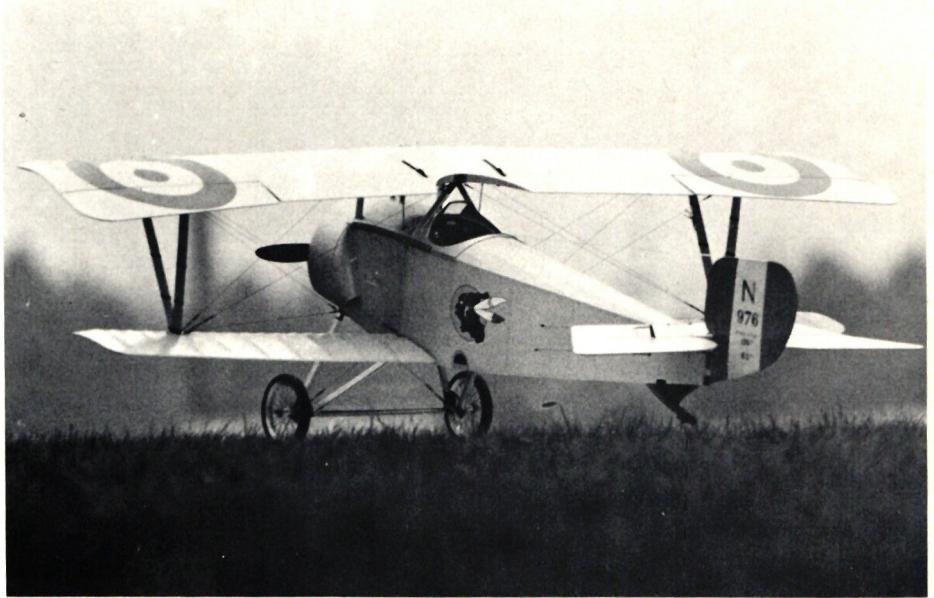
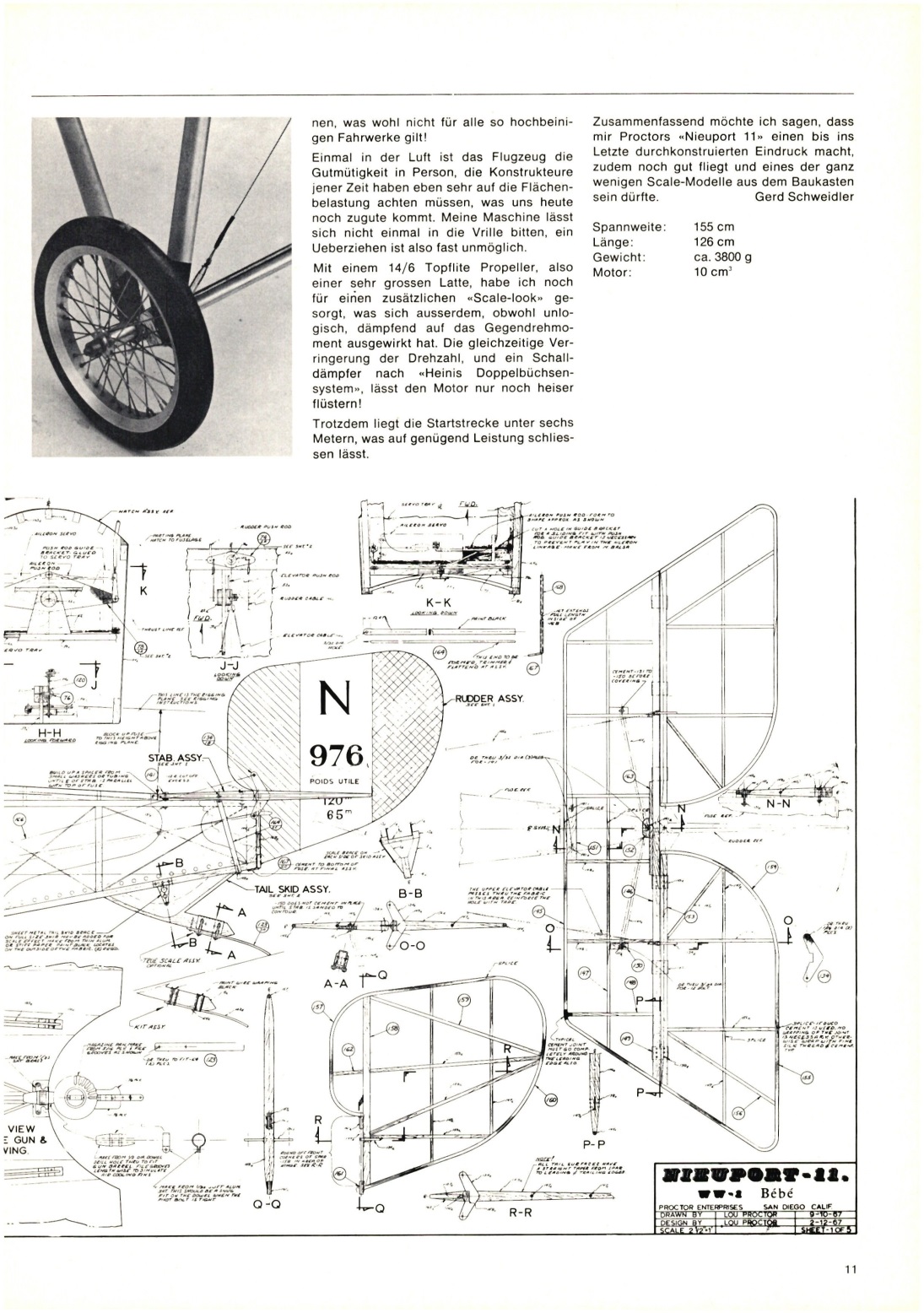
Four detailed blueprints, drawn using the blueprinting process, and therefore very precise; the assembly instructions are almost like a book.
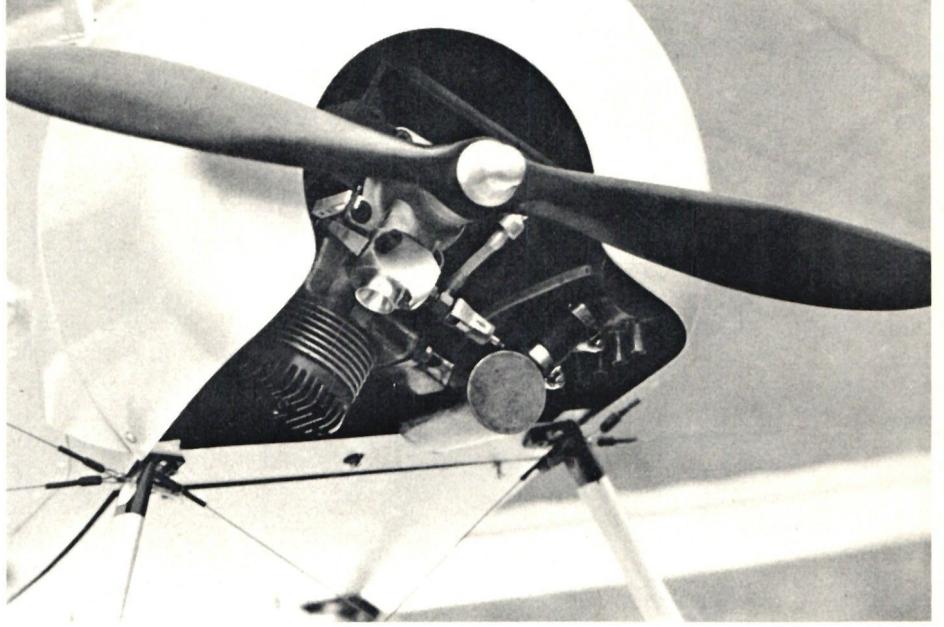
All landing gear parts and wing struts are made of extruded aluminum, bent, drilled, sandblasted, and anodized. The engine cowling is also made of aluminum and pre-formed for installation. All plywood parts—and the model consists mainly of this material—are cut out, not stamped, and of exceptional precision.
The strips are dimensionally accurate, not too narrow, and mostly made of pine wood (similar to a mixture of balsa and pine), which I particularly liked.
Small parts, cables, clamping sleeves, etc., are provided in sufficient quantities. Everything is numbered—even the small bag containing four washers—so mixing up the parts is virtually impossible. However, I replaced all screws and nuts with metric threads.
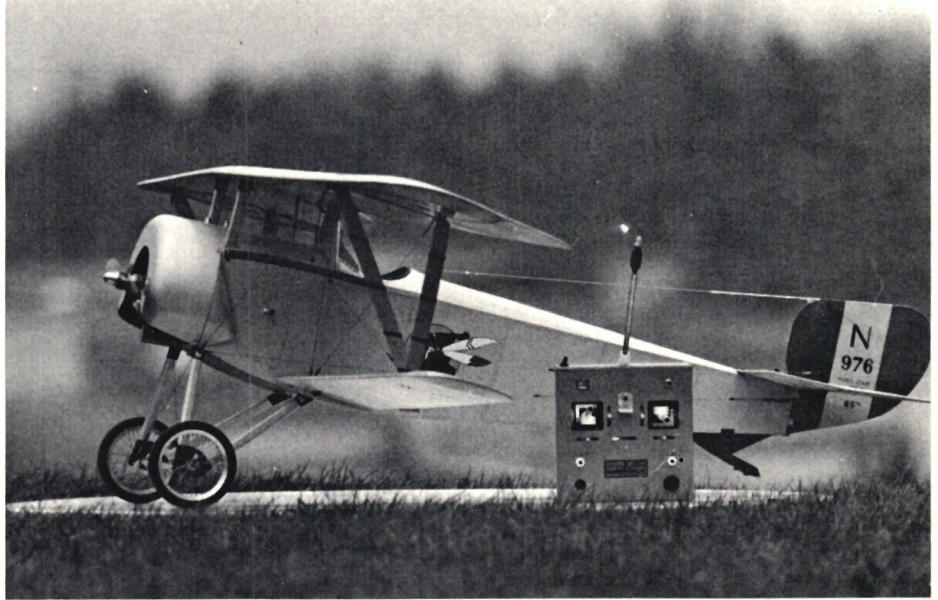
Only moderately experienced model builders should attempt the “Nieuport 11”; while the assembly isn’t overly complicated, it does require a bit of patience and precision. The project becomes particularly appealing if you decide to stain all the wooden parts in the appropriate shades, as specified in a special column on the parts list. Knowledge of English is helpful but not absolutely necessary.
The maiden flight went off without any serious incidents. Like so many American designs, this one lacks engine thrust and lateral thrust, which immediately became apparent through rather erratic behavior during takeoff and a strong roll to the left during flight.
After correcting this issue and adding a small amount of lead under the cowl, the aircraft can now be described as stable even during takeoff and landing—
—which probably isn't true for all aircraft with such high-leg landing gear!
Once in the air, the plane is the very embodiment of good-naturedness; the designers of that era simply had to pay very close attention to wing loading, which still benefits us today. My plane won’t even go into a spin if you try, so stalling is practically impossible.
With a 14/6 Topflite propeller—a very large blade—I’ve added an extra “scale look,” which, although illogical, has also had a damping effect on the counter-torque. The simultaneous reduction in RPM, combined with a muffler based on “Heini’s double-tube system,” makes the engine whisper hoarsely!
Nevertheless, the takeoff distance is under six meters, which suggests sufficient power.
In summary, I’d like to say that Proctor’s “*Neuport 11*” strikes me as a model that’s been meticulously engineered down to the last detail; it also flies well and is likely one of the very few scale models available as a kit.
Wingspan | 155 cm |
Length | 126 cm |
Weight | approx. 3,800 g |
Engine | 10 cm³ |


News from HEBU

HORIZON HOBBY/LEMACO NEWS: MICRO OV-10 BRONCO 645 MM BY E-FLITE

PRIDE AND GOOD IDEAS
 Markus Nussbaumer

TEAM MANAGER "THIS" BOSSHARD
 Rodito Nussbaumer

YOU KNOW WHAT I MEAN? 125 YEARS OF THE SWISS AERO CLUB
 Emil Giezendanner

F3A EUROPEAN CHAMPIONSHIPS IN ST-MACAIRE, FRANCE
 Matthias Bosshard

ATOM, THE NEW DOUBLE-DECKER FROM CPLR
Matthias Bosshard
SUMMER FUN 2026 AT MG USTER
Martin Wunderli
What's New at Leomotion.com

52. 2026 ALPS CUP
Emil Giezendanner
TWIN TOWN PARTNERSHIP
Wolfgang Voeller
34th HAHNENMOOS ALPINE MODEL AIRPLANE CAMP
Res Dauwalder
CORSAIR F4U – A WARBIRD WITH A MEMORABLE LOOK
Jürgen Rosenberger, Jürgen Prinz
SMALL, MODEL-LIKE SAILBOATS
Res Dauwalder
TRY-OUT DAY AT MFV WETTINGEN
Urs Keller
WELCOME, NEW MEMBER!
Andrea Bolliger
FREE FLIGHT IN THE MIDDLE OF SUMMER
Urs Muntwyler
COUPE DES ALPES – OBSERVE AND LEARN
Rodito Nussbaumer
EURO CONTEST GLIDER ACRO TOUR AUSTRIA 2026

BY YOUTH, FOR YOUTH
Lorena Betschen
INSIGHTS INTO THE HISTORY OF SEAPLANES

THE PC-21 STORY
Emil Giezendanner
NEWS FROM HEBU
 Julia Bucher

FROM 0 TO 100
Markus Nussbaumer
MEMORIES
Wolfgang Völler
NOS REGION – A HUB FOR ELECTRIC AVIATION
Emil Giezendanner
DO YOU KNOW WHAT I MEAN IN THE LAND OF SMILES?
Emil Giezendanner
Have you almost forgotten about aircraft that take off and land vertically?
Emil Giezendanner