
11-Meter Radio and RC Model Aircraft
About 10 years ago, we mainly used tone-modulated Tip-Tip systems, which were very successful. Each function (up, down, left, right, etc.) was assigned a specific tone, which then caused the corresponding steel tongue on the tongue-frequency relay at the receiver to vibrate, causing the servo to extend fully via an amplifier. These systems came mainly from the United States and were found in large numbers at our airfields. At that time, it was possible to have five such control systems operating simultaneously without interfering with one another.
As far as I know, the color code commonly used today also originated in the United States, but it has now become widely accepted.
| 1. brown: | 26.995 MHz |
| 2. red: | 27.045 MHz |
| 3. orange: | 27.095 MHz |
| 4. yellow: | 27.145 MHz |
| 5. green: | 27.195 MHz |
Soon after—about seven years ago—the first digital proportional controls arrived. The major advantage—that each servo didn’t simply move to full deflection and back, but moved proportionally depending on the stick position on the transmitter—led to a completely new flying experience and really propelled RC flying into the mainstream. A veritable RC boom had thus begun. The production of such systems quickly spread to Europe, and every year new manufacturers entered the market with their products. Soon the five frequencies were no longer enough, since—especially in gliding—when conditions are favorable, everyone wants to get into the “loop,” and those who managed to connect wanted to stay in the updraft as long as possible—which often came at the expense of a fellow pilot who happened to be on the same frequency and thus had to wait on the ground. However, technological progress did not leave this problem unsolved for long. The systems became narrower-band, the receivers more selective, and soon it became standard practice to create an intermediate frequency between each of the five known frequencies, which meant for model aviators that ten RCsystems could be put into operation simultaneously, making it possible to control ten model aircraft at once on the 11-meter band. This was certainly a major advance, and it’s reasonable to assume that even more intermediate frequencies could have been created in this way. The main problem lies in the large number of different brands with varying tolerances. Cooperation among manufacturers in this regard seems illusory in Europe, but it would certainly not be a luxury. Well, as long as motor manufacturers cannot even agree on the same hole spacing on the mounting flange, that would probably be asking too much. Certainly, development would be far from complete, and it would be possible—albeit with greater effort—to use various electronic tricks to fly a much larger number of model aircraft independently of one another.
However, last year, unexpectedly and completely out of the blue (as is typical of anything born in bureaucracy), a veritable crisis has descended upon the 11-meter RC model aviation community. It concerns
For now, let me just note that amateur radio is a leisure activity like any other. It is a technical hobby that already holds a tremendous fascination for many thousands of Swiss people. The fact that there are all sorts of aberrations and shameful behavior in amateur radio is just as unavoidable as those model airplane enthusiasts who, with their unbearable noise, the mess they leave at the airfield, and cars parked in meadows and fields—do more than “promote” our sport.
The ability to use radio equipment to make contact with other like-minded people over short and long distances, to receive messages and relay them as a relay station, and even to help organize rescue operations is sure to spark great interest in many people. Perhaps this is an attempt to move away from the passive, receptive, or consumerist attitude—as is the case with radio, television, magazines, etc.—toward an active, transmitting, and producing mindset? The fact that others are making a fortune off these specifically human needs is evident not only in the hobby sector. It’s not just importers and sellers who profit from two-way radio; the PTT does as well—and significantly more than from remote-controlled model aircraft, let that be explicitly noted here!
Well, it cannot be our task to rule on the legitimacy of 11-meter amateur radio—even the fact that we were there first is hardly taken seriously anywhere in the context of technical developments as well as administrative and regulatory issues. On the other hand, the manner in which the frequencies have been allocated is both baffling and incomprehensible, as they have placed the voice radio band right in the middle of our remote-control band. Due to the nine allocated voice radio frequencies, we have lost exactly three remote-control frequencies, namely:
| 27.025 MHz | brown/red: |
| 27.075 MHz | red/orange: |
| 27.125 MHz | orange/yellow: |
In addition, as of 1975, the intermediate frequencies 27.175 MHz (green/yellow) and 26.975 MHz (black/brown) will also no longer be authorized, meaning that model aviation has effectively lost a total of five frequencies on the 11-meter band. Given the significant growth and increasing popularity of model aviation, this is a tremendous loss. Even the allocation of new bands cannot fully compensate for this serious setback for us.
It is also interesting to note that licenses for remote controls on the intermediate frequencies will continue to be issued until the end of 1974, even though every kid knows that a model aircraft enthusiast who peacefully flies his glider in circles on a hill causes quite a disturbance to amateur radio operators within a surprisingly wide radius—namely, operators to whom the same PTT has granted the same frequency. It goes without saying that such conditions do not exactly inspire public confidence, and the question of who is to blame—the famous scapegoat—is obvious:
As already mentioned, the PTT’s revenue from license fees for two-way radios is substantial and will increase dramatically each year. This factor is rarely discussed, but—as is always the case—it plays a decisive role. The less it’s talked about, the more important it is! However, before leveling accusations at the PTT (which would be pointless anyway, since the PTT is not a person), we must not forget that by opening the 11-meter band for voice radio, the PTT did nothing more than comply with international regulations. In Italy, for example, the 11-meter band is now completely “contaminated” and has been off-limits to model aviation for years. The same is true overseas. That is why model aircraft there are primarily radio-controlled on 72 and 50 MHz. Model aviation has thus avoided two-way radio—which brings us straight to the crux of the matter: On the one hand, the PTT looked to other countries and aligned itself with international trends, but when it came to the reallocation of remote-control frequencies, they once again solved the problem on their own in true Swiss fashion, so that we must either do without commercially available equipment from abroad as much as possible or are forced to modify it to suit Swiss conditions. Furthermore—and this must be emphasized here—model aircraft enthusiasts have once again come out extremely badly in this whole affair. Four frequencies were taken away from us on 27 MHz, and we were given only four on 40 MHz, which leaves us right back where we started—
⏏ These frequencies can still be used until the end of 1974, but they will remain in use in Germany!
⏏ These frequencies, as well as 27.265 (D4) and 27.275 (24), will only be allocated in 1974 and will only be permitted until 1980
This frequency grid was drawn by L. Steinbrecher and clearly illustrates the situation. As a minor correction, it should be noted that black has never been approved. The actual intermediate frequencies are: 27.020 / 27.070 / 27.120, etc., as is the case with Digi-Fly, for example. The intermediate frequencies listed here are based on inexpensive radio crystals (18 francs per pair). Special crystals: 48 francs per pair.
Nothing to show for it but expenses! The development of model aviation would have more than justified the allocation of at least ten frequencies, e.g., on 40 MHz (or even better, on 50 or 72). The fact that we were allocated ten frequencies on 430 MHz of all places offers us no consolation whatsoever. Every expert knows that those wavelengths are not entirely problem-free. Even though we still have little experience in this area, it is already clear that the electronic complexity is twice as high. The impact on the price can therefore be easily calculated. Since no corresponding equipment is manufactured abroad, switching to these frequencies on a large scale is not even up for discussion at this time. This is just a side note, but it illustrates how unrealistic bureaucratic decrees and regulations often are. The bottom line of this whole story is this: If we dig into our pockets and purchase new equipment for 40 MHz, we’ll still have 9 frequencies available to us. And if we’re willing to be even more patient and spend even more, we might one day be able to independently control a full 10 models on 430 MHz. Either way, we have to pay the price for the PTT’s failure. Well, the question remains: have others besides the PTT also failed? What about, for example, the Aero Club of Switzerland or the Association of Model Retailers? What have they done—or failed to do—and how do they view the future? To find this out, we’ve written to these various organizations, hoping to shed a little more light on this murky matter for you in the next issue.
To be continued

News from HEBU

TEAM MANAGER "THIS" BOSSHARD
 Rodito Nussbaumer

YOU KNOW WHAT I MEAN? 125 YEARS OF THE SWISS AERO CLUB
 Emil Giezendanner

PRIDE AND GOOD IDEAS
 Markus Nussbaumer

ATOM, THE NEW DOUBLE-DECKER FROM CPLR
 Matthias Bosshard

SUMMER FUN 2026 AT MG USTER
Martin Wunderli
F3A EUROPEAN CHAMPIONSHIPS IN ST-MACAIRE, FRANCE
Matthias Bosshard
52. 2026 ALPS CUP
Emil Giezendanner
TWIN TOWN PARTNERSHIP
Wolfgang Voeller
CORSAIR F4U – A WARBIRD WITH A MEMORABLE LOOK
Jürgen Rosenberger, Jürgen Prinz
TRY-OUT DAY AT MFV WETTINGEN
Urs Keller
HORIZON HOBBY/LEMACO NEWS: MICRO OV-10 BRONCO 645 MM BY E-FLITE

EURO CONTEST GLIDER ACRO TOUR AUSTRIA 2026

BY YOUTH, FOR YOUTH
Lorena Betschen
INSIGHTS INTO THE HISTORY OF SEAPLANES

SMALL, MODEL-LIKE SAILBOATS
Res Dauwalder
What's New at Leomotion.com

COUPE DES ALPES – OBSERVE AND LEARN
Rodito Nussbaumer
34th HAHNENMOOS ALPINE MODEL AIRPLANE CAMP
Res Dauwalder
WELCOME, NEW MEMBER!
Andrea Bolliger
FREE FLIGHT IN THE MIDDLE OF SUMMER
Urs Muntwyler
THE PC-21 STORY
Emil Giezendanner
NEWS FROM HEBU
 Julia Bucher

FROM 0 TO 100
Markus Nussbaumer
MEMORIES
Wolfgang Völler
NOS REGION – A HUB FOR ELECTRIC AVIATION
Emil Giezendanner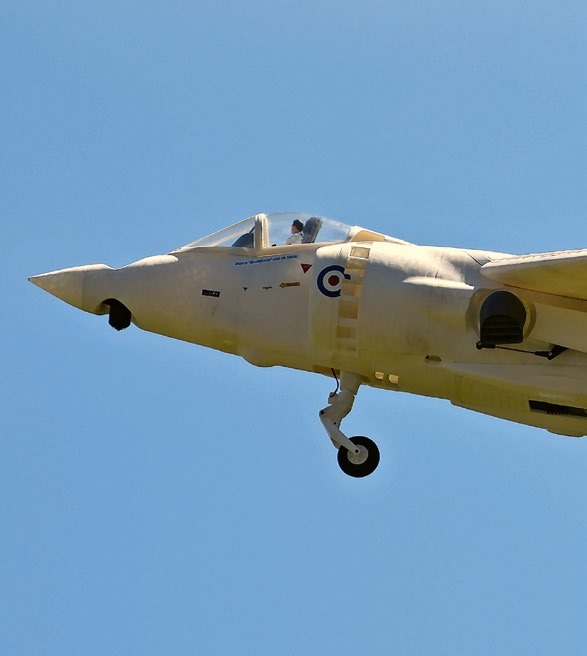
Have you almost forgotten about aircraft that take off and land vertically?
Emil Giezendanner
DO YOU KNOW WHAT I MEAN IN THE LAND OF SMILES?
Emil Giezendanner