
Freestyle Aerobatics – Exciting, but Challenging
Freestyle aerobatics is not a substitute for the well-known and lesser-known aerobatic classes in Chapter F3 (Aerobatics) or the Helicopter section of the FAI Sporting Code. Freestyle is a welcome addition and enrichment to RC aerobatics.
1. Late 1950s through the late 1960s: Light wooden airplanes with relatively weak engines resulted in slow, gentle maneuvers in the center of the field, in front of the judges.
2. In the early 1970s, heavier models with significantly more powerful engines emerged, leading to a faster, more dynamic flying style with much larger maneuvers. This was further enhanced by the models performing massive left and right bank turns before entering the maneuver. The wing loading was increased to 100 g/dm², and the sometimes pronounced wing sweep promised speed and stability.
3. In the early 1980s, the big turning point—or rather, the turn maneuvers—arrived. The limited flight window—120 degrees of lateral opening and 60 degrees of vertical angle—as well as the scoring of right and left turn maneuvers brought a new challenge to the scene. This concept has remained in place for more than a quarter of a century.
Although other maneuver programs or sequences would be possible today thanks to new, highly efficient, and finely adjustable propulsion systems as well as greatly improved aircraft, the “straight-line programs” have been retained in F3A aerobatics (as well as in F3M and F3P). Flying back and forth as straight as possible, as if on rails, earns points. This program format, which is gradually becoming outdated, is not mandatory—yet, as it stands, there seems to be no desire for change.
Given the situation described above, performing figure combinations and sequences in sync with music is an ideal complement to the F3 aerobatics classes, including helicopters. The demonstrations are more of a show and geared toward the audience. The competition is an interesting “side effect.”
Aerobatics classes, combined with freestyle routines (set to music) in accordance with the FAI Sporting Code, Section 4, Volume F3, Radio Control Aerobatics
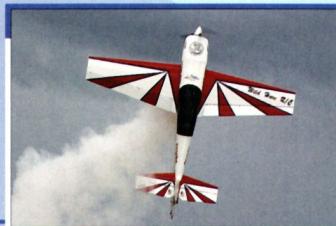
Large Aerobatic Power Model Aircraft
(20 kg max.)
- a) Known schedule
- b) Unknown schedule
- c) Freestyle (to music)
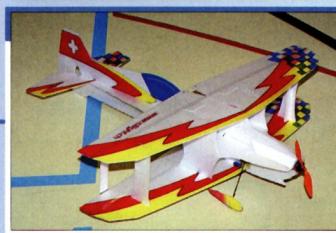
Indoor Aerobatic Power Model Aircraft
- a) Schedule F3P-AP
- b) Schedule F3P-AF
- c) Schedule F3P-AFM
(Aerobatic Freestyle to Music)
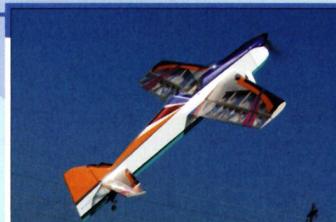
Electric Aerobatics
(3 kg max.)
- a) Preliminary flights
- b) Final flight freestyle
(to music)
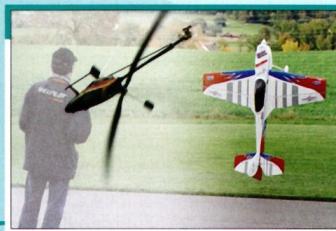
Artistic Aerobatics
For fixed-wing aircraft (5 kg) and helicopters (6 kg)
- a) Compulsory flights to music
- b) Music-accompanied freestyle flights
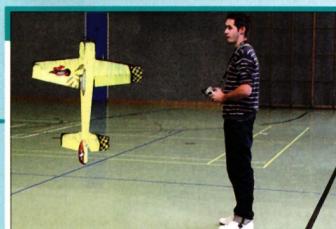
AeroMusicals
- a) 120 sec duration
(preliminary rounds) - b) 240 sec duration
(final round)
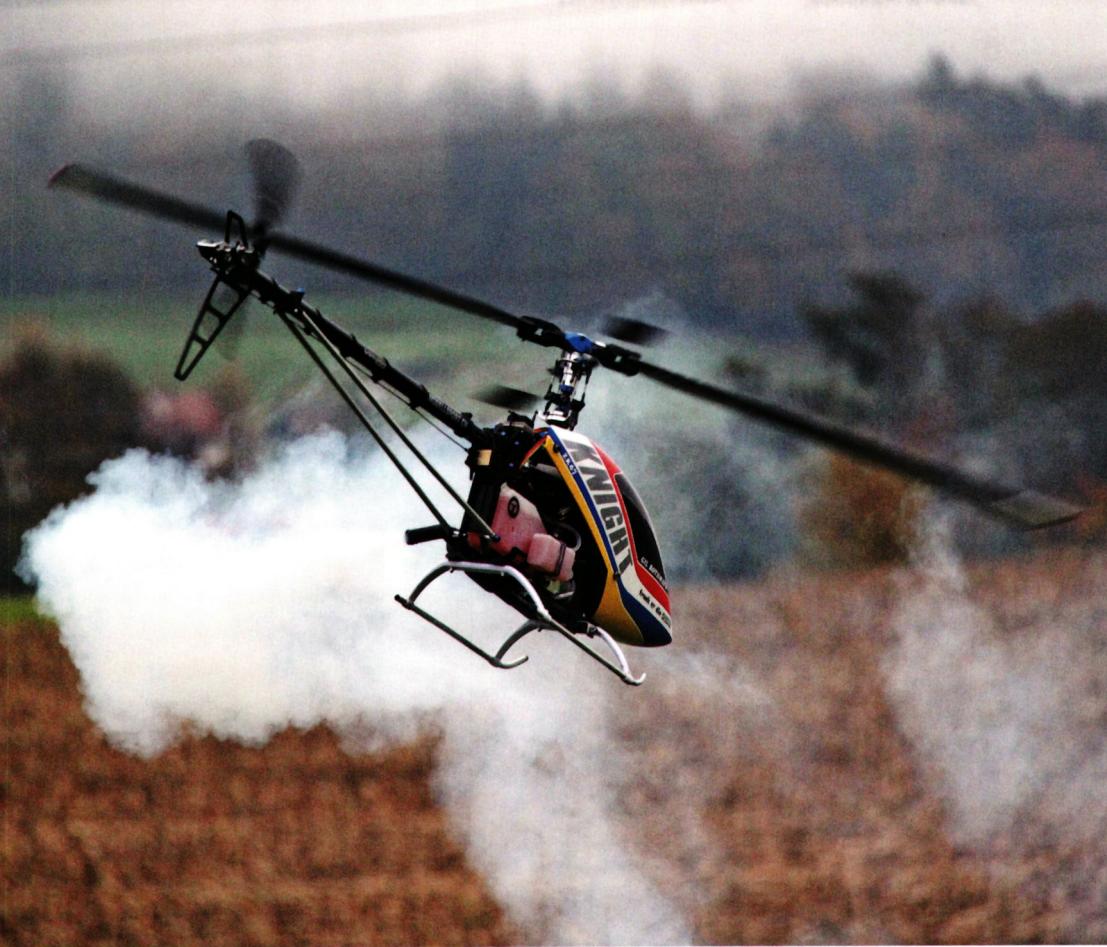
We must continually acknowledge that freestyle flying to music is still a relatively new branch of RC flying. The wide range of opinions on what freestyle actually is stems, in part, from this very fact. The new rules in the F6 classes are still very much in flux. At the moment, there is a trend within CIAM to place even greater emphasis on showmanship and artistic performance than on technical skill.
In the helicopter flying community, “freestyle” is often used interchangeably with “3D,” which has a set of maneuvers. The maneuvers are judged individually, as in the FAI F3N helicopter class, for example. Unfortunately, the CIAM has shot itself in the foot in this regard, as “F3N” is actually understood to refer to 3D helicopters with fixed maneuvers and coefficients. However, it is more precise to distinguish between the two terms. Freestyle is performed without specified maneuvers, as in, for example, F3M Freestyle, F3P-AFM, F5A Freestyle, or F6A/B. Pilots must demonstrate the full potential of difficult maneuvers with their airplanes and helicopters whenever possible. Added to this is the factor of music. In CIAM, a distinction is made between whether the performance is meant to be “to” music or “with” music. In all existing FAI freestyle classes, flying is to be done “to” music. This means that the figures and transitions must be synchronized with the music, and the individual sequences must match the rhythm and tempo. Flying “with” music—or flying with background sound—is argued to lean more toward “free or amateur dance.”
While in F3M (large models), F3P (indoor), and F5A (electric aerobatics) freestyle flights are treated by the rules as an integral part—that is, as (final) rounds of the respective class—the two classes F6A Artistic Aerobatics and F6B Aeromusicals are purely freestyle classes. Unfortunately, CIAM—similar to the case with F3N, where the term “freestyle” is used, which actually refers to 3D—created confusion with the term “AeroMusicals” by initially designating the freestyle round set to music in indoor aerobatics F3P as “AeroMusicals,” just like the F6B AeroMusicals class. This has since been corrected. Today, according to the 2010 Sporting Code, the F3P categories are as follows: F3P-AP, F3P-AF, and F3P-AFM (Aerobatics Freestyle to Music). A key difference between the two indoor freestyle classes lies in the technical specifications of the models.
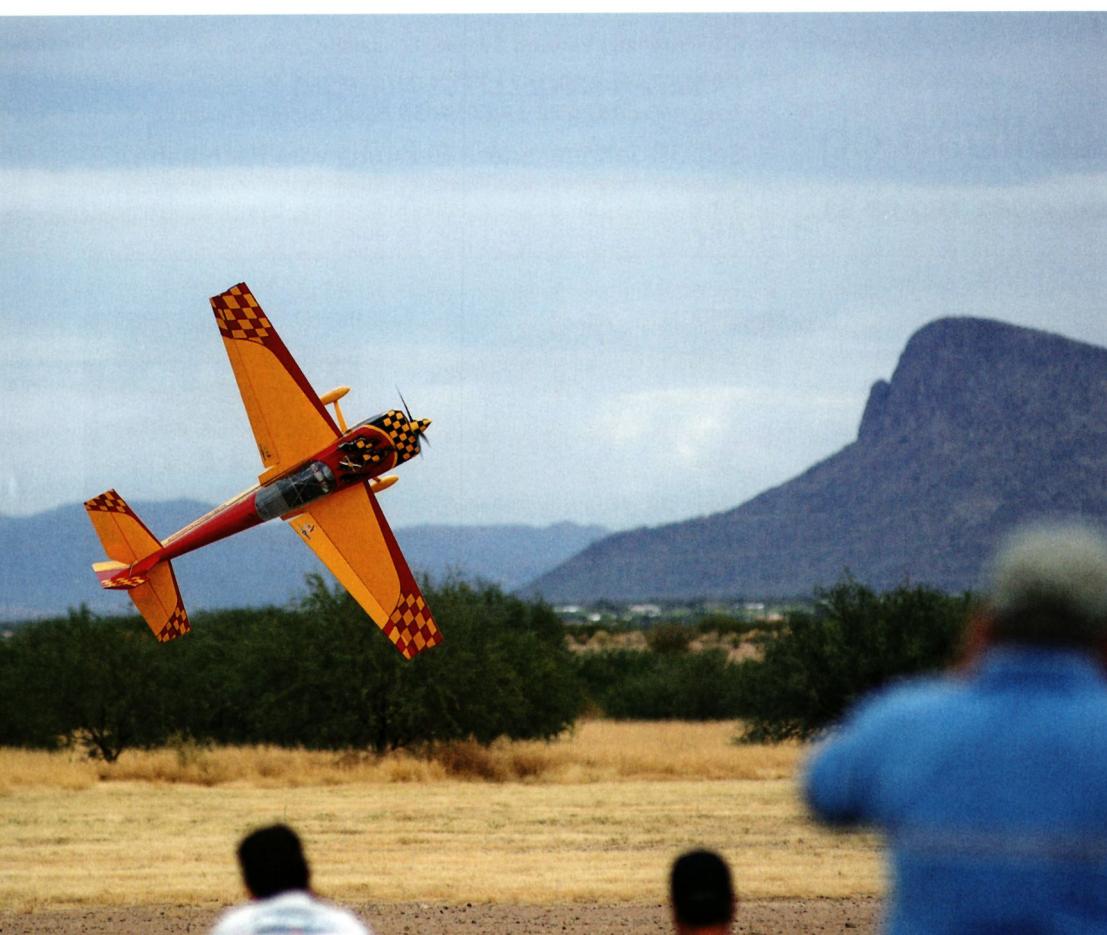
The AeroMusicals rules state: “There are no restrictions on the number of control functions or auxiliary equipment. No other restrictions apply.” The technology is therefore limitless and allows for highly interesting electronic devices. Anyone who underestimates the significance of this article is quite behind the times. For example, the term “gyros”—or sensors—is still sometimes understood to refer to little boxes weighing 5 g or similar devices... The future will prove us right. Be that as it may, freestyle flying to music is a truly great challenge and will carve out a firm place for itself in the diverse model aviation scene.
Emil Ch. Giezendanner,
Photos 1, 3, and 4 by
Hans Jürg Baum
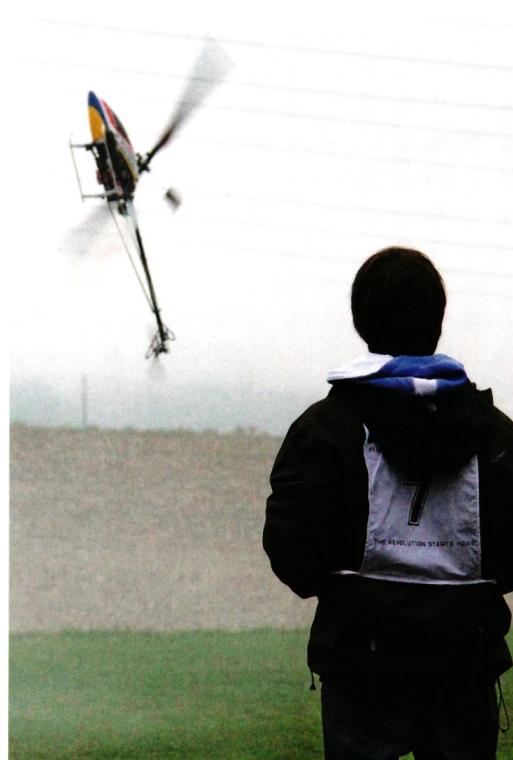


News from HEBU

TEAM MANAGER "THIS" BOSSHARD
 Rodito Nussbaumer

YOU KNOW WHAT I MEAN? 125 YEARS OF THE SWISS AERO CLUB
 Emil Giezendanner

PRIDE AND GOOD IDEAS
 Markus Nussbaumer

ATOM, THE NEW DOUBLE-DECKER FROM CPLR
 Matthias Bosshard

SUMMER FUN 2026 AT MG USTER
Martin Wunderli
F3A EUROPEAN CHAMPIONSHIPS IN ST-MACAIRE, FRANCE
Matthias Bosshard
52. 2026 ALPS CUP
Emil Giezendanner
HORIZON HOBBY/LEMACO NEWS: MICRO OV-10 BRONCO 645 MM BY E-FLITE

TWIN TOWN PARTNERSHIP
Wolfgang Voeller
CORSAIR F4U – A WARBIRD WITH A MEMORABLE LOOK
Jürgen Rosenberger, Jürgen Prinz
TRY-OUT DAY AT MFV WETTINGEN
Urs Keller
WELCOME, NEW MEMBER!
Andrea Bolliger
EURO CONTEST GLIDER ACRO TOUR AUSTRIA 2026

BY YOUTH, FOR YOUTH
Lorena Betschen
INSIGHTS INTO THE HISTORY OF SEAPLANES

SMALL, MODEL-LIKE SAILBOATS
Res Dauwalder
What's New at Leomotion.com

COUPE DES ALPES – OBSERVE AND LEARN
Rodito Nussbaumer
34th HAHNENMOOS ALPINE MODEL AIRPLANE CAMP
Res Dauwalder
FREE FLIGHT IN THE MIDDLE OF SUMMER
Urs Muntwyler
THE PC-21 STORY
Emil Giezendanner
NEWS FROM HEBU
 Julia Bucher

FROM 0 TO 100
Markus Nussbaumer
MEMORIES
Wolfgang Völler
NOS REGION – A HUB FOR ELECTRIC AVIATION
Emil Giezendanner
Have you almost forgotten about aircraft that take off and land vertically?
Emil Giezendanner
DO YOU KNOW WHAT I MEAN IN THE LAND OF SMILES?
Emil Giezendanner