
Are they just stories, or is it reality?
When it comes to the Federal Office of Civil Aviation (hereinafter FOCA) certifying a model helicopter, the wildest rumors are circulating in the community about why this can never, ever be done or is not permitted. Behind closed doors, so they say, there are actually quite a few model helicopters in Switzerland that exceed the magic 30-kilogram limit and do not have such certification.
Unfortunately, it’s not enough to simply declare the model’s weight as 29.8 kilograms to the event organizer, the pilots, or visitors. In many cases, the operators of these models are unaware that their actions could also drag the event organizer or air traffic control into legal trouble in the event of an accident during a fly-in. In the following report
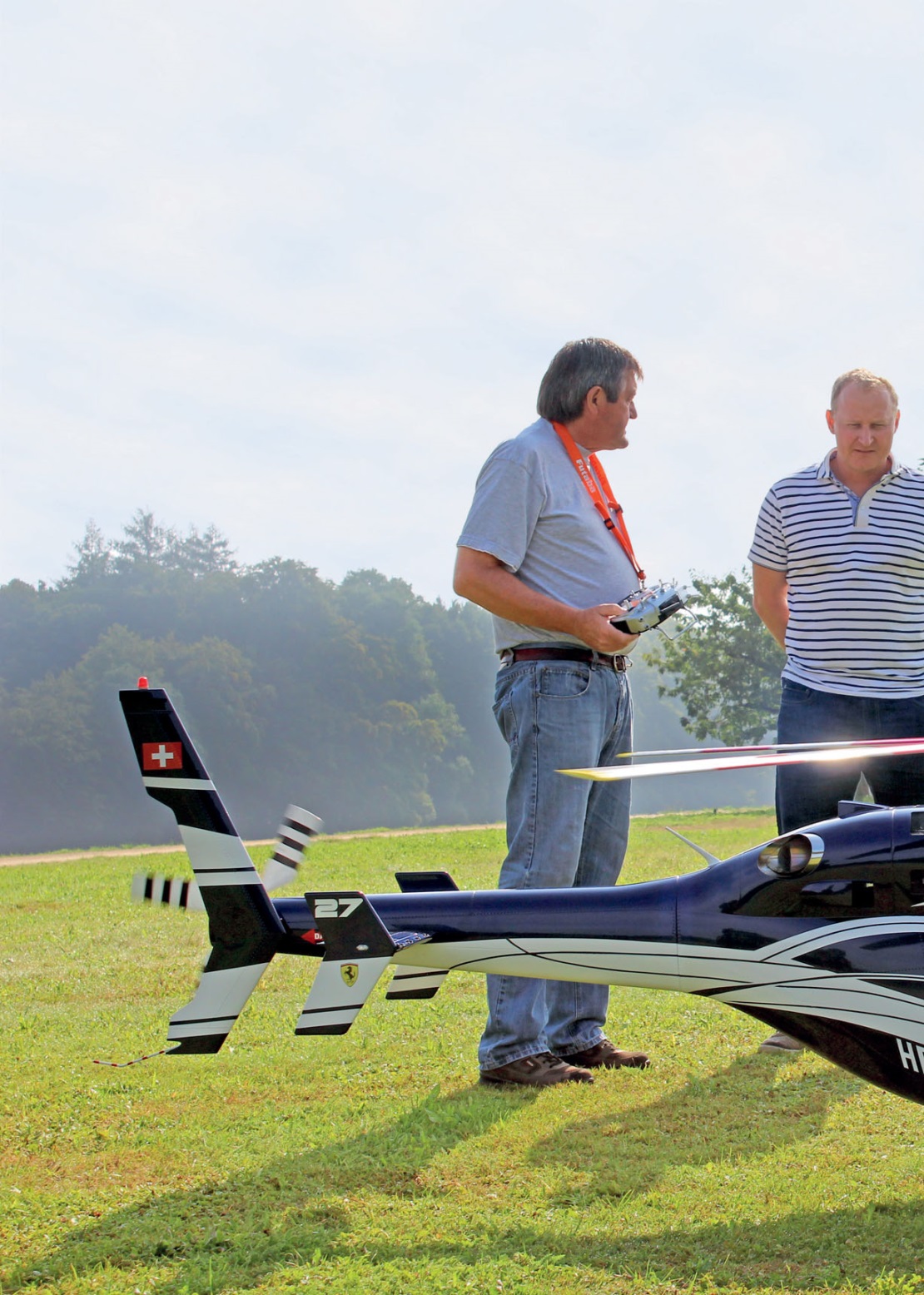
I would like to address the issues of liability, risks, and approval by the FOCA. Perhaps this report, in particular, will prompt some people to make up for what they have neglected to do so far.
Thanks to the weight limit of up to 30 kilograms—which is (still) virtually unique worldwide—we here in Switzerland still have much more leeway to operate a model of a certain size in compliance with the law. However, it is absolutely not true that Swiss citizens are permitted to fly models weighing up to 30 kilograms abroad simply because they have insurance coverage. Even when flying abroad, we are subject to the applicable weight limits of the country or the airfield. In Germany, for example, the takeoff permits issued by the model airfield are decisive. Even if the model has been certified by the FOCA, this weight limit cannot be circumvented. What is possible, however, is for the operator of the model airfield to obtain a permit from the competent authority to suspend this limit for a certain period of time. Unfortunately, however, manufacturers of large electric- and turbine-powered RTF helicopters frequently misrepresent the weight by listing 24.5 kilograms, even though the battery or fuel alone already accounts for over three to four kilograms.
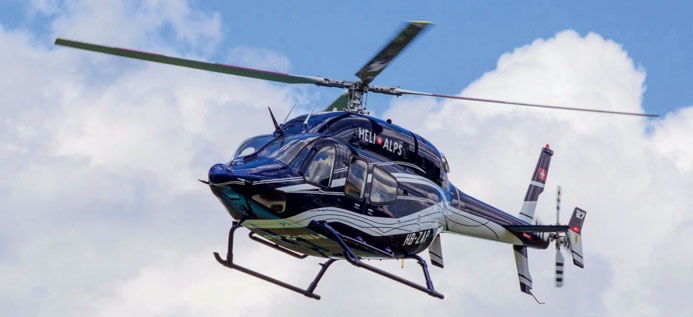
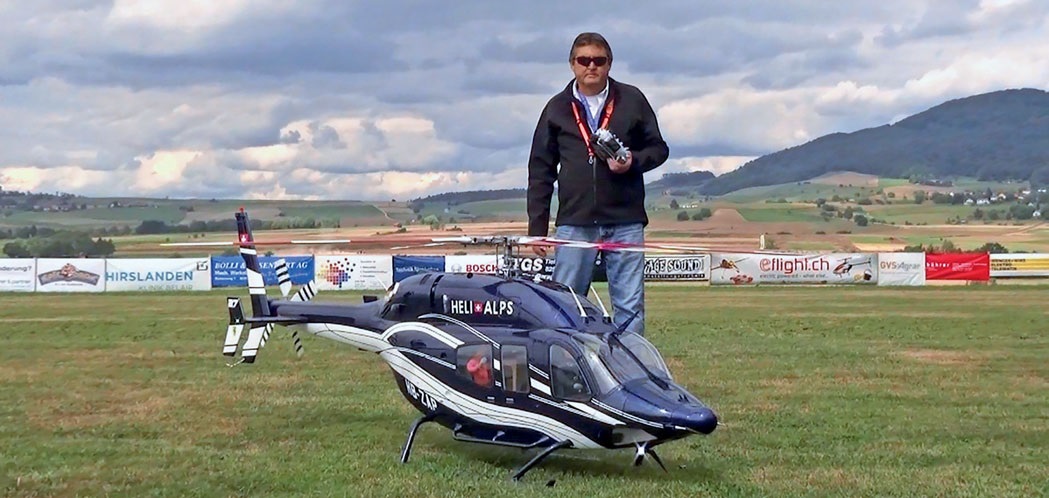
Due to a change of residence in the spring of 2017 and more limited space in my hobby room, I had to retrofit the tail section of my Bell 429 to make it removable. However, this resulted in
my model, which until then had a takeoff weight of just under 29 kilograms, suddenly weighed 31.5 kilograms. A few days and many phone calls later, it became clear to me that the only correct course of action was to undergo certification by the FOCA, rather than resorting to a pro forma weight reduction or declaring a weight of 29.9 kilograms.
As a sort of test run, so to speak, I went through the certification and registration process with my model based on the paperwork and documents that were still in the drafting phase at the time. In the process, I was also able to contribute my experiences and perspectives as a model builder. Through all these interactions and visits, I came to know the FOCA inspectors as highly competent and courteous specialists in all matters.
The Principles of Liability: Liability insurance covers damages caused by the operator of model aircraft to a third party or to a third party’s property. However, it not only pays for validly asserted claims but also handles negotiations regarding unfounded claims for which the operator is not responsible. In legal terms, this is known as the defense against unjustified claims.
In what situations is the model pilot actually liable for damage caused? The law recognizes three types of liability: fault-based liability, as well as modified and strict liability.
Liability: Liability arises when someone causes damage to another person through a negligent act or omission.
Mitigated Causal Liability: This applies when the damage was not caused by the policyholder themselves and they are not guilty of gross negligence. An example would be damage caused by children or animals, provided they were properly supervised.
Strict liability: This form of liability is also known as strict liability. It primarily applies to owners of motor vehicles, but also to us as model aircraft pilots. The mere act of operating the vehicle poses a danger to more vulnerable parties (pedestrians, cyclists, and in our case, for example, spectators). As a result, it can happen that drivers or model aircraft pilots—even if they are acquitted by the courts of any fault in an accident—must cover part of the damages resulting from the accident through their liability insurance.
It is precisely within this strict strict liability framework that we operate our models. Insurance coverage for models weighing between 0.5 and 29.999 kilograms requires a separate liability insurance policy. In many cases, this is covered by personal liability insurance, either with or without an additional premium. In any case, you should report this to your personal liability insurer and request a corresponding confirmation from the insurer. However, it is easier to obtain coverage through a club that is a member of the SMV. This association-based solution offered by Allianz Switzerland is tailored precisely to the needs of model aircraft enthusiasts. Through an extension of this insurance, available via Allianz Thun at 058 357 17 17 or www.luftfahrtversicherungen.ch, models weighing between 30 and 150 kilograms can—or must—also be insured. This insurance extension applies to the specific model, because once the Federal Office of Civil Aviation (BAZL) has approved it, the model is registered with a registration number (SUI-XXXX). According to the DETEC Ordinance on Special-Category Aircraft (VLK 748.941), proof of liability insurance must always be carried while the aircraft is in operation. This applies to all model aircraft weighing 0.5 kg or more. →
Due to the decline of specialty retailers and the rise of online sales in recent years, there are increasingly more model aircraft pilots who fly without the appropriate liability insurance. What does this mean in plain language? In the event of damage—whether to people, animals, or property—the model aircraft operator is held strictly liable. This also applies to others involved in the incident. Thus, an event organizer or flight director is just as responsible for ensuring compliance with the law as the model pilot himself. In recent years, it has become standard practice at events to check proof of insurance and to inform participants that alcohol consumption is prohibited while flying. In many places, model pilots are required to sign a waiver to this effect, but when it comes to weight limits, the rules are currently enforced relatively leniently, and I have yet to see a model actually weighed.
In the absence of appropriate and adequate liability insurance, those responsible are personally liable, which in plain language means that a person who causes damage can have their entire personal assets seized to cover the damages.
Due to personnel changes at the FOCA in recent months, the procedure for certifying a model aircraft has also been redefined. In this process, the certification criteria of our neighboring countries—specifically Germany
and Austria, were taken into account to a very large extent. Consequently, anyone who wishes to fly in these countries and holds a Swiss operating permit should be able to obtain an operating permit abroad as well without significant effort. Comprehensive guidelines for building a model helicopter with a maximum takeoff weight of more than 30 kilograms up to and including 150 kilograms have been developed by officials at the FOCA and are now available to every model helicopter pilot from the very start of the building process. These guidelines precisely define the relevant procedures necessary to ensure the safe operation of the model. Not only are topics such as structural strength, design, and construction specified in detail, but ground and flight tests are also covered.
Even when planning a model helicopter for which the builder or manufacturer specifies a takeoff weight of more than 30 kilograms, it is essential to consult the FOCA guidelines and to proceed with construction in accordance with them. Making changes or adjustments to the model later on to bring it into compliance with the approval criteria can be very labor-intensive or even impossible. Therefore, it is better to submit a model to the FOCA for approval, and if it does not reach the 30-kilogram threshold, withdraw the application. If in doubt, it’s better to ask one more time—the specialists are happy to help. This is certainly the easier route than having to make up for it later with great effort.
When selecting assemblies and electronic components, you can also save yourself a lot of work by relying on tried-and-true parts that have been successfully used in other models. For example, there are rotor heads, tail rotors, or rotor blades that come with strength calculations or have already been used in other model helicopters that required certification. This means you don’t have to perform strength, tensile strength, or shear strength calculations yourself—or, if you lack the necessary knowledge, have specialists do them for a high price.
Proper and detailed preparation, along with careful component selection, ultimately saves a lot of hassle and time. The model must be registered with the FOCA for certification using the form “Application for a Permit to Operate an Aircraft Weighing Between 30 and 150 Kilograms.” I would definitely recommend doing this well in advance.
The following documents must also be attached to the application: proof of insurance (liability claims by third parties on the ground must be covered by the owner through liability insurance with a minimum coverage of 1 million Swiss francs, see Art. 14 VLK SR 748.941), load calculations, data sheets, test reports, etc.
Once the model is complete, the FOCA expert begins the inspection. The inspection date must be arranged in advance with the FOCA.
The model is inspected according to a checklist based on the guidelines. For example, the following are inspected: maximum takeoff weight, center of gravity, control system responsiveness, control system functionality, identification plate (model markings), engine (including mounting), installation, fuel tank, etc.
Once the helicopter has been inspected and provided that no serious defects have been identified that could impair the helicopter’s airworthiness—
With this provisional approval, flights must be conducted to verify the airworthiness of the model helicopter under the pilot’s own responsibility and in accordance with FOCA guidelines (flight test program). These include takeoff and landing, controllability, climb performance, vertical descent and recovery, recovery from horizontal flight, and high-speed flight. These individual flight tests, which are described in detail in the flight test program, must be signed off by the pilot. A minimum of ten flights with the model helicopter should be completed before participating in public flight events.
Once all these points have been completed and successfully carried out, the flight test report may be submitted to the FOCA.
Once all required documents have been submitted and all requirements have been met, the FOCA issues the necessary permit. To ensure that the correct—and, above all, all—documents required for operating a model helicopter weighing between 30 and 150 kilograms are always on hand, the FOCA created the Blue Binder (flight log).
It contains the following documents:
- Data sheet
- Photo of the model
- Operating permit
- Proof of insurance
- Flight log for model aircraft weighing more than 30 kg
- Maintenance Record for Model Aircraft Weighing More Than 30 kg
- Load test certificate
- Test report and any corrective action reports
- Checklist for assembly and pre-flight inspection
Flight Log: Documentation of completed flights, any remarks, and malfunctions must be recorded in the flight log.
Maintenance Record: The maintenance manual contains all records regarding the care, inspection, upkeep, and maintenance of the model aircraft and its components, as well as any modifications and repairs.
This blue binder must always be carried with the model. It must also be presented to the organizers of public air shows upon request. An identification tag must be affixed to the model in a visible location and securely attached to the fuselage. The identification tag must contain at least the following information:
- Name and address of the owner
- The registration number (SUI-XXXX) assigned by the FOCA for the model
However, even with the issuance of a permit to operate model helicopters weighing more than 30 kilograms, the FOCA’s oversight of the model does not take a back seat. Once every twelve calendar months, the owner must thoroughly inspect their model using a checklist provided by the FOCA. This inspection is then recorded accordingly in the maintenance log for model aircraft.
Major changes to an already-certified model aircraft (e.g., propulsion system, modifications, remote control, major repairs, etc.) or changes of address, sale, or change of owner must be reported to the FOCA as soon as possible.
As mentioned at the beginning, there are many stories and opinions regarding the FAA’s approval of a model. Through the testing and approval of my model, I was able to form my own opinion. However, none of those wild stories actually happened to me. I found the staff to be highly professional and very competent. Despite my extensive experience as a model builder, I was still able to learn a thing or two that I can apply in the future.
At this point, I’d advise anyone who owns a model that’s near the weight limit of +/-30 kilograms—or slightly above it—to take the plunge and have it officially certified.
For pilots who would like assistance with the certification process, swiss-scale-helikopter.ch has been offering a corresponding service for several months now. This service covers the complete certification process or just individual steps, such as preparing the paperwork, filing the application with the FOCA, or the certification inspection itself, etc.
Yes, who knows—maybe we’re already closer to the 25-kilogram limit than we think, and then a great many of us will have to register our models anyway.
The current documents can be downloaded at the following link:


News from HEBU

TEAM MANAGER "THIS" BOSSHARD
 Rodito Nussbaumer

YOU KNOW WHAT I MEAN? 125 YEARS OF THE SWISS AERO CLUB
 Emil Giezendanner

F3A EUROPEAN CHAMPIONSHIPS IN ST-MACAIRE, FRANCE
 Matthias Bosshard

SUMMER FUN 2026 AT MG USTER
Martin Wunderli
TRY-OUT DAY AT MFV WETTINGEN
Urs Keller
52. 2026 ALPS CUP
Emil Giezendanner
BY YOUTH, FOR YOUTH
Lorena Betschen
ATOM, THE NEW DOUBLE-DECKER FROM CPLR
Matthias Bosshard
CORSAIR F4U – A WARBIRD WITH A MEMORABLE LOOK
Jürgen Rosenberger, Jürgen Prinz
SMALL, MODEL-LIKE SAILBOATS
Res Dauwalder
What's New at Leomotion.com

TWIN TOWN PARTNERSHIP
Wolfgang Voeller
PRIDE AND GOOD IDEAS
 Markus Nussbaumer

EURO CONTEST GLIDER ACRO TOUR AUSTRIA 2026

INSIGHTS INTO THE HISTORY OF SEAPLANES

34th HAHNENMOOS ALPINE MODEL AIRPLANE CAMP
Res Dauwalder
WELCOME, NEW MEMBER!
Andrea Bolliger
HORIZON HOBBY/LEMACO NEWS: MICRO OV-10 BRONCO 645 MM BY E-FLITE

FREE FLIGHT IN THE MIDDLE OF SUMMER
Urs Muntwyler
COUPE DES ALPES – OBSERVE AND LEARN
Rodito Nussbaumer
THE PC-21 STORY
Emil Giezendanner
NEWS FROM HEBU
 Julia Bucher

FROM 0 TO 100
Markus Nussbaumer
MEMORIES
Wolfgang Völler
NOS REGION – A HUB FOR ELECTRIC AVIATION
Emil Giezendanner
Have you almost forgotten about aircraft that take off and land vertically?
Emil Giezendanner
DO YOU KNOW WHAT I MEAN IN THE LAND OF SMILES?
Emil Giezendanner