
Between Tradition and Progress
Between Tradition and Progress
A Visit to Graupner in Kirchheim-Teck
A phrase often and gladly heard in our modern society is the call for “equal opportunity.” But if we were to examine and come to understand this catchphrase in its full scope and with all its consequences, the “army of advocates” would be reduced by all those who understand only one side of “equality”—namely, profit. If everyone had to share equally in the arduous and laborious work of building something up, in setbacks and painful experiences, in losses and stagnation, in patient, long-term planning, in high-risk investments, and finally in the profits, the same disillusionment might set in as when developing countries demand free access to all technical know-how from industrialized nations, without considering that industrialization brings not only money but also numerous arduous and difficult consequences, such as large investments, hard, regular, reliable, and precise work, with no room for revolutions or counterrevolutions—because the customer isn’t particularly interested in whether the supplier
is Shia or Sunni, but rather in quality and on-time delivery—not to mention the environmental impact.
Technical development in the model-making sector is enormous; anyone who pursued this hobby ten or more years ago, for example, can attest to this. But a glance at older magazines, catalogs, and reference books can also confirm this. A manufacturing company like Graupner—a business that, by Swiss standards, would have to be considered one of the larger enterprises—cannot therefore limit itself solely to tapping into new sales territories, but is compelled, on the one hand, to identify new markets and identify actual market gaps, and, on the other hand, to continuously improve the existing product line in terms of technology and quality while keeping production costs as low as possible. Both the exploitation of market gaps and ongoing technical improvement require systematic and extensive research and development for a large-scale operation. Furthermore, large-scale industrial production demands far more thorough planning. As is well known, in mass production it is virtually impossible to change a single detail without it having repercussions on numerous other factors. This meticulous preparation and planning must
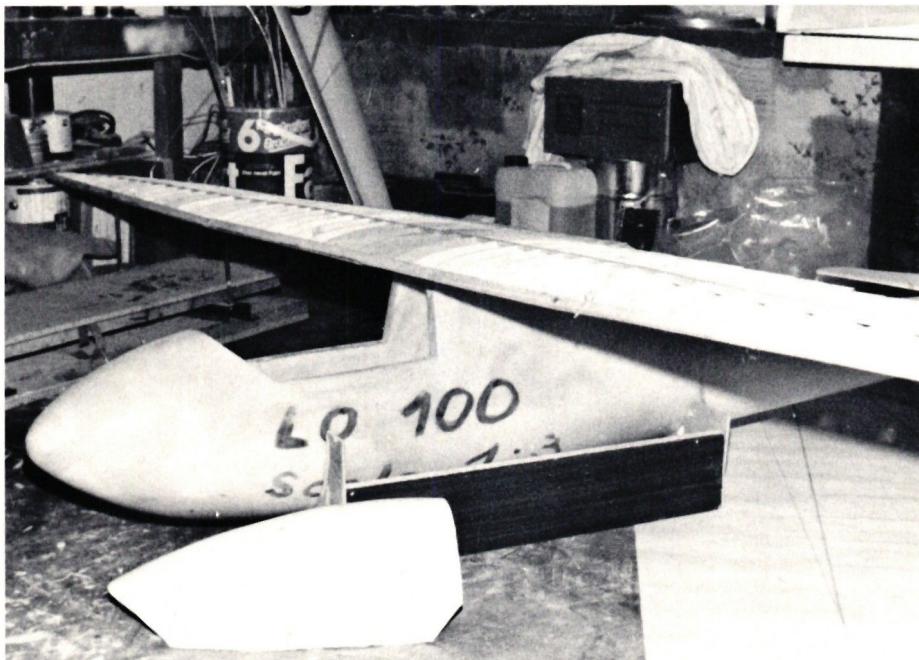
This must also be done with regard to deadlines, since the entire process takes more time. While small businesses can take spontaneous ideas and concepts and put them into practice, “inventions” must also be developed over the long term. No more ideas means no more work.
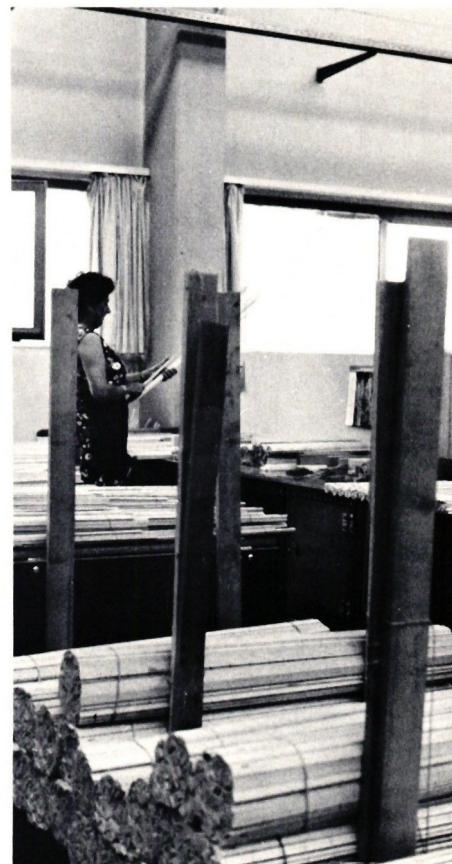
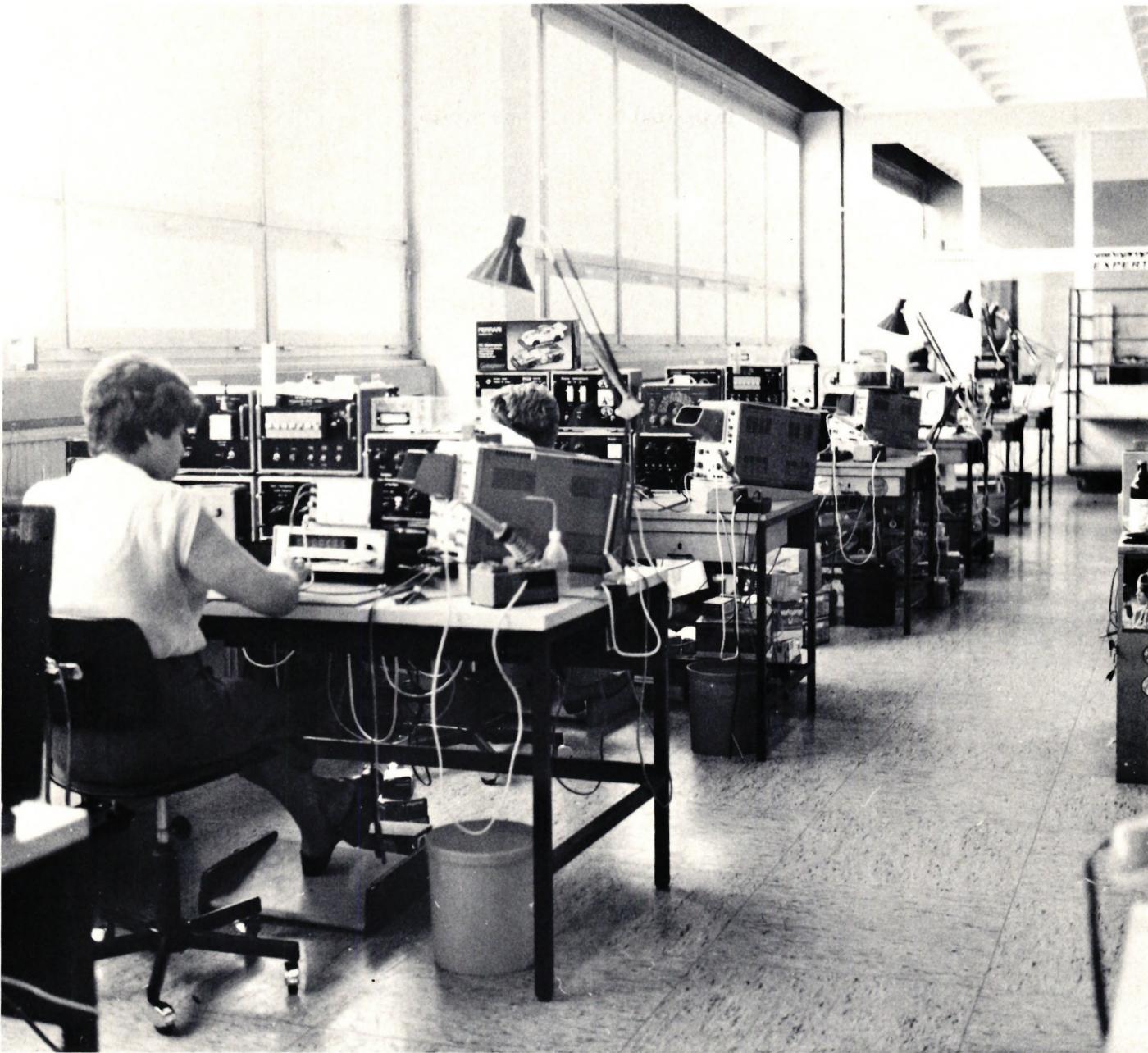
These thoughts occur to me as I tour the various departments of the Graupner company in Kirchheim-Teck. I am aware that during such tours, one sees only one aspect of the operation and can hardly imagine everything that goes on behind the scenes to ensure that a company of this size can function flawlessly. The facilities in Kirchheim themselves employ 350 people. On top of that, one would have to count the numerous suppliers, especially in the remote-control and motor sectors. If you added it all up, you’d probably arrive at a pretty impressive number of jobs. Graupner is thus undoubtedly one of the largest model-making manufacturers in the world. Mr. Graupner notes that he has no further expansion plans. His policy of outsourcing work to external companies has proven quite successful, allowing him to limit his involvement to final inspections for various products. In addition, the company is streamlined according to the latest standards. This makes one realize just how rapidly development and change must have taken place in a company of this size—a process that also demands a high degree of willingness to adapt from both the staff and management. And when we talk about people, the question immediately arises: What about the practical relevance? What are the connections to model builders, airfields, and hobby workshops?
This must also be done with regard to deadlines, since the entire process takes more time. While small businesses can take spontaneous ideas and concepts and put them into practice, “inventions” must also be developed over the long term. No more ideas means no more work.
These thoughts occur to me as I tour the various departments of the Graupner company in Kirchheim-Teck. I am aware that during such tours, one sees only one aspect of the operation and can hardly imagine everything that goes on behind the scenes to ensure that a company of this size can function flawlessly. The facilities in Kirchheim themselves employ 350 people. On top of that, one would have to count the numerous suppliers, especially in the remote-control and motor sectors. If you added it all up, you’d probably arrive at a pretty impressive number of jobs. Graupner is thus undoubtedly one of the largest model-making manufacturers in the world. Mr. Graupner notes that he has no further expansion plans. His policy of outsourcing work to external companies has proven quite successful, allowing him to limit his involvement to final inspections for various products. In addition, the company is streamlined according to the latest standards. This makes one realize just how rapidly development and change must have taken place in a company of this size—a process that also demands a high degree of willingness to adapt from both the staff and management. And when we talk about people, the question immediately arises: What about the practical relevance? What are the connections to model builders, airfields, and hobby workshops?
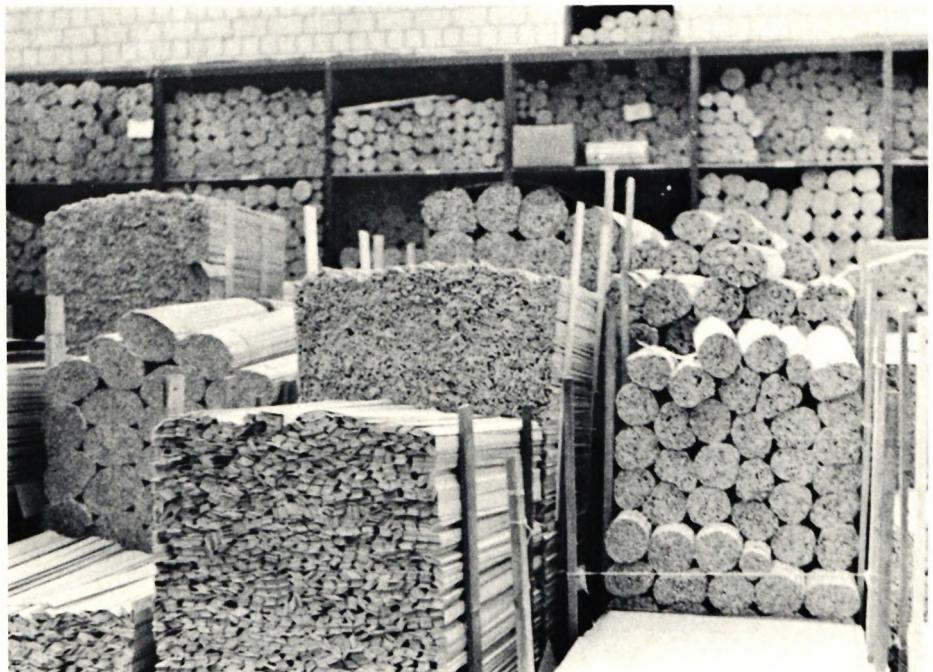
This seems to me to be a crucial point: whether we can successfully identify the needs of model builders. After all, the strengths and weaknesses of a finished product become apparent only in practical use. In my opinion, this is precisely where Graupner has closed a gap in recent years. The immense popularity generated by Fred Militky’s work, the above-average quality of the kits, and the systematic expansion of the accessories line have helped the company achieve a global reputation. In particular, the company’s pioneering work in electric flight deserves special recognition. Of course, even a company this successful is not immune to setbacks. Mr. Graupner notes that there were a particularly large number of “failures” when the company strayed from the path of practical experience and relied too heavily on “engineers and professors.” That doesn’t mean, however, that the company clings only to the old ways: Today, models with epoxy fuselages and Styrofoam wings are also produced—both powered and glider models. Epoxy fuselages are more labor-intensive to mass-produce than those made using other plastic manufacturing processes. Nevertheless, the “classic” Graupner balsa wood kits are not being discontinued; on the contrary, they are being further perfected. The company’s own balsa mill in Ecuador ensures excellent wood quality and clean, precise workmanship. Today, most of the processing is carried out at the balsa mill itself to avoid having to transport and clear customs for too much of the considerable waste back to Germany. gz.


News from HEBU

TEAM MANAGER "THIS" BOSSHARD
 Rodito Nussbaumer

YOU KNOW WHAT I MEAN? 125 YEARS OF THE SWISS AERO CLUB
 Emil Giezendanner

F3A EUROPEAN CHAMPIONSHIPS IN ST-MACAIRE, FRANCE
 Matthias Bosshard

SUMMER FUN 2026 AT MG USTER
Martin Wunderli
TRY-OUT DAY AT MFV WETTINGEN
Urs Keller
52. 2026 ALPS CUP
Emil Giezendanner
BY YOUTH, FOR YOUTH
Lorena Betschen
ATOM, THE NEW DOUBLE-DECKER FROM CPLR
Matthias Bosshard
CORSAIR F4U – A WARBIRD WITH A MEMORABLE LOOK
Jürgen Rosenberger, Jürgen Prinz
SMALL, MODEL-LIKE SAILBOATS
Res Dauwalder
What's New at Leomotion.com

TWIN TOWN PARTNERSHIP
Wolfgang Voeller
EURO CONTEST GLIDER ACRO TOUR AUSTRIA 2026

INSIGHTS INTO THE HISTORY OF SEAPLANES

34th HAHNENMOOS ALPINE MODEL AIRPLANE CAMP
Res Dauwalder
WELCOME, NEW MEMBER!
Andrea Bolliger
HORIZON HOBBY/LEMACO NEWS: MICRO OV-10 BRONCO 645 MM BY E-FLITE

FREE FLIGHT IN THE MIDDLE OF SUMMER
Urs Muntwyler
COUPE DES ALPES – OBSERVE AND LEARN
Rodito Nussbaumer
PRIDE AND GOOD IDEAS
 Markus Nussbaumer

THE PC-21 STORY
Emil Giezendanner
NEWS FROM HEBU
 Julia Bucher

FROM 0 TO 100
Markus Nussbaumer
MEMORIES
Wolfgang Völler
NOS REGION – A HUB FOR ELECTRIC AVIATION
Emil Giezendanner
Have you almost forgotten about aircraft that take off and land vertically?
Emil Giezendanner
DO YOU KNOW WHAT I MEAN IN THE LAND OF SMILES?
Emil Giezendanner