
Independent Power Supply for Battery Chargers and Robotic Lawn Mowers
The goal of MG Fricktal is to ensure an independent and reliable power supply for charging batteries and operating a robotic lawn mower. To this end, we installed two photovoltaic systems (PV systems), each with two solar panels. One PV system has GEL batteries, while the other was equipped with two lead-acid batteries. The lead-acid batteries were advertised and sold as gas-free and suitable for use in solar systems. Unfortunately, it turned out that this was not the case. The PV system for charging the batteries operates at a voltage of 12 V, while the PV system for the robotic lawn mower operates at 24 V. However, the robotic lawn mower requires 24.8 V. Therefore, we installed an inverter so that we could plug the power supply unit that came with the robotic lawn mower directly into a standard 220 V surface-mounted outlet. There’s no need to discuss the weather in the first half of 2024. The PVA robotic lawn mowers didn’t get enough sun to keep up with mowing the rapidly growing spring grass or to keep the robotic lawn mower’s batteries charged.
The battery-powered PVA also has a small inverter built in. So the lawn care team would occasionally switch the robotic lawn mower from one outlet to the other. That always worked fine, until...
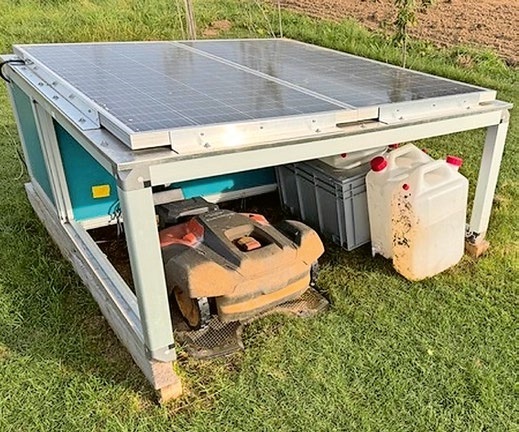
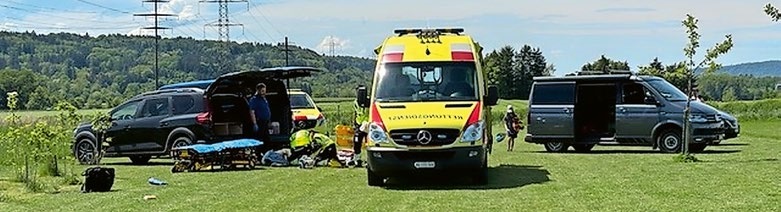
On May 14, 2024—one of the first warm days of the year, with a temperature of 25 degrees Celsius—a serious accident occurred around 2:00 p.m. While reconnecting the PVA batteries to the PVA lawn mower, a devastating oxyhydrogen gas explosion occurred, resulting in personal injury. The person reconnecting the plug was standing very close to the PVA lawn mower. By chance, the fire department was only 200 meters away, conducting a drill at the Röti shooting range. The emergency responders heard the blast and immediately rushed to the scene. The fire department responded quickly and professionally. Within a very short time, the emergency responders were on the scene and began rescue and safety measures.
Despite careful planning and modern safety measures, this explosion occurred. The exact cause is still the subject of an ongoing
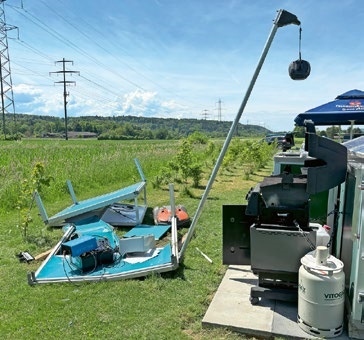
Investigations; however, initial analyses suggest that the lead-acid batteries were outgassing. Hydrogen formed at the battery cathode inside the otherwise sealed (rainproof) industrial aluminum container. When the lawn robot’s power supply was unplugged and plugged back in, the inverter’s relay switched, which likely caused a spark—enough to ignite the hydrogen-oxygen mixture in the battery compartment, causing an explosion.
In our efforts to ensure a reliable power supply, we held discussions aimed at obtaining power from a cable distribution box on a nearby neighboring property. Unfortunately, this attempt did not yield a satisfactory result. The situation was further complicated by the fact that securing cooperation from the wider community proved rather difficult. Legal and organizational challenges delayed the rapid provision of aid and resources for all those involved.
To find a long-term solution and secure funding
To make this possible, we are participating in a sponsorship project organized by Aargauer Elektrizitätswerke—the annual AEW-Energiebatzen event. Our club, MG Fricktal, was registered, and we launched the project “Help, We Need Power!” The goal of this project was to gain support and votes for our cause over the course of two weeks. We came in second place and are overjoyed—after all, following the acquisition of the new airfield in 2022, this was the first time we’ve ever received public recognition and were even sponsored by an organization unrelated to model aviation. We’re thrilled!
Despite the setbacks, the club remained determined to learn from the incident and develop sustainable solutions. As an immediate response to the accident, we initiated priority measures:
- Safety reviews:** Conducting comprehensive safety analyses and inspections of the existing infrastructure to minimize future risks.
- Technological improvements:** Integration of advanced technologies and safe batteries (LiFe4PO) that are optimized and proven for use in solar systems.
- Site assessment:** Separate compartments for the installation of the PV system and the batteries to ensure maximum efficiency and safety.
Our medium-term goal is to ensure a sustainable and reliable power supply to meet our needs, despite the stringent building regulations we were required to accept as part of the airfield permit. In our association, we are convinced of the long-term benefits of renewable energy
and a solar power system.
Through the successful implementation of this project, we hope to make a positive contribution and serve as a model for other, similar initiatives. Every contribution, whether large or small, brings us closer to this goal.
Despite the challenges, the MG Fricktal Association remains committed to ensuring a safe, reliable, and independent power supply. Its commitment to the safety and well-being of the community is its top priority. Through collaboration with experts, supporters, and the local community, the “Help, We Need Power!” project aims not only to secure the energy supply but also to strengthen confidence in sustainable and safe energy solutions for our electric model airplanes.
Robert Gächter, MG Fricktal


News from HEBU

HORIZON HOBBY/LEMACO NEWS: MICRO OV-10 BRONCO 645 MM BY E-FLITE

PRIDE AND GOOD IDEAS
 Markus Nussbaumer

TEAM MANAGER "THIS" BOSSHARD
 Rodito Nussbaumer

YOU KNOW WHAT I MEAN? 125 YEARS OF THE SWISS AERO CLUB
 Emil Giezendanner

F3A EUROPEAN CHAMPIONSHIPS IN ST-MACAIRE, FRANCE
 Matthias Bosshard

ATOM, THE NEW DOUBLE-DECKER FROM CPLR
Matthias Bosshard
SUMMER FUN 2026 AT MG USTER
Martin Wunderli
What's New at Leomotion.com

52. 2026 ALPS CUP
Emil Giezendanner
TWIN TOWN PARTNERSHIP
Wolfgang Voeller
34th HAHNENMOOS ALPINE MODEL AIRPLANE CAMP
Res Dauwalder
CORSAIR F4U – A WARBIRD WITH A MEMORABLE LOOK
Jürgen Rosenberger, Jürgen Prinz
SMALL, MODEL-LIKE SAILBOATS
Res Dauwalder
TRY-OUT DAY AT MFV WETTINGEN
Urs Keller
WELCOME, NEW MEMBER!
Andrea Bolliger
FREE FLIGHT IN THE MIDDLE OF SUMMER
Urs Muntwyler
COUPE DES ALPES – OBSERVE AND LEARN
Rodito Nussbaumer
EURO CONTEST GLIDER ACRO TOUR AUSTRIA 2026

BY YOUTH, FOR YOUTH
Lorena Betschen
INSIGHTS INTO THE HISTORY OF SEAPLANES

THE PC-21 STORY
Emil Giezendanner
NEWS FROM HEBU
 Julia Bucher

FROM 0 TO 100
Markus Nussbaumer
MEMORIES
Wolfgang Völler
NOS REGION – A HUB FOR ELECTRIC AVIATION
Emil Giezendanner
DO YOU KNOW WHAT I MEAN IN THE LAND OF SMILES?
Emil Giezendanner
Have you almost forgotten about aircraft that take off and land vertically?
Emil Giezendanner