
Fribourg's Trophy in Pierrafortscha
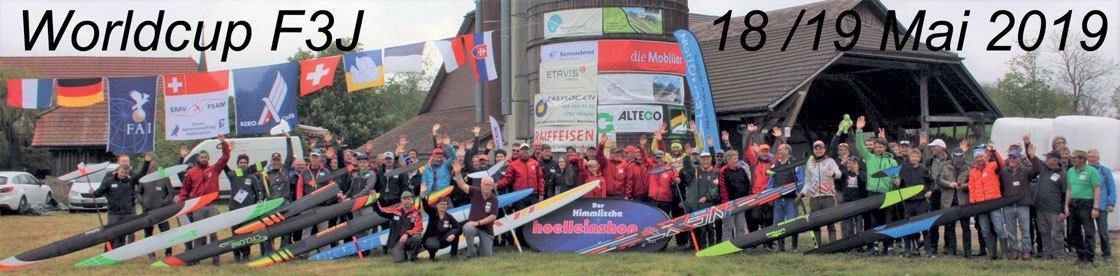
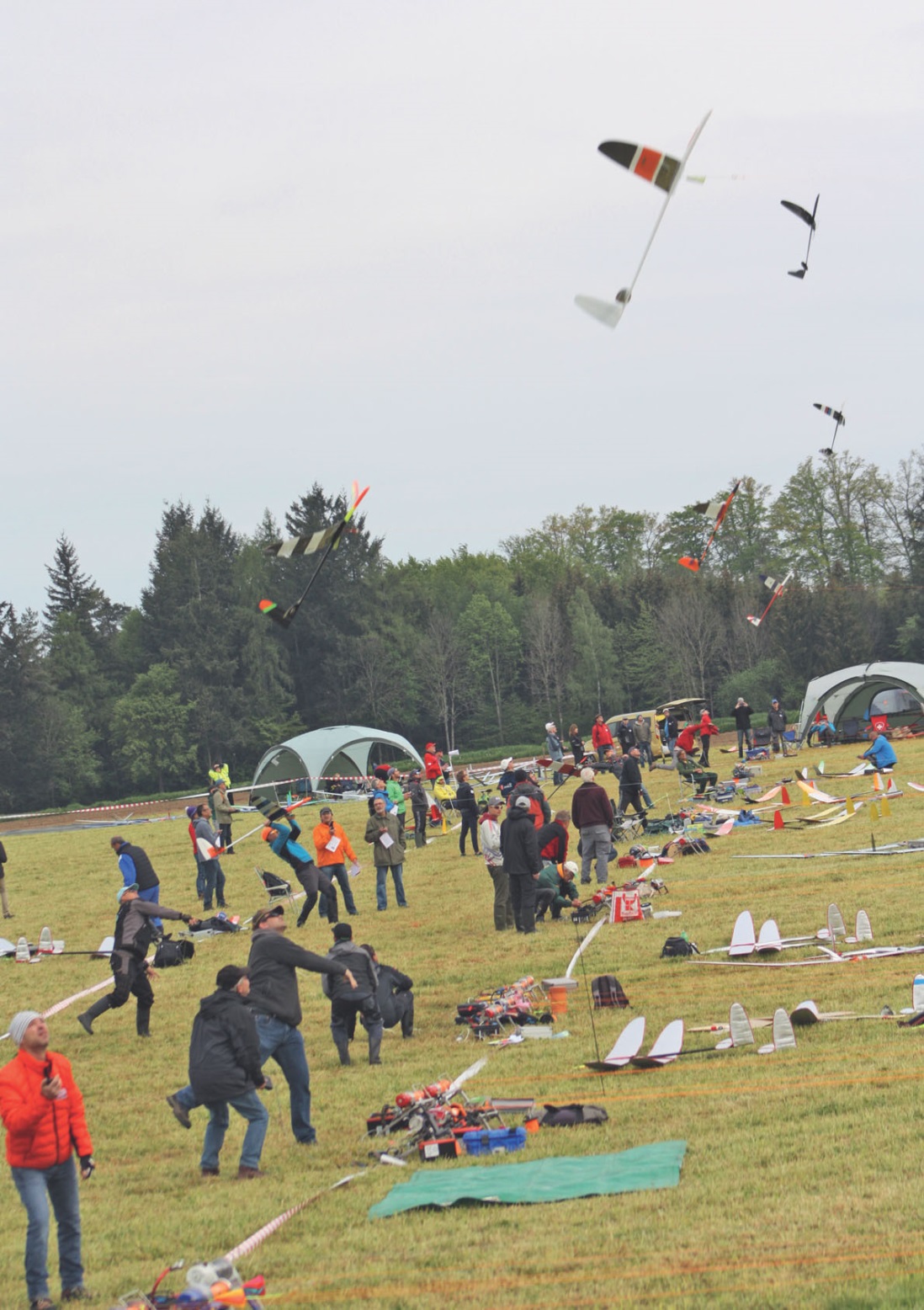
In addition to manual towing, electric winches are now also permitted—as has long been the practice in Switzerland for F3J competitions. At the Fribourg Trophy, all pilots competed exclusively using winches. This shows that this rule change is generally well-received. “No more bull towing,” said a longtime F3J pilot from Switzerland. In the past, the Swiss national team sometimes even had to recruit their tow pilots from abroad. But there are also critical voices. Some pilots doubt that the option of winch launches will lead to more participants. Others regret that F3J is no longer a team sport as it once was and that, with the elimination of tow-by-truck, a hallmark of the competition class is being lost. The second major rule change concerns the increase in the minimum wing loading for glider models from 12.5 g/dm² to 20 g/dm².
Many pilots felt that the association should have set a transition period of several years to give pilots time to retrofit their expensive competition fleet. The goal of the new regulations is to make F3J attractive to a broader group of model aviators. In recent years, the number of pilots at international competitions has plummeted.
The decline in participants did not spare the Fribourg Trophy either. The field comprised 54 pilots from Germany, France, Italy, the Czech Republic, Slovakia, and Switzerland. Last year
there had been about 80. The decline in F3J is primarily due to the new competition classes in gliding that have emerged in recent years. It is uncertain whether the new rules will reverse this trend.
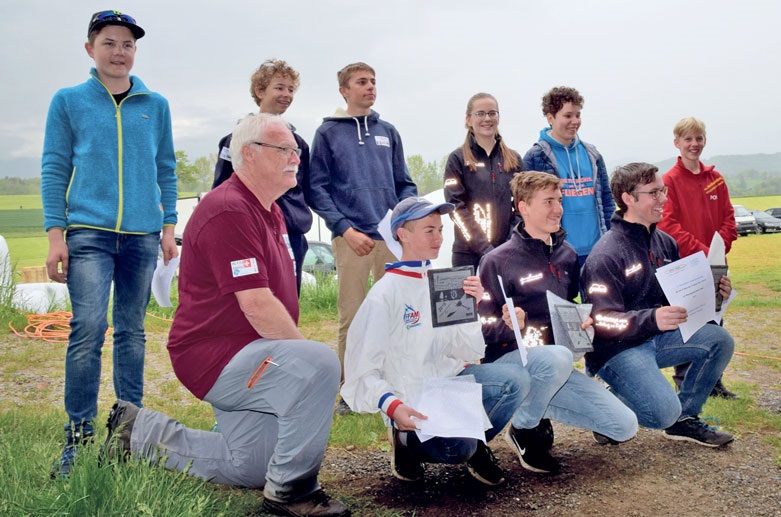
OK President Markus Schneuwly and the numerous volunteers from the Freiburg Model Flying Club were very lucky with the weather. Until midweek, a strong Bise wind swept through Switzerland at speeds of up to 70 km/h. Meteorologists had forecast rain for the weekend. But the weather gods were kind. Both competition days remained rain-free. The first raindrops didn’t fall until immediately after the fly-off. On Saturday, seven rounds were flown, and on Sunday, one round plus a fly-off for the juniors and seniors, each with three rounds. In total, this amounted to 510 scored flights. Flying conditions under the overcast skies above Pierrafortscha were challenging. Thermals were present but remained weak throughout the competition. The red kites, which are particularly common in the region, often helped pilots locate the updrafts. In the fly-off, the consistency of the top pilots was impressive, and the margins between them were narrow. Under stable conditions, numerous pilots released their lines early, thereby gaining one or two decisive advantages over their competitors. The victory ultimately went to Jan Littva (Slovakia), ahead of Tobias Lämmlein (Switzerland) and Yvan Moquereau (France). In the junior category—which featured a separate fly-off—Louis Tack
(Germany) came out on top. Behind him, Jean-Baptiste Senouque (France) and Jean-Christoph Weihe (Germany) took the runner-up and third-place spots.

*Christian Hunkeler*


News from HEBU

TEAM MANAGER "THIS" BOSSHARD
 Rodito Nussbaumer

YOU KNOW WHAT I MEAN? 125 YEARS OF THE SWISS AERO CLUB
 Emil Giezendanner

HORIZON HOBBY/LEMACO NEWS: MICRO OV-10 BRONCO 645 MM BY E-FLITE

PRIDE AND GOOD IDEAS
 Markus Nussbaumer

34th HAHNENMOOS ALPINE MODEL AIRPLANE CAMP
Res Dauwalder
TRY-OUT DAY AT MFV WETTINGEN
Urs Keller
F3A EUROPEAN CHAMPIONSHIPS IN ST-MACAIRE, FRANCE
 Matthias Bosshard

52. 2026 ALPS CUP
Emil Giezendanner
ATOM, THE NEW DOUBLE-DECKER FROM CPLR
Matthias Bosshard
SUMMER FUN 2026 AT MG USTER
Martin Wunderli
What's New at Leomotion.com

THE PC-21 STORY
Emil Giezendanner
COUPE DES ALPES – OBSERVE AND LEARN
Rodito Nussbaumer
TWIN TOWN PARTNERSHIP
Wolfgang Voeller
EURO CONTEST GLIDER ACRO TOUR AUSTRIA 2026

BY YOUTH, FOR YOUTH
Lorena Betschen
CORSAIR F4U – A WARBIRD WITH A MEMORABLE LOOK
Jürgen Rosenberger, Jürgen Prinz
SMALL, MODEL-LIKE SAILBOATS
Res Dauwalder
WELCOME, NEW MEMBER!
Andrea Bolliger
FREE FLIGHT IN THE MIDDLE OF SUMMER
Urs Muntwyler
INSIGHTS INTO THE HISTORY OF SEAPLANES

NEWS FROM HEBU
 Julia Bucher

FROM 0 TO 100
Markus Nussbaumer
MEMORIES
Wolfgang Völler
NOS REGION – A HUB FOR ELECTRIC AVIATION
Emil Giezendanner
DO YOU KNOW WHAT I MEAN IN THE LAND OF SMILES?
Emil Giezendanner
Have you almost forgotten about aircraft that take off and land vertically?
Emil Giezendanner