
Green Energy – The Quiet Revolution
The first international electric flight meet—presumably the first of its kind worldwide—was held in Pfäffikon in 1973. Electric flight has drastically changed the sport of model flying. Just as gliding and internal combustion engines did in the past, electric propulsion has become commonplace. There is hardly a model flying discipline that has not adopted this easy-to-use propulsion system.
Long before electric propulsion began to gain a foothold—or was even reinvented—in many competition categories, building and flying electric models was limited to a relatively small community. It was often not taken seriously. But it was precisely these people who helped manufacturers develop electric propulsion to make it “accessible to the general public.” That is why the F5 competition scene is of such great importance. The leading manufacturers and developers were, in fact, regularly represented at the competitions; and some of them even flew their own models. Fred Militky for Graupner, Fritz Geist, Heinz Keller, Werner Westphal, Hans Dieter Levin, and a little later Hans Hoyer for Robbe, Uwe Plettenberg, Lehner, Harald Konrath (Kontronik), and Rainer Hacker. When it came to speed controllers, Hansjakob Sommerauer and Matthias Schulze were among the first major players. With the advent of brushless motors, additional controller manufacturers entered the market.
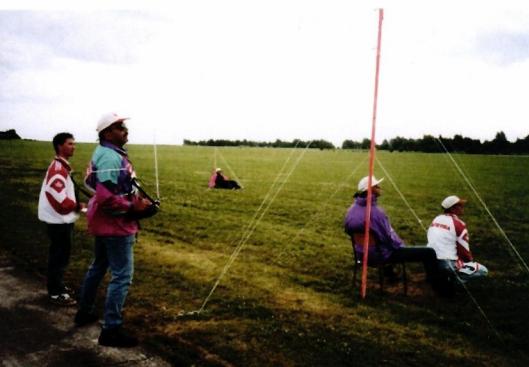
were not taken seriously at first. But it was precisely these people who helped manufacturers develop electric propulsion systems that were “suitable for the general public.” That is why the F5 competition scene is so important. The leading manufacturers and developers were regularly represented at the competitions; in fact, some of them even flew their own models. Fred Militky for Graupner, Fritz Geist, Heinz Keller, Werner Westphal, Hans Dieter Levin, and a little later Hans Hoyer for Robbe, Uwe Plettenberg, Lehner, Harald Konrath (Kontronik), and Rainer Hacker. When it came to speed controllers, Hansjakob Sommerauer and Matthias Schulze were among the first major players. With the advent of brushless motors, additional controller manufacturers joined the fray.
Translation: Thierry Ruef
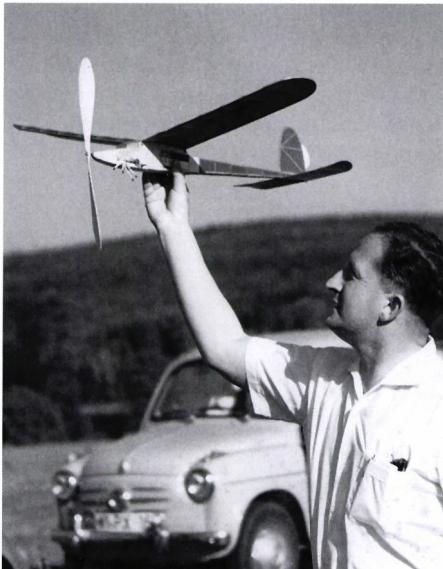
Attempts—some more successful than others—to use electric motors to power model airplanes began quite early on. In Europe, these efforts were spurred in particular by the highly efficient, small, and lightweight bell-armature motors developed by Dr. Fritz Faulhaber. As early as the 1950s, Fred Militky, chief designer at Graupner, succeeded in flying his experimental models. Initially, these were free-flight models. Thus, Graupner brought Militky’s successful SILENTIUS model to market as a kit at an early stage
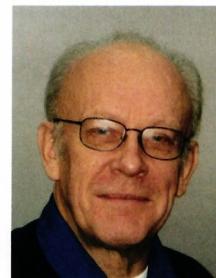
The first remote-controlled electric gliders soon followed: At the 1971 F3A World Championships in Doylstown (USA), Fred Militky and Wolfgang Schwarze demonstrated the RC electric glider “Silencer” to an astonished audience. The model soared to astonishing heights right from the start. I can still remember very clearly how captivated I was by this silent flight demonstration. At that time, F3A aerobatics was increasingly being sidelined in our region due to noise emissions. As early as the winter of ’71–’72, I began building my first RC electric gliders and equipping our CYGNUS light glider with a motor mount. The motor came from AstroFlight (USA). These motors were exported to Europe early on, along with GE battery packs. AstroFlight was involved in various research projects. The AstroFlight motors were very robust and well-cooled. When the first kits for electric gliders came onto the market in 1972, I felt the time had come to invite people to Pfäffikon for the first electric flight meet in the fall of 1973—exactly 40 years ago. Four participants attended. The E-1 from Hel-
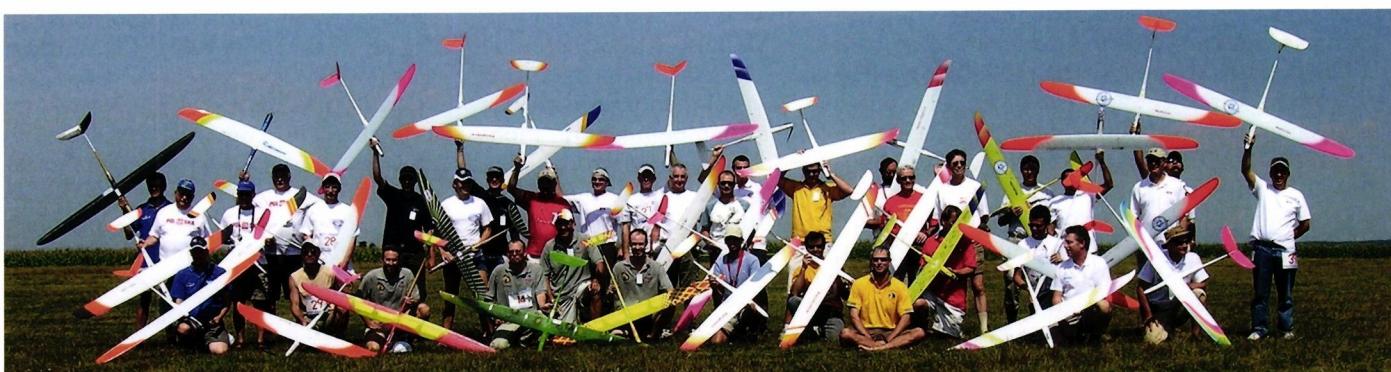
The Mut Schenk (Multiplex) amazed everyone with its tremendous climb rate, while the Hi-Fly was initially considered more of a “meadow glider.” Since then, the meeting has been held regularly with very few interruptions. There was great interest and curiosity within the model aviation community. Every year, new models, improved power systems, switches, chargers, and so on were introduced. As early as 1978, Roland Stuck and Helmut Schenk demonstrated their solar-powered models to us. The ongoing improvement of NiCad batteries, as well as the growing knowledge of how to handle these cells, also made a significant contribution.
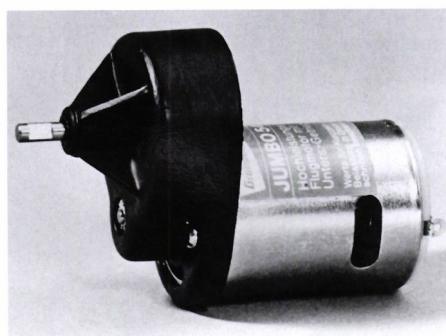
The new, powerful rare-earth magnets have literally given the development of electric flight new wings. The first of these new, powerful generations of motors was introduced to the market by Heinz Keller, a physicist with a master’s degree, in the late 1970s. With them, in addition to lightweight gliders, an increasing number of large gliders, aerobatic aircraft, and scale models began to be equipped with electric powerplants. Then, in 1979, Heinz Keller’s appearance hit us like a bolt from the blue. Pilot Heinz Elsässer flew his aerobatic model, equipped with a Keller motor, flawlessly through an impressive series of maneuvers, taking off from the ground on an ordinary meadow.
1Samarium-cobalt ($SmCo_5$) is a rare-earth magnetic alloy and was the magnetic material with the highest energy density in the 1970s. $SmCo_5$ was later surpassed in energy density by neodymium-iron-boron ( $Nd_2Fe_{14}B$ ).
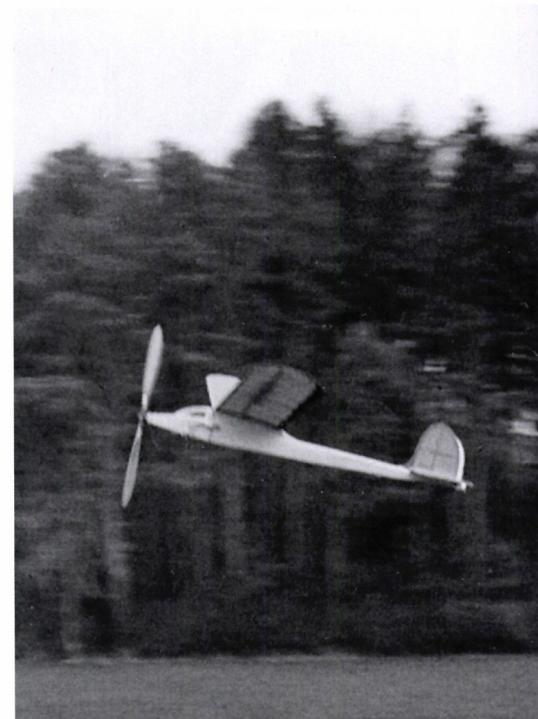
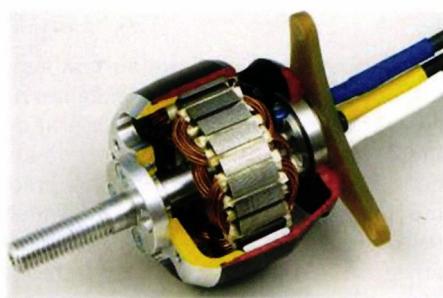
The ever-increasing power—whether due to competition or the electrification of larger and heavier vehicles—was not all good news. Before long, the hulls and engine compartments began to turn black from coal dust. As is well known, coal and metal dust in electronic devices such as controllers and receivers is anything but beneficial. The principle of electronic commutation in electric motors was already quite old at that time. However, the first brushless electric motors suitable for model aircraft, along with the corresponding controllers, were used very successfully by the U.S. team at the 1994 World Electric Aircraft Championships, where they won the title and took second place in the team standings. The manufacturer was the U.S. company Aveox. It took a few years before the Europeans followed suit with their own developments. It wasn’t until the late 1990s that Plettenberg, Lehner, Kontronik, and Hacker—all based in Germany—along with Californian Steve Neu, began manufacturing their own brushless motors with great success. Toward the end of the 1990s, the Köhler brothers introduced the first outrunner motors to the market. The advantage of this design lies in its higher torque, which allows for larger propellers. The outrunner gained widespread popularity after 2000 thanks to the LRK DIY motors.
It should be emphasized once again and explicitly here that electric flight had already reached a very high technical level even before the widespread use of LiPo batteries. The notion that electric propulsion only gained momentum because of these batteries is certainly false! As early as 1996, our magazine MFS—the only one to do so, incidentally—highlighted the development of this new generation of batteries in a detailed report. As early as 1977, it was discovered that, under certain conditions, a whole range of normally insulating plastics can become metallic conductors. The first lithium cells with polymer electrolytes are said to have been developed by scientists at the CNRS in France in collaboration with—
2Lithium-polymer batteries consist of a negative graphite electrode and a positive electrode made of lithium metal oxide. These batteries do not contain liquid; instead, they consist of solid to gel-like layers.
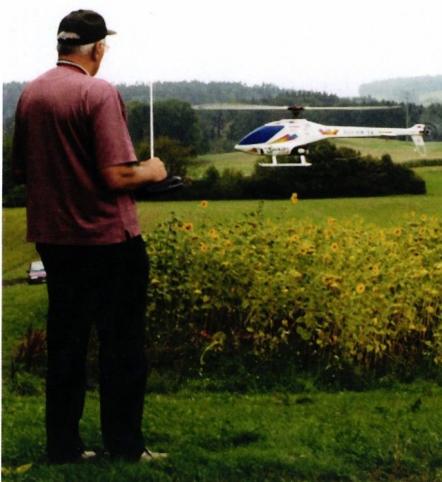
It is said to have been developed in collaboration with a research laboratory in Quebec. There has been—and continues to be—a great deal of coverage about LiPo batteries. Unlike NiMH cells, they require more care, especially during charging. The significantly better power-to-weight ratio of these cells has led to electric propulsion gaining a foothold relatively quickly—in addition to the existing F5 electric flight classes—in the other FAI competition classes as well, such as F3A aerobatics, F3C helicopters, scale models, and finally F2 tethered flight—which repeatedly fuels highly incompetent opinions that the electric flight classes have had their day. At the
At the 2003 F3A World Championships in Poland, American Jason Shulman placed seventh with an electric-powered model—there had been some rather unsuccessful attempts prior to that—and just one year later, in 2004, Roland Matt of Liechtenstein won the championship title right off the bat at the F3A European Championships in Portugal with a Hacker-powered model.
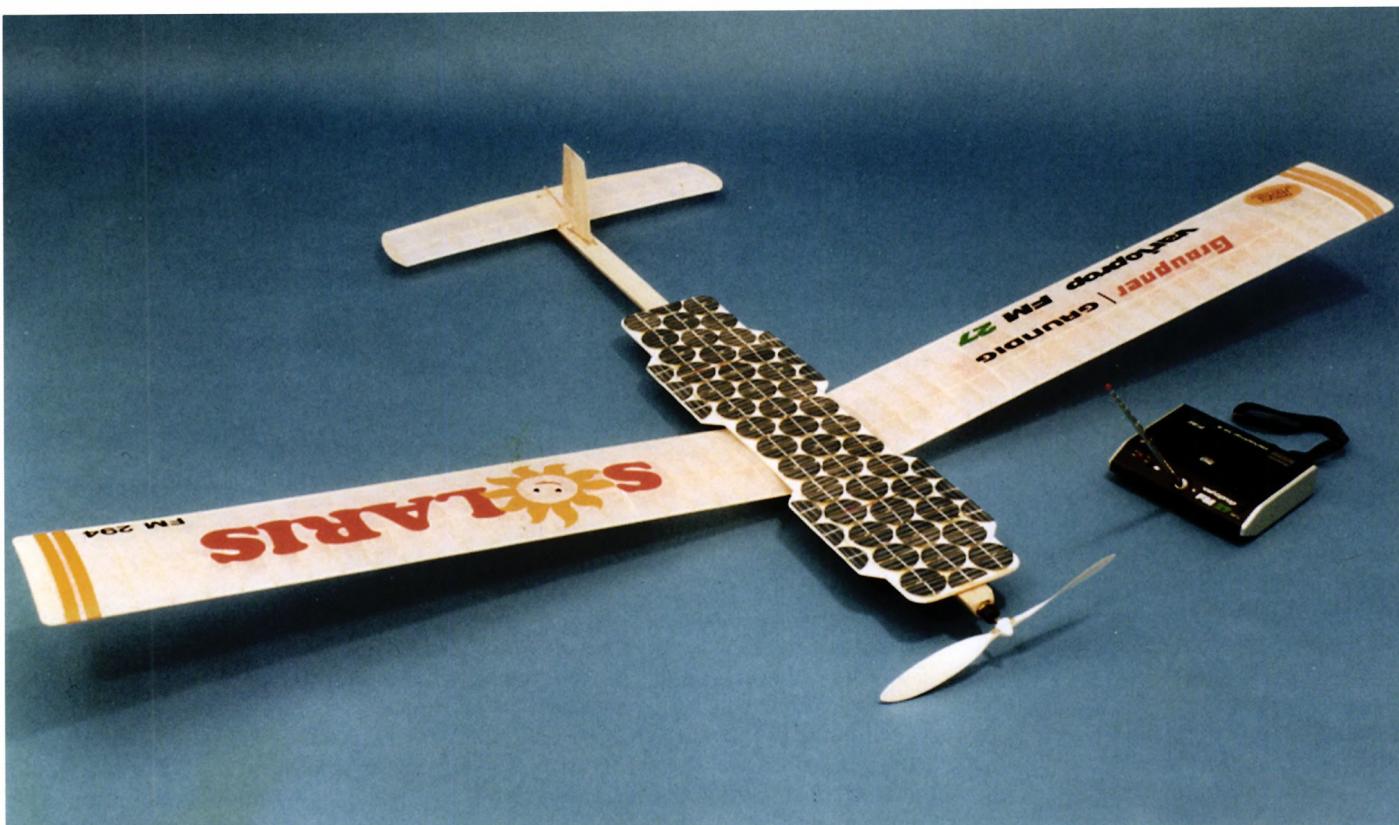
Bertrand Piccard’s current Solar Impulse project has reignited enthusiasm for this interesting and environmentally friendly mode of propulsion, even in model aviation. According to the CIAM F5 Subcommittee, the FAI solar flight competition class (F5E) is to be updated and promoted. The true pioneers of solar flight—admittedly using far simpler means—were model aircraft enthusiasts and various university institutes. As early as 1975, the photovoltaic-powered model Sunrise I—designed by R. J. Boucher of AstroFlight—flew for 20 minutes in California, and just one year later, Sunrise II flew significantly longer. Helmut Bruss must undoubtedly be regarded as Europe’s greatest pioneer of solar model aviation. Unaware of the successes overseas, Bruss—still known today as a technical author—had already built and flown his first solar-powered model aircraft as early as 1975. Not only did he introduce the entire field of solar flight technology to his school, but our magazine and our symposia also benefited from his vast experience. The first truly airworthy solar model, the Solaris, was flown by Fred Militky in 1976. The flight lasted just under three minutes. Today, former Dornier engineer Dr. Wolfgang Schäper, holder of various world records in solar flight, must surely be counted among the most experienced and successful experts in solar model aviation.
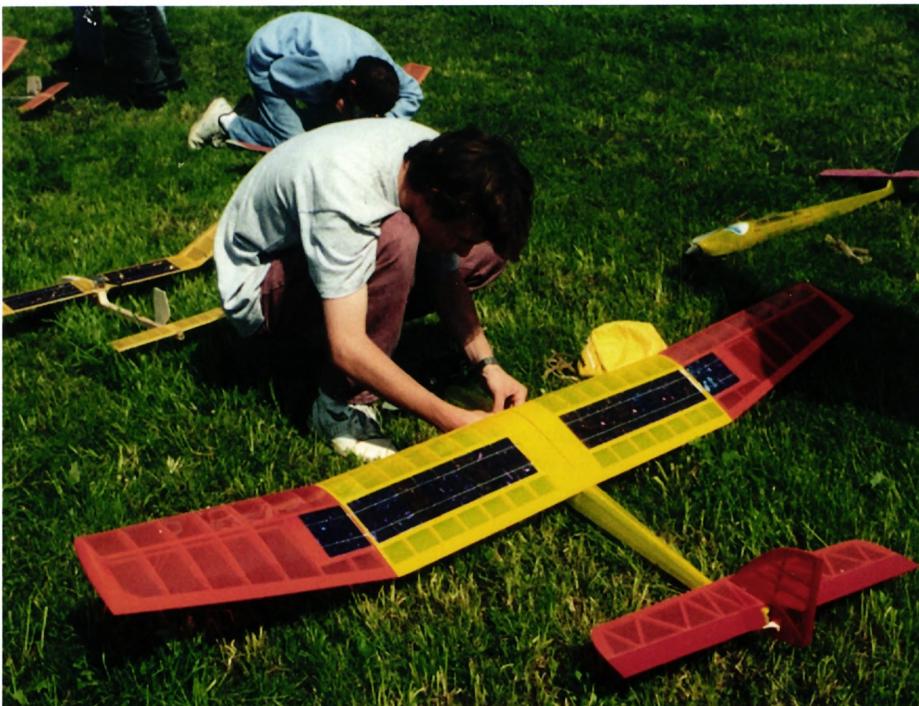
Dr. Paul B. McCready achieved the first truly successful manned solar flight with the Solar Challenger in 1981. The aircraft flew from Paris to London in five and a half hours—and without a storage battery! From 1989 to 1990, Eric Raymond completed no fewer than 21 flights across the United States in his Sunseeker, spending a total of 120 hours in the air. There are several other, more or less successful manned solar flight projects worth mentioning—long before Piccard. However, none of these projects has achieved the level of popularity that Solar Impulse has.
Electric drives will continue to be popular across a wide range of sectors in nearly every industry due to their simple and virtually maintenance-free operation. This reality also means that the line between toys and hazardous waste is sometimes crossed, which completely undermines any notion of sustainability. In addition to these current trends, we can expect some particularly interesting developments, especially in the electronics sector and in battery technology. Batteries will continue to improve not only in terms of even higher energy densities but also in safety. There also seems to be a lot of progress in charging technology. Most of us remain satisfied users who just want to plug in the battery and—up, up, and away!


News from HEBU

HORIZON HOBBY/LEMACO NEWS: MICRO OV-10 BRONCO 645 MM BY E-FLITE

PRIDE AND GOOD IDEAS
 Markus Nussbaumer

TEAM MANAGER "THIS" BOSSHARD
 Rodito Nussbaumer

YOU KNOW WHAT I MEAN? 125 YEARS OF THE SWISS AERO CLUB
 Emil Giezendanner

F3A EUROPEAN CHAMPIONSHIPS IN ST-MACAIRE, FRANCE
 Matthias Bosshard

ATOM, THE NEW DOUBLE-DECKER FROM CPLR
Matthias Bosshard
SUMMER FUN 2026 AT MG USTER
Martin Wunderli
What's New at Leomotion.com

52. 2026 ALPS CUP
Emil Giezendanner
TWIN TOWN PARTNERSHIP
Wolfgang Voeller
34th HAHNENMOOS ALPINE MODEL AIRPLANE CAMP
Res Dauwalder
CORSAIR F4U – A WARBIRD WITH A MEMORABLE LOOK
Jürgen Rosenberger, Jürgen Prinz
SMALL, MODEL-LIKE SAILBOATS
Res Dauwalder
TRY-OUT DAY AT MFV WETTINGEN
Urs Keller
WELCOME, NEW MEMBER!
Andrea Bolliger
FREE FLIGHT IN THE MIDDLE OF SUMMER
Urs Muntwyler
COUPE DES ALPES – OBSERVE AND LEARN
Rodito Nussbaumer
EURO CONTEST GLIDER ACRO TOUR AUSTRIA 2026

BY YOUTH, FOR YOUTH
Lorena Betschen
INSIGHTS INTO THE HISTORY OF SEAPLANES

THE PC-21 STORY
Emil Giezendanner
NEWS FROM HEBU
 Julia Bucher

FROM 0 TO 100
Markus Nussbaumer
MEMORIES
Wolfgang Völler
NOS REGION – A HUB FOR ELECTRIC AVIATION
Emil Giezendanner
DO YOU KNOW WHAT I MEAN IN THE LAND OF SMILES?
Emil Giezendanner
Have you almost forgotten about aircraft that take off and land vertically?
Emil Giezendanner