
Supporting Young Talent in the SMV: Two Initiatives Starting in 2008!
Recruiting and supporting new model aircraft pilots is the focus of two separate points in the mission statement of the Swiss Model Flying Association (SMV). The Youth Development Department, established about two years ago, and special activities within the F1 Free Flight Technical Commission ensure that clear commitments are followed by concrete actions. Following extensive preparatory work, concrete results are now coming to fruition for the 2008 season.
About two years ago, in a workshop organized by René Müller at the RMV Zentralschweiz and moderated by Reto Schilliger, young beginners and experienced coaches worked on compiling a list of possible measures to promote model aviation and, in particular, to support young talent within the clubs. Recognizing that available resources must be focused to achieve an initial concrete result, and based on the positive feedback from the young participants, the Youth Development Department—newly established as a result of this workshop—decided to implement the idea of performance badges. These are widely established in many sports, not least in gliding.
The proficiency badges, in the form of a certificate and a patch, are intended first and foremost to serve as an incentive for beginners to make targeted progress in their flying skills. At the same time, they define certain standards that serve as a guide for instructors in the clubs when planning training. However, achievement badges were not defined solely in terms of flying skills, but also for special commitment to competition or to mentoring young pilots of any age.
When developing the requirements for the proficiency badges, particular emphasis was placed on the following points:
- Conducting the tests and providing the necessary documentation by the clubs themselves
- Specifying only the standards to be met, but not the training paths or methods (many roads lead to Rome!)
- Simplicity of the organizational process for all parties involved
- Inclusion of as many aviation disciplines as possible
- Avoiding both excessive and insufficient challenges
Virtually all programs were tested throughout 2007 and optimized where necessary. Jürg Kuoni (helicopters), Thomas Suter (powered flight), Robert Schuster (gliding), Christoph Bachmann (free flight), Heiner Borer and Peter Germann (tethered flight), as well as Reto Schilliger (patches and other documents) had their hands full. In addition, their efforts had to be coordinated in several meetings.
The first certification, “Pilot,” generally demonstrates that the holder can fly safely without constant supervision. The second certification, “Advanced Pilot,” proves that the holder can not only fly safely on their own, but also with a
operates with a certain level of precision at a higher level.
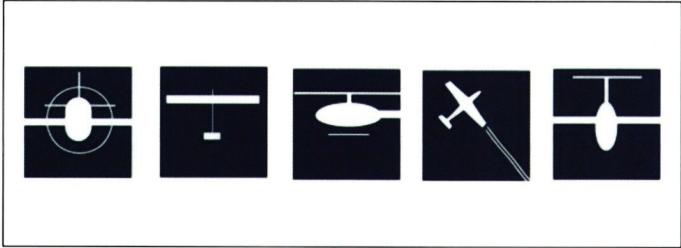
A major challenge was defining appropriate test programs based on as consistent a framework as possible for the categories of powered flight, gliding, helicopter flight, free flight, and tethered flight. It was also necessary to take into account the different propulsion types—internal combustion engines and electric motors—as well as the various takeoff methods used in gliding. To clearly indicate in which disciplines one of the above awards was earned, they are graphically distinguished on the badges. The two “gliding” examples show what the badges and patches look like. (See box above)
All programs and sets of rules are practically complete and will also be presented to the chairpersons at the SPK in Baden. For those interested, below is an excerpt listing the programs that must be flown successfully twice in succession on a single day (without the instructions on correct execution found in the detailed documentation):
1. “Pilot” Award
- Start
- Stall
- Full Circles (Right and Left)
- Crosswind and final approach
- Touchdown
2nd “Advanced Pilot” Certification
- Start
- Downward Swing
- Pulled loop
- Turn
- Two half-rolls
- Cross-wind and final approach
- Precision landing on target
1. “Pilot” Award
- Start
- Straight Fly-by
- Combination of turns
- Stall
- Landing turn
- Touchdown
2nd “Advanced Pilot” Certification
- Takeoff
- Pulled loop
- Roll
- Turn
- Immelmann
- Spin (3 revolutions)
- Simulated engine failure
- Touchdown
1. “Pilot” Award
- Hovering
- Forward and Reverse Flight
- Hovering – Circling – Hovering
- Landing
2. “Advanced Pilot” Certification
- Takeoff and Inverted Hover
- Full circle left and right
- Turn
- Loop
- Approach and landing
The free flight and tethered flight programs for the two awards are a bit more specialized. For free flight, proof of certain flying achievements must be provided at events with timekeepers; for tethered flight, the programs are based on the basic maneuvers of tethered flight and the basic requirements for getting started in aerobatics.
The “Pilot” and “Advanced Pilot” proficiency badges clearly relate to specific flying disciplines and serve as an introduction to model aviation. However, the SMV also wishes to offer further incentives to actively develop one’s flying skills and to promote model aviation. The following three proficiency badges are available for this purpose:
The “Competition Pilot” award is granted to any full member of the SMV who, over two consecutive calendar years, participates in at least three open, regional, national, or even international championships each year—for a total of at least eight—in which a ranking is maintained and prizes or medals are awarded.
For a competition to count, all rounds must be flown—except in the case of a crash. The final results are irrelevant for the awarding of the diploma.
The Master Pilot award is given to those who not only participate actively in competitions but also achieve notable results. To qualify, a pilot must demonstrate, over three consecutive years, at least two placements per year—for a total of at least six—in the top third, or a total of two medals, at a Swiss, interregional, or regional championship, or at an open international competition held in accordance with FAI regulations and with at least ten participants.
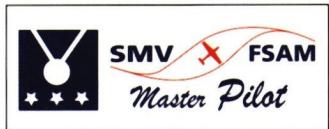
Starting in 2008, the Instructor Pilot designation will be awarded to model aircraft pilots who, over the course of three years, guide two beginners to the Advanced Pilot diploma.
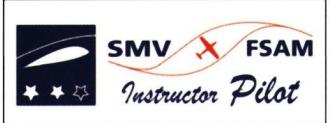
There are specific application forms for all diplomas, which must be used to confirm passing the club’s internal exam or, for other diplomas, to provide proof of the other required achievements. The application forms are then forwarded to the Central Secretariat at AeCS, which in turn sends the corresponding diploma and patch to the club president.
The president, in turn, signs the diploma and may then present the diploma and patch in as dignified a setting as possible.
Detailed information will be published on www.modellflug.ch/jugendfoerderung leading up to the SPK and communicated through other appropriate channels.
In parallel with the development of the proficiency badges, the F1 Working Group intensively explored the topic of “School and Model Building.” Here, too, great emphasis was placed on utilizing the resources and opportunities of the association and the working group in a way that would generate a sustainable impact at a reasonable cost.
For about a year, the team led by Christoph Bachmann and Walter Eggimann evaluated a series of model kits for use in schools, which were, of course, not only studied theoretically but also built and flown right away. Based on this work and in collaboration with the Youth Development Department, a multi-component concept was developed as follows, which will be launched in the spring of 2008, initially through the clubs within the SMV.

Two A4 pages contain a list of six models suitable for school use, including the manufacturer, part number, approximate price, wingspan, and level of difficulty. The document concludes with a brief description of each model and a list of helpful contacts within the Student Council.
Based on the overview above, an order form was created that can be submitted at any model shop. It also includes information on the necessary accessories.
A letter template was created in Word for the clubs; it can be customized in detail and sent, along with the documents listed above, to nearby schools and their shop teachers. Of course, a contact person should also be listed for any questions. The better the support for the school, the better for model aviation!
A program of courses for project managers is also in the works and is expected to be included in the mailing mentioned above.
The SMV and the F1 Free Flight Committee are counting on the clubs to actively implement this initiative within their own communities. Further information on this will be available at www.modellflug.ch/jugendfoerderung until the SPK meeting.
The two initiatives mentioned above showcase the first results of two years of work within the newly established department. The course for further measures will be set at the upcoming meetings.
As always, additional volunteers are welcome at any time! SMV/RS
My name is Michael Messerli, and I’m 13 years old. I’ve been a member of the MG-UT (Untersiggenthal-Turgi) since 2006, and I fly the Multiplex Easy Glider model. The “Glider Pilot” exam was a bit of a challenge for me, especially the task of making a perfect landing. I’m proud of what I’ve accomplished—I can now fly and land my model safely, which is a lot of fun. I see the exam as a little motivation, and I really like the badge.
Michael Messerli, Würenlingen AG


News from HEBU

TEAM MANAGER "THIS" BOSSHARD
 Rodito Nussbaumer

YOU KNOW WHAT I MEAN? 125 YEARS OF THE SWISS AERO CLUB
 Emil Giezendanner

HORIZON HOBBY/LEMACO NEWS: MICRO OV-10 BRONCO 645 MM BY E-FLITE

PRIDE AND GOOD IDEAS
 Markus Nussbaumer

34th HAHNENMOOS ALPINE MODEL AIRPLANE CAMP
Res Dauwalder
TRY-OUT DAY AT MFV WETTINGEN
Urs Keller
F3A EUROPEAN CHAMPIONSHIPS IN ST-MACAIRE, FRANCE
 Matthias Bosshard

52. 2026 ALPS CUP
Emil Giezendanner
ATOM, THE NEW DOUBLE-DECKER FROM CPLR
Matthias Bosshard
SUMMER FUN 2026 AT MG USTER
Martin Wunderli
What's New at Leomotion.com

THE PC-21 STORY
Emil Giezendanner
COUPE DES ALPES – OBSERVE AND LEARN
Rodito Nussbaumer
TWIN TOWN PARTNERSHIP
Wolfgang Voeller
EURO CONTEST GLIDER ACRO TOUR AUSTRIA 2026

BY YOUTH, FOR YOUTH
Lorena Betschen
CORSAIR F4U – A WARBIRD WITH A MEMORABLE LOOK
Jürgen Rosenberger, Jürgen Prinz
SMALL, MODEL-LIKE SAILBOATS
Res Dauwalder
WELCOME, NEW MEMBER!
Andrea Bolliger
FREE FLIGHT IN THE MIDDLE OF SUMMER
Urs Muntwyler
INSIGHTS INTO THE HISTORY OF SEAPLANES

NEWS FROM HEBU
 Julia Bucher

FROM 0 TO 100
Markus Nussbaumer
MEMORIES
Wolfgang Völler
NOS REGION – A HUB FOR ELECTRIC AVIATION
Emil Giezendanner
DO YOU KNOW WHAT I MEAN IN THE LAND OF SMILES?
Emil Giezendanner
A SPECTACULAR F3A WORLD CUP IN THE PRINCIPALITY OF LIECHTENSTEIN
Emil Giezendanner