
"Diana" – the Polish Grace
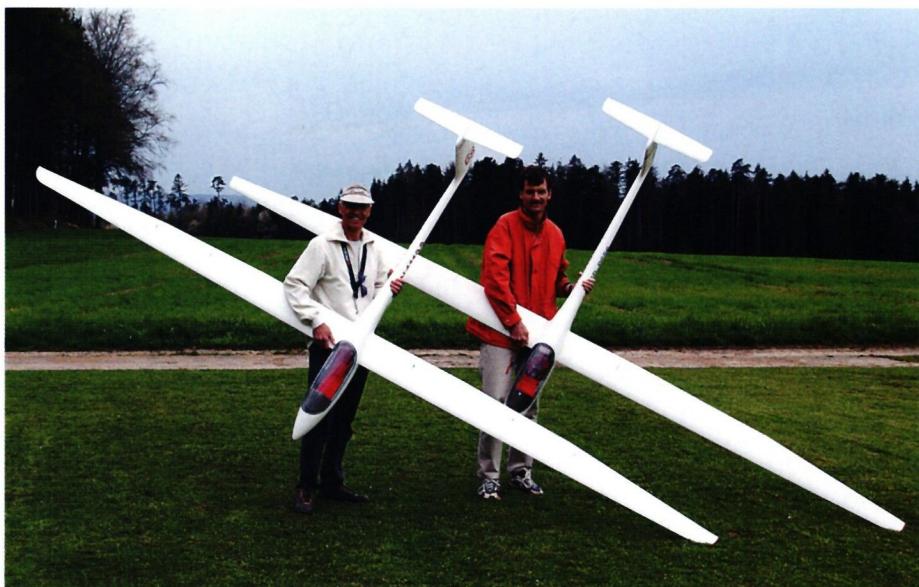
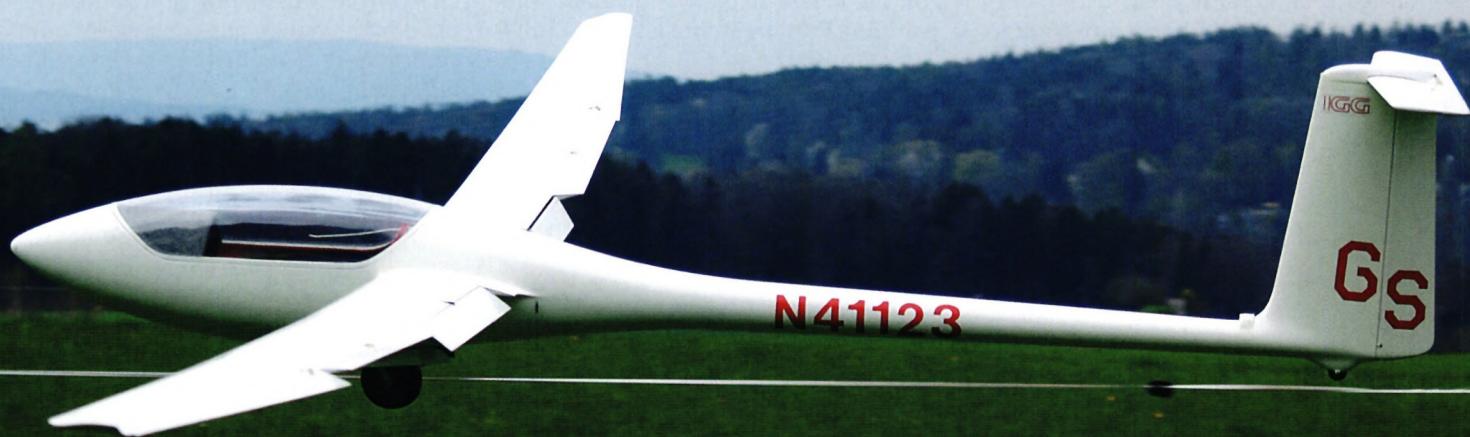
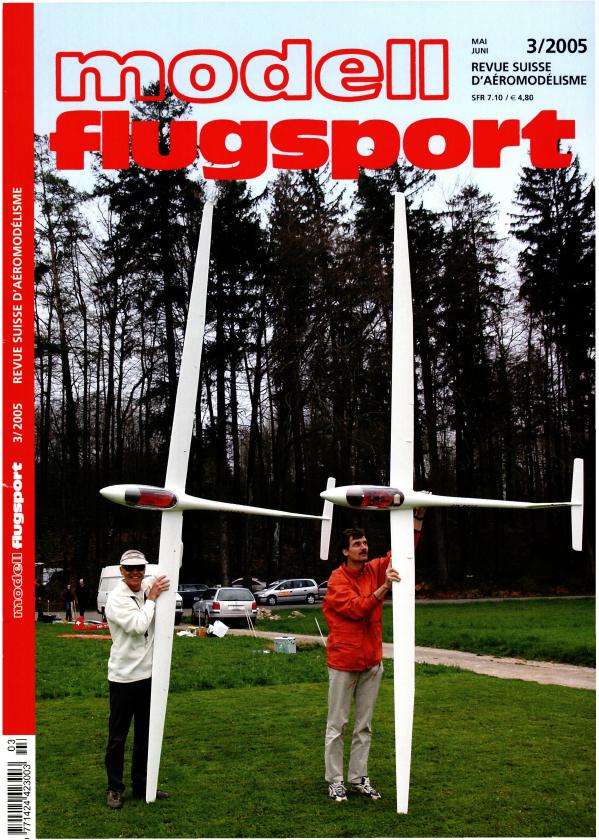
About 15 years ago, the Polish company SZD developed the SZD-56 “Diana,” a 15-meter-class glider that still turns heads today—primarily because of its appearance. The slender, seemingly endless fuselage with its strikingly pronounced taper after the wing attachment, the high-mounted horizontal stabilizer, and the very slender wings are the most striking features of this design. The “Diana” is a very unique and polarizing aircraft; it either immediately captivates gliding enthusiasts or they dislike it entirely. Richard Oberholzer had been fascinated by the “Diana” for years. Finally, he built a 1:3.5 scale model of it.
The effort was well worth it; the “Diana” has become the finest model in his impressive collection of aircraft and the highlight of his long modeling career.
(The key information about the manned “Diana” is taken from the book *Gliders 1965–2000* by Martin Simons) Bogomil Beres, a designer at SZD for many years, set out to create a state-of-the-art aircraft that would make optimal use of carbon and aramid fibers. With the “Diana,” he designed an aircraft that fully capitalizes on the advantages of these modern materials.
The aircraft combines high rigidity and strength with a very low empty weight, which allows it to carry a large amount of water ballast. The wing has no spar—a feature that is almost unique in man-carrying gliding. All bending and torsional forces are absorbed by the upper and lower skins, which are constructed as a carbon-fiber-rigid-foam sandwich and reinforced at specific points with additional carbon fibers. The slender airframe has a very high aspect ratio of 27.6. With a root profile of only 13%, the profile height at the root is just 87 mm—a dimension often found even on the wings of large model airplanes. Each wing features three sealed flaps mounted on the underside. Winglets can be optionally installed at the wing tips.
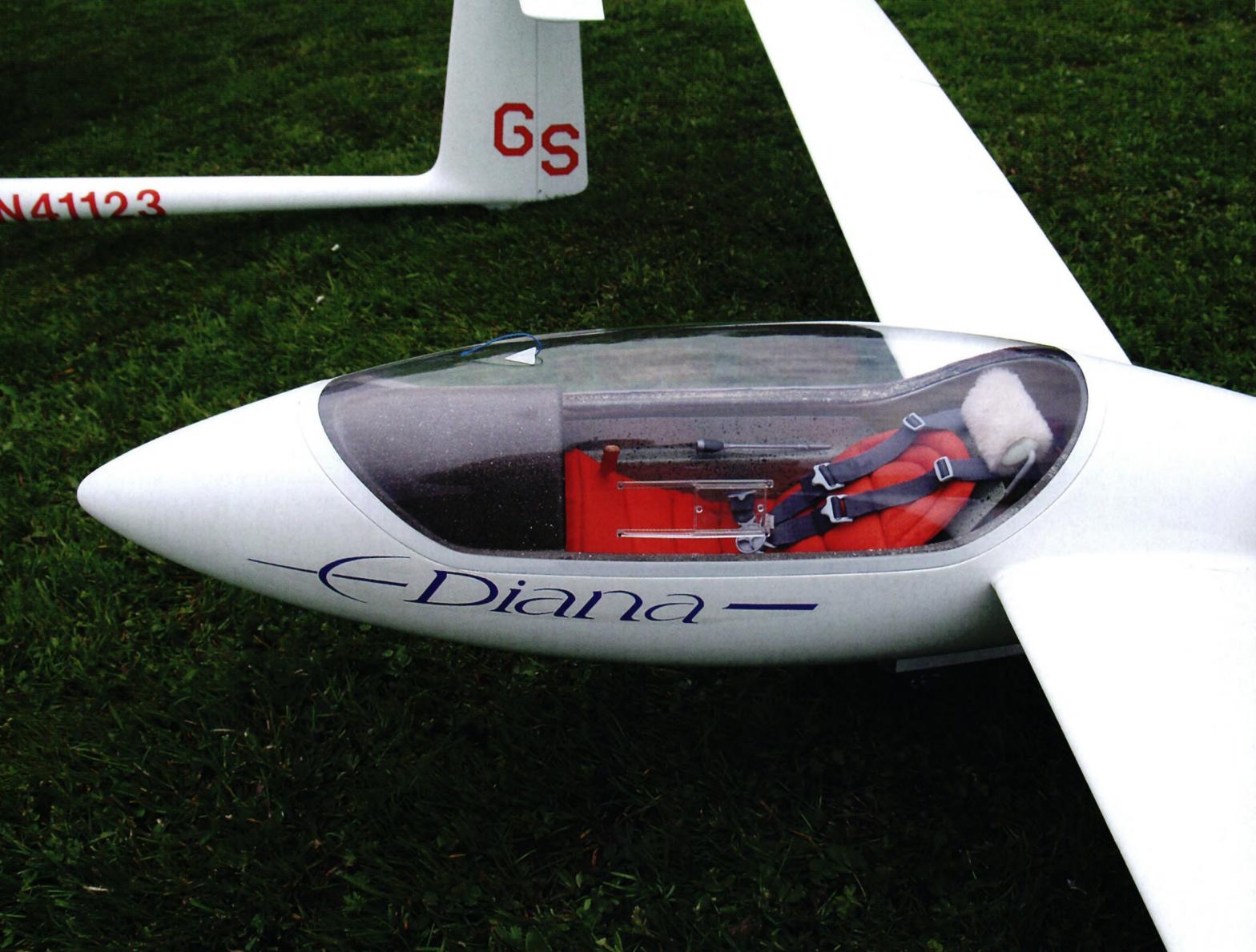
The seating position in the fuselage is more reclined than in other models. The “Diana” is controlled via a sidestick mounted on the right cockpit wall. The one-piece canopy opens forward.
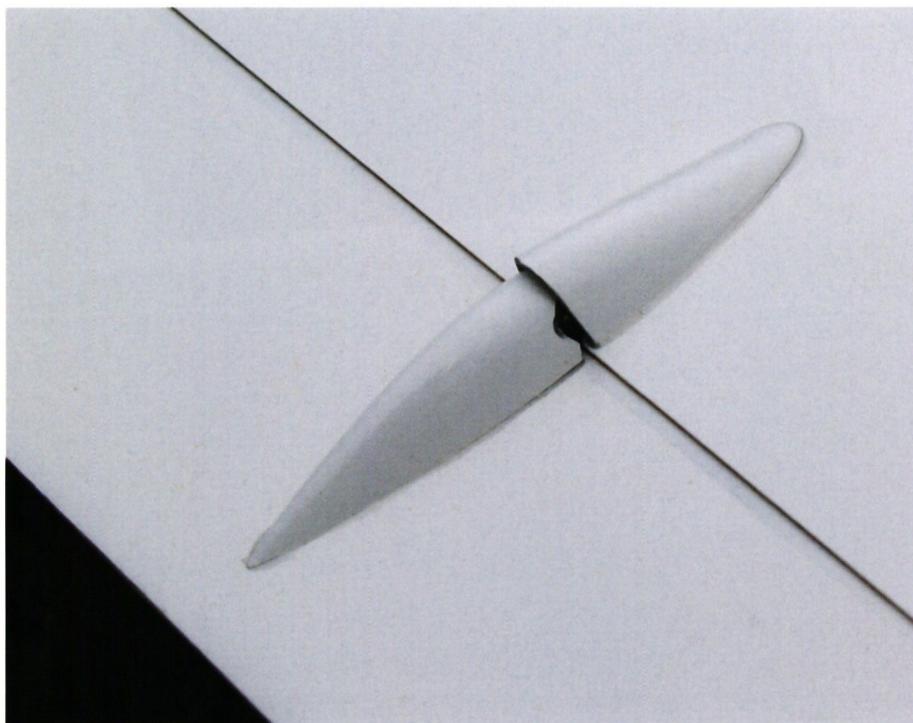
The connection between the wings and the fuselage is unusual. A spar stub approximately 1.5 m long is permanently mounted in the fuselage; the wings are attached to the spar stubs protruding from the fuselage—a design similar to that used in model aircraft construction.
The “Diana” made its maiden flight in 1990. At the time of its introduction, the “Diana’s” flight performance and handling characteristics were rated as very good. The glide ratio was measured at 1:48; the roll speed around the longitudinal axis was high, giving the “Diana” impressive maneuverability. Shortly after the maiden flight, Czech pilot Hana Zejdova broke no fewer than eleven women’s records in Australia flying a “Diana,” and shortly thereafter, a “Diana” shattered additional speed records over 300-, 500-, and 1,000-kilometer triangles. Three years later, a “Diana” set a world speed record in the United States over a 1,000-kilometer triangle.
After the SZD company—originally a state-owned enterprise—went bankrupt and ceased operations, the designer Bogumil Beres acquired the rights to “his” aircraft. He built six “Diana” aircraft in his own workshop, none of which apparently made their way to Switzerland. It was recently announced that Bogumil Beres has test-flown the successor model, the “Diana 2.” It features a completely new, very elegant wing whose leading edge is a single parabola—an incentive and a challenge for model builders.
The model is built to a very accurate scale. This resulted in a fuselage depth of only 19 cm and a wing area of just 66.3 dm². A consistent lightweight construction was essential to ensure the wing loading did not exceed a reasonable limit. The model is primarily designed as a “slope glider,” but has also demonstrated its impressive qualities as a thermal glider during extensive flight testing. The only major deviation from the prototype is the omission of air brakes. The model is braked using the inner and middle flaps, which, when set to the “butterfly” position, allow for a very safe and slow final approach—followed by a precision landing—both on slopes and in open terrain.
A significant portion of the “Diana’s” excellent flight characteristics is attributable to Christoph Mächler, who calculated the model’s aerodynamics. He recommended the HN-474 airfoil profile and successfully counteracted the high stability factor caused by the long fuselage. Richard Oberholzer’s “Diana,” with a wingspan of 428 cm, has a takeoff weight of 5,200 g, resulting in a wing loading of 78 g/dm².
Below are some detailed specifications for the model.
Richi Oberholzer shaped the hull positive from segments of rigid foam that had been glued onto a central aluminum tube. The finished shape was covered with fiberglass cloth. After the laborious process of smoothing the surface—which involved repeated filling, spraying, and intermediate sanding—the fuselage mold could be built. Hansrudolf Lüdi (Lümo) and Willy Fahrni graciously took on this labor-intensive work as a volunteer effort, thereby greatly accelerating the project. The fuselage consists of a top layer of UP-Vorgelat and several layers of fiberglass, which are oriented at 90°/0°, 45°, and unidirectional, depending on the area. The fuselage weighs less than one kilogram while maintaining sufficient strength. The aircraft is equipped with an electric Giezendanner retractable landing gear. A real eye-catcher is the large, transparent PET canopy hand-drawn by Bruno Greuter.
Since the “Diana” needed to be able to withstand a fair amount of stress in flight without becoming too heavy, the goal was to achieve an optimal balance of weight and strength. With a profile depth of 190 mm at the root and 85 mm at the wingtip, and a profile thickness of 12% on the inner side and 9% at the wing tip, it was particularly important to control the torsional forces, as the “Diana” was also designed to fly very fast. The wings consist of a foam core and are covered with thin abachi veneer. Torsional stiffness is provided by a continuous carbon D-box, constructed with carbon fiber fabric weighing 90 g/dm². The flaps, which have a depth of nearly 25%, are also backed with the same fabric, which, of course, is oriented at a 45° angle to the direction of flight. The spar consists of a rigid foam core encased in a carbon-fiber braided tube. The actual spar webs are made of carbon rovings, the number of which decreases gradually toward the outer edge and consists of a single roving at the wing tip. The spar bridge consists of a wing connector laminated from carbon rovings, which has a V-shape of 2.5° per side and is inserted into aramid mounting pockets integrated into the spar at the wing roots. The fuselage is essentially suspended from four aluminum pins that protrude from the wing roots and engage with the wing-shaped section of the fuselage. Each wing incorporates three servos, each 10 mm thick. After finishing—which consists of a fiberglass covering, primer, and highly polished two-component paint—a flight-ready wing weighs just under 900 grams.
The tail surfaces are constructed similarly to the wings, but without a spar. Here, too, given the long tail lever arm, great emphasis was placed on keeping the weight low. Thus, the finished horizontal stabilizer, with a surface area of 6.9 dm², weighs only 82 g. The horizontal stabilizer is positioned extremely far aft relative to the vertical stabilizer’s damping, which posed some challenges regarding mounting and propulsion.
If you want to conveniently control the individual servos and functions, a 12-channel receiver is a must if you plan to fly with a tow hook and a Vario in addition to the retractable landing gear. However, it is also possible to make do with a 10-channel receiver. In this case, though, the two inner flaps must be connected via a trimmable V-cable and controlled through a single channel, or the vario must be routed to the same output as the tow hook or the landing gear.
The HN-474 requires only very small deflections of the camber and aileron flaps. The wing is cambered via all three flaps, both in the high-speed and low-speed flight positions. When circling in thermals, only the outermost flap functions as an aileron. To improve roll responsiveness during takeoff and when turning on a slope, the middle flap is engaged as an aileron with reduced deflection. When the “Diana” is braked using the butterfly position, elevator input is progressively added as the deflection of the flaps used for braking increases, so that the glider does not lose speed but rather tends to require a slight pull back during the descent.
This brings us to the most important and fascinating topic. Even though building such a machine requires a great deal of planning, craftsmanship, and time, the effort is well worth it. The model’s excellent flight characteristics more than make up for all the effort. In Roman mythology, the goddess Diana was the patroness of the hunt. The “Diana” model rightly bears this goddess’s name. It’s always fascinating to experience the dynamics and speed range this very lightweight model possesses. When the flaps are set to a negative angle, the “Diana” accelerates immediately and with virtually no loss of altitude. If it is accelerated into a dive with the flaps in this position, it whizzes past the pilot at high speed with a beguiling, delicate whistle and impresses with its astonishing climbing power during the subsequent pull-up. Especially during high-speed flight, it’s advantageous that the low airfoil camber of just 2.1% can be further reduced by setting the camber flaps to a negative position. This airfoil design enables high speeds without requiring the aircraft to carry a high wing loading. However, the “Diana” can easily accommodate ballast, which significantly enhances its dynamics. Under high G-forces, the slender wings, as expected, flex noticeably along their entire length—a feature that looks very true to the original and was intentionally designed through the gradation of the carbon rovings. When the flaps are set to positive, the “Diana” can be flown and circled at astonishingly slow speeds. It exhibits harmless low-speed and circling characteristics. Given the very long tailplane lever arm, it’s no surprise that the otherwise very agile “Diana” flies straight ahead as if on rails during course flying. Landings are a pleasure when the mix of elevator input is just right with the butterfly configuration extended. The “Diana” always stands out—even high in the sky—thanks to its unique silhouette. With its graceful, long fuselage and slender wings, it immediately stands out among other gliders.
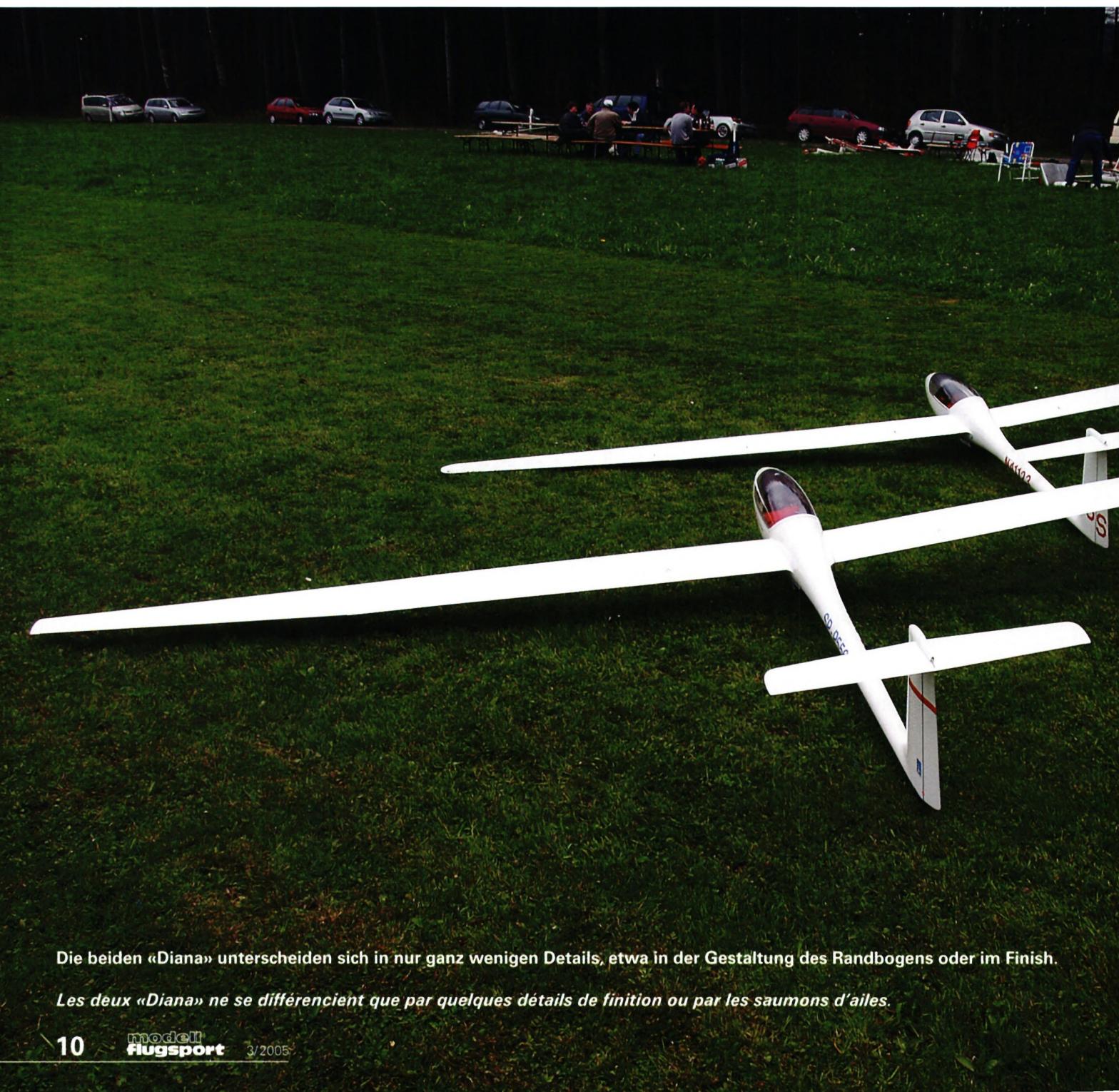
The author of this report, who has also been fascinated by this Polish gem from the very beginning, contributed the wing construction plan and has likewise built a “Diana,” which, at the time of writing, has successfully completed its maiden flight. Its design corresponds to that of Richi Oberholzer; as the photos show, the differences lie only in a few details. Thanks to its very consistent lightweight construction, this “Diana” has a takeoff weight of 4,500 grams and a wing loading of just 68 g/dm². We are eager to see test flights with additional ballast of up to 10% of the takeoff weight, the use of which was factored into the structural design. When ballasted, the “Diana” should live up to its namesake and demonstrate even more pronounced “hunting characteristics.”
Richard Oberholzer’s “Diana” is yet another—and, unfortunately, increasingly rare—example of how a healthy dose of enthusiasm, perseverance, and camaraderie in model aviation can produce unique designs that clearly stand out from the vast majority of commercially available models.
Needless to say, Richi Oberholzer and the author of this report are already talking about building the “Diana 2,” which, incidentally, has the same fuselage and horizontal stabilizer as its predecessor. The reporter, however, does not wish to get ahead of himself, but rather refers to a possible future report...
Georg Staub
All photos by Albert Weber, Rüti

EURO CONTEST GLIDER ACRO TOUR AUSTRIA 2026

THE PC-21 STORY
 Emil Giezendanner

TWIN TOWN PARTNERSHIP
 Wolfgang Voeller

SUMMER FUN 2026 AT MG USTER
Martin Wunderli
CORSAIR F4U – A WARBIRD WITH A MEMORABLE LOOK
Jürgen Rosenberger, Jürgen Prinz
52. 2026 ALPS CUP
Emil Giezendanner
YOU KNOW WHAT I MEAN? 125 YEARS OF THE SWISS AERO CLUB
Emil Giezendanner
News from HEBU

TEAM MANAGER "THIS" BOSSHARD
Rodito Nussbaumer
ATOM, THE NEW DOUBLE-DECKER FROM CPLR
 Matthias Bosshard

F3A EUROPEAN CHAMPIONSHIPS IN ST-MACAIRE, FRANCE
Matthias Bosshard
INSIGHTS INTO THE HISTORY OF SEAPLANES

WELCOME, NEW MEMBER!
Andrea Bolliger
What's New at Leomotion.com

PRIDE AND GOOD IDEAS
 Markus Nussbaumer

SMALL, MODEL-LIKE SAILBOATS
Res Dauwalder
FREE FLIGHT IN THE MIDDLE OF SUMMER
Urs Muntwyler
BY YOUTH, FOR YOUTH
Lorena Betschen
HORIZON HOBBY/LEMACO NEWS: MICRO OV-10 BRONCO 645 MM BY E-FLITE

COUPE DES ALPES – OBSERVE AND LEARN
Rodito Nussbaumer
34th HAHNENMOOS ALPINE MODEL AIRPLANE CAMP
Res Dauwalder
TRY-OUT DAY AT MFV WETTINGEN
 Urs Keller

NEWS FROM HEBU
 Julia Bucher

NOS REGION – A HUB FOR ELECTRIC AVIATION
Emil Giezendanner
MEMORIES
 Wolfgang Völler

70 YEARS OF THE NIDWALDEN MODEL AIRPLANE CLUB
Martin Barmettler
A SPECTACULAR F3A WORLD CUP IN THE PRINCIPALITY OF LIECHTENSTEIN
Emil Giezendanner
FROM 0 TO 100
Markus Nussbaumer