
Now it's official—18 additional remote control frequencies at 40 MHz
Almost exactly one year ago, the Expert Group on Remote Control Frequencies (FFF) reported that the petition for remote control frequencies was “on the right track.” In the meantime, further negotiations with the relevant departments of the PTT, the Federal Department of Transport and Energy (EVED), and the Communications Troops Division (AUEM) have been successfully concluded. During a meeting in Bern on September 21, 1978, that lasted several hours, the PTT met approximately 80% of the FFF’s objectives regarding the conditions for granting licenses for the 18 new frequencies in the 40-MHz frequency band.
In the course of our negotiations, which lasted nearly two years, the PTT received objections from car and ship model clubs regarding the possible exclusive allocation of the 18 new frequencies to model aircraft enthusiasts.
For their part, the PTT representatives rejected the idea of a legally enforceable guarantee of exclusive frequency allocation.
The PTT proposed that it recommend the use of a portion of the new frequencies primarily for model airplanes and another portion for other types of models. For aviation safety reasons, the FFF insisted that, in the event of a compromise-based allocation of the 18 new frequencies, the division be carried out by means of a provision that must be clearly stated in the license agreement.
This solution, which has now been reached, gives us model aircraft enthusiasts a significant opportunity to coordinate among the various model categories and ensure order, without, on the other hand, imposing obligations on the PTT that would exceed the scope of a Class E license. With the new licensing conditions—which, incidentally, comply with CEPT recommendations and have been in effect in the Federal Republic of Germany for several years—the PTT has been able to fully meet our requests. As the PTT has assured us, the 18 new frequencies and the new licensing conditions are scheduled to take effect this year, with December 1, 1978, set as the target date.
Furthermore, the FFF—which, since January 1, 1978, has officially represented the frequency interests of model aircraft enthusiasts as a subcommittee of the AeCS’s RC-FAKO—has been recognized by the PTT as a partner in addressing future issues in the model aircraft frequency sector. The frequency allocation for new licenses for the wireless remote control of Class E models, effective December 1, 1978, for Switzerland is shown in Table 1.
The USKA (Swiss Union of Shortwave Amateurs) has assured the PTT that it will ask its members to avoid the 10 model remote-control frequencies in the 433/434 MHz band.
Table 1: Class E Frequency Allocation for Switzerland, December 1, 1978
| Frequency (MHz) | Frequency designation | Scope of License | |
|---|---|---|---|
| Channel | Frequency range color | ||
| Frequency Group A 13,650 | for all model remote controls | ||
| Frequency Group B | For all model remote controls | ||
| 26,995 | 4 | brown | |
| 27,045 | 9 | brown | |
| 27,095 | 14 | brown | |
| 27,145 | 19 | brown | |
| 27,195 | 24 | brown | |
| Frequency Group C | For all model remote controls | ||
| 40,665 | 50 | green | |
| 40.675 | 51 | green | |
| 40,685 | 52 | green | |
| 40,695 | 53 | green | |
| Frequency Group F | Intended for models other than model aircraft. For model aircraft only in exceptional cases (e.g., at events such as competitions, etc.)1 | ||
| 40.715 | 54 | green | |
| 40.725 | 55 | green | |
| 40,735 | 56 | green | |
| 40,765 | 57 | green | |
| 40,775 | 58 | green | |
| 40,785 | 59 | green | |
| Frequency Group F | Intended for model aircraft. Only in exceptional cases for other models (e.g., at events such as competitions, etc.)2 | ||
| 40.815 | 81 | green | |
| 40.825 | 82 | green | |
| 40,835 | 83 | green | |
| 40,865 | 84 | green | |
| 40,875 | 85 | green | |
| 40,885 | 86 | green | |
| 40,915 | 87 | green | |
| 40,925 | 88 | green | |
| 40,935 | 89 | green | |
| 40,965 | 90 | green | |
| 40,975 | 91 | green | |
| 40,985 | 92 | green | |
| Frequency Group D | for all model remote controls | ||
| 433,250 | 107 | blue | |
| 433.300 | 109 | blue | |
| 433,3503 | 111 | blue | |
| 433.600 | 121 | blue | |
| 433,700 | 125 | blue | |
| Frequency Group E | for all remote control models | ||
| 433.750 | 127 | blue | |
| 434.150 | 146 | blue | |
| 434,400 | 153 | blue | |
| 434,450 | 155 | blue | |
| 434,500 | 157 | blue |
1 and 2 “Exceptional use of the frequencies by models other than the specified ones” refers to the use of the frequencies only during an official event or an official competition.
3 The frequency 433.350 MHz was swapped for 433.450 MHz to prevent simultaneous use by model remote controls on the one hand and by amateur radio operators, who operate at significantly higher power levels, on the other.
At the same time as the new frequencies are made available—that is, at the end of 1978—the new licensing requirements for wireless remote control and telemetry systems will take effect.
Detailed descriptions of the measurement procedures can be found in the PTT’s technical licensing requirements for wireless narrowband remote control and telemetry systems operating on shared frequencies.
As of the date of the release of the 18 new frequencies and the entry into force of the new technical licensing requirements, remote control systems (transmitters and receivers) may be submitted to the PTT General Directorate, Frequency Administration and Transmitter Registry Section RA 523, Victoriastrasse 21, 3000 Bern 33, for equipment testing (type or individual testing) for a fee.
Only remote control systems that comply with the new technical licensing requirements (narrowband/frequency-stable systems that guarantee operation within 10 kHz) and for which a corresponding new license, issued by the PTT for frequency group F, may be operated.
Replacing the crystal in operational remote control systems for which a PTT license exists for frequency groups A, B, C, D, or E, in order to switch to the new frequencies of frequency group F without a type test or individual test and without a new license, is prohibited and illegal.
The new technical licensing requirements will take effect at the end of 1978 for all remote control systems operating in all Class E remote control frequency ranges, i.e., frequency groups A through F.
Type approvals granted under the previous approval regulations remain valid until December 31, 1981.
After this date, these approvals shall be deemed to have expired unless it is demonstrated that the approved equipment complies with the current technical approval requirements.
Naturally, during this transition period, operating licenses will be granted for equipment that has been approved in accordance with the previous type-approval regulations.
Such equipment may, of course, continue to be operated by the owner beyond the transition period, but only on the licensed frequency groups.
Two years ago, petitioners from AeCS Model Flying Region 5 requested that additional—and, above all, safe—frequencies be allocated to model aircraft pilots.
The FFF, AUEM, L+A, PTT, and EVED have done their utmost to help achieve this goal.
Now it is up to the model aviators—whether they are AeCS members or not (yet)—and to the model boat and car builders to ensure order and mutual consideration on the radio control frequencies.
Given the current situation, we no longer have any patience whatsoever for users of remote-control systems who:
- a) operate their equipment outside the frequencies listed in Table 1;
- b) use the frequencies in Frequency Group F—that is, the new 18 frequencies—with equipment that has neither been tested in accordance with the new technical certification requirements nor holds a new PTT license for Frequency Group F.
- c) users of the new 18 frequencies who use frequencies that do not comply with the PTT’s allocation regulations (model airplanes / other models).
Please help us ensure that, with mutual understanding and consideration, we can once again enjoy our sport and our leisure activity with greater peace of mind and confidence in the future.
Use the new frequency flags, which clearly display the channel number assigned to the frequency in use on a colored background corresponding to the frequency range being used (brown = 27 MHz / green = 40 MHz / blue = 433/434 MHz).
Comply with the license provisions.
- a) Always carry the license certificate with you when operating the remote control.
- b) Use only the frequencies listed on the license certificate.
- c) Report any changes to the information on the license certificate to the appropriate district telecommunications office.
If you have any problems or would like to offer suggestions regarding radio control frequencies, please write to us. We are always here to help you.
Aero Club of Switzerland
Central Secretariat
, Model Flying Division, FFF
Frequency Working Group, Lidostrasse 5
, 6006 Lucerne
On this occasion, on behalf of all model aircraft enthusiasts, we would like to thank all the departments involved, in particular Mr. Schmid from the General Secretariat of the EVED
Mr. Scherrer, Head of Planning and Electronics at AUEM
Colonel Iselin, Commander of the Bülach Military Base
Messrs. Kieffer, Zehnder, and Spycher of the Frequency Management and Transmitter Regulation Section of the PTT Directorate General
Mr. Gasser of the Federal Aviation Authority, for their great understanding of our problems and for the satisfactory resolution of those issues.
On behalf of the FFF: H. R. Schlüpfer

News from HEBU

HORIZON HOBBY/LEMACO NEWS: MICRO OV-10 BRONCO 645 MM BY E-FLITE

PRIDE AND GOOD IDEAS
 Markus Nussbaumer

TEAM MANAGER "THIS" BOSSHARD
 Rodito Nussbaumer

YOU KNOW WHAT I MEAN? 125 YEARS OF THE SWISS AERO CLUB
 Emil Giezendanner

F3A EUROPEAN CHAMPIONSHIPS IN ST-MACAIRE, FRANCE
 Matthias Bosshard

ATOM, THE NEW DOUBLE-DECKER FROM CPLR
Matthias Bosshard
SUMMER FUN 2026 AT MG USTER
Martin Wunderli
What's New at Leomotion.com

52. 2026 ALPS CUP
Emil Giezendanner
TWIN TOWN PARTNERSHIP
Wolfgang Voeller
CORSAIR F4U – A WARBIRD WITH A MEMORABLE LOOK
Jürgen Rosenberger, Jürgen Prinz
SMALL, MODEL-LIKE SAILBOATS
Res Dauwalder
TRY-OUT DAY AT MFV WETTINGEN
Urs Keller
WELCOME, NEW MEMBER!
Andrea Bolliger
COUPE DES ALPES – OBSERVE AND LEARN
Rodito Nussbaumer
EURO CONTEST GLIDER ACRO TOUR AUSTRIA 2026

BY YOUTH, FOR YOUTH
Lorena Betschen
INSIGHTS INTO THE HISTORY OF SEAPLANES

34th HAHNENMOOS ALPINE MODEL AIRPLANE CAMP
Res Dauwalder
THE PC-21 STORY
Emil Giezendanner
FREE FLIGHT IN THE MIDDLE OF SUMMER
Urs Muntwyler
NEWS FROM HEBU
 Julia Bucher

FROM 0 TO 100
Markus Nussbaumer
MEMORIES
Wolfgang Völler
NOS REGION – A HUB FOR ELECTRIC AVIATION
Emil Giezendanner
DO YOU KNOW WHAT I MEAN IN THE LAND OF SMILES?
Emil Giezendanner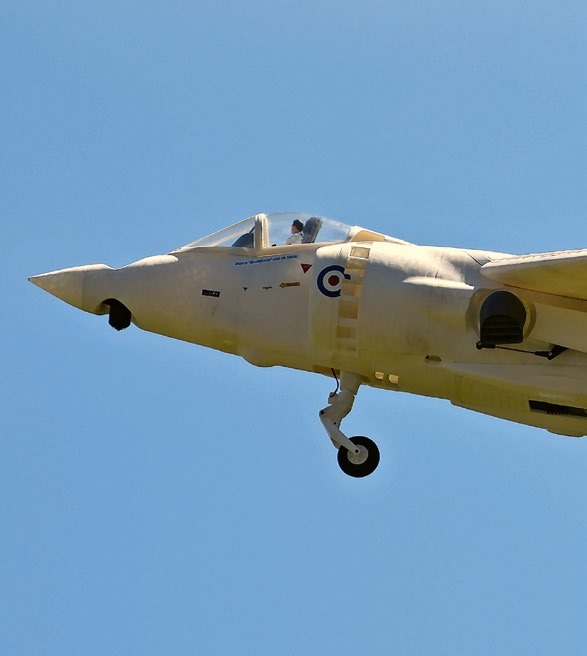
Have you almost forgotten about aircraft that take off and land vertically?
Emil Giezendanner