
Skyguide – The Invisible Partner
The Swiss air traffic control agency Skyguide has approximately 1,500 employees across 14 locations. On behalf of the federal government, it ensures the safe and efficient management of military and civil air traffic in controlled airspace. Its area of responsibility extends beyond national borders to southern Germany, France, and Austria. As a result, more than 40 percent of the airspace monitored by Skyguide is located abroad. The Swiss air traffic control agency is not only responsible for controlling arrivals and departures at 14 airports; it also monitors traffic in the air corridors. In total,
last year, there were approximately 1.16 million flights, or about 3,170 flights per day. Its responsibilities also include the aeronautical information service and the technical service for the installation, operation, and maintenance of air traffic control systems, such as radar systems or instrument landing systems.
Switzerland's unique location within the international air traffic network, combined with the country's topography, makes its airspace one of the densest and most complex in Europe. For example, the numerous surrounding
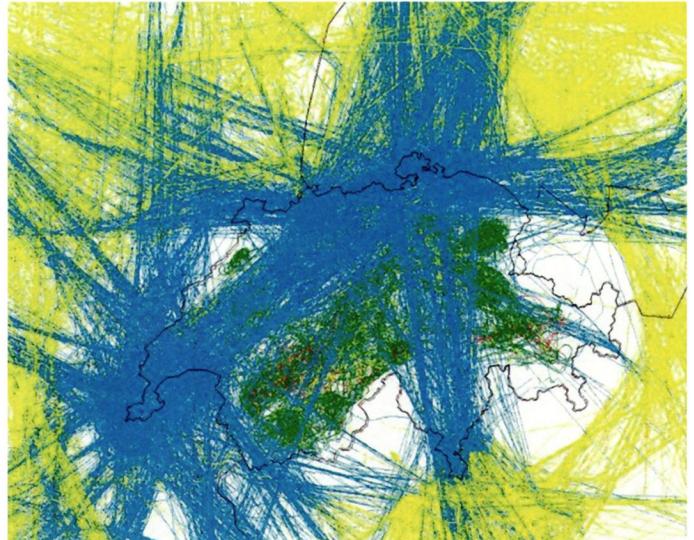
Intercontinental airports handle a high volume of takeoffs and landings. Swiss airspace also contains two of the busiest hubs in Europe. The unique topography and limited space further increase the complexity of air traffic control. This is compounded by the needs of the various airspace users, all of whom claim space in the airspace for themselves.
In Switzerland’s limited airspace, it is not easy to reconcile the interests of all users. Safety is always the top priority. Ensuring a consistently high level of safety for all parties involved sometimes leads to restrictions. However, Skyguide strives to accommodate the needs of all airspace users—to the extent possible within the framework of applicable safety standards. A high degree of flexibility is required to use the limited airspace as efficiently as possible. The integration of military and civil air traffic control 10 years ago
was made by the integration of military and civil air traffic control 10 years ago. As a result, military airspace can be used for civil traffic as long as no military training flights are taking place.
The better airspace users understand the rules and structures, the safer air traffic becomes. Communication and coordination among the various stakeholders in aviation play a
and fosters mutual understanding. Skyguide places great importance on regular communication with all its partners. For example, meetings are held once a year between Skyguide’s top management and the board of the Swiss Aero Club. This platform provides an opportunity to identify any issues and develop joint measures for improvement. One result of this strong collaboration is the Memorandum of Understanding signed last year by the Swiss Model Aircraft Association (SMV) and Skyguide. This document establishes uniform procedures at the national level regarding model airfields within control zones.


News from HEBU

TEAM MANAGER "THIS" BOSSHARD
 Rodito Nussbaumer

YOU KNOW WHAT I MEAN? 125 YEARS OF THE SWISS AERO CLUB
 Emil Giezendanner

HORIZON HOBBY/LEMACO NEWS: MICRO OV-10 BRONCO 645 MM BY E-FLITE

PRIDE AND GOOD IDEAS
 Markus Nussbaumer

34th HAHNENMOOS ALPINE MODEL AIRPLANE CAMP
Res Dauwalder
TRY-OUT DAY AT MFV WETTINGEN
Urs Keller
F3A EUROPEAN CHAMPIONSHIPS IN ST-MACAIRE, FRANCE
 Matthias Bosshard

52. 2026 ALPS CUP
Emil Giezendanner
ATOM, THE NEW DOUBLE-DECKER FROM CPLR
Matthias Bosshard
SUMMER FUN 2026 AT MG USTER
Martin Wunderli
What's New at Leomotion.com

THE PC-21 STORY
Emil Giezendanner
COUPE DES ALPES – OBSERVE AND LEARN
Rodito Nussbaumer
TWIN TOWN PARTNERSHIP
Wolfgang Voeller
EURO CONTEST GLIDER ACRO TOUR AUSTRIA 2026

BY YOUTH, FOR YOUTH
Lorena Betschen
CORSAIR F4U – A WARBIRD WITH A MEMORABLE LOOK
Jürgen Rosenberger, Jürgen Prinz
SMALL, MODEL-LIKE SAILBOATS
Res Dauwalder
WELCOME, NEW MEMBER!
Andrea Bolliger
FREE FLIGHT IN THE MIDDLE OF SUMMER
Urs Muntwyler
INSIGHTS INTO THE HISTORY OF SEAPLANES

NEWS FROM HEBU
 Julia Bucher

FROM 0 TO 100
Markus Nussbaumer
MEMORIES
Wolfgang Völler
NOS REGION – A HUB FOR ELECTRIC AVIATION
Emil Giezendanner
DO YOU KNOW WHAT I MEAN IN THE LAND OF SMILES?
Emil Giezendanner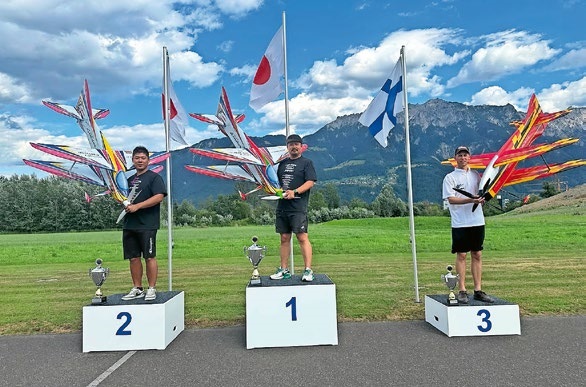
A SPECTACULAR F3A WORLD CUP IN THE PRINCIPALITY OF LIECHTENSTEIN
Emil Giezendanner