
Water-powered model aircraft—a tradition that goes back farther than many people realize
The following section describes the early days of water model aircraft flying using combustion-engine models. This is followed by a report on a water model aircraft competition in Thun. Finally, there is a brief description of RC water model aircraft flying today.
Around 1942, the first model seaplanes powered by internal combustion engines appeared on Swiss waters. In the years that followed, model seaplane flying took place mainly on the lakes of Ticino. At that time, most models were equipped with what was known as the “three-point float system.” Instead of a landing gear, two large main floats were mounted at the front and a small support float at the rear. Many model aircraft enthusiasts tried to improve the leading edge of the displacement floats. Floats with a step for the gliding phase were virtually nonexistent. They were beautiful models built from plywood and pine strips. Most were powered at that time by the Dyno model diesel engine with a displacement of 2.5 cm³. It was always a struggle to get more engine power to get off the water. In the years that followed, more powerful engines came onto the market, and later the first glow igniters from America.
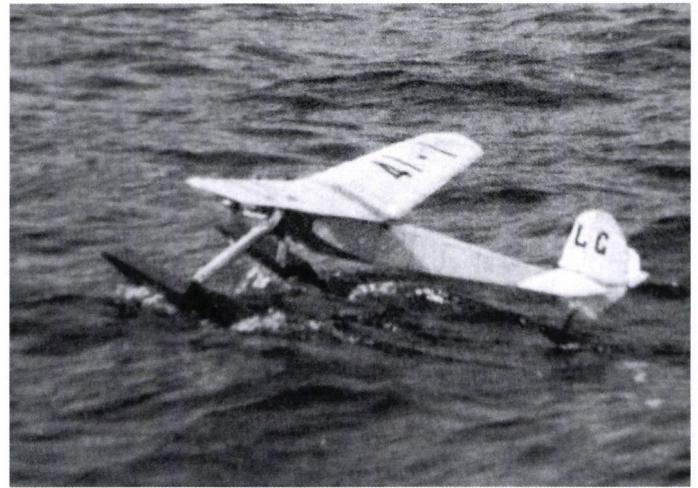
In 1946, the 2nd Swiss Competition for Water-Based Model Airplanes took place on Lake Biel. The hand-launch category was won by Guido Schaefer, a model airplane enthusiast from Thun. Another member of our MG, Fritz Gerber, competed with his beautiful “Falke” model. Even back then, it was equipped with two main floats and would hold its own in a comparison with today’s models. →
To use the lake, we “were allowed” to pay CHF 16 to the Cantonal Railway Authority of Bern. In exchange, we were allowed to launch about 10 model boats on the lake, charge no admission fees, and not cordon off any areas along the shore.
In early September, the time had finally come for this competition to take place. I took my model to the starting line. Back then, it was customary for every model to have a name; but most of the “fancier” insect names had already been taken.
The model was powered by a Castor 2.5-cm³ diesel engine. Three weeks later, at the National VM Competition in Yverdon, I took second place with this model.
On Saturday, we from Thun conducted some test flights. After the engine had been running too long, my model was blown off course by the wind and landed on a poplar tree near the Rössli restaurant.
To describe how the competition unfolded on Sunday, here are excerpts from a newspaper article from that time:
Our friends from Lugano arrived in Thun on Saturday evening and, after getting together for a drink, were able to find lodging with the model airplane enthusiasts from Thun. In the morning, a strong upper-level wind was blowing, which usually shifts to a Bise around 9–10 a.m. Unfortunately, that wasn’t the case that day. Arrangements had already been made to move the launch point far out onto the lake. Then suddenly, around half past twelve, our wish came true and we were able to begin.
It soon became clear that our friends from Lugano, who were there with five models, had the best handle on the tricky business of launching from the water.
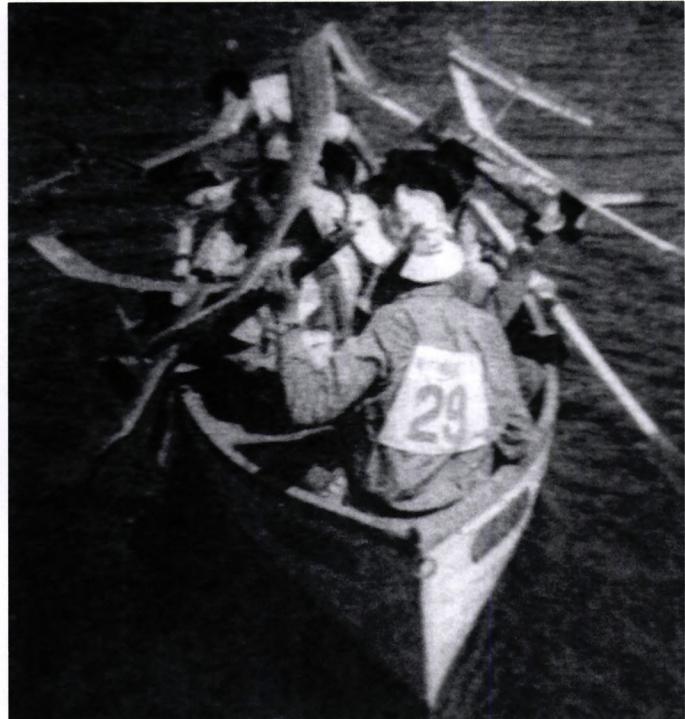
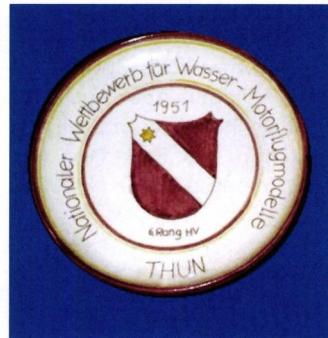
If the models were a little lighter, they would certainly perform better. This category of models was something new for us. If we build better floats, further successes are sure to follow. Under the careful guidance of Ae.C.S. representative Carlo Canepa from Lugano, the float testing, timekeeping, and evaluation were carried out to the satisfaction of everyone involved. A big thank you to all the boat owners who repeatedly brought the models back to the starting line, and to the Pontoniere, who provided us with a ferry boat to serve as the starting point. Thanks to the many ribbons sold, we were able to present a ceramic plate to all competitors who were ranked.
That concludes the newspaper report, which appeared alongside the results in various newspapers.
Such national VM hydro competitions continued to be held on various Swiss lakes for many years. As remote-control systems improved, they were increasingly used with seaplane models as well. Once again, it was GM Lugano that began organizing international competitions for radio-controlled seaplane models starting in 1959. In the early years, these were still so-called single-channel models, meaning only the rudder could be controlled.
For many years, getting the model out of the water remained a major challenge. For a long time, it was believed that it was not reliably possible to lift the model out of the water using just two main floats. It was only when more powerful motors and multi-channel control systems became available that the three-float configuration could finally be phased out.
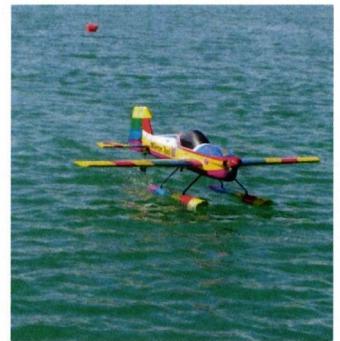
Today, modern motorized models are also flown on water. F3A models are equipped with floats and launched from the water. In addition to numerous competitions, these F3A-W models also have their own European Cup.
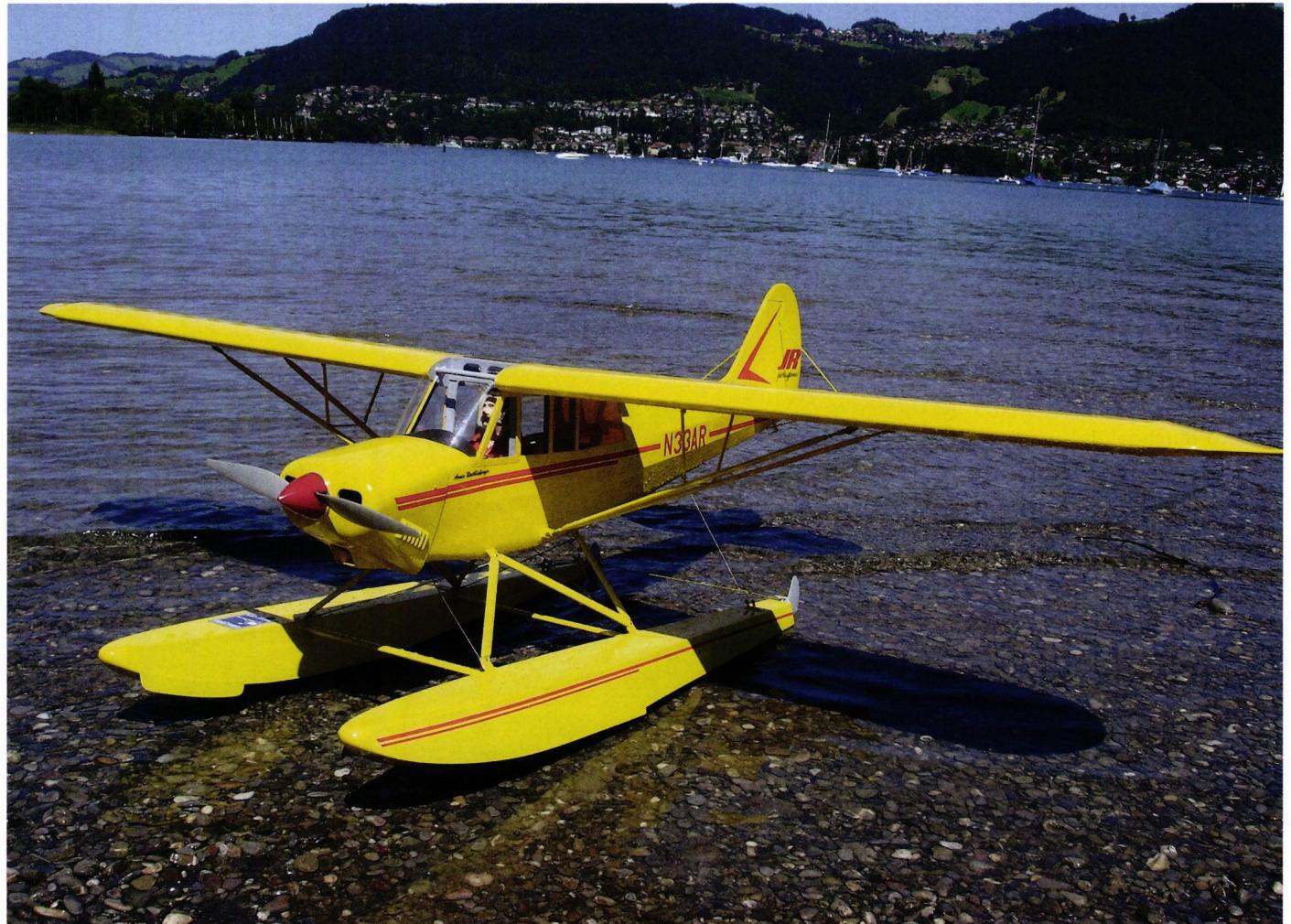
Replicas of large real-world aircraft—so-called scale or sport models—are also becoming increasingly common. This type of seaplane model has been growing rapidly since the advent of electric propulsion. It is now increasingly possible to fly over bodies of water where this was previously not permitted with internal combustion engines.


News from HEBU

HORIZON HOBBY/LEMACO NEWS: MICRO OV-10 BRONCO 645 MM BY E-FLITE

PRIDE AND GOOD IDEAS
 Markus Nussbaumer

TEAM MANAGER "THIS" BOSSHARD
 Rodito Nussbaumer

YOU KNOW WHAT I MEAN? 125 YEARS OF THE SWISS AERO CLUB
 Emil Giezendanner

F3A EUROPEAN CHAMPIONSHIPS IN ST-MACAIRE, FRANCE
 Matthias Bosshard

ATOM, THE NEW DOUBLE-DECKER FROM CPLR
Matthias Bosshard
SUMMER FUN 2026 AT MG USTER
Martin Wunderli
What's New at Leomotion.com

52. 2026 ALPS CUP
Emil Giezendanner
TWIN TOWN PARTNERSHIP
Wolfgang Voeller
34th HAHNENMOOS ALPINE MODEL AIRPLANE CAMP
Res Dauwalder
CORSAIR F4U – A WARBIRD WITH A MEMORABLE LOOK
Jürgen Rosenberger, Jürgen Prinz
SMALL, MODEL-LIKE SAILBOATS
Res Dauwalder
TRY-OUT DAY AT MFV WETTINGEN
Urs Keller
WELCOME, NEW MEMBER!
Andrea Bolliger
FREE FLIGHT IN THE MIDDLE OF SUMMER
Urs Muntwyler
COUPE DES ALPES – OBSERVE AND LEARN
Rodito Nussbaumer
EURO CONTEST GLIDER ACRO TOUR AUSTRIA 2026

BY YOUTH, FOR YOUTH
Lorena Betschen
INSIGHTS INTO THE HISTORY OF SEAPLANES

THE PC-21 STORY
Emil Giezendanner
NEWS FROM HEBU
 Julia Bucher

FROM 0 TO 100
Markus Nussbaumer
MEMORIES
Wolfgang Völler
NOS REGION – A HUB FOR ELECTRIC AVIATION
Emil Giezendanner
DO YOU KNOW WHAT I MEAN IN THE LAND OF SMILES?
Emil Giezendanner
Have you almost forgotten about aircraft that take off and land vertically?
Emil Giezendanner