
Aspach Electric Car Meet
No, it doesn’t really seem to bother anyone that there’s an ever-growing hole in the ground on the western edge of the field, which turns every off-field landing into a descent to the sixth basement level and elevates rescue operations—if they’re even worth the effort—to the level of mountaineering-grade rescue exercises. For twelve years now, a certain breed of electric aircraft enthusiasts—who don’t fit into any category defined by competition rules, couldn’t care less about climbing onto any winner’s podium—has been gathering there, and simply wants to show off what they’ve come up with over the past 52 weeks—driven and inspired by the idea that everything flies somehow, especially when it’s electrically powered! And so, once again this year, 175 pilots unpacked nearly 280 models to present them to a crowd of like-minded enthusiasts and interested spectators.
The range extended from the “death spirals” (vertical, full-throttle rolls downward) performed by the “Contour 400” with a 50 cm wingspan to Franz Schmid’s now legendary 10.5 m Horten Ille, whose 60 power cells (N-3000CR) were, however, unable to discharge due to a trivial engine problem. In between, there was everything that could get the blood pumping for those obsessed with electric propulsion.
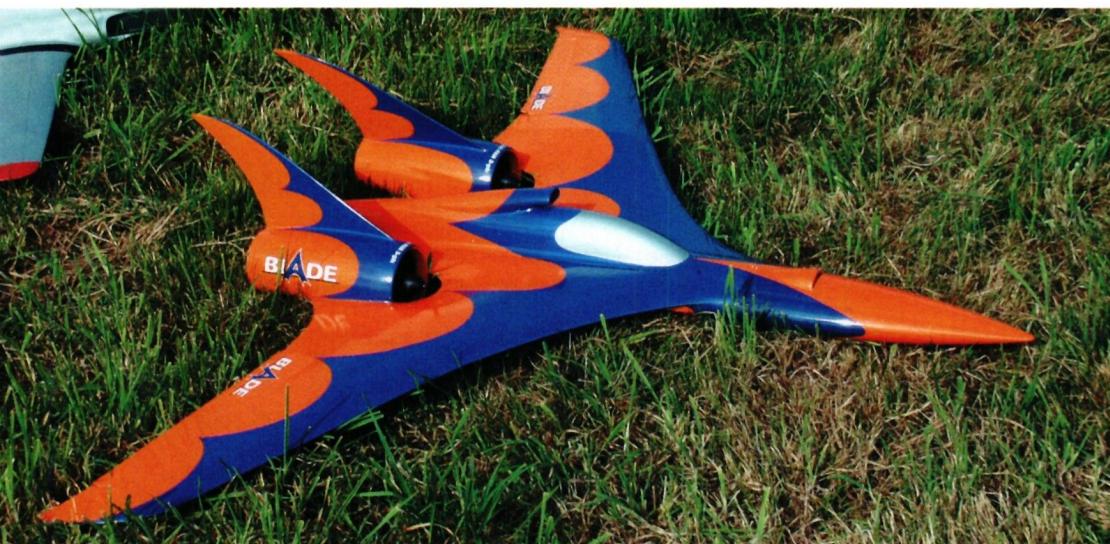
Although it’s hard to pinpoint given the diversity on display, it’s becoming clear where the spirit of innovation is headed. A sort of “flight from the middle” is emerging. More and more electric model aircraft enthusiasts are venturing into “big planes” and power systems with 20 or more cells. It almost seems as though the new CP-1700 compact cell has helped break previously held taboos. With an increased awareness of improved energy efficiency, modelers are increasingly indulging in “scale ballast” in the form of fully equipped cockpits, surface details, tension wires, and well-engineered, spring-loaded landing gear with an authentic look. Even jet models—which until recently were almost unimaginable without a rubber band launch aid—no longer want to simply crawl on their bellies but instead roll confidently across the hard runway on retractable wheels. In general, the performance of fan engines—originally unmentioned in the electrical engineering “creation story”—seems to be exploding. “Vertical without end” also seems to have long since ceased to be a foreign concept when it comes to impellers. And if one engine isn’t enough, we’ll just use two. Of course, you’ll search in vain for any traces of carbon dust on their nozzles, because brushless rotation has long been the norm inside.
The range of high-torque motors seems to be driving the shift
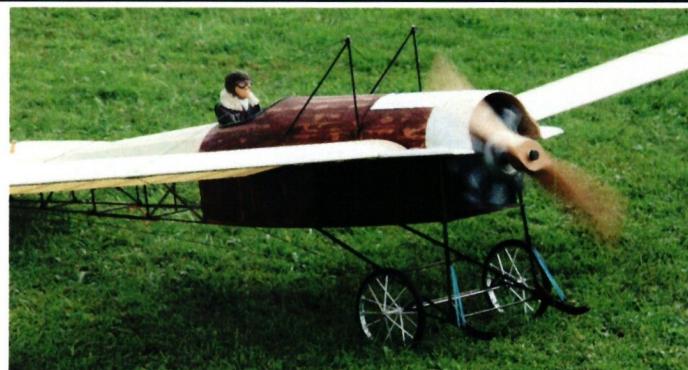
to transition from the classic electric glider to the electrically powered model in general. This allows for the use of large propellers, which not only appear more true to the original design but also operate more effectively, without the intermediary services of gear stages stressed by metal abrasion. The latter are likely indispensable only in the sport classes, where maximum, short-term power output is crucial.
New, sometimes complex propulsion technology—not least among the “Hubis,” who neither compromise on visual perfection nor fall short in terms of (aerobatic) flight dynamics—and all this despite flight times that inevitably clash with the tight scheduling of a major event. No wonder, since external rotors are whirring inside, and rows of 3000s flash like advertising columns from the battery compartments. And anyway: Flight time alone is no longer enough to score points, even among the “ampers”!
It’s probably common knowledge by now that many electric-flying enthusiasts no longer consider building an electric motor themselves to be out of the question. That takes time, which is why the question of finding a suitable model often arises shortly before an event begins. Often, the only option left is to reach for one of those oversized cardboard boxes containing one of the popular “ARF foam planes,” or to find two half-evenings to quickly shape a few Depron sheets into something resembling an airplane. As a result, it’s not uncommon for the interior and exterior to be somewhat out of proportion in terms of the effort involved. High-tech in shacks? This needn’t detract from the fun of flying, since it has always been the pride in something you’ve built yourself that elevates the model flying experience. And maybe there’s still enough time before the next Aspach to pull off a real showstopper. The creation should be finished by September 20–21, 2003, at the latest. Then it’s Aspach the 13th. We’re not superstitious, are we?
Ludwig Retzbach

EURO CONTEST GLIDER ACRO TOUR AUSTRIA 2026

THE PC-21 STORY
 Emil Giezendanner

TWIN TOWN PARTNERSHIP
 Wolfgang Voeller

SUMMER FUN 2026 AT MG USTER
Martin Wunderli
CORSAIR F4U – A WARBIRD WITH A MEMORABLE LOOK
Jürgen Rosenberger, Jürgen Prinz
52. 2026 ALPS CUP
Emil Giezendanner
YOU KNOW WHAT I MEAN? 125 YEARS OF THE SWISS AERO CLUB
Emil Giezendanner
News from HEBU

TEAM MANAGER "THIS" BOSSHARD
Rodito Nussbaumer
ATOM, THE NEW DOUBLE-DECKER FROM CPLR
 Matthias Bosshard

F3A EUROPEAN CHAMPIONSHIPS IN ST-MACAIRE, FRANCE
Matthias Bosshard
INSIGHTS INTO THE HISTORY OF SEAPLANES

WELCOME, NEW MEMBER!
Andrea Bolliger
What's New at Leomotion.com

PRIDE AND GOOD IDEAS
 Markus Nussbaumer

SMALL, MODEL-LIKE SAILBOATS
Res Dauwalder
FREE FLIGHT IN THE MIDDLE OF SUMMER
Urs Muntwyler
BY YOUTH, FOR YOUTH
Lorena Betschen
HORIZON HOBBY/LEMACO NEWS: MICRO OV-10 BRONCO 645 MM BY E-FLITE

COUPE DES ALPES – OBSERVE AND LEARN
Rodito Nussbaumer
34th HAHNENMOOS ALPINE MODEL AIRPLANE CAMP
Res Dauwalder
TRY-OUT DAY AT MFV WETTINGEN
 Urs Keller

NEWS FROM HEBU
 Julia Bucher

NOS REGION – A HUB FOR ELECTRIC AVIATION
Emil Giezendanner
MEMORIES
 Wolfgang Völler

70 YEARS OF THE NIDWALDEN MODEL AIRPLANE CLUB
Martin Barmettler
A SPECTACULAR F3A WORLD CUP IN THE PRINCIPALITY OF LIECHTENSTEIN
Emil Giezendanner
FROM 0 TO 100
Markus Nussbaumer