
RC Hang Gliding on the Hoch-Ybrig
Organization: Region 5
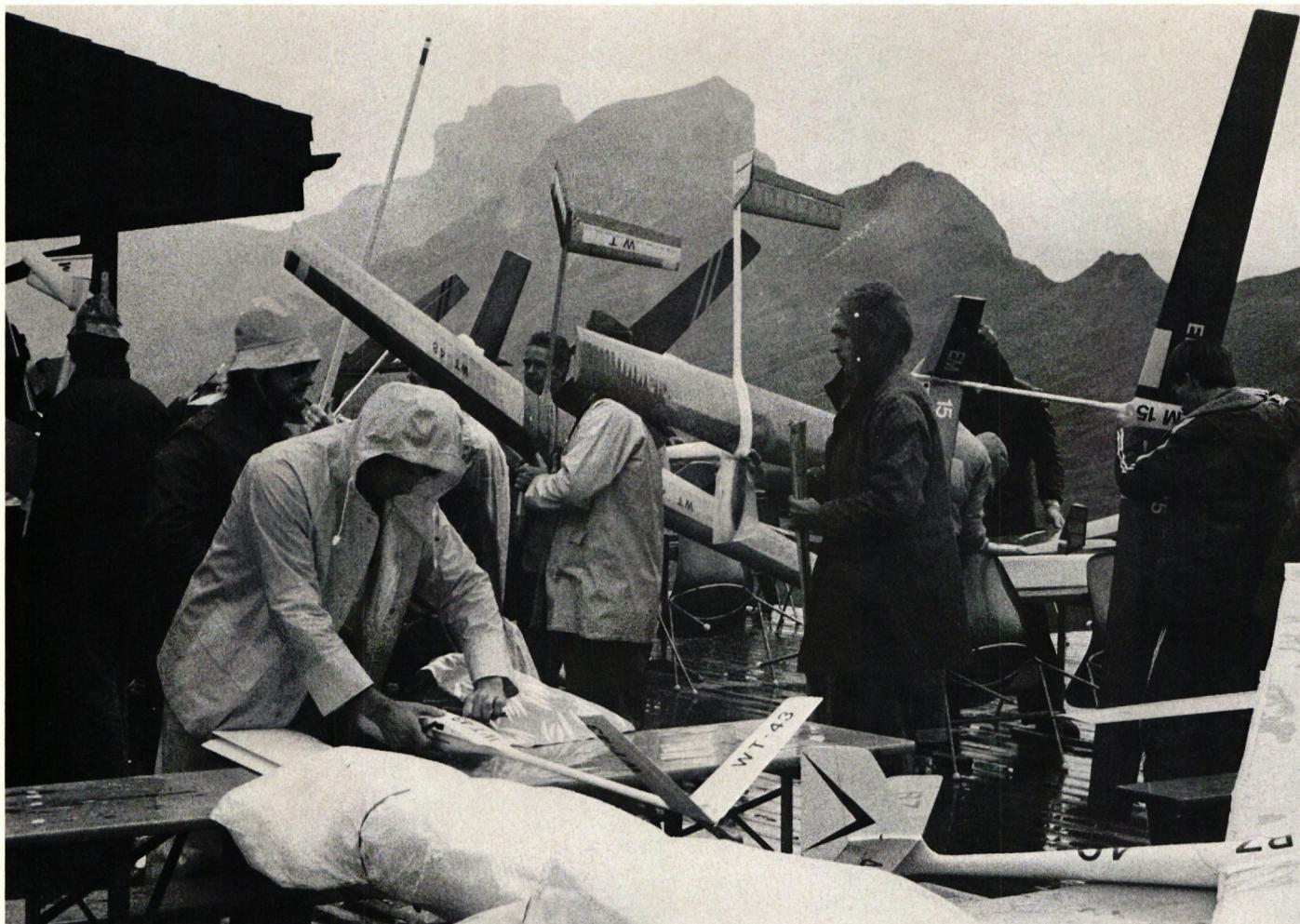
The RCS Swiss Slope Gliding Championship from the perspective of a member of the RC Gliding Subcommittee.
The Swiss Championship held on September 4, 1977, at Hoch-Ybrig marked the conclusion of a year of gathering experience with the new provisional RC slope gliding regulations. Over the course of the year, we received specific proposals from various model aviation regions for improving the regulations, with the overwhelming majority rating the newly designed program very positively. Our goal was to place higher demands on the pilots’ flying performance and tactical skills, as well as on the models themselves.
should. As the reactions from our competitors confirm, we have succeeded in this. However, some details need to be revised to improve the competition in practice.
The biggest problem with RC gliding competitions in general arises time and again at the regional qualifiers, which, in the major model flying regions, attract over 100 competitors. At the Swiss Championship, the competition could not begin until 12:00 p.m. due to very poor weather. With 40 competitors, divided into groups of four, we were nevertheless able to complete four rounds. Spread over these five hours, this amounts to an average of 1 1/4 hours per round, or two minutes per competitor.
With 120 competitors and groups of five for each start, approximately three hours per round would need to be allocated. This means that only two rounds can be held in a single day of competition. That is simply far too few for RC gliding competitions. The element of chance involved in Switzerland’s constantly changing updraft conditions will turn any RC gliding competition with only two rounds into a farce. There can be no question of a fair competition.
Furthermore, it was noted by various parties that the current scoring system does not produce enough rankings. As a solution, it was proposed to include the actual flight time in the scoring. This shortcoming was particularly evident under weak updraft conditions.
When we in the RC Gliding Subcommittee were considering the time factor, we came up with a solution that can address both of the above-mentioned problems at once:
The revised regulations will introduce a group-based scoring system. This means that the pilot in each starting group who achieves the best performance within that group will receive 1,000 points for that performance. The remaining pilots in the same starting group will receive a percentage of the points based on the performance of the group’s winner.
Such a solution opens up entirely new possibilities in RC slope soaring. The influence of constantly changing updraft conditions during the course of a heat is completely eliminated. Even if the wind direction shifts during a heat, pilots can immediately switch to the alternate slope without having to wait for the heat to end.
Under these circumstances, there is no need for a discard result, which gives pilots who deliver consistent performance a better chance.
Based on this, we recalculated the results of the Swiss Championship and found that this approach yielded a clear ranking. However, the pilots were not prepared for such a scoring system.
However, the inclusion of actual flight time in the scoring can be omitted.
However, to ensure that competitions with group-based scoring are truly fair, it was necessary to mandate a flawless random draw of competitors for the starting groups, with names concealed and under supervision. Furthermore, it was objected that the time available after crossing the finish line until landing was too short. We have addressed this issue by proposing to increase this time from the current 30 seconds to 60 seconds. However, the discipline time is to remain unchanged at 8 minutes. It became very clear that the required total distance of the triangle—600 meters—is too long in practice. The proposed reduction to 300 meters will also help differentiate the rankings more clearly and corresponds to the distance already successfully used in practice. Due to varying interpretations, it was decided to define the start/finish line more clearly and to establish guidelines regarding the limited width of the line.
We are convinced that these changes—even though it is impossible to cover every eventuality in a set of rules—will make the RC hang gliding competition even more interesting and, above all, fairer for the competitors.
The result should truly depend on the performance of the pilot and the model, and no longer solely on luck.
We have therefore submitted a corresponding amendment proposal to the RC FAKO and hope that we will be able to definitively implement these revised rules in 1978.
I would like to take this opportunity to sincerely thank all my fellow modelers who have taken the time to support us with constructive criticism, whether verbal or written.
Since these regulations are certainly not set in stone and will inevitably require revisions and new approaches, we are already asking all model aircraft pilots to share their experiences, suggestions, and critiques with us on an ongoing basis or to forward them to the RC FAKO via the regional technical advisors.
We rely on a strong response from the ranks of our competitors.
We would like to take this opportunity to sincerely thank you for your ongoing constructive criticism, whether verbal or written.
Since these regulations are certainly not set in stone and will inevitably require revisions and new approaches, we ask all model aviators to share their experiences, suggestions, and feedback with us on an ongoing basis or to forward them to the RC FAKO via the regional technical advisors.
We rely on a strong response from the ranks of our competitors.
Organization: Region 5
| 1. Marcel Scherrer | WE | 3250 |
| 2. Ruedi Baumgartner | WT | 2850 |
| 3. Ernst Haigis | SG | 2750 |
| 4. Andreas Müller | TA | 2550 |
| 5. H. J. Bindemann | BZ | 2450 |
| 6. Stürchler, Paul | BR | 2400 |
| 7. Stephan Engler | WO | 2350 |
| Peter Disler | Mayor | 2350 |
| René Hunziker | LY | 2350 |
| 10. Armin Röthlisberger | TU | 2300 |
| Marc Schnyder | EM | 2300 |
| 12. Jürg Steinmann | OB | 2000 |
| 13. Hansjürg Weber | RO | 1950 |
| Peter Rascher | EL | 1950 |
| 15. Bruno Miotti | WT | 1900 |
| 16. Kurt Nünlist | GT | 1800 |
| Eich, Kurt | RO | 1800 |
| 18. Rumpold, Helmut | WT | 1750 |
| 19. Frank Zülsdorf | SG | 1700 |
| 20. Edgar Gautschi | WT | 1650 |
| 21. Peter Meier | OB | 1600 |
| 22. Bruno Meuwli | FG | 1450 |
| Zeltner, Peter | SB | 1450 |
| 24. Rolf Hentschi | BL | 1400 |
| 25. R. Dietschi | NE | 1300 |
| Hefti Peter | EB | 1300 |
| Hans Grünenwald | WE | 1300 |
| 28. Rudolf Schaub | MB | 1150 |
| 29. Philippe Viret | GE | 1050 |
| Karl Hürlimann | WH | 1050 |
| 31. Paul Kundela | RS | 1000 |
| Kälin Karl | EI | 1000 |
| 33. Arnold Furer | TU | 850 |
| Henseler, Walter | EM | 850 |
| 35. Lucian Anton | RS | 700 |
| 36. Ueli Gerber | TU | 550 |
| Karl Ochsenbein | EI | 550 |
| 38. Marcel Bachmann | EM | 400 |
| 39. Hans Beer | LS | 300 |
| 40. Gemperle Kurt | DI | 250 |
| 41. Ernst Gerber | TU | 150 |
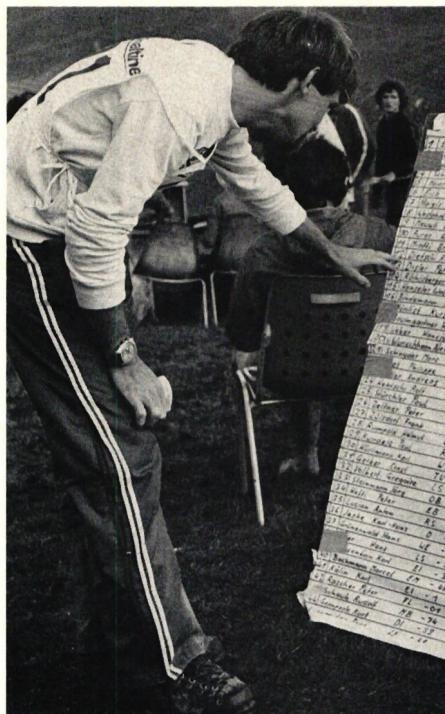
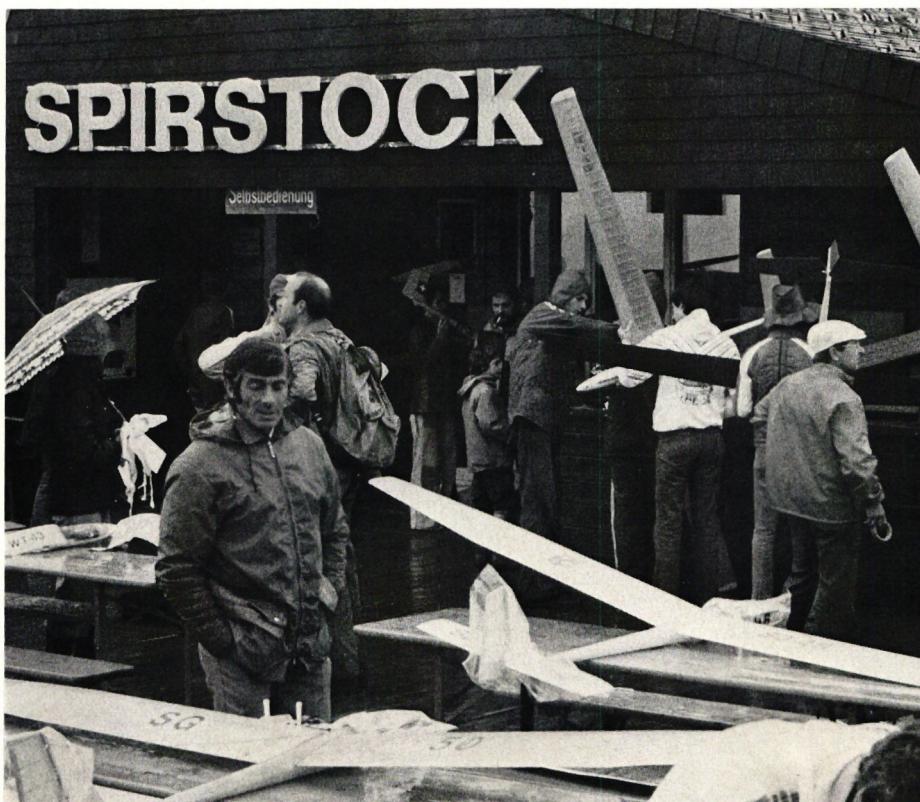
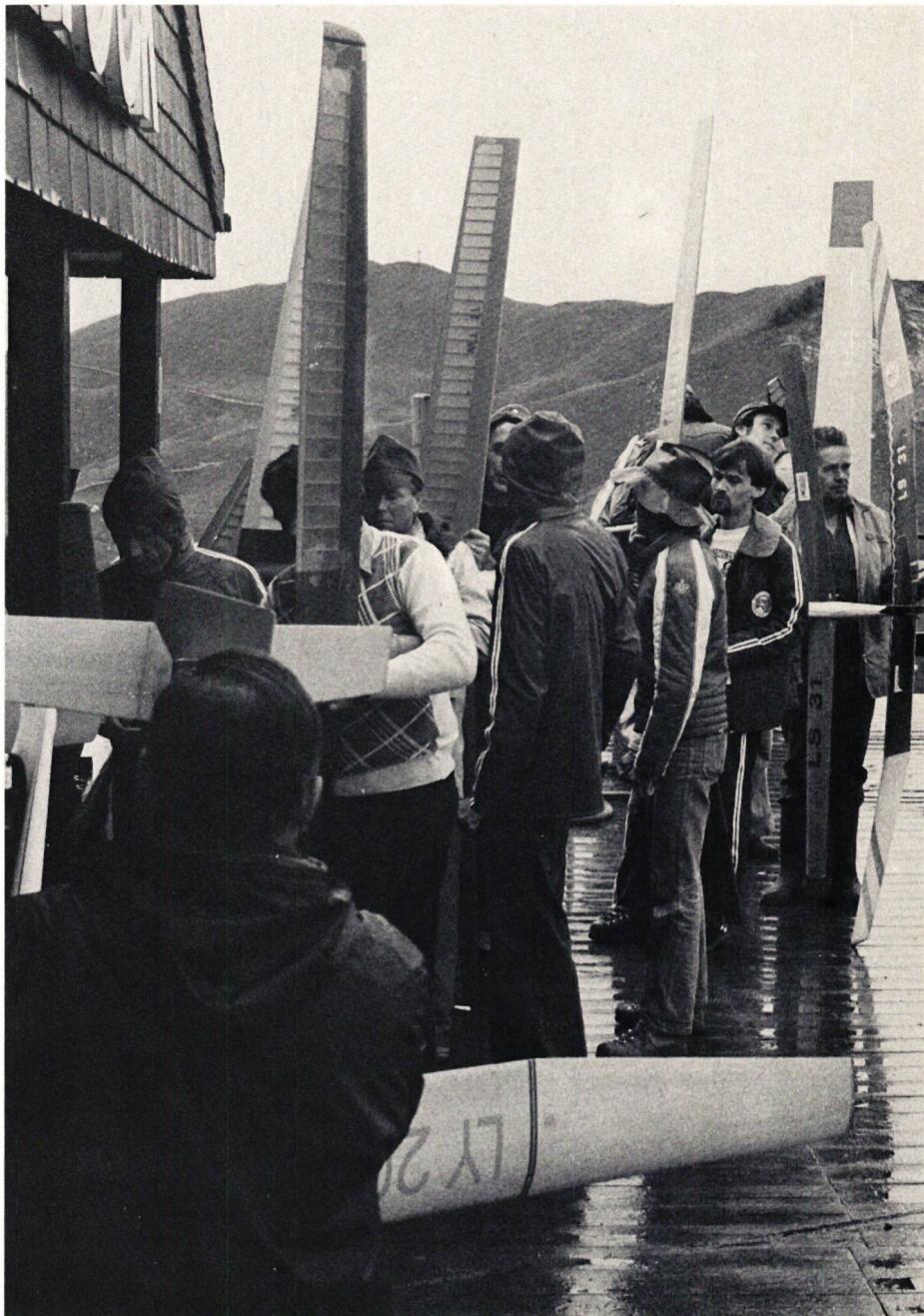
Left: You can see quite clearly here that they can't get their act together—it actually rained that morning... Apparently, someone put it even more bluntly, using language befitting his upbringing.


News from HEBU

TEAM MANAGER "THIS" BOSSHARD
 Rodito Nussbaumer

YOU KNOW WHAT I MEAN? 125 YEARS OF THE SWISS AERO CLUB
 Emil Giezendanner

PRIDE AND GOOD IDEAS
 Markus Nussbaumer

ATOM, THE NEW DOUBLE-DECKER FROM CPLR
 Matthias Bosshard

SUMMER FUN 2026 AT MG USTER
Martin Wunderli
F3A EUROPEAN CHAMPIONSHIPS IN ST-MACAIRE, FRANCE
Matthias Bosshard
52. 2026 ALPS CUP
Emil Giezendanner
HORIZON HOBBY/LEMACO NEWS: MICRO OV-10 BRONCO 645 MM BY E-FLITE

TWIN TOWN PARTNERSHIP
Wolfgang Voeller
CORSAIR F4U – A WARBIRD WITH A MEMORABLE LOOK
Jürgen Rosenberger, Jürgen Prinz
TRY-OUT DAY AT MFV WETTINGEN
Urs Keller
WELCOME, NEW MEMBER!
Andrea Bolliger
EURO CONTEST GLIDER ACRO TOUR AUSTRIA 2026

BY YOUTH, FOR YOUTH
Lorena Betschen
INSIGHTS INTO THE HISTORY OF SEAPLANES

SMALL, MODEL-LIKE SAILBOATS
Res Dauwalder
What's New at Leomotion.com

COUPE DES ALPES – OBSERVE AND LEARN
Rodito Nussbaumer
34th HAHNENMOOS ALPINE MODEL AIRPLANE CAMP
Res Dauwalder
FREE FLIGHT IN THE MIDDLE OF SUMMER
Urs Muntwyler
THE PC-21 STORY
Emil Giezendanner
NEWS FROM HEBU
 Julia Bucher

FROM 0 TO 100
Markus Nussbaumer
MEMORIES
Wolfgang Völler
NOS REGION – A HUB FOR ELECTRIC AVIATION
Emil Giezendanner
Have you almost forgotten about aircraft that take off and land vertically?
Emil Giezendanner
DO YOU KNOW WHAT I MEAN IN THE LAND OF SMILES?
Emil Giezendanner