
EU Drone Regulations—A Blow to Model Aircraft Enthusiasts
We can only speculate as to why the legal experts at the European Union Aviation Safety Agency (EASA) wanted to make model aircraft flights subject to the EU Drone Regulation. Personally, I suspect the influence of powerful trade associations, including those in the aviation industry.
The trouble began to brew early on. As early as 2016, it became apparent that model aircraft flying would be subject to the EU Drone Regulation. In December 2018, the topic of model aircraft and drones also came before the CIAM (FAI Model Aircraft Commission). At the FAI, the decision had presumably already been made at a higher level. With grand promises, representatives of the drone lobby succeeded in convincing the association’s leadership of the “gold mine” that drones represented. Apparently, they anticipated massive sponsorship funds for the FAI, which was already in financial straits at the time. These remain mere speculations.
Even the first drone racing world championships in China were a disaster—including the TV rights. At the aforementioned CIAM Bureau meeting, I had advocated for a clear separation between model aircraft and drones and had also argued fiercely with the FAI Secretary General. Later, the AeCS sent a letter to the FAI—
(VLK) dated November 24, 1994
(as of January 1, 2019)
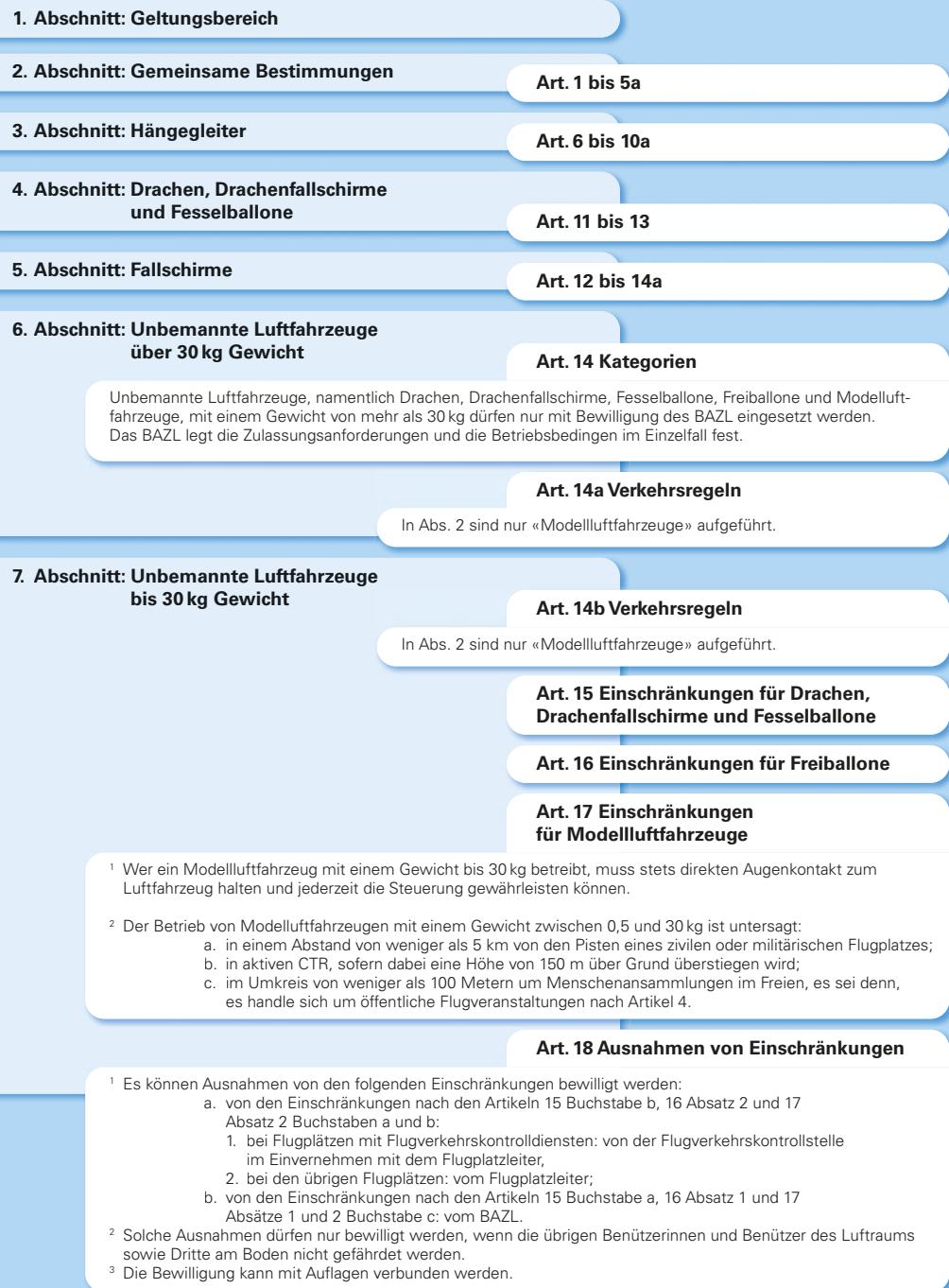
**Section 1: Scope**
**Section 2: Common Provisions** Art. 1 through 5a
**Section 3: Hang Gliders** Articles 6 through 10a
**Section 4: Kites, Kite Parachutes, and Tethered Balloons** Art. 11 through 13
**Section 5: Parachutes** Art. 12 through 14a
**Section 6: Unmanned Aircraft Weighing More Than 30 kg** Art. 14 Categories
Unmanned aircraft, specifically kites, kite parachutes, tethered balloons, free balloons, and model aircraft, weighing more than 30 kg may only be operated with a permit from the FOCA. The FOCA shall determine the certification requirements and operating conditions on a case-by-case basis.
Art. 14a Traffic Rules
Paragraph 2 lists only “model aircraft.”
**Section 7: Unmanned Aircraft Weighing Up to 30 kg**
Art. 14b Traffic Rules
Paragraph 2 lists only “model aircraft.”
Art. 15 Restrictions on Kites, Kite Parachutes, and Tethered Balloons
Art. 16 Restrictions on Free-Flying Balloons
Art. 17 Restrictions on Model Aircraft
1 Anyone operating a model aircraft weighing up to 30 kg must maintain direct visual contact with the aircraft at all times and be able to control it at all times.
2 The operation of model aircraft weighing between 0.5 and 30 kg is prohibited:
- a. within a distance of less than 5 km from the runways of a civil or military airfield;
- b. within active CTRs, provided that an altitude of 150 m above ground level is exceeded;
- c. within a radius of less than 100 meters of outdoor gatherings of people, unless the event is a public aviation event as defined in Article 4.
Art. 18 Exceptions to Restrictions
1 Exceptions to the following restrictions may be granted:
- a. from the restrictions under Articles 15(b), 16(2), and 17(2)(a) and (b):
- for airports with air traffic control services: by the air traffic control unit in consultation with the airport manager;
- for other airfields: by the airfield manager;
- b. from the restrictions set forth in Article 15(a), Article 16(1), and Article 17(1) and (2)(c): by the FOCA.
2 Such exemptions may only be granted if they do not endanger other users of the airspace or third parties on the ground.
3 The authorization may be subject to conditions.
**Where are the drones? Logically, drones should be listed along with the other categories of unmanned aerial systems (UAS).**
The response was succinct: “Model airplanes are unmanned aircraft.” This answer foreshadowed a trend that is, unfortunately, common today: In many places, there are no longer any model airplanes—only drones. The international model aviation community remained silent, with the exception of the German Model Aviation Association. The model aviation representatives were unable to prevail against the EASA lawyers. However, the EASA lawyers realized that this one-size-fits-all approach was unsustainable in the long run. In fact, the drone regulation now even includes a category for “model aircraft.” Unfortunately—as already mentioned—the FAI has done model aviation a great disservice by using the term “drone racing” for FPV races (copter races using video goggles).
Politicians around the world are seeking to regulate drone use. Complaints regarding dangerous approaches to aircraft, photography in and over residential areas, and disturbances to wildlife—particularly in nature reserves—have also led to numerous complaints and lawsuits here. The inevitable happened: drone flight bans were imposed in various cantons and municipalities. Unfortunately, model aircraft flying was also banned at the same time. When I inquired, I was told that even the Federal Office of Civil Aviation (FOCA) does not distinguish between model aircraft and drones—where can I find the legal basis for this? To me, it’s clear: the drone boom has landed us model aircraft enthusiasts in this mess. To this day, there are no rules for drones in Switzerland!
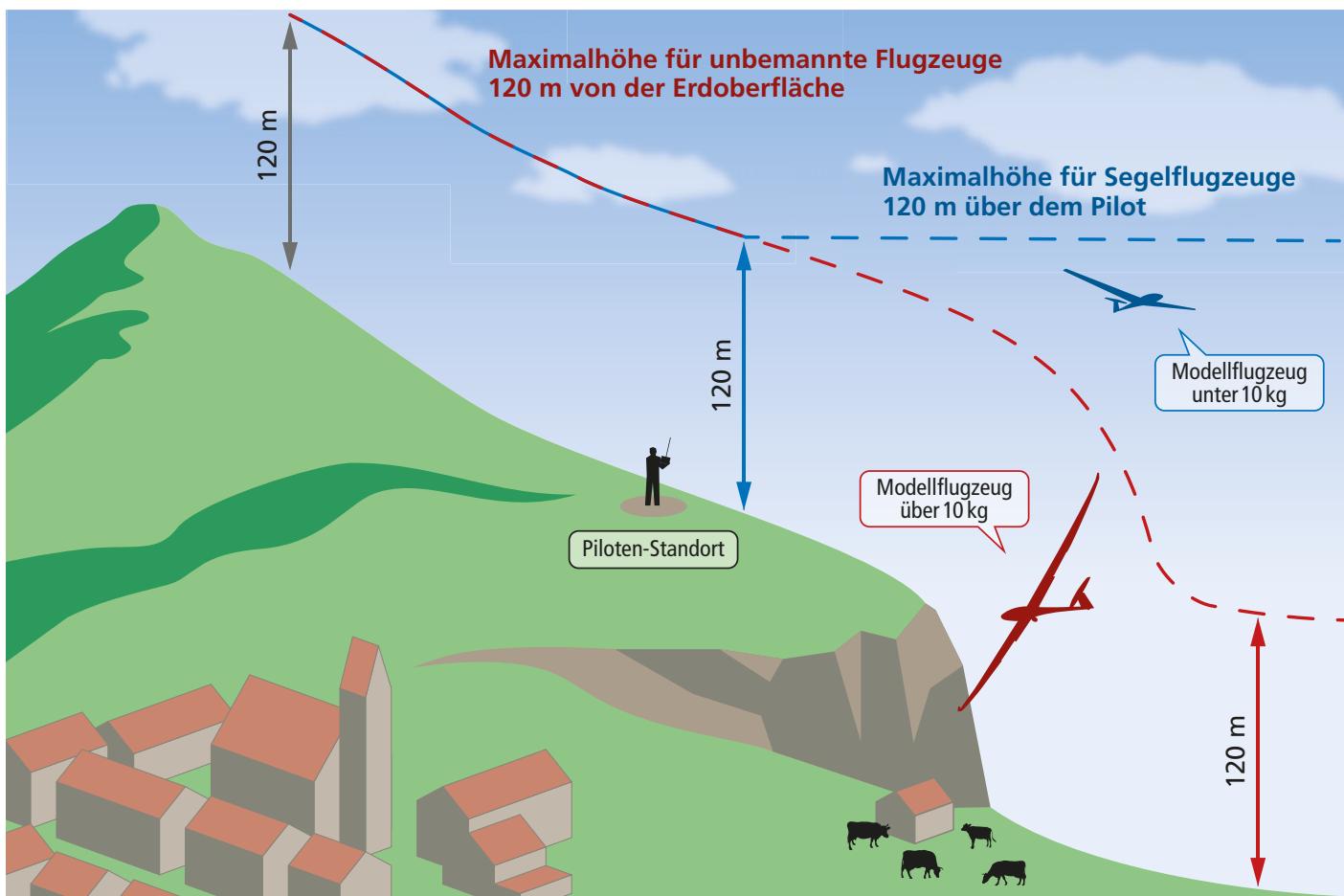
Unfortunately, this is something we hear time and again. From my perspective, the restrictions and limitations would be massive for us model aviators. After many discussions and a great deal of research, I’ve come to a very different conclusion. For example, slope flying—which is popular in Switzerland—would be severely affected; in fact, it would be practically impossible with large gliders weighing 10 kg or more. Added to this are age limits for our junior pilots, mandatory registration (our data must be accessible to Brussels), online exams, new fees, and safety inspections of our airfields—to name just a few. The “competent authorities” can designate or exclude specific, defined portions of airspace for model flying.
Unfortunately, very few of us are familiar with the entire complicated, roughly 70-page set of regulations known as the “Commission Implementing Regulation (EU) 2019/947.” What I don’t know won’t bother me! For our model aviation enthusiasts who aren’t members of an association, the whole situation—combined with a general altitude restriction—would become even more burdensome and, in particular, highly discriminatory.
Just as the federal government has failed to keep up with digitalization, the FOCA has clearly missed the boat when it comes to the drone boom. This is likely also due to the fact that it planned to adopt the EU Drone Regulation. Now that the Federal Council has been tasked by Parliament with excluding model aircraft from the EU Drone Regulation, these issues will also come up for discussion.
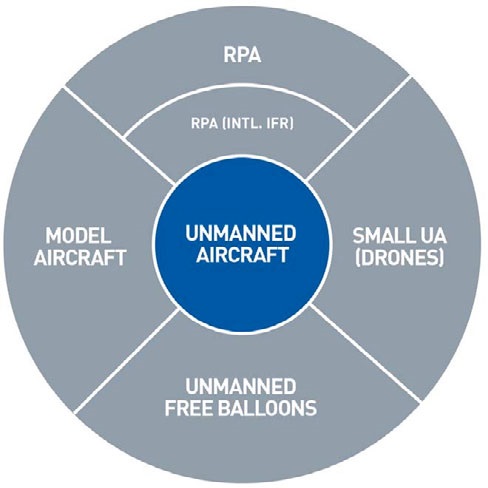
Of course, model aircraft are unmanned aerial vehicles. Drones are included in this category as well. It would be just as foolish if a federal agency couldn’t distinguish between trucks and passenger cars. Both are road vehicles! The ICAO (International Civil Aviation Organization, a specialized agency of the United Nations [UN] headquartered in Montreal, Canada) is considerably further along in this regard. See chart.
#### UNMANNED AIRCRAFT (UA)
Unmanned aircraft (UA) operate as part of an unmanned aircraft system (UAS) which also includes a remote pilot station.
(RPS), a C2 Link for control and management, and other necessary components. UA includes a broad spectrum of aircraft, from drones, unmanned free balloons, and model aircraft, to highly complex remotely piloted aircraft (RPA) operated by licensed aviation professionals. REMOTELY PILOTED AIRCRAFT (RPA)
RPA are a subset of UA. A further subset of RPA is expected to be accommodated and ultimately integrated into the airspace for international, instrument flight rules (IFR) operations, which will require full regulatory certification.
#### SMALL UA / DRONES
Generally weighing less than 25 kg, this subset of smaller UA is commonly referred to as drones.
#### UNMANNED FREE BALLOON
This term describes non-power driven, unmanned, lighter-than-air aircraft in free flight.
#### MODEL AIRCRAFT
This term describes small size unmanned aircraft, generally representing a scaled down version of full size aircraft and used for recreational purposes in the sport and pastime of aeromodelling.

The Aero Club and SMV have entrusted the Foundation for Aviation Competence (FFAC) with overseeing the implementation process of the adopted motion to exclude model aircraft from EU drone regulations. The founder and president of the foundation is the well-known aviation lawyer and honorary member of the AeCS, Prof. Dr. Roland Müller. Roland Müller—who is also an active model aircraft pilot—chairs a small working group comprising two aviation lawyers: Marc Siegenthaler, who is highly knowledgeable about the drone scene, and Martin Ryff from the AeCS. Martin Ryff is an aviation lawyer with many years of experience and extensive knowledge of international aviation, particularly the EASA (EU). Representing the model aviation community are Adi Eggenberger, SMV President, and Emil Giezendanner, NOS President. The working group has taken the initiative and provided the FOCA with a key proposal in the form of a draft for a new VLK.
...security checks at our airfields, to name just a few. The “competent authorities” may designate or exclude specific, defined portions of airspace for model aircraft flight.
Unfortunately, very few of us are familiar with the entire complicated, roughly 70-page set of regulations known as the “Commission Implementing Regulation (EU) 2019/947.” What I don’t know won’t bother me! For our model aviation enthusiasts who aren’t members of an association, the whole situation would become even more burdensome—and, in particular, highly discriminatory—with a general altitude restriction.
Just as the federal government has failed to keep up with digitalization, the FOCA has clearly missed the boat when it comes to the drone boom. This is likely also due to the fact that it planned to adopt the EU drone regulation. Now that the Federal Council has been tasked by Parliament with excluding model aircraft from the EU drone regulation, these issues will also come up for discussion.
Of course, model aircraft are unmanned aerial vehicles. Drones are included in this category as well. It would be just as foolish if a federal agency couldn’t distinguish between trucks and passenger cars. Both are road vehicles! The ICAO (International Civil Aviation Organization, a specialized agency of the United Nations [UN] headquartered in Montreal, Canada) is considerably further along in this regard. See chart.
In my view, the fact that representatives of the drone industry fought against this motion during the parliamentary debates on excluding model aircraft from the EU Drone Regulation did a disservice to public acceptance of drones. After all, the National Council and the Council of States approved the motion, thereby giving the Federal Council a clear mandate. The drone industry would have fared much better if it had acknowledged the concerns of model aircraft enthusiasts while simultaneously demanding a swift solution for the drone industry from the FOCA. That could reconcile both sides; for one thing is clear: the entire debacle arose for model aviation from the problems associated with the use of drones—and not the other way around. If the drone industry and researchers want such massive EU interference in their development, they must take responsibility for it themselves. This will secure market access, but with clipped wings—a killer of innovation. Slope soaring, which is popular in Switzerland, is already severely restricted in many places in tandem with drone bans. Under the EU regulation, slope soaring with large gliders would be made practically impossible. Unlike the model aircraft hobby, public acceptance will not improve as drone use increases. Delivery drones in residential neighborhoods, air taxis taking up already scarce parking spaces in cities, commotion around hospitals and industrial zones, etc. Fighting for one’s own interests is no sin. But if the entire model aviation culture is to be regulated to death in the process, the fun definitely stops. *Giez.*

Technological advances and the growing commercial significance of drones are making the distinction between drones and model airplanes increasingly clear.
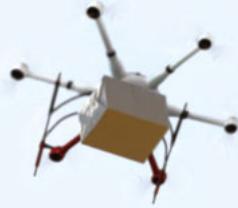
| Drones | Model airplanes | |
|---|---|---|
| National and International Economy |
|
|
| Organizations and Associations | Business and Industry Associations:
|
|
| General Technology, Definition |
|
|
| Research and Development |
|
|
| Manufacturing |
|
|
| Importers and Investors |
|
|
| Application |
|
|
| Number of jobs | 3,000 (Federal Government figure, 2020) | 120 in specialty stores (estimated) |
| Key Players |
|
|


News from HEBU

TEAM MANAGER "THIS" BOSSHARD
 Rodito Nussbaumer

YOU KNOW WHAT I MEAN? 125 YEARS OF THE SWISS AERO CLUB
 Emil Giezendanner

PRIDE AND GOOD IDEAS
 Markus Nussbaumer

ATOM, THE NEW DOUBLE-DECKER FROM CPLR
 Matthias Bosshard

SUMMER FUN 2026 AT MG USTER
Martin Wunderli
F3A EUROPEAN CHAMPIONSHIPS IN ST-MACAIRE, FRANCE
Matthias Bosshard
52. 2026 ALPS CUP
Emil Giezendanner
HORIZON HOBBY/LEMACO NEWS: MICRO OV-10 BRONCO 645 MM BY E-FLITE

TWIN TOWN PARTNERSHIP
Wolfgang Voeller
CORSAIR F4U – A WARBIRD WITH A MEMORABLE LOOK
Jürgen Rosenberger, Jürgen Prinz
TRY-OUT DAY AT MFV WETTINGEN
Urs Keller
WELCOME, NEW MEMBER!
Andrea Bolliger
COUPE DES ALPES – OBSERVE AND LEARN
Rodito Nussbaumer
EURO CONTEST GLIDER ACRO TOUR AUSTRIA 2026

BY YOUTH, FOR YOUTH
Lorena Betschen
INSIGHTS INTO THE HISTORY OF SEAPLANES

34th HAHNENMOOS ALPINE MODEL AIRPLANE CAMP
Res Dauwalder
SMALL, MODEL-LIKE SAILBOATS
Res Dauwalder
What's New at Leomotion.com

FREE FLIGHT IN THE MIDDLE OF SUMMER
Urs Muntwyler
THE PC-21 STORY
Emil Giezendanner
NEWS FROM HEBU
 Julia Bucher

FROM 0 TO 100
Markus Nussbaumer
MEMORIES
Wolfgang Völler
NOS REGION – A HUB FOR ELECTRIC AVIATION
Emil Giezendanner
Have you almost forgotten about aircraft that take off and land vertically?
Emil Giezendanner
DO YOU KNOW WHAT I MEAN IN THE LAND OF SMILES?
Emil Giezendanner