
REGIONS: PLACES OF GREAT DIVERSITY
Region NOS
Our model aviation regions are very different—or so one might think. Upon closer inspection, however, this is only true to a limited extent. After all, it is our clubs that make the greatest contribution to the life of these regions—or, as it should be called in official terminology: the “AeCS and SMV Regional Model Aviation Associations.” They shape their organizations through their diverse activities and varied identities.
The various airfields are an essential prerequisite. They are the hub that makes it possible for the club to fulfill its purpose in the first place. This often leads to a certain degree of “specialization.” In the NOS region, various models have successfully emerged and established themselves, such as:
Clubs dedicated to hang gliding are popular and successful. The varied topography of the NOS makes it an ideal location. Walensee, the Glarus region, the Zurich Oberland, and the area around Lake Zurich. Within this fairly large community, various areas of focus have emerged. For example, one club allows only unpowered gliding at its launch site. Most prefer a mix of activities. Another club places a high value on DIY building and design and explores new findings and theories. There’s always something new to learn!
The majority of NOS groups are located around the larger cities and towns. Depending on the terrain, they engage in electric flight, jet operations, or a completely mixed range of activities, from propeller-driven aircraft to jets. Many of them are subject to restrictions—some of them quite severe—imposed by manned flight operations (Kloten, Dübendorf). Nevertheless, the negotiating skills of our experts and our discipline allow us to successfully pursue our hobby. Our two helicopter clubs have had particularly successful years in competition, including on the international stage.
Electric flight has experienced a major boom since 1973—beginning with the Militky Cup (the 50th anniversary of the Militky Cup will be celebrated in 2027). The simple propulsion systems made for enjoyable gliding flights even in flat terrain. Even aerobatics took its first tentative steps with the use of the new Keller motors. The physicist Keller developed the first high-performance electric motors using rare-earth magnets. The young electric aerobatic pilot Heinz Elsässer was already performing perfect figure routines back then (1985).
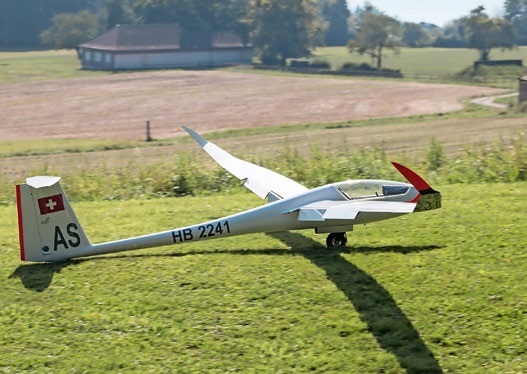
The doom-and-gloom talk about design and construction isn’t always honest. It’s often rooted in envy or resentment. Modern wood-building kits, along with computer-controlled milling and 3D printing, are giving hobby aircraft builders a new boost with nearly unlimited possibilities (we regularly publish related reports in this magazine). Anyone who keeps their eyes open will discover a vast selection of aircraft and models. Within the NOS, there are various clubs where building remains a key pillar of their activities. First and foremost, the MG Linth must be mentioned. Also worth mentioning are the great glider designers and builders of the MG Erlenbach-Herrliberg and the MG Buttikon. There are certainly others as well. Unfortunately, these colleagues aren’t very visible to the public—they tend to stay in their workshops.
Airports and large military and other airfields are generally not particularly conducive to model flying in virtually all regions. However, the intensity of flight operations and population density vary from place to place. In addition, the NOS recognizes various groups that share the use of “airfields capable of carrying people.” This works only thanks to disciplined flight operations based on clear agreements. Shared use always requires a high degree of trust.
Every flight requires space. A new dark cloud is looming on the horizon: once again, it’s drones. This time, it’s not the “desk-bound bureaucrats” stirred up by the EU Aviation Safety Agency—who, as is well known, summarily lumped model aircraft together with drones (unfortunately, most countries, as well as the International Air Sports Federation, went along with this nonsense. A few even went a step further with location tracking via nifty little devices in the models...). This time, it’s about far more than EU regulations: money and power will cause us concern in the future, as major international corporations will exert powerful pressure on policymakers. Logistics giants and major suppliers want free airspace at altitudes where we model aircraft pilots also operate. Standing up to these large corporations is far more difficult than fighting against EASA regulations.
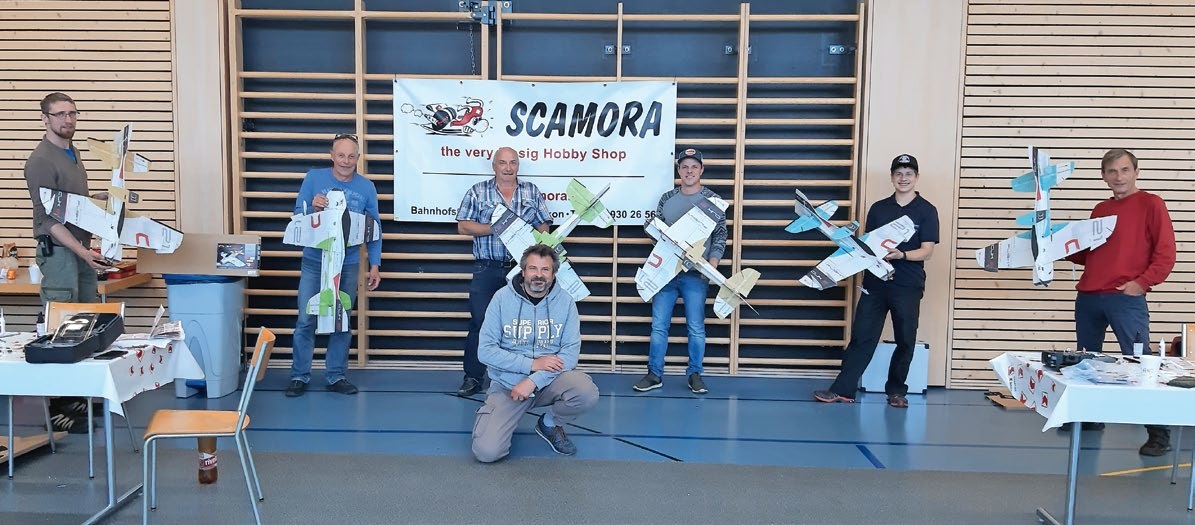
Youth programs are highly valued by a large number of the groups. Every year, the NOS provides several hundred wooden model kits free of charge for summer building camps. The standard program is: building in the morning, flying and repairing in the afternoon, followed by flights in a dual-control aircraft to wrap things up. Variations on this include, for example, painting the models in different colors as part of a design contest. This program is primarily aimed at middle school students.
In general, teacher-student flying sessions are very popular and widespread among clubs. Building courses that run over several evenings have become less common. This could potentially be incorporated into funding strategies as a new offering during the winter months.
Individual youth projects fall directly under the jurisdiction of the NOS Regional Board. Similar initiatives—in addition to the Bern (BOW) youth camp—can also be organized as joint exhibitions, air shows, or flying days. However, none of this is possible without personnel support from the clubs. There have already been several reports on Young Silent Wings. This program always includes flying during scheduled training sessions for aerobatics and gliding. Participation in competitions is supported by Sportflyers. These events serve not only as competitions but also as opportunities for practical training and continuing education.
Photos: MG Buttikon, MG Bussard, MG Erlenbach-Herrliberg


News from HEBU

TEAM MANAGER "THIS" BOSSHARD
 Rodito Nussbaumer

YOU KNOW WHAT I MEAN? 125 YEARS OF THE SWISS AERO CLUB
 Emil Giezendanner

PRIDE AND GOOD IDEAS
 Markus Nussbaumer

ATOM, THE NEW DOUBLE-DECKER FROM CPLR
 Matthias Bosshard

SUMMER FUN 2026 AT MG USTER
Martin Wunderli
F3A EUROPEAN CHAMPIONSHIPS IN ST-MACAIRE, FRANCE
Matthias Bosshard
52. 2026 ALPS CUP
Emil Giezendanner
HORIZON HOBBY/LEMACO NEWS: MICRO OV-10 BRONCO 645 MM BY E-FLITE

TWIN TOWN PARTNERSHIP
Wolfgang Voeller
CORSAIR F4U – A WARBIRD WITH A MEMORABLE LOOK
Jürgen Rosenberger, Jürgen Prinz
TRY-OUT DAY AT MFV WETTINGEN
Urs Keller
WELCOME, NEW MEMBER!
Andrea Bolliger
EURO CONTEST GLIDER ACRO TOUR AUSTRIA 2026

BY YOUTH, FOR YOUTH
Lorena Betschen
INSIGHTS INTO THE HISTORY OF SEAPLANES

SMALL, MODEL-LIKE SAILBOATS
Res Dauwalder
What's New at Leomotion.com

COUPE DES ALPES – OBSERVE AND LEARN
Rodito Nussbaumer
34th HAHNENMOOS ALPINE MODEL AIRPLANE CAMP
Res Dauwalder
FREE FLIGHT IN THE MIDDLE OF SUMMER
Urs Muntwyler
THE PC-21 STORY
Emil Giezendanner
NEWS FROM HEBU
 Julia Bucher

FROM 0 TO 100
Markus Nussbaumer
MEMORIES
Wolfgang Völler
NOS REGION – A HUB FOR ELECTRIC AVIATION
Emil Giezendanner
Have you almost forgotten about aircraft that take off and land vertically?
Emil Giezendanner
DO YOU KNOW WHAT I MEAN IN THE LAND OF SMILES?
Emil Giezendanner