
Store
This is where anyone who has something interesting to share can contribute. News, industry developments, successful model designs, events, clubs, experiences, etc. Please send letters and photos to: Redaktion Modellflugsport, P.O. Box, 8335 Hittnau.
The model aircraft club presidents of Region 5 met in Bubikon—hosted by MG Hinwil
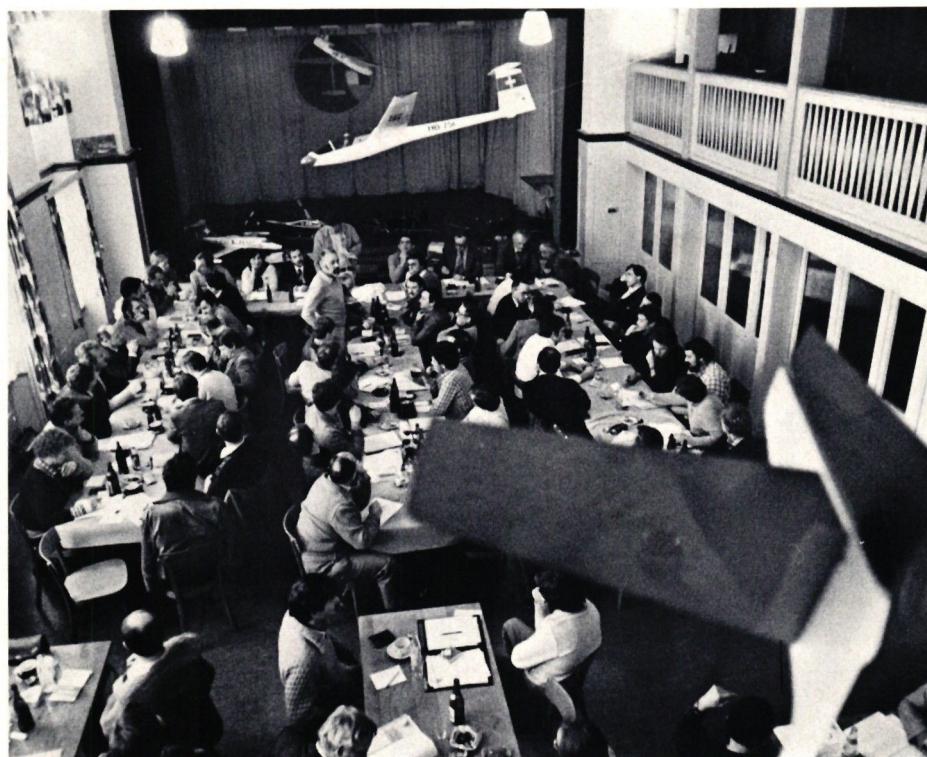
On Saturday, January 12, representatives from 34 model aviation clubs gathered in Bubikon (ZH) for the regular chairpersons’ conference of Model Aviation Region 5.
Since the end of November of last year, Model Aviation Region 5 has functioned as an independent section serving as a direct link between the model aviation clubs and the Aero-Club of Switzerland (AeCS). This reorganization has shortened the chain of command by one level, as model aviators are now affiliated directly with the AeCS rather than through the original section, which also represents the other aviation disciplines (see also the bylaws in mfs 6/79).
The morning was devoted to a discussion on the topic “Model Airfield Sites—Today and Tomorrow.” We were also pleased to welcome AeCS Central Secretary Hanns-Adalbert Wirz and Model Flying Commission President Werner Koelliker. In recent years, an increasing number of flying fields have become unusable due to changes in urban development and growing public awareness of environmental noise. The Model Aviation Region views addressing this problem as one of its primary tasks. On the one hand, targeted noise measurements are being conducted, and based on these, design recommendations and operating guidelines are being issued. On the other hand, cooperation with the authorities and public outreach are to be promoted. The goal is to make the public aware that model aviation, as a sport and recreational activity, fulfills an important social function. Model aviation is often equated with noisy powered flight; therefore, there should be increased outreach regarding the quiet (e.g., electric flight) and silent (gliding) categories of model aviation.
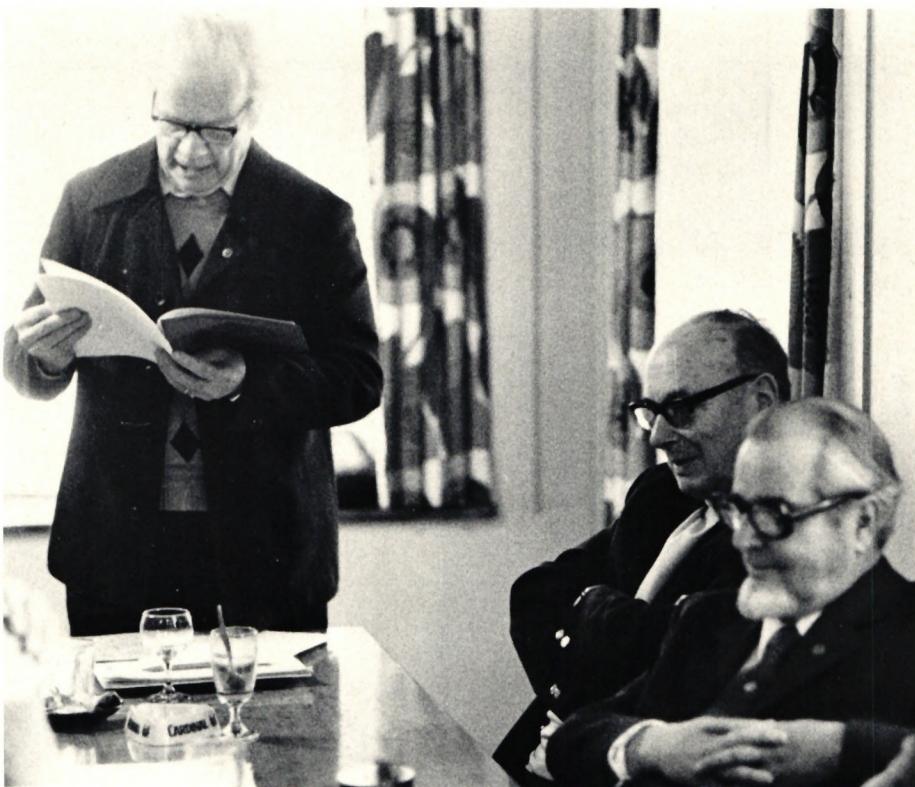
The afternoon conference, at which model aviation representatives were welcomed by Municipal Councilman Alfred Spring, focused primarily on administrative matters for the region. All agenda items were approved without much discussion. Regional Chair Emil Giezendanner (Pfäffikon, ZH) presented five certificates of honor for outstanding athletic achievements or long-standing administrative service and inducted three veterans as the region’s first honorary members (see box).
The following were named honorary members:
- Arnold Degen, Zurich: former senior model aircraft expert at the AeCS
- Emil Glünkin, Küsnacht: designer of well-known model aircraft
- Werner Schramme, Küsnacht, MG Rapperswil: Founder of the Zurich Model Aircraft Group (1926)
Certificates of Honor were awarded to:
- Walter Burger, Affoltern Model Flying Club: long-time international judge
- Bruno Giezendanner, MG Pfäffikon: 6th place at the most recent World Aerobatics Championships
- René Pfister, Glattal Model Flying Club: 1979 European Slope Flying Champion (F1E)
- Roland Pfister, Glattal Model Flying Club: 2nd place at the F1E European Championships
- Jakob Zimmermann, MG Hinwil (formerly Wetzikon): 13 years of service on the board
Wehntal
Model Aircraft Club Flight Day: “Will the Föhn hold or won’t it?” That was the question on most Wehntal model aviators’ minds on the weekend of October 13–14, 1979. On their agenda was the model aircraft flight day in Schöflisdorf.
Although a little rain fell during Sunday morning, we remained optimistic about the weather and made the final preparations for the model demonstrations. Already in the morning, some pilots showed up to thoroughly test their models one last time. Despite the uncertain weather conditions, we hoped that all pilots would show up so that our planned flight program could be carried out in its entirety. By noon, the Föhn wind had cleared the bad weather enough that we were able to hold the demonstrations under ideal conditions.
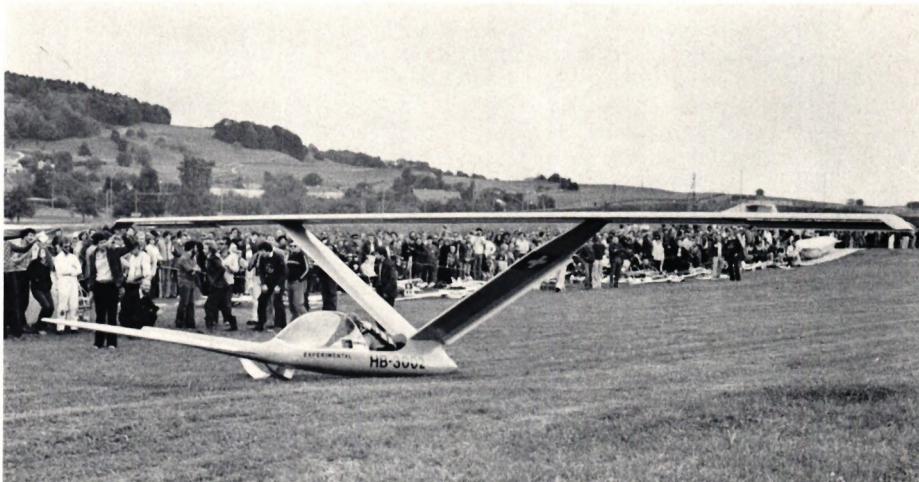
At exactly 1:30 p.m., our announcer welcomed the large crowd that had gathered and kicked off the program. Everyone was eager to see what these rather beautiful and, in some cases, highly detailed scale models could do in flight. The range of models on display was wide and varied.
Among the gliders, a Windspiel Acrobat, an Acro-Delta, an ASW 17, two B 4s, and a five-meter ASW 19 were flown. The gliders reached their initial altitude via winch launch, piggyback on a powered model, or tow by a powered model. A relatively new discipline, electric-powered model aircraft, was also presented to the spectators.
The majority of the demonstrations featured internal-combustion-engine models, even though gliding predominates in model aviation. Motorized model demonstrations are more attractive, and in the field of realistic models, the possibilities are nearly endless. We saw some beautiful replicas on display. These included the PT 7 biplane, the twin-engine Transall, the DC-3, the T-28B, the PC-7 Turbotrainer, the Pitts Special biplane, the Ju 52, the fast F-16 and F-18 fighters, the Robin JR 400, the twin-engine Lightning, the Blériot, and so on.
Another group consisted of utility models, whose purpose was to carry or tow gliders, perform aerobatics, or demonstrate high-speed flight. Candy was dropped for the children from a Burda Piper, and banner towing was also practiced in model aviation.
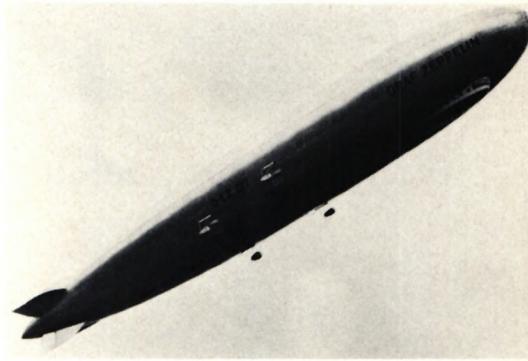
Our model flying group also tried to show the audience unconventional flying objects and rarities. For example, the two round lids adorned with animal figures were a particular source of amusement for the children. Very few people had ever seen a model rocket launch before! In between, a duck-shaped glider was towed up the nearby street with the help of a car. This duck-shaped glider has a wingspan of over 13 meters (so it’s no longer considered a model airplane) and is piloted by a person lying on their stomach to control the aircraft. The car-towed launch and the precise landing on the model airfield demonstrated two key characteristics of the glider developed in Wald. Thanks to the nearly windless weather, a zeppelin approximately 5 meters long, made of aluminum foil, was also able to take to the skies. The airship, filled with hydrogen and equipped with four electric motors, impressively demonstrated that even a Zeppelin is highly maneuverable.
In between, a contest was held in which, among other prizes, two sightseeing flights around the Alps could be won. The challenge was to estimate the speed of a model glider over a measured distance. The speed of 160 km/h—achieved in a dive and measured during level flight—was underestimated by 1 km/h and overestimated by 1 km/h, respectively, by the two winners of the Alpine sightseeing flights. Since the winner of one of the sightseeing flights has plenty of other opportunities to fly, the third-place finisher (a young boy) had a boy’s dream come true—he received the sightseeing flight over the Alps. A big round of applause for both of them.
Despite the pilots’ excellent discipline, our air show could not take place without some model losses. Nevertheless, for us, it was a demonstration that exceeded our expectations in every respect. In closing, we’d like to express our gratitude: to the landowners for spontaneously making the site available, to the residents and the municipal authorities of Schöflisdorf-Oberweningen for their understanding of our hobby, to the many spectators for coming, all the pilots and volunteers for their efforts, and last but not least, our wives for the delicious cakes and their help at the airfield.
Wehntal Model Flying Club
From the MG Einsiedeln Annual Report
I certainly do not view the role of president as a hobby. For me, flying and camaraderie remain my hobbies. I speak on behalf of my fellow board members when I say that, as president or a board member, one cannot reap the rewards of one’s efforts. The past few years have shown that, with as many members as we have, it’s impossible to please everyone anyway. My predecessors made a great personal commitment, and yet there have been a few disagreements in recent years. It was certainly necessary to discuss everything openly at the special general meeting. Members were urged to prioritize flying and camaraderie. We no longer discuss personal matters; instead, we focus exclusively on flying. Camaraderie is once again a top priority, and everyone is pulling in the same direction. We on the board do not view this as a personal achievement; rather, you, dear members, have all contributed to it without exception. On behalf of the board, I would like to thank you sincerely for this. Only in this way—and in no other—can we enjoy our hobby, and only in this way can we maintain or even improve the group’s positive public image. I stand by my commitment that, in the future and for as long as I am chairman, I will not tolerate any deviations from this policy.
Erich Himmler, Chairman
From the RCSG-Swissair Annual Report
General: The year 1979 was a year of stabilization for our club. I was pleased to note that team spirit and camaraderie were given high priority, which had a particularly positive impact at the high-launch site in Brütten.
Even though thermals and updrafts were sometimes lacking, we were still able to spend enjoyable hours together thanks to good teamwork and a spirit of cooperation. I would like to take this opportunity to inform you all that the landowners expressed their satisfaction with our club—in other words, we received no complaints. It is now up to us to maintain this good rapport. Discipline and courtesy are the only ways to achieve this goal. With this in mind, on behalf of the club, I presented each landowner with a well-stocked fruit basket at Christmas, which was received with great gratitude.
Flying Operations: The past season brought us very varied flying weather. Truly great flying days were rather rare, and even on the beautiful fall days, there was little sign of the much-praised thermals. Despite all these circumstances, flying activity was considerable. Thanks to great dedication, many members were still able to enjoy a nice flight.
For the first time since the club’s founding, we participated in competitions. Our junior members put in an impressive effort for this. Peter Maag, Urs Linder, and Marc Morgenthaler achieved quite good results, and I hope this serves as an incentive for all of us to participate in a competition from time to time.
There isn’t really much more to report about the now-traditional fall recreational flying event. As reported in the Swissair News, everyone had a great time.
E. Huber, President
Since 1972, the Burgdorf Model Aircraft Club has operated its own model airfield at Walkringen-Moos.
In a letter dated August 10, 1979, to the Federal Aviation Authority in Bern, the residents of Walkringen-Moos demanded: “... in light of disruptive incidents, the immediate suspension of flight operations on Sundays.”
Our group therefore immediately called for an extraordinary general meeting, which was held as early as August 31. At this special general meeting, we had to admit that the noise problem was indeed real and that we were not entirely blameless either; however, our members were reasonable enough to recognize this, and thus a one-time resolution was passed. Below is our letter to the complainants and to the Federal Aviation Authority in Bern:
Dear Mr. Wenger, Without going into great detail about the current legal situation regarding model aircraft flying, we have decided to resolve the noise problem ourselves and voluntarily.
Enclosed you will find our new operating plan regarding model aviation at Walkringen-Moos. As you can see, we have decided to completely refrain from flying model aircraft with 2-stroke engines on Sundays. This self-imposed restriction is difficult, but we are convinced that we have done model aviation a favor by doing so. Our self-imposed restriction may surprise you, but resentment and a fight to the bitter end are not the solution; understanding and dialogue—that is what we seek; we will certainly do our part.
Burgdorf Model Building Group
Our operating plan stipulates:
- Model gliders and electric aircraft are not subject to any time restrictions.
- Flying times for models with 4-stroke engines:
Monday through Saturday, 9:00 a.m.–12:00 p.m.
and 2:00 p.m.–7:00 p.m.
; Sundays: 2:00 p.m.–6:00 p.m. - All other models with 2-stroke engines, equipped:
Monday, Wednesday, Thursday, Friday: 2:00 p.m.–7:00 p.m.
; Tuesday and Saturday: 9:00 a.m.–12:00 p.m. and 2:00 p.m.–7:00 p.m.
; Sundays: No flying allowed! - Engines such as Quadra, Suevia, etc., provided they have a displacement of at least 20 ccm and a maximum of 9,000 rpm, are permitted; flight times are the same as for 4-stroke engines.
- On major public holidays, flying motorized models is prohibited.
- A maximum of two internal combustion model aircraft with 2-stroke engines may be in the air at the same time.
In a letter dated October 22, 1979, the Federal Aviation Authority in Bern wrote:
“... the Burgdorf Model Building Group has since addressed your concerns and, as a result, has imposed further restrictions on itself. In our opinion, the Sunday flight ban on high-revving two-stroke engines, in particular, should lead to a noticeable reduction in the disturbances that have been the subject of complaints. We regard the regulations as a gesture of goodwill on the part of the model aircraft enthusiasts and ask that you acknowledge them.”
Since then, good neighborly relations have been restored.
Chairman P. Schüpbach


News from HEBU

TEAM MANAGER "THIS" BOSSHARD
 Rodito Nussbaumer

YOU KNOW WHAT I MEAN? 125 YEARS OF THE SWISS AERO CLUB
 Emil Giezendanner

PRIDE AND GOOD IDEAS
 Markus Nussbaumer

ATOM, THE NEW DOUBLE-DECKER FROM CPLR
 Matthias Bosshard

SUMMER FUN 2026 AT MG USTER
Martin Wunderli
F3A EUROPEAN CHAMPIONSHIPS IN ST-MACAIRE, FRANCE
Matthias Bosshard
52. 2026 ALPS CUP
Emil Giezendanner
HORIZON HOBBY/LEMACO NEWS: MICRO OV-10 BRONCO 645 MM BY E-FLITE

TWIN TOWN PARTNERSHIP
Wolfgang Voeller
CORSAIR F4U – A WARBIRD WITH A MEMORABLE LOOK
Jürgen Rosenberger, Jürgen Prinz
TRY-OUT DAY AT MFV WETTINGEN
Urs Keller
WELCOME, NEW MEMBER!
Andrea Bolliger
EURO CONTEST GLIDER ACRO TOUR AUSTRIA 2026

BY YOUTH, FOR YOUTH
Lorena Betschen
INSIGHTS INTO THE HISTORY OF SEAPLANES

SMALL, MODEL-LIKE SAILBOATS
Res Dauwalder
What's New at Leomotion.com

COUPE DES ALPES – OBSERVE AND LEARN
Rodito Nussbaumer
34th HAHNENMOOS ALPINE MODEL AIRPLANE CAMP
Res Dauwalder
FREE FLIGHT IN THE MIDDLE OF SUMMER
Urs Muntwyler
THE PC-21 STORY
Emil Giezendanner
NEWS FROM HEBU
 Julia Bucher

FROM 0 TO 100
Markus Nussbaumer
MEMORIES
Wolfgang Völler
NOS REGION – A HUB FOR ELECTRIC AVIATION
Emil Giezendanner
Have you almost forgotten about aircraft that take off and land vertically?
Emil Giezendanner
DO YOU KNOW WHAT I MEAN IN THE LAND OF SMILES?
Emil Giezendanner