
I fly only for Switzerland
The achievement was outstanding, as was the international media coverage. With his first successful flight across the Alps on July 13, 1913, Swiss aviation pioneer Oskar Bider (1891–1919) became even more famous than he already was after his flight across the Pyrenees from Pau to Madrid.
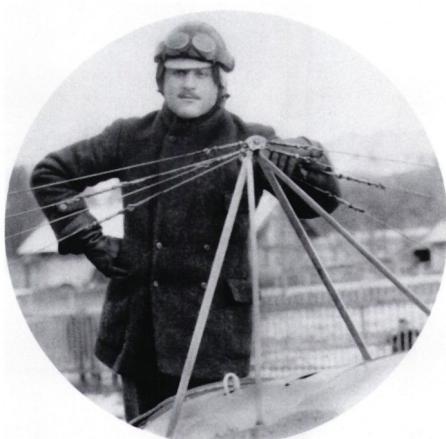
“He was ‘a successful, upright man, a simple man, a Swiss of the tough, old school,’” recalled Major (General Staff) Theo Real, his superior in the fledgling Air Corps, in October 1919. Anyone who knew Bider would endorse, word for word, this succinctly crafted, exceedingly apt characterization. Bider’s goal was what had ended fatally three years earlier for Geo Chavez of Brig near Domodossola on September 23, 1910: crossing the Alps from Bern to Milan.
Oskar Bider acquired it on December 30, 1912, at the Blériot Flying School in Pau, at the foot of the Pyrenees. It bore the number 1194. On January 24, 1913, Bider set an aviation milestone with the first flight across the Pyrenees. The pilot’s name spread around the world. Soon, Oskar Bider was also the proud holder of Swiss pilot’s license No. 32.
At numerous air shows in Aarau, Basel, Bern, Burgdorf, Lausanne, Liestal, Sion, and elsewhere, people could marvel at Oskar Bider and his delicate Blériot XI aircraft. With each flight, he gained more confidence in aviation—and, along with it, greater popularity. However, at that time, flying was still considered sheer madness by the vast majority of his contemporaries.
On July 25, 1909, it made the first crossing of the English Channel. Louis Blériot had designed the aircraft in 1908. Blériot, a Frenchman, invested his entire fortune in its development. More than 800 of these aircraft were built, in addition to licensed versions manufactured in Italy and England. A Blériot XI from
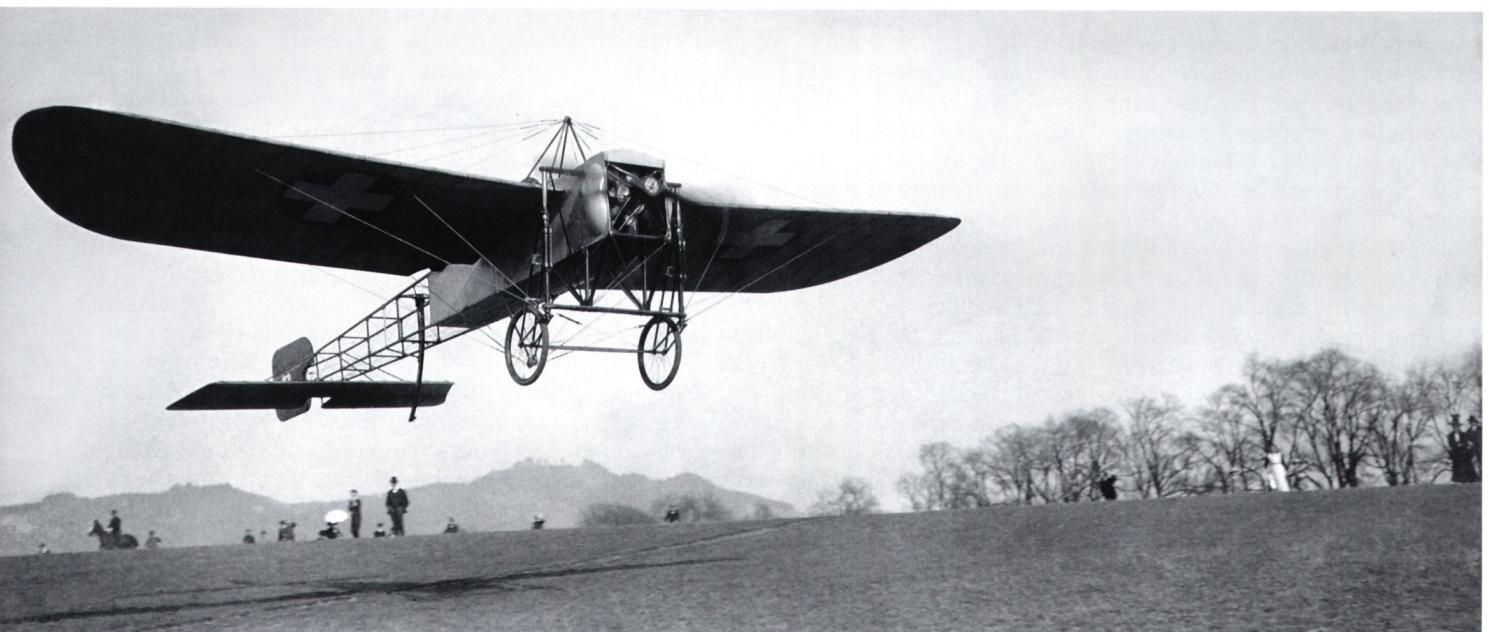
Incidentally, Oskar Bider is on display at the Swiss Museum of Transport in Lucerne (see box on page 6).
As early as May 13, 1913, Oskar Bider had completed a short flight across the Alps from Bern to Sion, and prior to that, on March 9, he had transported the first Swiss airmail from Basel to Liestal: 75 kilograms of mail for the national fundraising campaign to establish a Swiss military aviation program. In over two hundred flights without any major damage, the young pilot gained experience with climb rate, weather conditions, fuel and oil consumption, and so on. “First, I have a good mechanic, and second, I have a good engine,” Oskar Bider often explained when asked how he was doing.
At 4:08 a.m., Oskar Bider took off in the Blériot XI with a 70 PS engine. His trusted mechanic, Saniez, had previously removed the passenger seat and installed a second fuel tank in its place. This allowed him to—
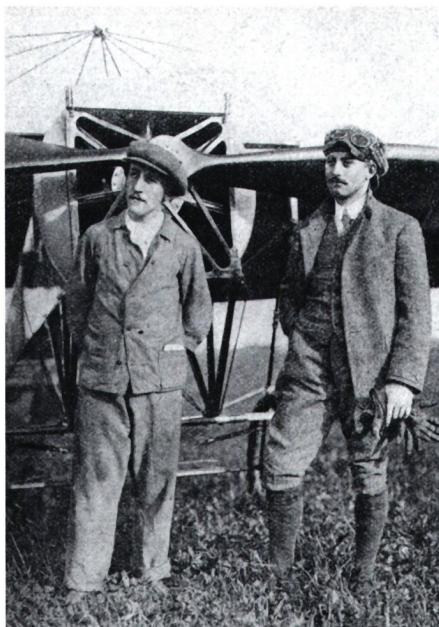
The takeoff weight was reduced by 60 kg.
Bider climbs rapidly to 3,000 meters above the city of Bern, flies over the Jungfrau, makes a brief refueling stop in Domodossola at 6:40 a.m., and takes off for the second leg of the flight. After 4 hours and 34 minutes and a flight distance of 230 km, Oskar Bider lands at Milan’s Taliedo Airport at 8:42 a.m. A delegation from the Swiss community, officials, doctors, and engineers is already waiting for him. He has on board a message from the mayor of Bern, which Bider subsequently presents to the mayor of Milan during a ceremonial audience.
A Blériot XI flown by Bider was stored for a long time in an old hangar in Dübendorf. Thanks to the initiative of Council of States member and aviation expert Dr. Eugen Dietschi (1896–1986), Basel, the aircraft—along with a Dufaux biplane—was put on display at the Olten Historical Museum. There, the legendary aircraft was admired by countless visitors for 32 years.
After the Swiss Museum of Transport opened in Lucerne in 1959, Director Alfred Waldis arranged for the aircraft to be transferred from Olten to Lucerne, where it has since been preserved as a showpiece for posterity. Undoubtedly the finest tribute to Bider. RE
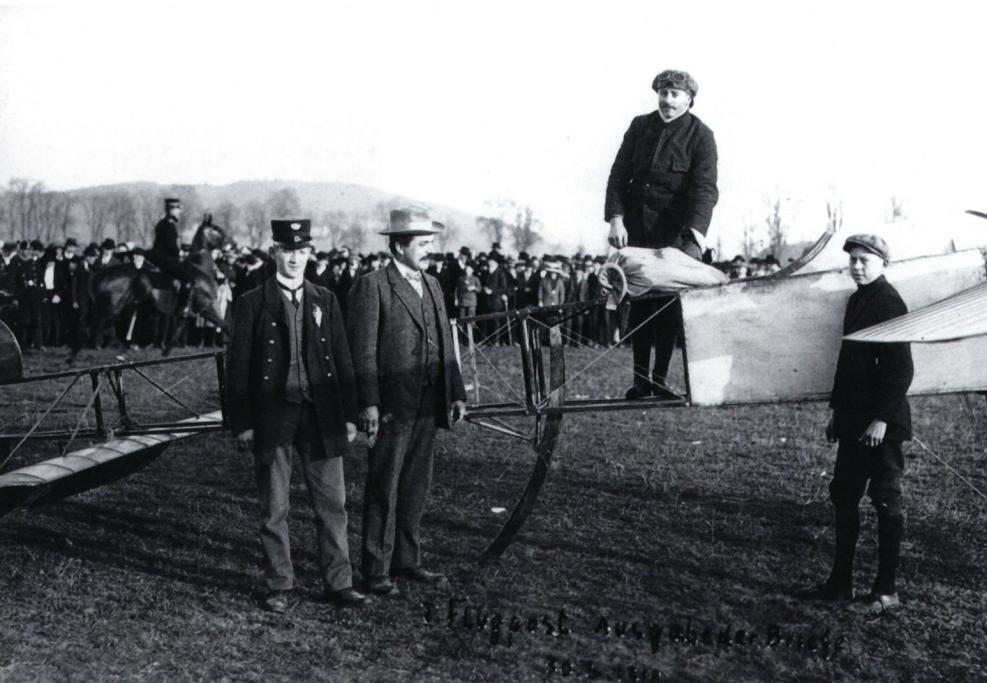
Once again, newspapers around the world reported on the success. In Paris, Blériot burst into tears when he heard about Bider’s new record flight and sent a congratulatory telegram. He was even offered French citizenship, but Bider declined: “I fly only for Switzerland.” The Federal Council presented Oskar Bider with an engraved gold watch. Oskar Bider’s 1913 flight across the Alps from Bern to Milan will always remain a monumental achievement in aviation, given the still very modest technical resources, knowledge, and experience available to pilots at the time. It therefore stands to reason that, in this anniversary year of 2013, we should honor the great Swiss aviation pioneer and his legacy on a national level.
Photos: Rolf Ellwanger Archive (RE)
June 22–23: Folk festival in Langenbruck, BL, Bider’s birthplace.
May 17 through July 21: Exhibition at the Museum im Bellpark in Kriens: “The Space Between the Mountains—Oskar Bider’s Flight Over the Alps.”
June 27 through July 28: Special exhibition at the Swiss Museum of Transport in Lucerne featuring a Blériot XIb flown by Bider, a Nieuport fighter plane, original artifacts and documents, a stamp exhibition, and film screenings.
July 13: Anniversary event on Bern’s Bundesplatz, exactly 100 years later. Presentation of a flyable Blériot XI replica, welcome address by Swiss astronaut Claude Nicollier, short speeches, a public contest, a reenactment of the anniversary flight in vintage aircraft from Bern to the Jungfraujoch with airmail philatelists, and a broadcast on Swiss television SRF. Wreath-laying ceremony at the Bider monument on the Kleine Schanze in Bern. In the evening, a ceremony at the Swiss Alpine Museum.
Special event day at the Swiss Museum of Transport in collaboration with the Museum im Bellpark in Kriens, featuring the Bider Shuttle (vintage bus) running between the two museums.
Swissmint has already issued an official commemorative silver coin with a face value of 20 francs.
RE
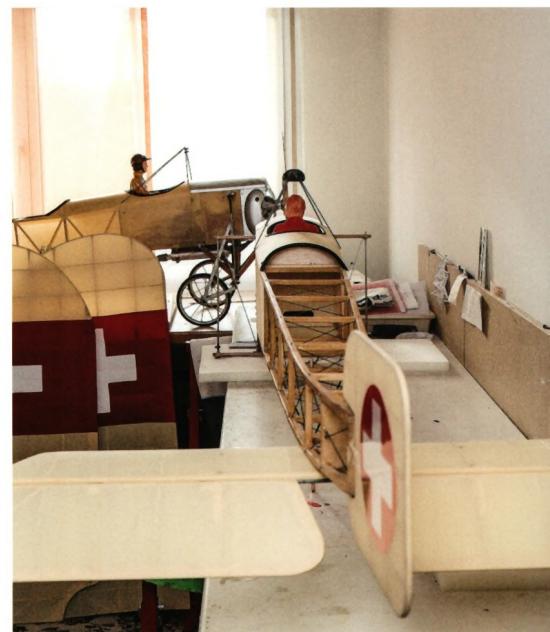
A 1:2.5-scale replica of Oskar Bider's Blériot
Hermann Mettler
More than 10 years ago, Fritz Weber, together with Rainer Mattle, built a large-scale model of the Blériot XI, the aircraft in which Oskar Bider made his first flight across the Alps.
To do this, he used an existing blueprint, which he then scaled to a ratio of 1:2.5. The aircraft has been flown at various model aircraft events in the past, including the MG Bassersdorf Air Show on August 31, 2008.
Fritz Weber still looks up to Oskar Bider as his great aviation idol. That’s
he has long been looking forward to the “100 Years of Alpine Flight” anniversary. He will certainly be attending the Oskar Bider Festival on June 22–23, 2013, in Langenbruck. There, he plans to show interested spectators his two Blériot models: the large model (scale 1:2.5) on display and the smaller model (scale 1:4) in flight. ■
Photo by H. Mettler
| Wingspan: | 4.2 m |
| Fuselage length: | 3.4 m |
| Weight: | 35 kg (certified by the FOCA) |
| Scale: | 1:2.5 |
| Engine: | Moki 5-cylinder radial engine with 13.5 PS |


News from HEBU

TEAM MANAGER "THIS" BOSSHARD
 Rodito Nussbaumer

YOU KNOW WHAT I MEAN? 125 YEARS OF THE SWISS AERO CLUB
 Emil Giezendanner

PRIDE AND GOOD IDEAS
 Markus Nussbaumer

ATOM, THE NEW DOUBLE-DECKER FROM CPLR
 Matthias Bosshard

SUMMER FUN 2026 AT MG USTER
Martin Wunderli
F3A EUROPEAN CHAMPIONSHIPS IN ST-MACAIRE, FRANCE
Matthias Bosshard
52. 2026 ALPS CUP
Emil Giezendanner
HORIZON HOBBY/LEMACO NEWS: MICRO OV-10 BRONCO 645 MM BY E-FLITE

TWIN TOWN PARTNERSHIP
Wolfgang Voeller
CORSAIR F4U – A WARBIRD WITH A MEMORABLE LOOK
Jürgen Rosenberger, Jürgen Prinz
TRY-OUT DAY AT MFV WETTINGEN
Urs Keller
WELCOME, NEW MEMBER!
Andrea Bolliger
EURO CONTEST GLIDER ACRO TOUR AUSTRIA 2026

BY YOUTH, FOR YOUTH
Lorena Betschen
INSIGHTS INTO THE HISTORY OF SEAPLANES

SMALL, MODEL-LIKE SAILBOATS
Res Dauwalder
What's New at Leomotion.com

COUPE DES ALPES – OBSERVE AND LEARN
Rodito Nussbaumer
34th HAHNENMOOS ALPINE MODEL AIRPLANE CAMP
Res Dauwalder
FREE FLIGHT IN THE MIDDLE OF SUMMER
Urs Muntwyler
THE PC-21 STORY
Emil Giezendanner
NEWS FROM HEBU
 Julia Bucher

FROM 0 TO 100
Markus Nussbaumer
MEMORIES
Wolfgang Völler
NOS REGION – A HUB FOR ELECTRIC AVIATION
Emil Giezendanner
Have you almost forgotten about aircraft that take off and land vertically?
Emil Giezendanner
DO YOU KNOW WHAT I MEAN IN THE LAND OF SMILES?
Emil Giezendanner