
Discus on a 1:2 scale
From Dream to Reality
As a model builder since childhood, I had the idea in 2003 to build my very own glider. To set myself apart from what’s commercially available, I chose the half-scale Discus. Concerned about precision and realism, I contacted Schempp Hirth in Germany, a manufacturer of large gliders. I received a three-view drawing at a 1:10 scale with dimensions, which I would use as a basis.
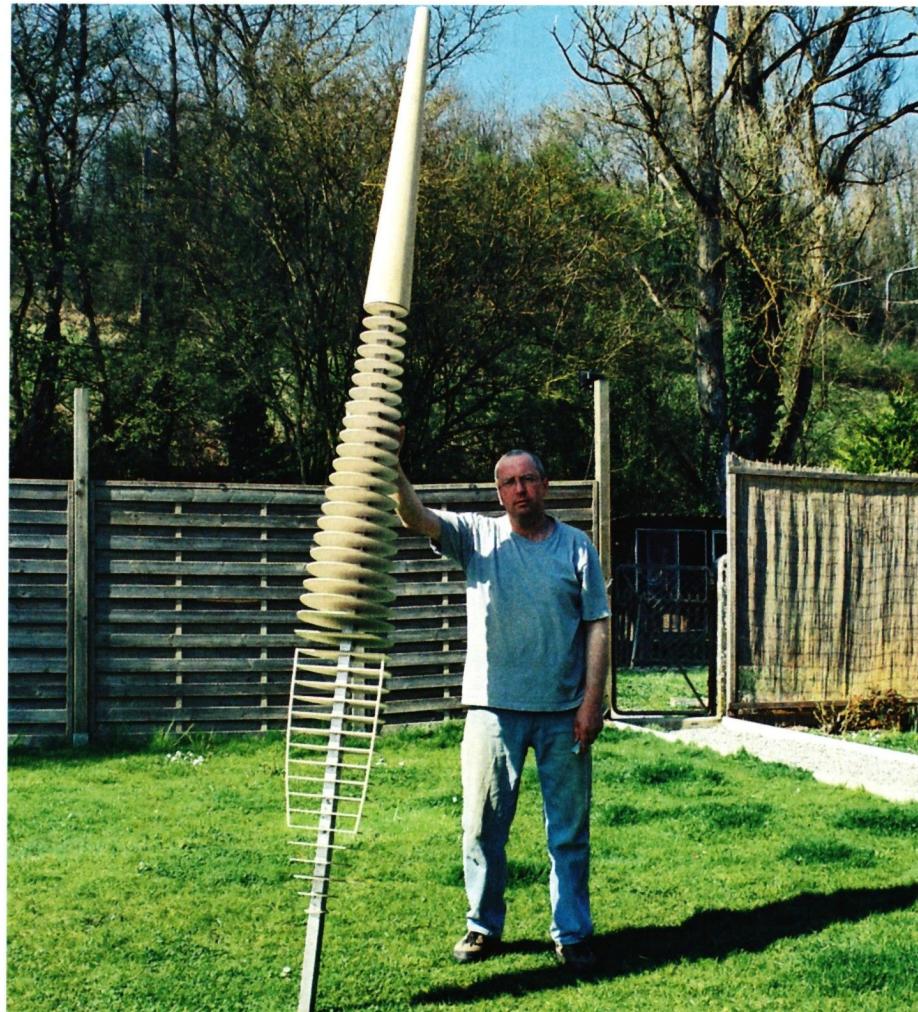
To minimize measurement errors, I redraw the fuselage at a 1:2 scale, in profile and top view. For the frame contours, I use the “Wings 2” program by Richard Ferrière. These 44 contours are drawn on paper, glued onto 7-mm MDF panels, then cut out and sanded. To ensure perfect straightness, they are threaded onto a steel rod with a rectangular cross-section. The tail spar, perfectly concentric, is made of Roofmat. The entire structure is then covered with a framework of 15×5 mm linden wood slats. After light sanding, the result is perfect. Linden wood is ideal: it is dense, easy to sand, and has a regular, tight grain. It remains very stable, meaning it warps very little.
The form is then covered with 3 layers of fiberglass fabric weighing 163 g per m². The final finish is applied using a spray gun in several layers of a two-component automotive coating, smoothed with water. The fenders are then sealed using two small wing-shaped pieces specially crafted for this purpose.
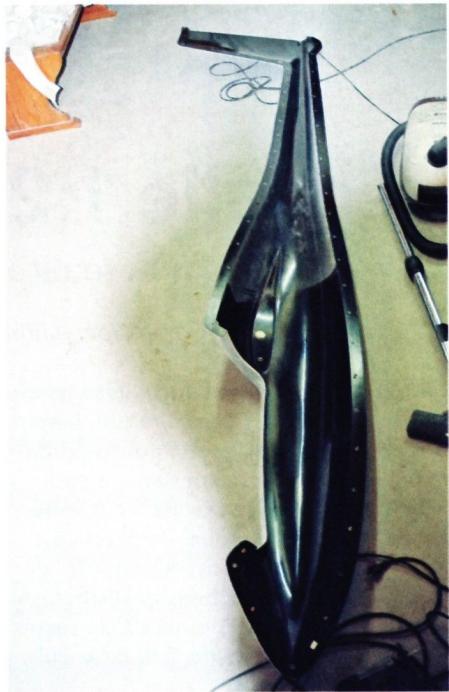
I had never made molds before, and after a few unsuccessful attempts to get help, I continued to gather information online and from experts. After a few trials, I decided to make my molds out of epoxy resin laminate for greater stability. The base model is laid flat to create the first half-mold. The parting strip must be as close to the mold as possible, and the resulting small gap is then filled with modeling paste (shown in blue in the photos).
My wife helped me laminate the two half-shells of this impressive hull structure, starting by applying one layer of resin per mold. While it’s still tacky, we apply a bonding layer of epoxy resin and chopped glass fiber. For half a mold, you have to expect 18 hours of nonstop work. A total of 16 layers of fiberglass fabric are laid down with epoxy resin. After three days of curing, the mold can be removed without difficulty.
A week later, the first fuselage section is revealed. A little putty and surface finishing have smoothed out the imperfections. It seems a bit heavy to me, but it’s very stiff. It is reinforced lengthwise with two unidirectional carbon fiber strips, each 10 cm wide.
This glider is built entirely to "SCALE" specifications. All of the model's dimensions correspond to those of the original glider. The version shown here is the Discus CS (Standard Class), i.e., the first version of this glider.
| Scale: | 1:2 |
| Wingspan: | 7.50 m |
| Fuselage length: | 3.30 m |
| Wing span of the tail unit: | 1.10 m |
| Tailplane profile in accordance with the original (biconvex over ¾ of the profile). | |
| Wing profile: HQ 3.15/HQ 3.13/HQ 3.12. | |
| Fuselage made of fiberglass and epoxy, reinforced with carbon fiber. | |
| Vertical stabilizer fins made of vacuum-formed “Nomex” honeycomb sandwich. | |
| Wings in standard construction made of polystyrene with Abachi wood skin, carbon fiber spars, fiberglass surface, and paint finish. | |
| Total weight in flight configuration: | 40 kg |
| Wings: | 6.6 kg each |
| Fuselage with wing attachment: | 22.4 kg |
| Tail unit: | 0.937 kg |
| Trim weight: | 3.350 kg |
| Wing area: | 250 dm² |
| Wing loading: | 158 g/dm² |
| Longitudinal V: | 2° |
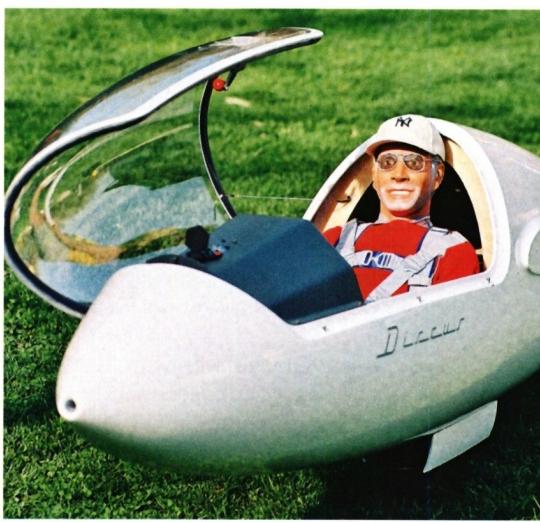
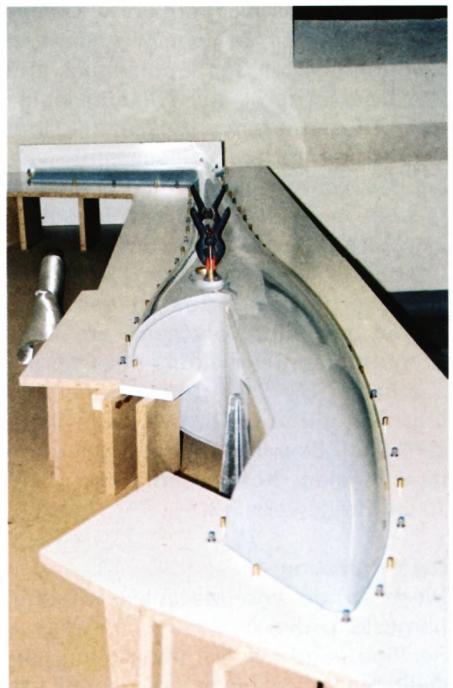
This was manufactured by Mecaplex in Grange, which produces thermally formed glazing for large seaplanes. They require a smooth mold that is 6 mm thick and temperature-resistant up to 140 °C. I make a negative mold and then shape the final die required by Mecaplex. I use high-temperature resin with a special hardener that requires oven curing. Since I don’t have an oven large enough, I build a small “extension” onto our kitchen stove.
My glass cover arrives shortly afterward, mounted on a 2.5 mm thick Plexiglas sheet. It is fully adjusted using a file. I build a ventilation slider for it and glue it onto a strip of carbon fiber. The locking mechanism and rotation are identical to those of its bigger brother.
The fuselage features a commercially available, reinforced retractable landing gear mounted on three gas shock absorbers. The pilot figure is from Axel Scale Models in Germany. The keel fin, which is lightweight and sturdy, is vacuum-formed from fiberglass laminate, epoxy, and Nomex honeycomb. It is steerable via three ball bearings. The control system consists of Kevlar cables for forward and reverse movement and operates without any play.
It is vacuum-formed from honeycomb. It is attached to the fuselage using a 6-mm-thick carbon T-bracket to avoid having a screw on the top surface. The elevator consists of two parts; the control servos are located inside the stabilizer, which allows for direct control without play. I chose the original Discus airfoil: 16% thickness, biconvex, and concave in the last quarter. I will analyze this unusual profile during flight.
The wings consist of a polystyrene core covered with 0.9 mm of abachi. The spar is I-shaped, consisting of two carbon plates with a tapering cross-section, connected by a web made of 3-mm aircraft plywood. Various fiberglass strips are applied under the skin for reinforcement. Load tests subsequently reveal that this is more than sufficient. The landing flaps, with their complex kinematics, are molded from fiberglass and epoxy resin. The ailerons are actuated by half-round rods, which does not exactly make adjustment easy. The wings are covered with 50 g/m² fiberglass fabric. The wing tips are made of balsa wood, covered with carbon fiber fabric. The wing spar is made of 28 mm steel and weighs more than 4 kg on its own.
The servo motors are installed inside the wings near the control surfaces, without an access panel, to keep the wing as clean as possible. I regretted this decision when, while adjusting the receivers, the two servos for the landing flaps burned out, forcing me to open both wings. That won’t happen to me again next time.
The computer simulation for the HQ Series 3 profiles yields the following results:
The best glide ratio is 39.4 at 68 km/h.
The minimum sink rate is 0.45 m/s at 60 km/h.
The stall speed is 50 km/h.
Stability is optimized for the roll and pitch axes.
These results, which are close to the performance of large gliders, bode well.
I would like to thank Richard Ferrière for his valuable collaboration (use of his “Wings 2” program and calculations regarding performance and center of gravity).
The entire model is coated with two-component automotive paint. It's a lot of work, but the result is worth it. The finish stays beautiful and is easy to maintain.
I built a transport crate on a frame made of 60×30 mm welded aluminum. The crate is made of low-density veneered poplar wood. The overall dimensions are 3800 mm×550 mm×550 mm, and it weighs 60 kg, including the model.
At an event featuring aircraft-towed launches in Courtelary, I couldn’t resist the temptation to let this beautiful bird take to the skies after such a long wait. I needed a very skilled pilot to take charge of this first flight. That was Stéphane Drand, who was there that day and ultimately convinced me to take the plunge. We decided to line up the Discus at the end of the runway, let it lift off the ground after about two meters, and tow it in a straight line. After rolling about 40 meters, it lifted off behind its tow plane and climbed to about three meters. The pilot released the tow rope, and the Discus flew a good distance over the runway before touching down gently. On a second attempt, with a gentle climb, the glider proved stable and responded well to commands. Stéphane was eager to release the tow rope because the glider just wanted to climb and make its first real flight. It makes more sense to wait for certification.
These first two attempts are indeed promising; the glider is well-trimmed, the flight paths are flawless, no trimmers need adjusting, and the settings seem correct. The trim during flight is truly realistic, and the glide ratio is incredible: on the second flight, it flew almost the entire length of the runway.
After all these hours of work, it’s truly an incredible reward to see this glider continue to develop. I’ll keep you updated on its further development and its first real flight.
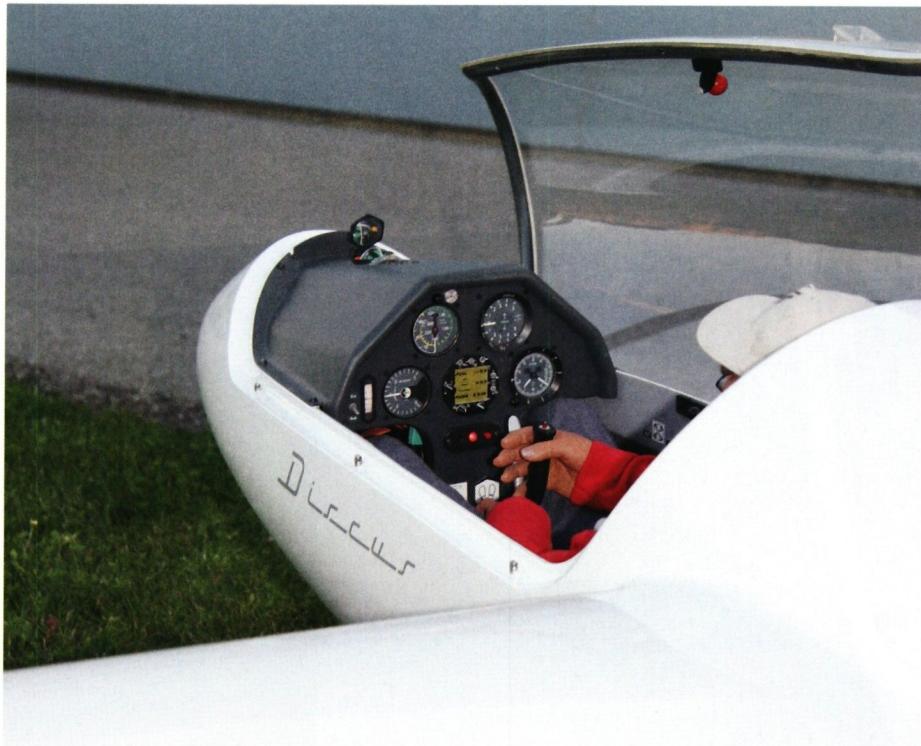
I’m really glad I had the courage to take on a project like this. This kind of project is a real adventure, one that I thoroughly enjoyed, thanks to my wife’s help and support. As for my state of mind, it’s not easy to work on the same model by myself for more than three years. There are moments of discouragement because the problems that arise are proportional to the model’s scale. Unfortunately, there aren’t many accessories available in stores, so you have to make everything yourself. This kind of work is demanding, but the joy is boundless when you’re rewarded with a successful flight.
I’m still not immune to it—I’m planning to take on another project this winter by building a new Discus in the 2C version, with the same fuselage and a 9-meter wingspan.
Since I’m more of a designer than a pilot, the mere fact of seeing this wonderful bird continue to evolve brings me enormous satisfaction.


News from HEBU

TEAM MANAGER "THIS" BOSSHARD
 Rodito Nussbaumer

YOU KNOW WHAT I MEAN? 125 YEARS OF THE SWISS AERO CLUB
 Emil Giezendanner

HORIZON HOBBY/LEMACO NEWS: MICRO OV-10 BRONCO 645 MM BY E-FLITE

PRIDE AND GOOD IDEAS
 Markus Nussbaumer

34th HAHNENMOOS ALPINE MODEL AIRPLANE CAMP
Res Dauwalder
TRY-OUT DAY AT MFV WETTINGEN
Urs Keller
F3A EUROPEAN CHAMPIONSHIPS IN ST-MACAIRE, FRANCE
 Matthias Bosshard

52. 2026 ALPS CUP
Emil Giezendanner
ATOM, THE NEW DOUBLE-DECKER FROM CPLR
Matthias Bosshard
SUMMER FUN 2026 AT MG USTER
Martin Wunderli
What's New at Leomotion.com

THE PC-21 STORY
Emil Giezendanner
COUPE DES ALPES – OBSERVE AND LEARN
Rodito Nussbaumer
TWIN TOWN PARTNERSHIP
Wolfgang Voeller
EURO CONTEST GLIDER ACRO TOUR AUSTRIA 2026

BY YOUTH, FOR YOUTH
Lorena Betschen
CORSAIR F4U – A WARBIRD WITH A MEMORABLE LOOK
Jürgen Rosenberger, Jürgen Prinz
SMALL, MODEL-LIKE SAILBOATS
Res Dauwalder
WELCOME, NEW MEMBER!
Andrea Bolliger
FREE FLIGHT IN THE MIDDLE OF SUMMER
Urs Muntwyler
INSIGHTS INTO THE HISTORY OF SEAPLANES

NEWS FROM HEBU
 Julia Bucher

FROM 0 TO 100
Markus Nussbaumer
MEMORIES
Wolfgang Völler
NOS REGION – A HUB FOR ELECTRIC AVIATION
Emil Giezendanner
DO YOU KNOW WHAT I MEAN IN THE LAND OF SMILES?
Emil Giezendanner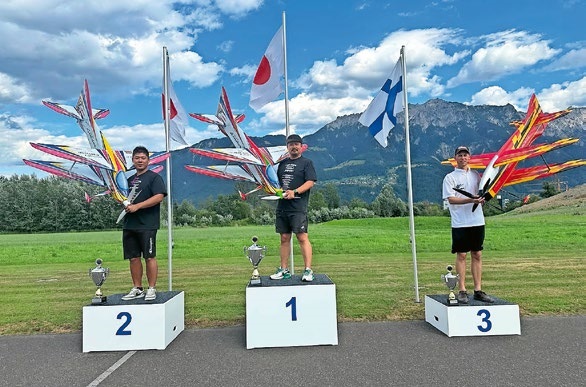
A SPECTACULAR F3A WORLD CUP IN THE PRINCIPALITY OF LIECHTENSTEIN
Emil Giezendanner