
A model that's not exactly run-of-the-mill...
...or, as some people like to say, one of the most beautiful airplanes that ever existed. So I was looking for a new challenge, and to explain this decision, I need to take a brief look back a few years.
It all actually started with a quote from Reto Senn. “Don’t you guys want to try flying a jet?” Reto asked us in the spring/summer of 2010 at our airfield in Alpnach, Switzerland. Reto is a very well-known figure in the global jet scene. It was Reto who got me hooked on jets, and I’m still grateful to him today, because without him, this article wouldn’t exist. As a result, for several years I built almost exclusively jet models—ten in total—and was a regular visitor to the Jet Power trade show. When the Jet World Championship took place in Meiringen in 2013, it was an absolute highlight for me. Meiringen is only about 35 km from my home, so I was able to be there every day to admire the beautiful and intricately crafted models. Then, two years later, when the 2015 Jet World Championship took place in Leutkirch, Germany, I was hooked all over again. Thomas Gleissner’s model—an Airworld F-104 Starfighter—had fascinated me so much that the thought began to take root in my mind: “I have to have one of those, too.”
The 1:4 scale model from Airworld has such a high level of detail that I’ve rarely seen anything of equal or higher quality. As I said, I was completely hooked, and I just couldn’t resist. So I went ahead and ordered my kit from my preferred dealer, Franz Walti of Jet-Tech. Franz Walti is no stranger to the jet modeling scene either; at the time, he was still running his well-known model aircraft shop, Jet-Tech, in Rothrist. So I had to wait a while until the long-awaited phone call finally came sometime toward the end of 2015, and I subsequently became the proud owner of an F-104 Starfighter. Despite—or perhaps precisely because of—its contours, which match the original 100%, the F-104 has fantastic flight and landing characteristics. The wing and horizontal stabilizer profiles have also been copied 1:1 from the original and are therefore extremely thin and just as sharp-edged as the original. The wing measures just 27 mm at its thickest point! At the wingtip, it’s only 12 mm! That corresponds to a thickness of just 3.375%. You really have to let that sink in. There is no nose radius as model aircraft enthusiasts are typically accustomed to; the radius at the nose strip is a mere 1–2 mm, sharp-edged to reduce drag. Anyone familiar with the F-104 knows the fascination that this unique aircraft exudes.
So, over the course of a little more than two years, I built my F-104 using a Jetcat P-220 turbine and the standard accessories available at the time. It was finally completed in early 2018 and was ready to take to the skies at last. Since we had unfortunately been prohibited from flying jets in Alpnach—my home base—since August 2012, I had been a member of the Müllheim Model Flying Club for several years. Since my F-104 weighed a little over 25 kg when fully fueled, I would have had to have the model certified for a flight in Germany, which seemed a bit too much of a hassle to me. In Switzerland, the limit without certification is 30 kg, so I wanted to make the maiden flight somewhere in Switzerland.
"After the flight is before the flight."
Well, things turned out as they were bound to, and I had once again gotten in touch with Reto Senn. Reto helped me out once more, and I was able to make the maiden flight during the lead-up to the 2019 Swiss Jet Championship at the airbase in St. Stefan in the beautiful Simmental valley near Lenk. The flight was a huge success, and I was utterly fascinated by the flight characteristics—something I’d never experienced before. It’s simply indescribable how stable the aircraft feels in the air. You just have to experience it for yourself. I can wholeheartedly recommend this model to everyone, 100% and without any reservations.
So, now back to my F-104. After the successful maiden flight in August 2019, there came a time when I could no longer fly the F-104 for the reasons mentioned above. It’s crazy—to this day, I’ve flown the F-104 exactly only once. For the rest of the time, I had the F-104 on display in our living room and simply admired it. This led to interesting conversations every now and then with friends who visited us and also admired the F-104. But at some point, I realized that things couldn’t go on like this. Due to the pandemic and its many unpleasant side effects, flying in Müllheim was out of the question at the time. So something had to be done. In the meantime, we tried to convince the officials at the airbase in Alpnach of the possibility of being allowed to fly EDF jets. We are currently on the verge of signing a contract amendment. Following a successful one-year trial period, nothing should stand in the way of flying E-Impeller jets in the future. Let’s hope for the best.
With these positive developments and a good dose of courage, the idea began to take shape in my mind to get the F-104 Starfighter back in the air with a suitable electric impeller. How does one tackle such a project? I didn’t know. All I knew was that, if it were even possible, it would be a very difficult undertaking. Modifying a finished model airplane so that an electric impeller provides the necessary power instead of a kerosene turbine is certainly no easy task, especially since, to my knowledge, no one had ever done this with this particular kit before.
So I decided to use a 195-mm Schübel DS-215-DIA HST impeller as the powerplant. So there followed a phase during which I thought long and hard and searched for possible solutions for an impeller-driven system. Anyone familiar with the Airworld F-104 knows that, logically, the interior of the fuselage has a great many stringers and edges—something impellers really don’t like. At the 2015 JetPower show, Manfred Greve flew a CARF Albatros L-39 equipped with a Schübel propeller so skillfully and impressively that I knew: if I were to use a propeller, it would have to be one from Schübel. So, in 2021, I contacted Schübel. There, I received invaluable support and assistance from Christian Wileschek. Christian helped me a great deal; Schübel considered my project fundamentally feasible, albeit with certain specifications and constraints. So the propulsion system was to be a 195-mm Schübel DS-215-DIA HST impeller. This impeller can generate a maximum thrust of around 250 N with a 14S LiPo pack. Ge-
| Kit and Landing Gear: | Airworld |
| Scale: | 1:4 |
| Wingspan: | 160/180 cm with wing tanks |
| Length: | 417 cm/457 cm with Pitot tube |
| Weight: | 29.8 kg |
| Propulsion: | 1x Schübel Impeller DS-215-DIA HST |
| Controller: | 1x MGM 400 A 40063 |
| Batteries: | 3x Swaytronic 14S 7200 mAh 50/100C |
| Lighting: | 2x Uni-light 8-channel |
Is that enough to power the F-104 adequately? I think so, because the power-to-weight ratio of my model is actually slightly higher than that of the turbine version right now, even though the total weight is also slightly higher. I knew from Christian that a 14S battery pack requires around 20,000 mAh to achieve a flight time of about 7 to 9 minutes. That’s because the impeller draws an incredible 350 A at peak and generates an electrical power output of over 15 kW. Whoa, that’s quite a statement, I thought to myself. As a trained electrician, I knew that such high currents in residential wiring require a cable cross-section of 185 mm² depending on the cable length. Impressive and remarkable currents, to say the least. At Schübel, they recommended that I install a 400-A controller from MGM.
I had to—or rather, I wanted to—remove all the equipment that had been installed in the F-104 so far. It’s no easy task to perform this kind of work on a finished model. All the cables, batteries, the turbine, the thrust tube, and all the pneumatic hoses were removed. In the end, it stood there,
Completely empty on the inside, but fully painted on the outside. The empty weight was now around 14 kg. So I had a maximum leeway of 16 kg until reaching the Swiss weight limit of 30 kg. Is that enough, I wondered? If you do a quick calculation, the impeller with the controller accounts for about 4 kg. My preferred Swaytronic 3-pack batteries, wired in parallel at 14S with 7,200 mAh each, weigh another 6 kg or so, bringing the total for the propulsion unit alone to about 10 kg. Then there are the cables between the battery and the ESC, as well as the propeller. And last but not least, of course, the entire receiver system, including cables and batteries. It became clear that it would certainly be possible to stay just under 30 kg, but the margin wouldn’t be large. So I started building it sometime in early 2022
without being 100% certain that I would ever successfully reach my goal. First, I simply used a Dremel to remove a few stringers in the area of the air intake. The air must be fed to the impeller with the smoothest possible flow and without any turbulent edges.
However, you shouldn’t just remove frames thoughtlessly, because after all, they provide the necessary structural integrity. So I had to restore the necessary stability using carbon fiber tape. It was a lot of work that had to be done with extreme care—after all, I didn’t want to damage the airframe.
Once this work was complete, I had to figure out where to install everything. Where would the impeller go, where would the controller go, and where would I place the batteries? All of this had to be done while keeping the center of gravity—which I had worked hard to achieve and deemed optimal—in mind at all times, and ensuring that everything was installed in a way that minimized airflow disruption. I also had to make sure that the cable runs from the battery to the controller were kept as short as possible. The cables from the controller to the impeller, on the other hand, can be somewhat longer. Where the kerosene tank used to be, there is now a gaping void because the air duct had to be installed there all the way to the main spar. Consequently, no batteries could be placed in this area. They therefore had to be moved further forward. The famous CG is always at the center of the entire project. After all, lead is to be avoided at all costs in a project like this. Throughout the process, center-of-gravity measurements and rough calculations were continuously performed for verification. Eventually, it was determined where all components—especially the impeller, battery, and controller—should be installed. The impeller is installed using a so-called “open-duct” configuration. This allows excess air to flow past the impeller, preventing it from being overfed with too much air before the inlet.
Another major hurdle was separating the hull sections.
Since the impeller had to be installed about 25 cm further forward than the turbine for reasons related to the center of gravity, the new thrust tube had to be adapted to accommodate this. I spent quite some time trying to find a good solution for this. At first, I considered a design with a separate thrust tube as well, but I couldn’t find a satisfactory solution. Eventually, I realized that the thrust tube would have to be fabricated in one piece. Of course, the new thrust tube also had to be handmade, since—as you might expect—nothing like this is available on the market. The thrust tube was laminated using styrofoam molds in a negative-mold process and, naturally, had to be completely smooth on the inside. First, a section about 25 cm long and the same diameter as the impeller was built, followed by another section about 78 cm long that tapers from 195 mm to about 140 mm. Although this taper is rather at the upper limit for the impeller, it has two important advantages. First, it slightly increases the jet velocity of the thrust jet, which benefits the terminal velocity, and second, it allows the existing Jet-Cat afterburner ring to continue to be used. I really wanted to keep this feature for aesthetic reasons. The downside of the tapered thrust tube is that it causes a very slight—but acceptable—increase in power consumption. The thrust tube weighs about 530 g and could probably be made about 200 g lighter if necessary. However, since I ultimately needed more weight at the rear, this wasn’t a decisive factor in my case. The first tests with the impeller running
On the ground, they showed tremendous thrust, which gives me great hope for the upcoming second maiden flight. Yes, you read that right—my E-Impeller aircraft hasn’t flown yet. That will happen soon in the spring, when it gets warmer again. I’m optimistic that it will go off without a hitch. I’ll provide another brief update after the maiden flight.
The entire conversion took about three years from the initial idea to the final implementation, involving roughly 500 hours of work. Part of that time was spent just thinking things through—the conceptual phase—to determine feasibility.
I would like to take this opportunity to extend my heartfelt thanks to Schübeler—and to Christian Wileschek in particular—as well as to Swaytronic and Matthias Altorfer for their outstanding support on this unique project. Without this support, it likely would not have been possible to carry out such a special project.
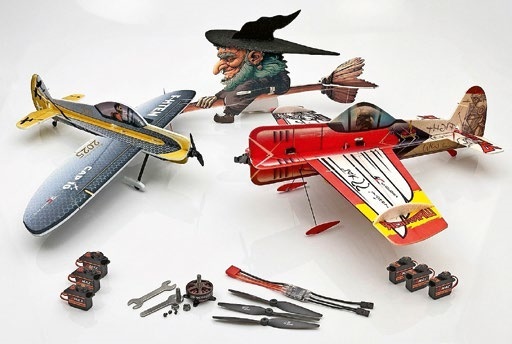
News from HEBU
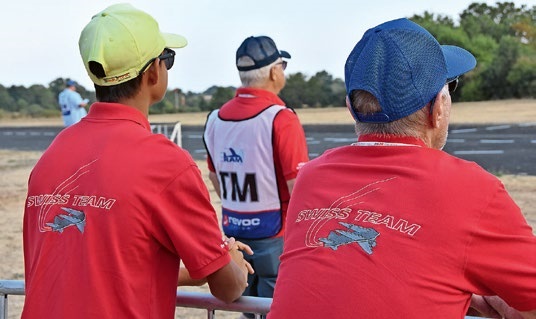
TEAM MANAGER "THIS" BOSSHARD
 Rodito Nussbaumer
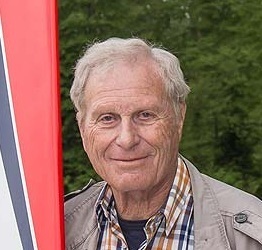
YOU KNOW WHAT I MEAN? 125 YEARS OF THE SWISS AERO CLUB
 Emil Giezendanner

PRIDE AND GOOD IDEAS
 Markus Nussbaumer
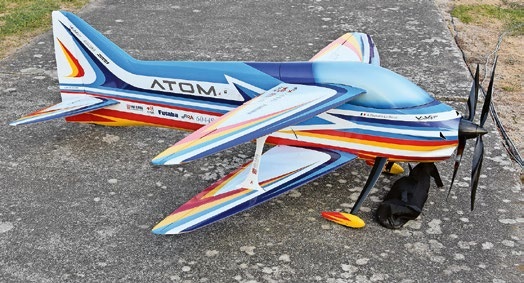
ATOM, THE NEW DOUBLE-DECKER FROM CPLR
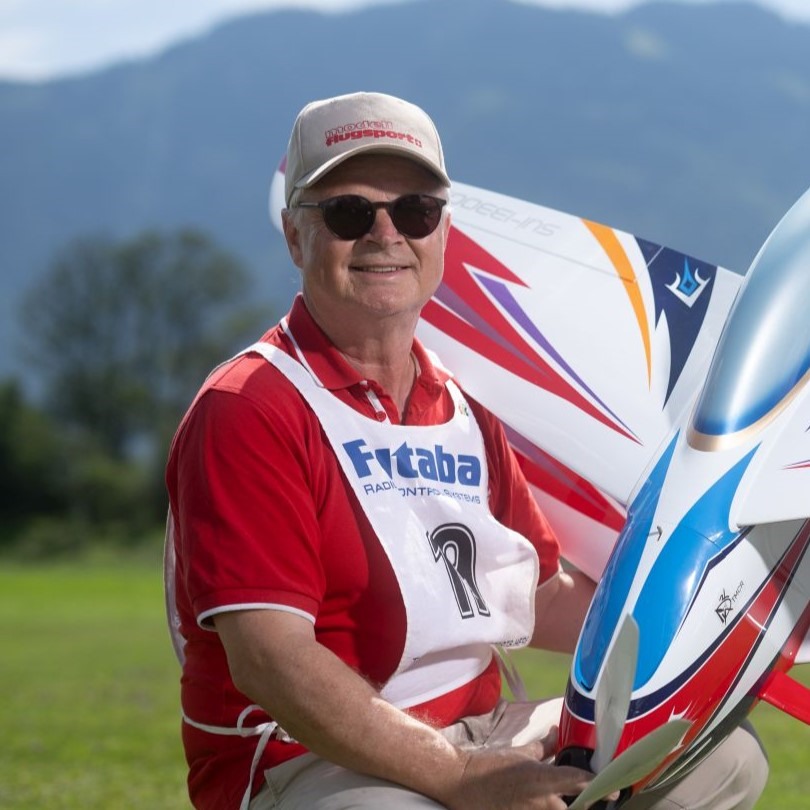 Matthias Bosshard
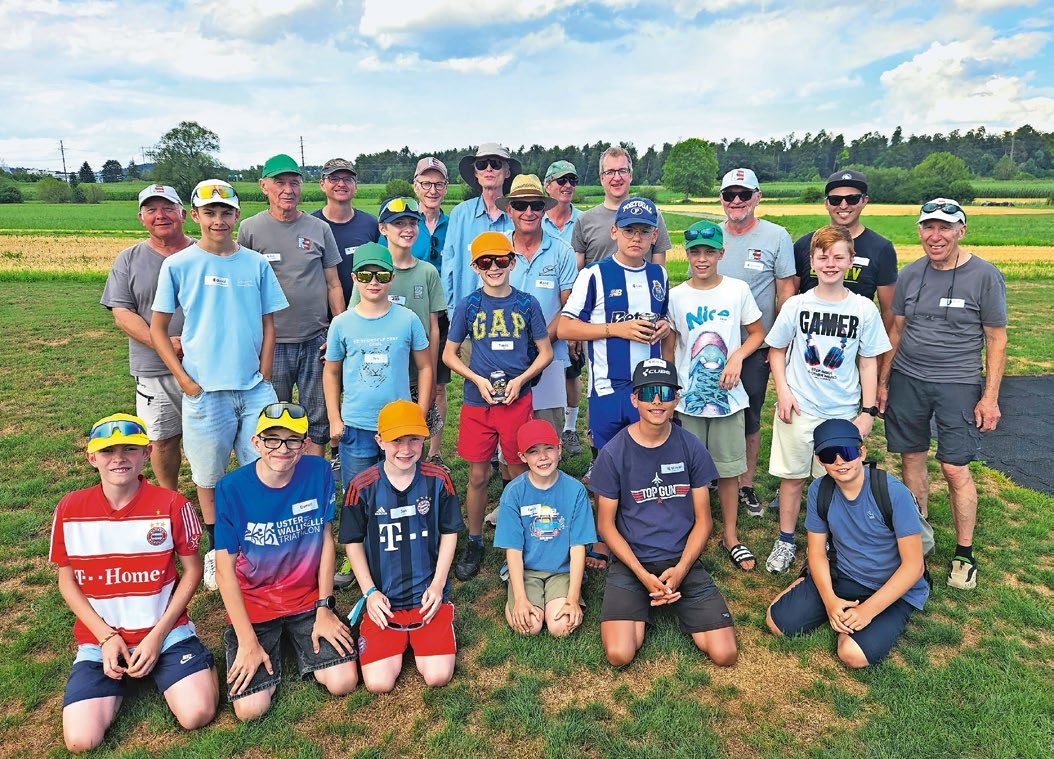
SUMMER FUN 2026 AT MG USTER
Martin Wunderli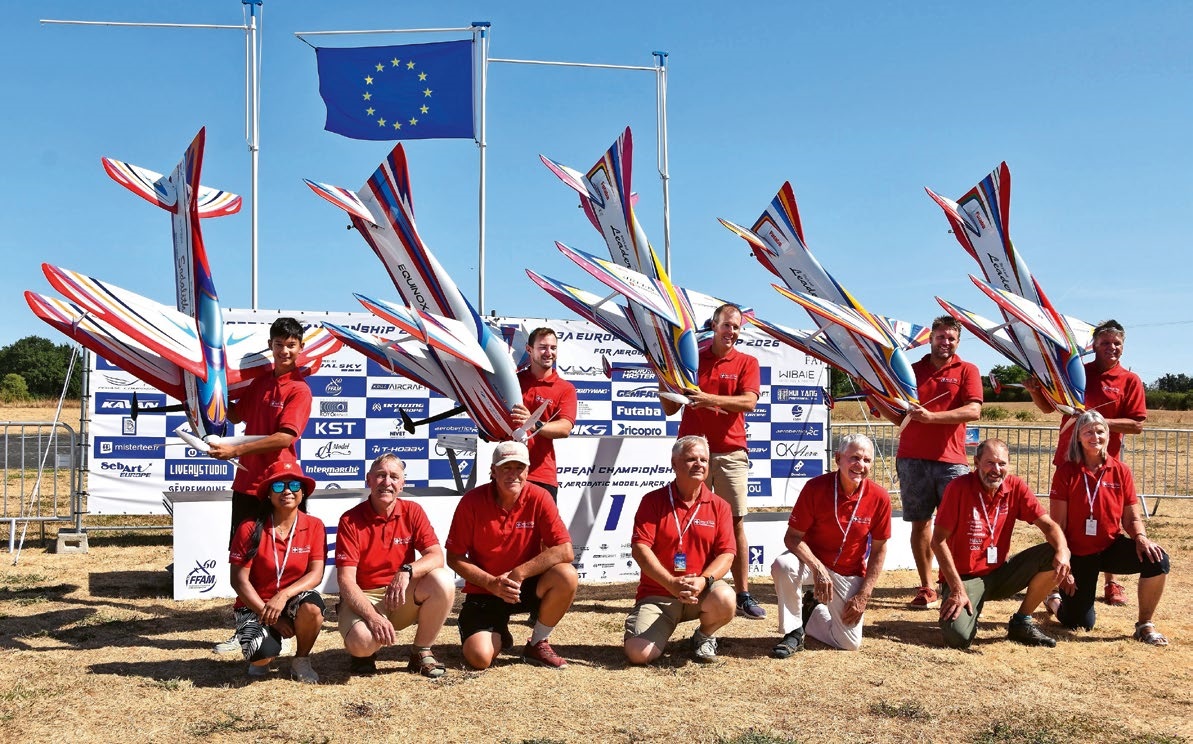
F3A EUROPEAN CHAMPIONSHIPS IN ST-MACAIRE, FRANCE
Matthias Bosshard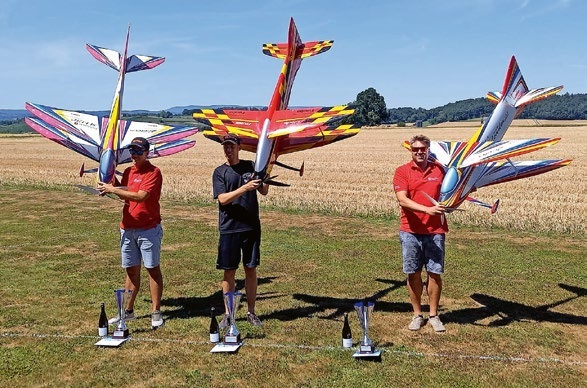
52. 2026 ALPS CUP
Emil Giezendanner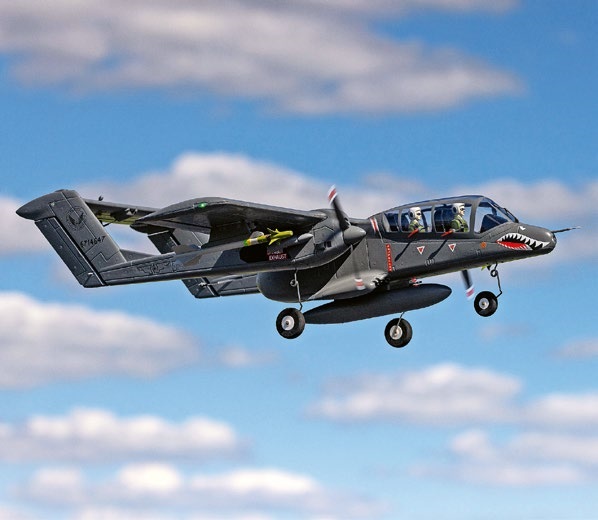
HORIZON HOBBY/LEMACO NEWS: MICRO OV-10 BRONCO 645 MM BY E-FLITE
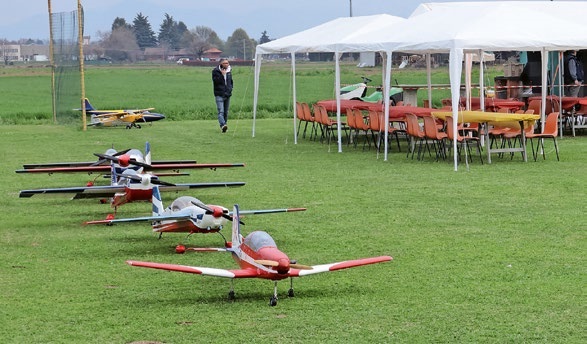
TWIN TOWN PARTNERSHIP
Wolfgang Voeller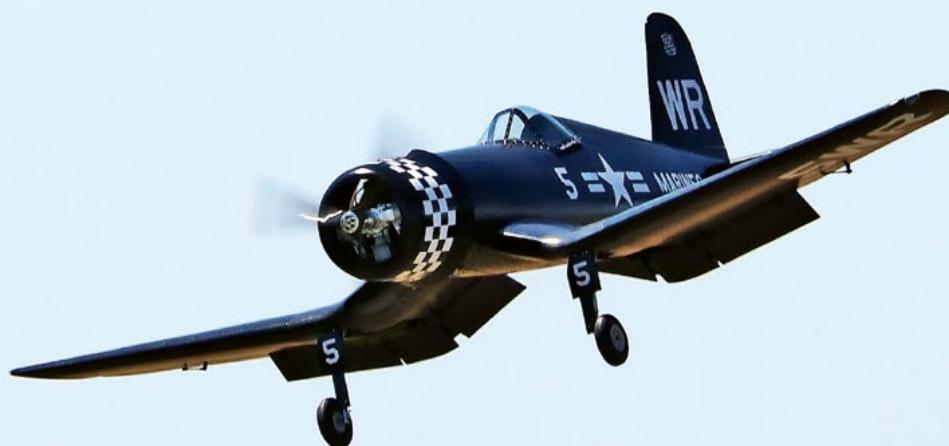
CORSAIR F4U – A WARBIRD WITH A MEMORABLE LOOK
Jürgen Rosenberger, Jürgen Prinz
TRY-OUT DAY AT MFV WETTINGEN
Urs Keller
WELCOME, NEW MEMBER!
Andrea Bolliger
EURO CONTEST GLIDER ACRO TOUR AUSTRIA 2026
BY YOUTH, FOR YOUTH
Lorena Betschen
INSIGHTS INTO THE HISTORY OF SEAPLANES
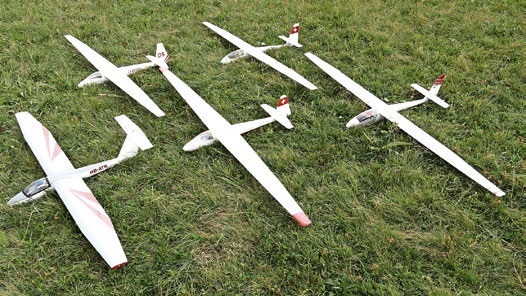
SMALL, MODEL-LIKE SAILBOATS
Res Dauwalder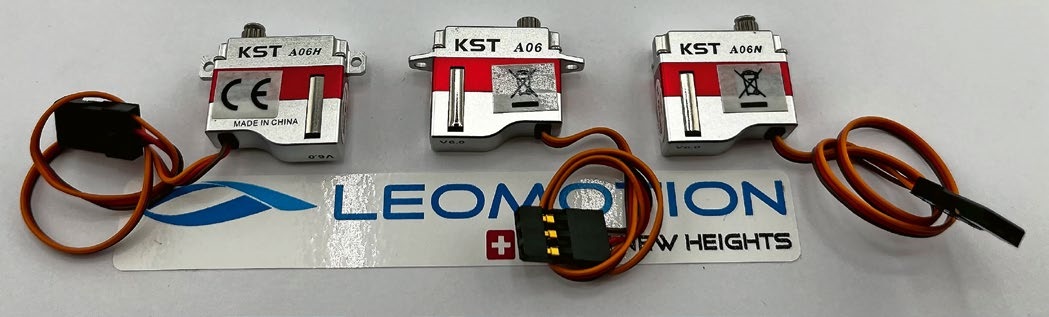
What's New at Leomotion.com
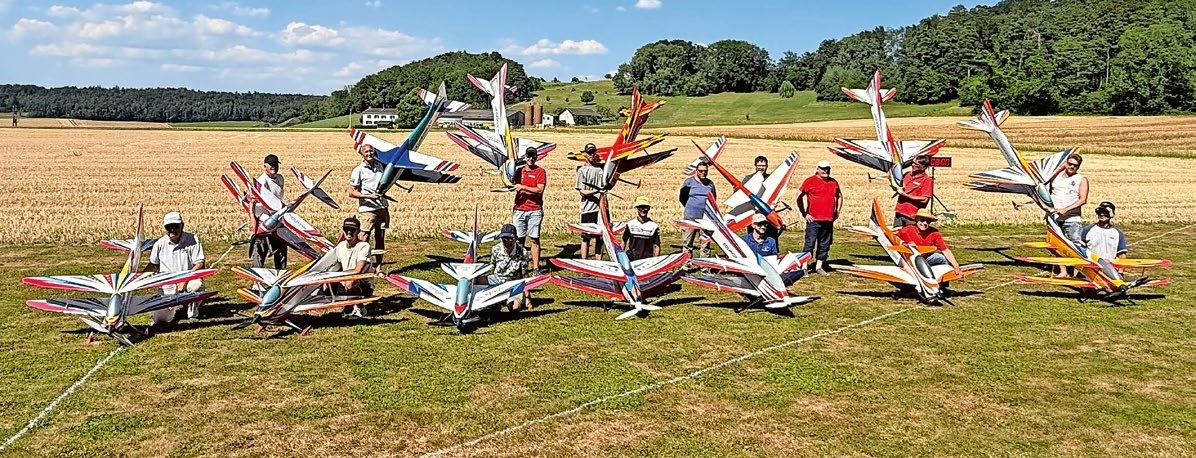
COUPE DES ALPES – OBSERVE AND LEARN
Rodito Nussbaumer
34th HAHNENMOOS ALPINE MODEL AIRPLANE CAMP
Res Dauwalder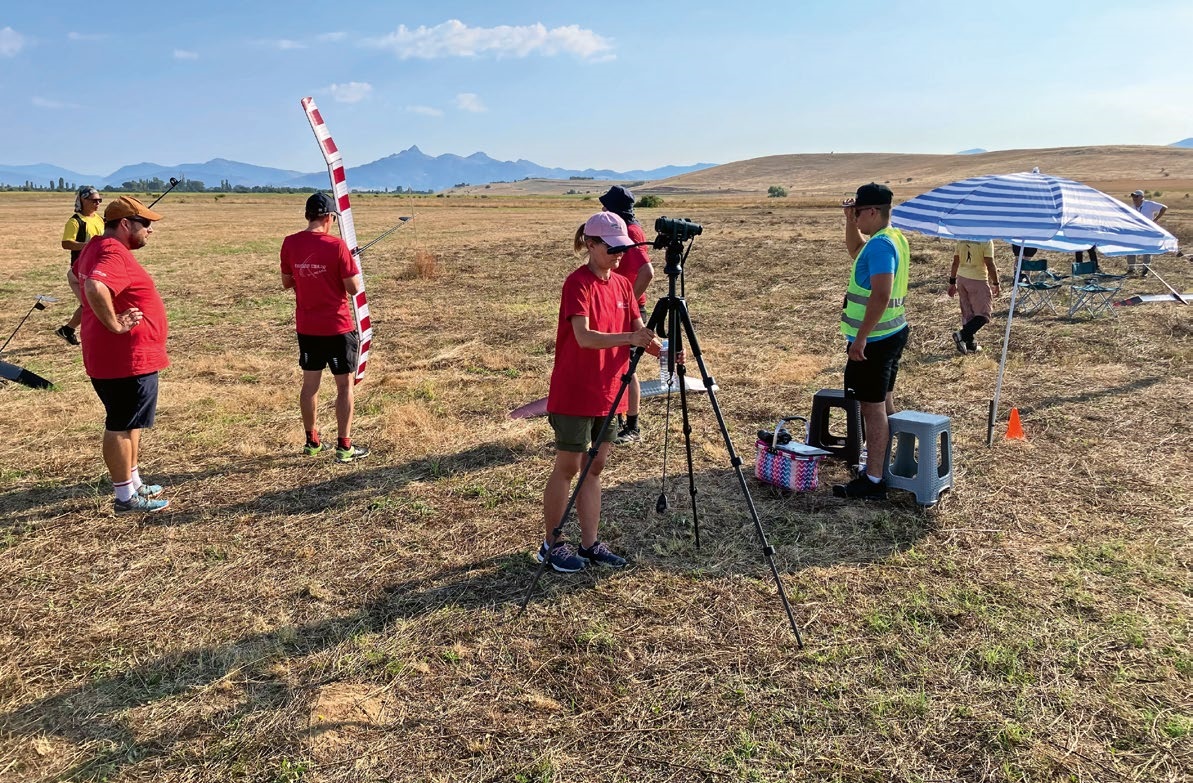
FREE FLIGHT IN THE MIDDLE OF SUMMER
Urs Muntwyler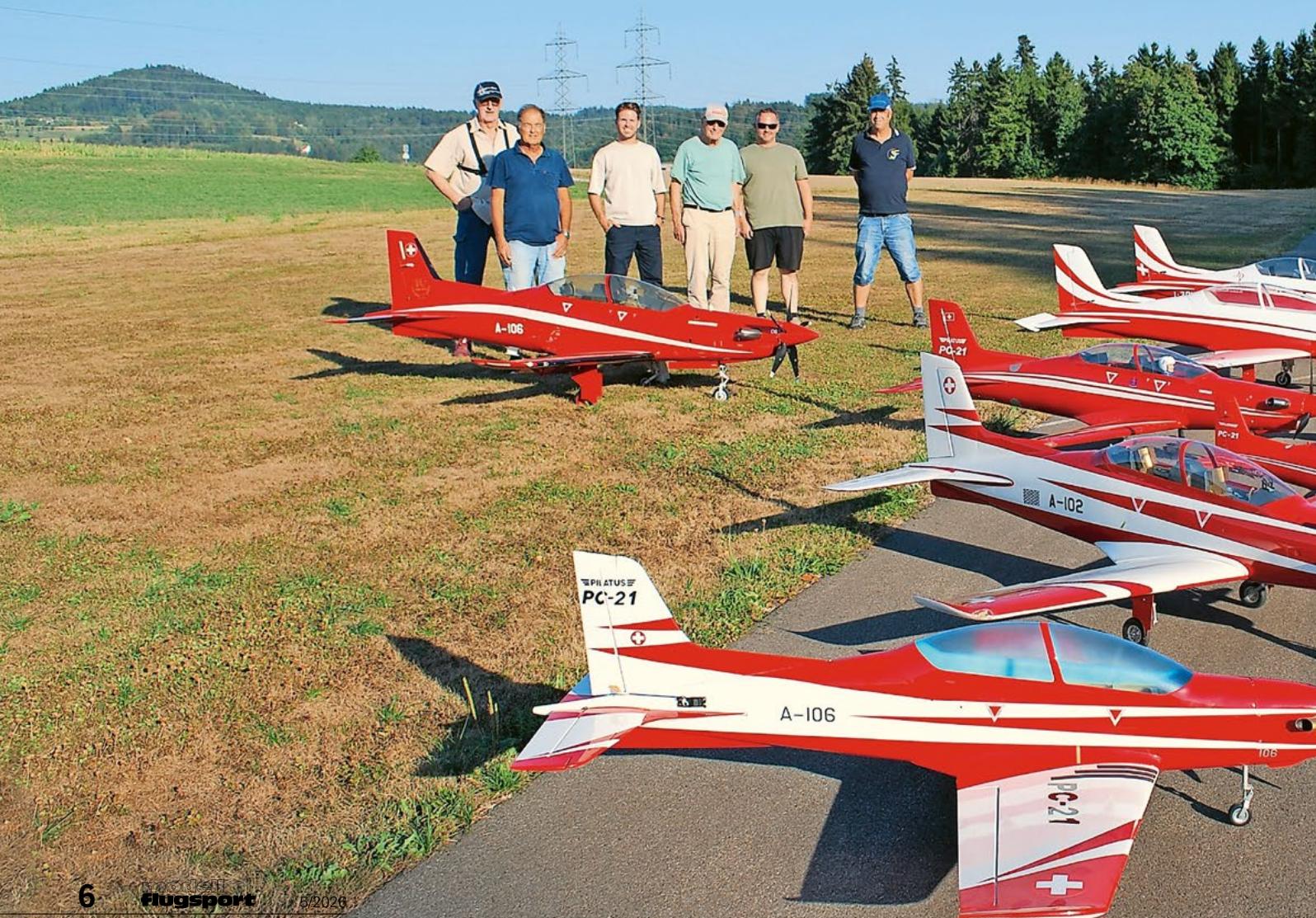
THE PC-21 STORY
Emil Giezendanner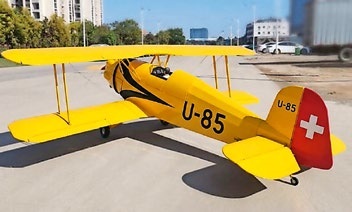
NEWS FROM HEBU
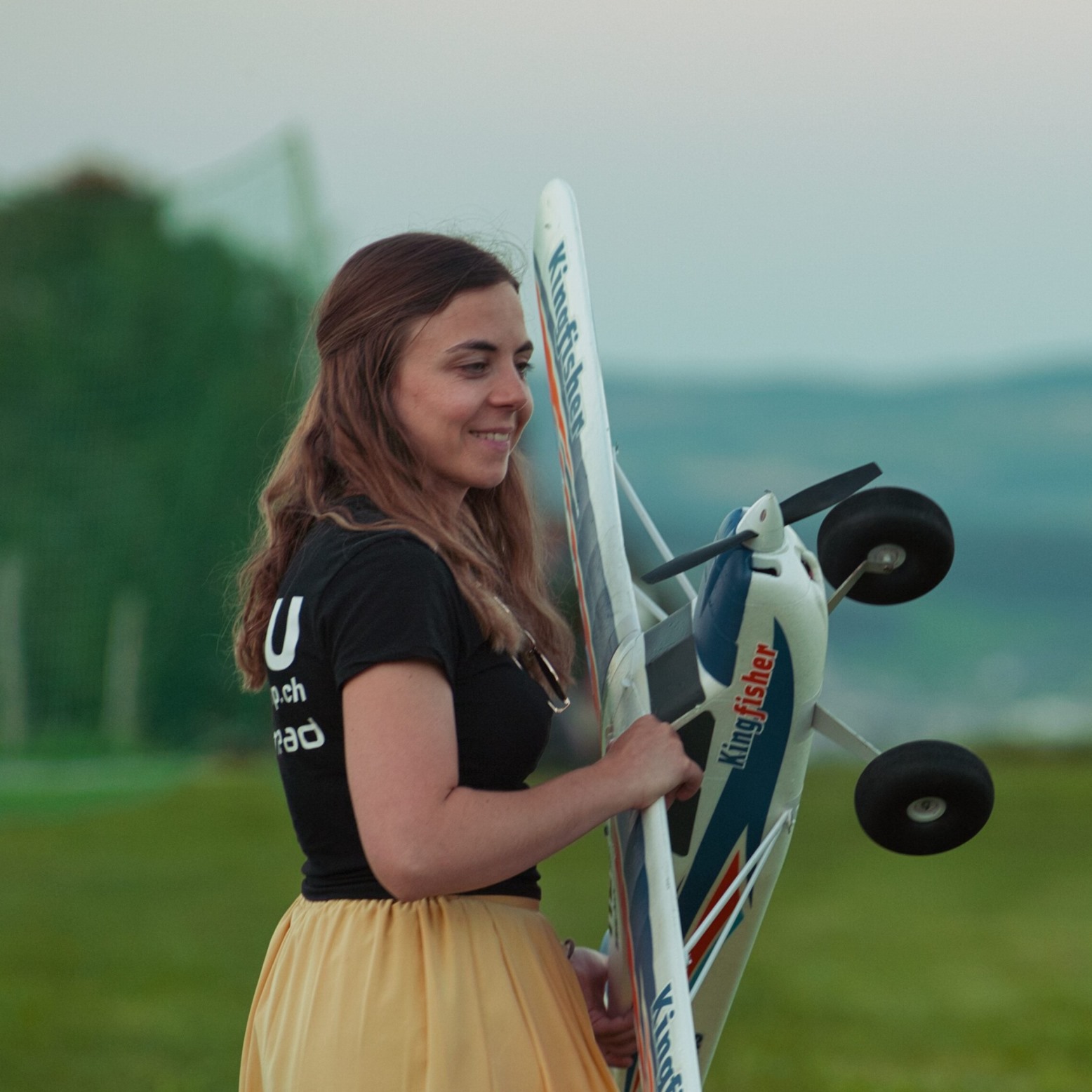 Julia Bucher
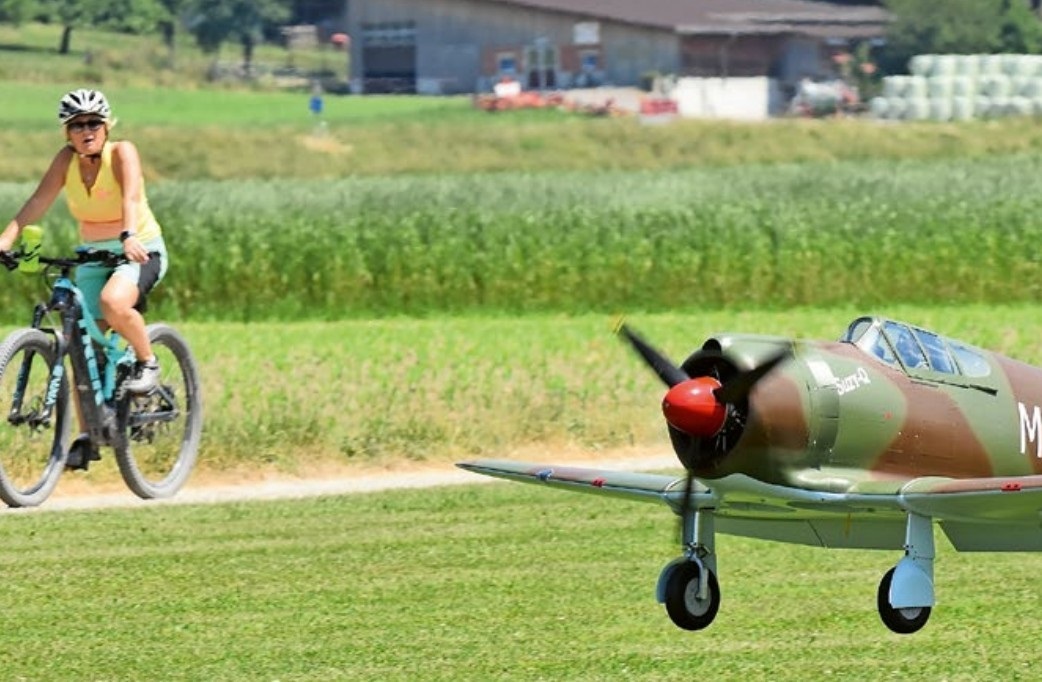
FROM 0 TO 100
Markus Nussbaumer
MEMORIES
Wolfgang Völler
NOS REGION – A HUB FOR ELECTRIC AVIATION
Emil Giezendanner
Have you almost forgotten about aircraft that take off and land vertically?
Emil Giezendanner
DO YOU KNOW WHAT I MEAN IN THE LAND OF SMILES?
Emil Giezendanner