
Graupner Reloaded?
Companies, too, go through different stages in their lives. Graupner, the quintessential traditional German model-making company, set the standard for decades, but in recent years has likely gone through one of the most difficult periods in its more than 75-year history.
As is well known, the trigger was the switch to the 2.4-gigahertz system for remote controls in 2008. The company had clearly bet on the wrong horse with the voltage-sensitive IFS system purchased in the U.S. Pilots lost their models, and Graupner, for its part, lost its “air supremacy” over the online forums, where facts soon became mixed with rumors. The end result was considerable uncertainty among customers who were just about to purchase a new remote control system, leading to significant losses in sales. Graupner employees had to prepare for many months of reduced working hours.
But upholding tradition also means overcoming crises. And it seems that the company in Kirchheim unter Teck, Swabia, has tackled this with determination and now believes it is back on track. However, this required painful cuts. The workforce was streamlined. To regain lost ground in the remote control market, the company turned to the expertise of its own development department and, with “Hott”—literally at the eleventh hour—a truly future-proof remote control system, with a special focus on transmission reliability and state-of-the-art telemetry performance. As a result, the company managed within a short time to regain much of the “basic trust” that customers had placed in this long-established Swabian firm. In any case, “Hott” is now considered one of the most advanced model remote-control systems, offering the highest level of reliability.
And, of course, the rest of the model lineup is also tailored even more closely to customer preferences. Knowing that model enthusiasts can sometimes be quite impatient, Graupner strives to deliver new products unveiled at trade shows as soon as possible after their debut. On the logistics side, a newly installed, computer-controlled inventory management system ensures that orders are shipped from the company to retailers on a daily basis.
During a tour of the company, it was surprising to learn that, contrary to popular belief, Graupner does not simply repackage and relabel products made in China, stack them, and pass them on to consumers. Rather, Graupner continues to handle both development and production in-house. Specifically, the preparatory work for the large gliders—such as milling the wing shapes—is carried out on the company’s own machinery. Additionally, some of the 125 employees are engaged in the pre-assembly of the models.
Graupner thus not only upholds tradition but also appears to be well-prepared for the future—a future that will be shaped here in Europe, not in Southeast Asia. After all, the company plans to celebrate its 100th anniversary in 2030 at its Kirchheim/Teck location.
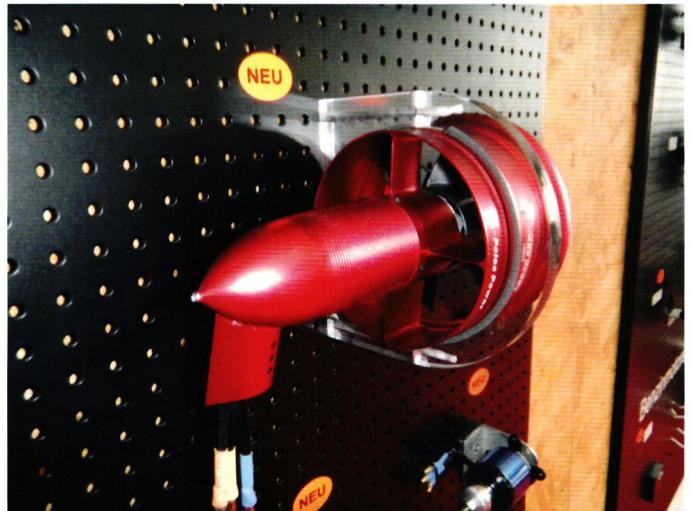
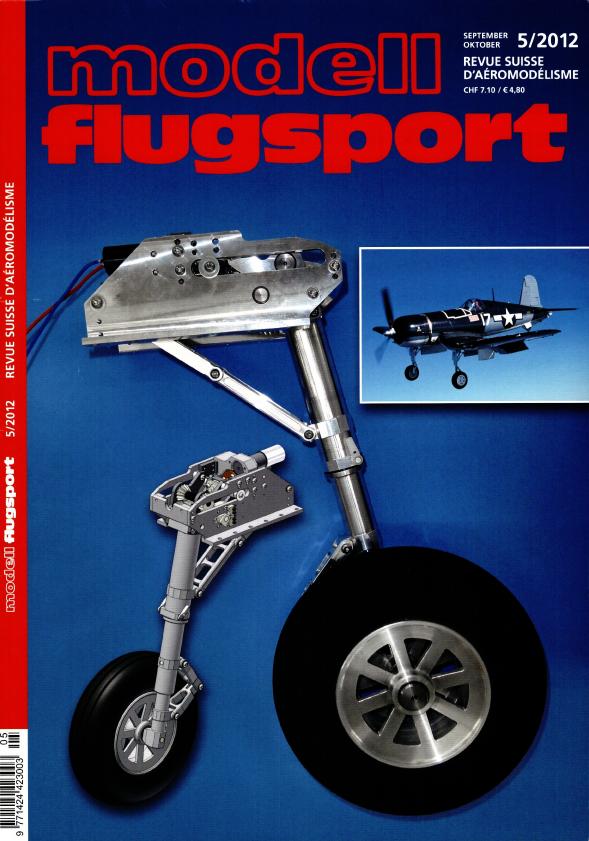

News from HEBU

TEAM MANAGER "THIS" BOSSHARD
 Rodito Nussbaumer

YOU KNOW WHAT I MEAN? 125 YEARS OF THE SWISS AERO CLUB
 Emil Giezendanner

HORIZON HOBBY/LEMACO NEWS: MICRO OV-10 BRONCO 645 MM BY E-FLITE

PRIDE AND GOOD IDEAS
 Markus Nussbaumer

34th HAHNENMOOS ALPINE MODEL AIRPLANE CAMP
Res Dauwalder
TRY-OUT DAY AT MFV WETTINGEN
Urs Keller
F3A EUROPEAN CHAMPIONSHIPS IN ST-MACAIRE, FRANCE
 Matthias Bosshard

52. 2026 ALPS CUP
Emil Giezendanner
ATOM, THE NEW DOUBLE-DECKER FROM CPLR
Matthias Bosshard
SUMMER FUN 2026 AT MG USTER
Martin Wunderli
What's New at Leomotion.com

THE PC-21 STORY
Emil Giezendanner
COUPE DES ALPES – OBSERVE AND LEARN
Rodito Nussbaumer
TWIN TOWN PARTNERSHIP
Wolfgang Voeller
EURO CONTEST GLIDER ACRO TOUR AUSTRIA 2026

BY YOUTH, FOR YOUTH
Lorena Betschen
CORSAIR F4U – A WARBIRD WITH A MEMORABLE LOOK
Jürgen Rosenberger, Jürgen Prinz
SMALL, MODEL-LIKE SAILBOATS
Res Dauwalder
WELCOME, NEW MEMBER!
Andrea Bolliger
FREE FLIGHT IN THE MIDDLE OF SUMMER
Urs Muntwyler
INSIGHTS INTO THE HISTORY OF SEAPLANES

NEWS FROM HEBU
 Julia Bucher

FROM 0 TO 100
Markus Nussbaumer
MEMORIES
Wolfgang Völler
NOS REGION – A HUB FOR ELECTRIC AVIATION
Emil Giezendanner
DO YOU KNOW WHAT I MEAN IN THE LAND OF SMILES?
Emil Giezendanner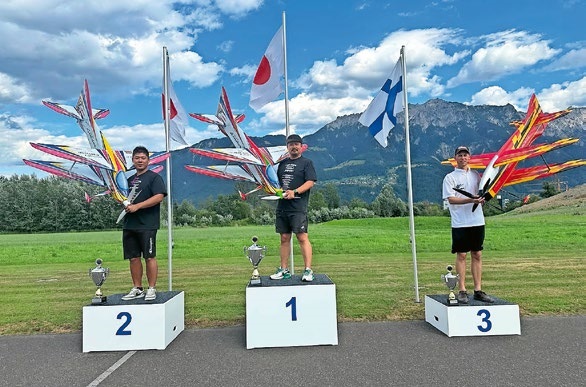
A SPECTACULAR F3A WORLD CUP IN THE PRINCIPALITY OF LIECHTENSTEIN
Emil Giezendanner