
Electric model airplanes—were they pioneers?
In the beginning—back in the 1960s—the general perception was that they were just a bunch of weirdos trying to get little planes off the ground with oversized batteries and weak electric motors that were constantly operating at the limit of their capacity. The only thing they could be sure of was the pitying glances from fellow model aviators or their scathing mockery whenever things didn’t work out yet again.
A kind of technically driven masochism was probably a prerequisite for sticking with it and carrying on. Today, no one doubts that the idea survived in the model-aircraft scene and ultimately became a success story. At some of our flying fields, internal combustion engines are already considered a rarity, even if—admittedly—this is sometimes attributable to the regulatory and prohibition frenzy of our authorities rather than to technical convictions among fellow model aviators. One thing remains undisputed: thanks to brushless motors and LiPo batteries, electric propulsion systems have become firmly established in all model sports and, when approached with reasonable expertise, leave virtually nothing to be desired in terms of performance.
Since the beginning of the 21st century, serious discussions about the electrification of motor vehicle transportation have been circulating, starting in China and then spreading to the U.S. and Europe. Technically, the catalyst was likely the onset of series production and mass manufacturing of a new type of battery: the 18650-sized lithium-ion batteries—first introduced to the market in 1991 by Sony (Japan) in a video camera— (18 mm diameter, 65 mm long). Remarkably, nearly three decades later, the cell’s external dimensions have remained unchanged. Its internal structure, too, is essentially still the same. It took about a decade for it to become suitable for high-current applications (model airplane enthusiasts know it by the name Konion). Its capacity has also increased as the technology has matured—not by a huge margin, mind you, but from an original 1,200 mAh to three times that amount today. Development in this sector simply takes time.
In 2015, the debate over electric cars gained entirely new momentum. This momentum stems less from new technical innovations than from the well-known VW diesel scandal. And since 2018, no forward-thinking person can avoid the modern Gret(a)chen question: What’s your stance on climate change?
Nevertheless, the new, (locally) emission-free propulsion technology is met with a great deal of skepticism. And not just among gasoline-loving exhaust-sound fanatics, not just among those employed in the automotive industry in Germany—who are probably not entirely wrong to fear for their jobs—and not just among investors in auto stocks who have become poorer overnight. No, it’s serious scientists who are voicing fears—backed by facts and figures—that in the former economic wonderland, the abrupt shift toward sustainable mobility could end up being costly or even go completely “down the drain.”
This naturally raises the question—which at first glance seems naive—of why the positive experiences on a small scale (model technology) apparently cannot be scaled up to the larger context (the rest of our mobile lives). And—let’s mentally skip over the transition phase for now—whether it would even be possible or desirable on a global scale (it only makes sense that way!) to power a large portion of public transportation with electric energy, even if this —it’s no shame to wish for it—were available in sufficient quantities and derived largely from renewable sources.

Electric motors are true masters of energy efficiency. Even on a model scale, they convert up to 93% of the energy supplied into rotational speed and torque. In cars, where everything is scaled up several notches, the typical efficiency is a staggering 98% or higher—a figure reminiscent of Eastern Bloc election results. Nevertheless, the motors must be cooled, because even with a modest 100 kilowatts (kW) of input, up to 2 kW—the power of a space heater—must be dissipated. That’s not a big deal, since, after all, you wouldn’t want to have to rely solely on electricity for heating in the winter. Thus, the drive motor also provides the power source for the vehicle’s built-in heat pump. And compared to its CO₂, NOx, and particulate-emitting counterparts—which, depending on load, convert 60 to 90% of the petrochemical energy supplied into hot air—even a “poor” electric motor still comes out ahead. These percentages improve even further in favor of the electric motor during slow, stop-and-go city driving—which is now the rule rather than the exception in many places. And it’s well known that the electric motor recovers energy during deceleration (regenerative braking), thereby also reducing wear on its brakes. It’s almost superfluous to add that “acceleration” has been redefined in the age of electric mobility. No, it can’t be the motor’s fault,
if e-mobility fails to gain traction with registration figures in the low single digits. The electric motor still has potential for development, however—though not primarily in terms of efficiency and performance, but rather on the cost side.
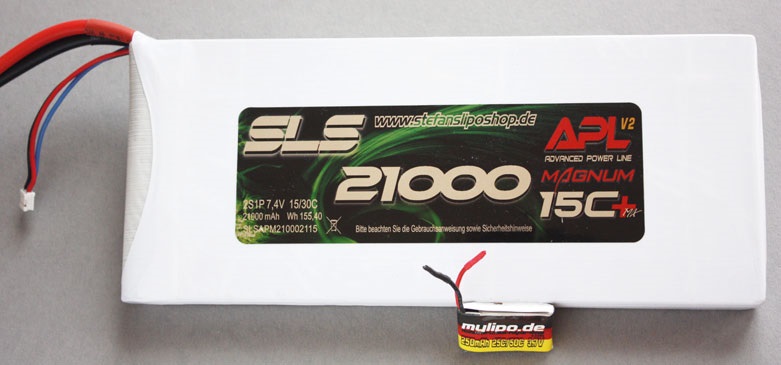
As you may recall, this term was also used in model aviation when the old shortwave remote control technology (27, 35, or 40 MHz) was being replaced by modern 2.4-GHz technology. The outcome is well known; the fear that was rampant back then is completely incomprehensible today. Whether this will also be the case for electric vehicles in the foreseeable future remains to be seen. Sure, an electric vehicle that can drive the A7 from Kempten to Flensburg without stopping to recharge isn’t on the horizon—unless, much like the tip tanks on an airplane, you were to fill two roof boxes with batteries. Here, too, the reasoning has long been common knowledge: Lithium-ion batteries of the 18650 size mentioned at the beginning, which are packed by the thousands into the floor of an electric car, currently achieve an energy density of about 200 watt-hours per kilogram (Wh/kg) of battery weight. That’s nominally more than our LiPos, which typically make do with about 150 Wh/kg but are allowed to operate almost bare in their airy Velcro-strap casing, whereas the traction battery in a car requires an encasing that includes coolant and protective electronics. The end result isn’t much different. LiPos are also engineered for high load capacity
and pay for this power with a lifespan of only 50 to 200 charge cycles—which is unquestionably insufficient for commercial applications. And while the average model airplane pilot starts longing for the runway after eight to ten minutes of intense aerobatic maneuvers, the electric car driver has only just reached the highway on-ramp. The limited operating time is thus likely both the key to the hobby’s success and its other problem. It’s little consolation to know that the average driving distance of a car today is only 40 kilometers.
Fossil fuels like diesel or gasoline simply outperform them with 12,000 to 13,000 Wh/kg. It’s a whole different league—and this fact isn’t diminished by the fact that the corresponding engines can only efficiently utilize a small fraction of that energy. Anyone browsing energy density tables now will quickly come across the leader, hydrogen ($H^2$), with 33,000 Wh/kg, and will recall having heard something about fuel cell cars as an alternative free from range anxiety. Well, unfortunately, even hydrogen—which, while produced in an environmentally friendly way as—
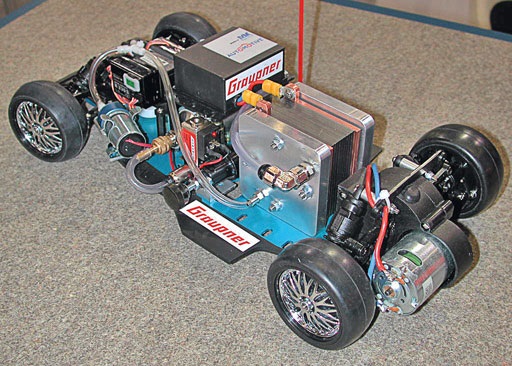
Hydrogen has its own set of problems, not unlike those of electricity: It does not occur anywhere in nature in a form that can be used directly and must be produced with some loss. Even when electricity (from renewable sources) is used to produce it, only about 50% of that electricity is converted into hydrogen gas. The subsequent conversion of hydrogen gas back into electricity via a fuel cell is no more efficient. Again, half of the input energy is converted into heat, leaving an overall efficiency of
25%. And even if recent experiments promise an improvement of a few percentage points here, the turbo diesel already performs better today!
The second problem concerns transportation and storage. The tiny hydrogen atoms are actually capable of penetrating the walls of standard metal gas cylinders. For this reason, they are currently stored under high pressure (up to 700 bar) in multi-layered special containers for mobile applications, whose sealing plastic layer accounts for about 10% of the container’s weight. The remaining 90% is attributable to
the pressure-resistant casing made of epoxy-resin-bonded glass and carbon fibers. While this composite reduces the packaging weight, it is neither environmentally friendly to produce, nor has the issue of disposal even begun to be resolved (which, incidentally, also applies to the rotor blades of wind turbines made of similar materials). Since hydrogen pipelines are costly for the reasons mentioned above and are considered feasible only in exceptional cases, the gas must therefore be compressed—with some loss—and transported in pressure vessels to the delivery point. The alternative method—liquefying the gas and then transporting it to the customer in double-walled tank trucks—does make better use of transport capacity, but requires three times as much primary energy due to the cooling process. $H_2$ refueling stations, where the gas would be produced on-site, would be ideal. However, this requires a local surplus of primary energy (wind and/or solar power). Such a supply logistics system does not yet exist. Storage at refueling stations takes place at medium pressure (50 bar) and therefore requires comparatively large tank volumes, usually in the form of tower tanks. Consequently, the refueling process for hydrogen also involves additional losses (high-pressure compression and cooling). Unlike electricity, hydrogen is easier to store, but even with high-pressure storage, it requires significantly more storage volume than natural gas, gasoline, or diesel, which limits its use in mobile applications. And anyone who doesn’t want to completely ignore the inherent risks of hydrogen is welcome to take a look at the history of airships.
The above statements, however, are not meant to spell the end of hydrogen technology, but rather to clearly ma-

...that there is still a long way to go before we get there. That is why this essay now turns its attention back to battery technology, which—as various solutions demonstrate—works in principle and is well on its way to at least partially addressing the Achilles’ heel of limited range.
Anyone who reads headlines like that should just keep scrolling. The Sony lithium-ion cell mentioned at the beginning—and everything that followed from South Korea and China—took nearly two decades to
become “road-ready” and capable of reasonably fast charging. Progress in terms of internal resistance, capacity, and energy density dragged on in tiny increments over decades. Hopes for “quick wins” in battery technology—if they ever existed—are an illusion these days. It doesn’t matter whether people are once again rambling on about sodium batteries (old hat, but not relevant to mobility) or even elevating the perfectly docile magnesium metal to the status of a beacon of hope. Even if they work in the experimental stage, it will still take decades for new, better, or more reliably available batteries to reach market maturity.
That leaves us with the tried-and-true lithium-ion battery, which will usher in the future of electric mobility and continue to power it for years to come. Unfortunately, they don’t grow on trees. The raw materials it’s made of come from numerous deposits scattered across the globe and have now become the subject of geostrategic economic interests. The success of the electric mobility transition will therefore depend—even more so than on further technical advances—on the unhindered availability (and affordability) of the following raw materials: lithium, cobalt, and nickel for the batteries; rare earth
metals, as well as large quantities of copper for the motors and the connection of charging stations, and finally platinum, should fuel cells ultimately gain traction. Unfortunately, all of the materials mentioned are also in high demand in other industrial sectors. For example, one-third of all lithium production goes to the glass and ceramics industries. Cobalt, which is notoriously scarce, is indispensable for metal finishing (toolmaking). Cobalt mining is concentrated in the Democratic Republic of the Congo and is not without ethical concerns, as working conditions there are unlikely to meet the standards of Central European labor unions. By the way: Almost no battery (including NiMH) today can function entirely without cobalt. It’s a shame that this resource, which is increasingly recognized as finite, has been squandered for years in all sorts of flashy, frivolous applications, such as cheap solar garden lights. Efforts are underway to substitute this proven transition metal with manganese or nickel, with nickel gaining increasing importance. Nickel, too, is one of the most in-demand metals as a key alloying component (stainless steel).
Rare earth elements—indispensable for magnet production—are, contrary to their name, not actually rare in the Earth’s crust. The fact that 85% of them still come from China today is due to the country’s shrewd economic policies in the 1990s: First, the market was flooded with cheap supplies, so that other deposits were soon abandoned as uneconomical. A steady rise in prices has been observed for about 10 years. Tesla has therefore opted not to use permanent magnets in the S model and instead uses asynchronous, magnet-free rotors. Although such electric motors are somewhat larger
and more expensive, but apparently that’s the safe bet.
Platinum and platinum group metals, such as palladium and rhodium, also come 85% from China. A staggering 35% of this is used to maintain family harmony and is consumed by the jewelry industry. Most of it has so far gone into catalytic converters and could thus be redirected to fuel cells as part of a transportation transition.
In the case of copper—whose importance in the electricity sector probably needs no further explanation—the upward price trend of recent years has also spurred a positive development: the recycling
recycling rate has risen very sharply. Perhaps this is Europe’s chance to invest in technologies that recover even the harder-to-separate raw materials from old batteries—not only to reduce dependence on imports but also to succeed in an area where East Asia’s lead has not yet dashed all hope. And the environment will thank us for it.
That leaves the concern about the much-discussed lithium, which, as is well known, is extracted from salt lakes in the highlands of the Andes. This method of extraction is very economical because the lithium salt is obtained using solar energy through gradual dehydration and with a high
purity. The associated environmental impacts—including higher local water evaporation and the resulting drop in groundwater levels—have recently been the subject of increasing criticism. It is little known that in 2015, Australia mined almost exactly as much lithium as Argentina and Chile combined, albeit in the form of the mineral spodumene, which requires significantly more processing effort. Similar deposits are found in Canada. And here’s some more good news: China finally ranks among the “also-rans,” accounting for just 6% of global production. German auto-
companies are currently spending a lot of money to secure lithium supplies for future Western battery production. However, everywhere they turn, they’re grappling with the familiar “hare and hedgehog” problem: the other side is always already there.
No, the claim that electric model aircraft pioneers were true pioneers probably isn’t quite accurate, despite their undeniable contribution to helping a forward-looking technology achieve a breakthrough through private research efforts. The global challenge of a future transition to electric transportation will likely lie more in energy and raw materials logistics. This calls for technical solutions, but even more so for ideas in the realm of global economic policy. Many doubt whether a fragmented EU stands a good chance against the economic giants of China and the U.S., which are fighting tooth and nail. Germany, long known as an automotive powerhouse, will undoubtedly face the greatest challenges, especially if China were to come up with the actually obvious idea of supplying us, in the near future, with lithium-ion batteries and rare-earth magnets—but only when they’re already installed in the lower half of “made in China” cars.
Let’s look on the bright side. Widespread e-mobility will come gradually. It won’t radically change our lives, but in some places it will mean that driving will once again be permitted where it was previously restricted or even prohibited. Hasn’t the switch to electric propulsion at model airfields seen similar success in many places? Well, then our idea of “Silent Flight” wouldn’t be completely off the mark after all!
Ludwig Retzbach
Source: The economic data is taken from the Material Study_e-mobilBW


News from HEBU

HORIZON HOBBY/LEMACO NEWS: MICRO OV-10 BRONCO 645 MM BY E-FLITE

PRIDE AND GOOD IDEAS
 Markus Nussbaumer

TEAM MANAGER "THIS" BOSSHARD
 Rodito Nussbaumer

YOU KNOW WHAT I MEAN? 125 YEARS OF THE SWISS AERO CLUB
 Emil Giezendanner

F3A EUROPEAN CHAMPIONSHIPS IN ST-MACAIRE, FRANCE
 Matthias Bosshard

ATOM, THE NEW DOUBLE-DECKER FROM CPLR
Matthias Bosshard
SUMMER FUN 2026 AT MG USTER
Martin Wunderli
What's New at Leomotion.com

52. 2026 ALPS CUP
Emil Giezendanner
TWIN TOWN PARTNERSHIP
Wolfgang Voeller
34th HAHNENMOOS ALPINE MODEL AIRPLANE CAMP
Res Dauwalder
CORSAIR F4U – A WARBIRD WITH A MEMORABLE LOOK
Jürgen Rosenberger, Jürgen Prinz
SMALL, MODEL-LIKE SAILBOATS
Res Dauwalder
TRY-OUT DAY AT MFV WETTINGEN
Urs Keller
WELCOME, NEW MEMBER!
Andrea Bolliger
FREE FLIGHT IN THE MIDDLE OF SUMMER
Urs Muntwyler
COUPE DES ALPES – OBSERVE AND LEARN
Rodito Nussbaumer
EURO CONTEST GLIDER ACRO TOUR AUSTRIA 2026

BY YOUTH, FOR YOUTH
Lorena Betschen
INSIGHTS INTO THE HISTORY OF SEAPLANES

THE PC-21 STORY
Emil Giezendanner
NEWS FROM HEBU
 Julia Bucher

FROM 0 TO 100
Markus Nussbaumer
MEMORIES
Wolfgang Völler
NOS REGION – A HUB FOR ELECTRIC AVIATION
Emil Giezendanner
DO YOU KNOW WHAT I MEAN IN THE LAND OF SMILES?
Emil Giezendanner
Have you almost forgotten about aircraft that take off and land vertically?
Emil Giezendanner