
24th Free Flight Seminar in Gretzenbach – A Look Back at a Successful Free Flight Season and a Look Ahead to 2024
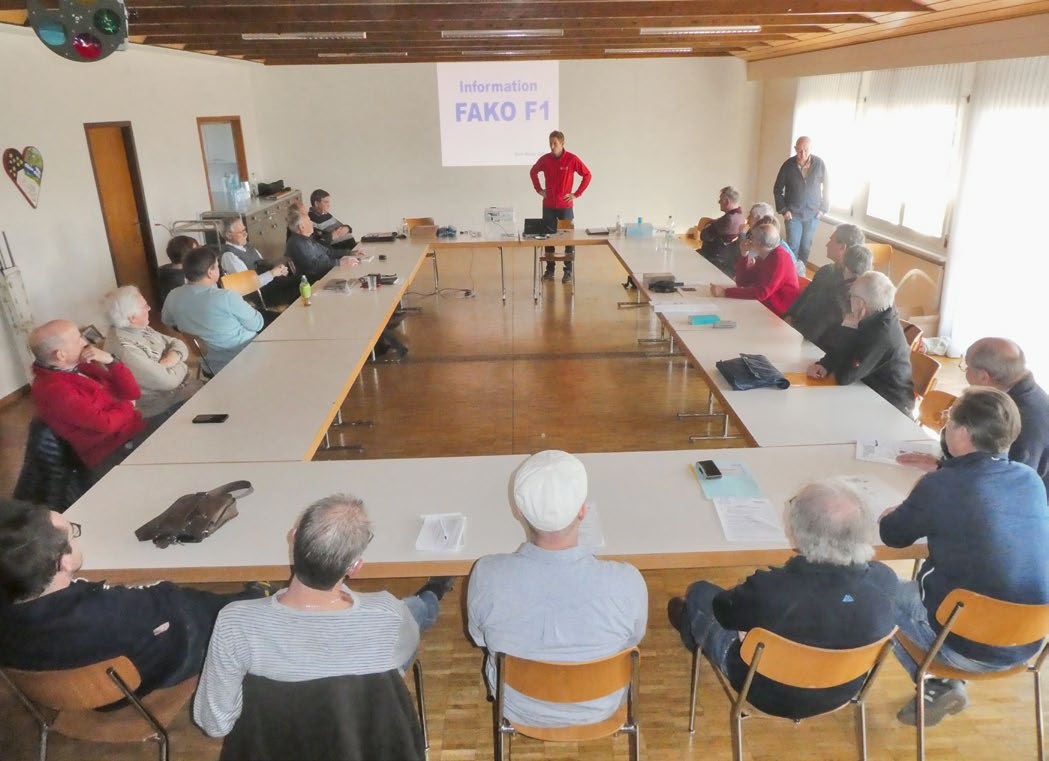
Michael Bleuer (MG Rüttenen), president of the Free Flight Technical Commission, welcomed about 30 participants to the traditional free flight seminar. As is customary, pilots exchange tips and equipment during the morning.
The theoretical session began in the afternoon, introduced by Michael Bleuer, chairman of the Free Flight Technical Commission. A major topic of discussion—especially for model aircraft and free flight enthusiasts active internationally—is the permits and regulations governing model aircraft in the EU. No new restrictions are currently known in Switzerland. The 2024 competitions are already listed online, and competition pilots can find the latest information and register on the Model Flying Association’s website. For those interested in free flight and beginners, we recommend the Losterfer competition on March 16, 2024, and the national free-flight team’s training session in Mühenthurnen.
As team manager, Alfred Andrist provided an update on the successful World Championships in Moncontour (France) in August 2023. A total of 600 pilots and support staff from 41 nations competed over the course of a week. Prior to the World Championships, the team trained several times in the Gürbetal valley. As part of their training, the team flew in two World Cup events to fine-tune their performance. Michi Bleuer took 2nd place in F1A (glider) and Dominik Andrist took 1st place in F1B (rubber-powered). Bolstered by these strong results, the Swiss team entered the competition with high morale. The competitions began at 7 a.m. on the field. The three pilots—Lauri Malila, Christian Andrist, and Michael Bleuer—competed in F1A. The models had to be retrieved after each run. Launches took place simultaneously at 41 launch sites. To prevent line crossings during circuit towing (where the pilot searches for thermals), each Swiss pilot was assigned a co-pilot to monitor the airspace. This allowed the pilot to concentrate on the launch procedure. After 7 scoring flights, 48 pilots qualified for the first 6-minute fly-off. Lauri Malila reached this mark and qualified for the second fly-off, featuring 15 pilots with an 8-minute flight time. At 8:30 p.m. that evening, Lauri achieved the longest flight time and became the F1A World Champion. This marks the second time since 1965 that a Swiss free-flight pilot has won the world championship in this category.
After a rest day, the F1B category began with the three pilots from the Andrist family. The two pilots, Christian and Dominik Andrist, advanced to the fly-off. It began at 8:30 p.m. with a flight time of 8 minutes. Dominik Andrist took third place with a flight time of over 7 minutes. In the F1C category (gliders with internal combustion engines), Peter Maurer (MV Bern) competed. He is the only pilot from Switzerland in this category.
In his presentation, Alfred Andrist emphasized the strong team effort required to help top pilots succeed. He also discussed the technical specifications of the winning models. In the F1A glider category, models with LDA profiles have an advantage in the first two 4-minute rounds. Thanks to their slender profiles, they reach altitudes of over 100 m. In the five additional 3-minute rounds with thermals during the day, conventional glider models are preferred. In the fly-off in the evening or early morning, carbon flapper models with adjustable wing profiles are the preferred choice. They can reach up to 120 m at launch, resulting in maximally long flight times. As the flight performance of the models continues to improve, it’s becoming increasingly difficult to track them visually. Multicolored LEDs are being used more frequently. GPS sensors for locating free-flight competition models are standard.
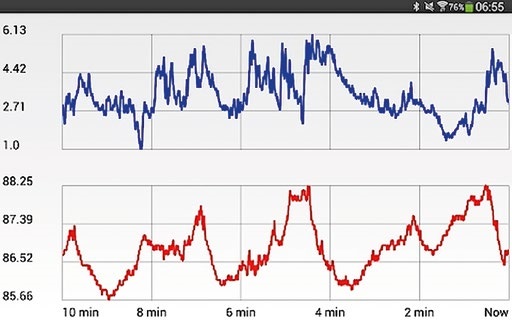
Up to 50% of competitors complete all rounds with maximum flight times. That’s why tactics are so crucial in the fly-off. Competition pilot Dominik Andrist (3rd place at the 2023 F1B World Championships and 2023 Swiss Champion in F1A) spoke about this. In the fly-off, even small mistakes can come back to haunt you and immediately result in a lower ranking. For Dominik Andrist, a modern, well-trimmed model that the pilot has mastered is essential for a good result. In the fly-off, the maximum launch interval is 7 minutes. The model must be launched within this timeframe. Both the primary model and a spare model must be ready. Trim flights are recommended before the fly-off. However, these drain the pilot’s energy, which may then be lacking during the fly-off. F1A World Champion Lauri Malila performs up to 10 trim flights before the fly-off. This varies by individual and depends on the pilot’s physical and mental condition. If there are only a few pilots in the fly-off, it’s important to observe them. You need to be familiar with the pilots, their models, and their performance, and adjust your tactics accordingly. If the fly-off takes place early in the morning in laminar air, maximum altitude and a good glide angle are what count. If the fly-off is in the early evening, there may still be thermals, and a pilot with a good glider may still have a chance. Thermal sensors are an important tool here. They indicate a thermal bubble through a rise in temperature and an increase in wind speed. In F1B (rubber-powered) as well, there are only 7 minutes available for winding the rubber and launching the model. The pilot must weigh whether to stretch the rubber cord to its load limit, risking a possible break. If that happens, a second cord must be wound, which cuts into the launch time. Depending on the weather, the model’s settings are optimized based on experience. Thermal sensors are standard equipment for top pilots in this category.
Christian Gugger gave a presentation on indoor flying in Switzerland. Indoor flying was successfully practiced in Switzerland in the 1970s and 1980s by pilots such as Maurice Bodmer, Thomas Urban, Andreas Vogel, Rainer Lotz, René Butty, and Dieter Siebenmann. What was missing were beginner classes. Since 2019, building courses have therefore been organized by the model flying clubs in Buchs, Balsthal, and Breitenbach. Christian Gugger presented the entire range of Saalfug models, which ranged from a simple beginner model with a 26 cm wingspan and a weight of 1 g (Lyllflygarn) to the large F1D competition model (55 cm wingspan, 1.4 g with 0.4 g of rubber).
Finally, Christian Andrist presented a new electronic control system for the F1E slope-soaring models designed by German slope-soaring pilot Paul Seren. It replaces the traditional magnetic control system. At the heart of the control system is the BNO-055 9-axis orientation sensor from Bosch. The sensor’s signals are processed and used to drive a servo, which in turn controls the wind vane in the model’s nose. It is also possible to control the lateral rudder at the tail of the model. The new control system is easier to program and lighter. This makes it simpler to build lightweight models that fly longer. An initial test in early February using a hand launch (known as a “flop”) yielded an astonishing glide angle. Pilots Alfred and Dominik Andrist will test whether this proves effective in competition at a World Cup in mid-February in Lost Hills, California, in the U.S.


News from HEBU

TEAM MANAGER "THIS" BOSSHARD
 Rodito Nussbaumer

YOU KNOW WHAT I MEAN? 125 YEARS OF THE SWISS AERO CLUB
 Emil Giezendanner

HORIZON HOBBY/LEMACO NEWS: MICRO OV-10 BRONCO 645 MM BY E-FLITE

PRIDE AND GOOD IDEAS
 Markus Nussbaumer

34th HAHNENMOOS ALPINE MODEL AIRPLANE CAMP
Res Dauwalder
TRY-OUT DAY AT MFV WETTINGEN
Urs Keller
F3A EUROPEAN CHAMPIONSHIPS IN ST-MACAIRE, FRANCE
 Matthias Bosshard

52. 2026 ALPS CUP
Emil Giezendanner
ATOM, THE NEW DOUBLE-DECKER FROM CPLR
Matthias Bosshard
SUMMER FUN 2026 AT MG USTER
Martin Wunderli
What's New at Leomotion.com

THE PC-21 STORY
Emil Giezendanner
COUPE DES ALPES – OBSERVE AND LEARN
Rodito Nussbaumer
TWIN TOWN PARTNERSHIP
Wolfgang Voeller
EURO CONTEST GLIDER ACRO TOUR AUSTRIA 2026

BY YOUTH, FOR YOUTH
Lorena Betschen
CORSAIR F4U – A WARBIRD WITH A MEMORABLE LOOK
Jürgen Rosenberger, Jürgen Prinz
SMALL, MODEL-LIKE SAILBOATS
Res Dauwalder
WELCOME, NEW MEMBER!
Andrea Bolliger
FREE FLIGHT IN THE MIDDLE OF SUMMER
Urs Muntwyler
INSIGHTS INTO THE HISTORY OF SEAPLANES

NEWS FROM HEBU
 Julia Bucher

FROM 0 TO 100
Markus Nussbaumer
MEMORIES
Wolfgang Völler
NOS REGION – A HUB FOR ELECTRIC AVIATION
Emil Giezendanner
DO YOU KNOW WHAT I MEAN IN THE LAND OF SMILES?
Emil Giezendanner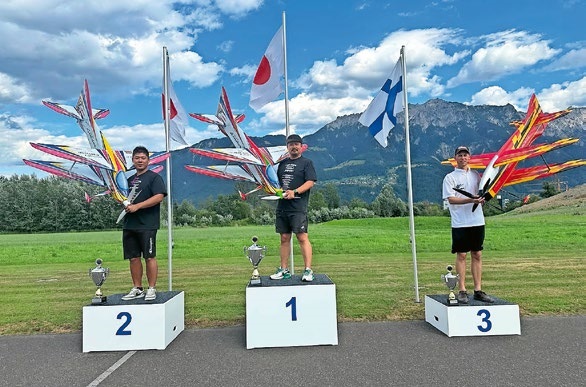
A SPECTACULAR F3A WORLD CUP IN THE PRINCIPALITY OF LIECHTENSTEIN
Emil Giezendanner