
Heinz Keller has died
The father of the “Keller motor” died on October 5, 2012, at the age of 82, near Hanau—the place where he grew up and spent most of his life. He is considered one of the great pioneers of electric flight.
Heinz Keller, born in 1929, first completed an apprenticeship at Hanauer Vakuumschmelze after graduating from high school; he then returned to work for the company that had trained him after earning a degree in physics from Goethe University in Frankfurt. There, Keller, a graduate in physics, began working early on with alloys of the rare-earth metals cobalt and samarium and quickly recognized the potential of these—at the time—novel magnetic materials for the construction of high-torque electric motors. The inspiration to try building a motor himself came from his hobby of model racing boats, which he pursued in his free time at the Fulda Model Boat Club.
Very soon after—it was probably 1978—electric model airplane enthusiasts also discovered the significance of this innovation. Until then, they had mostly struggled to gain altitude using Japanese Mabuchi motors, which were designed for power tools. The Keller motors brought a whole new dynamic to the electric aviation scene, which had previously often been ridiculed for its lack of power. Soon, it was impossible to win a competition without a Keller motor. Demand exploded, so that on the 25th anniversary of his employment at Vakuumschmelze, Heinz Keller resigned from his secure position and founded his own motor company. The now-legendary “Keller 50/24” was followed by numerous motor models for various applications and power classes. Yet his business acumen always lagged behind that of the designer and tinker. Heinz Keller did not concern himself with sales promotion in the modern sense; instead, he preferred to support young competitors—
commercial pilots. Getting a Keller motor wasn’t always easy; the service was more like a support program for competitors.
In 1989, Heinz Keller sold his engine manufacturing business to Robbe and, throughout the 1990s, pursued electric flight solely as a hobby. He turned his research attention to the nickel-cadmium cells that were common at the time. With great dedication, he collected measurement data and published the findings he had gathered in a technical book. Even then—
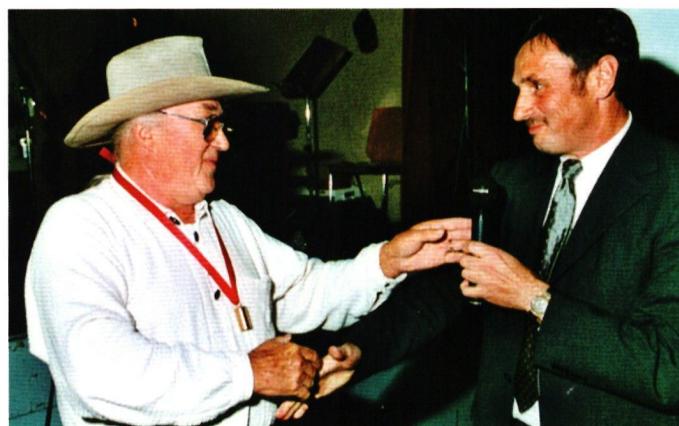
he continued to attend electric flight events time and again, always in his unmistakable outfit. He was often seen as a fellow citizen who was highly critical of the spirit of the times.
Although Heinz Keller had increasingly withdrawn into private life in his final years for health reasons, his name and his associated contributions to electric flight will remain indelibly etched in the memory of future generations. ■
*Ludwig Retzbach*


News from HEBU

HORIZON HOBBY/LEMACO NEWS: MICRO OV-10 BRONCO 645 MM BY E-FLITE

PRIDE AND GOOD IDEAS
 Markus Nussbaumer

TEAM MANAGER "THIS" BOSSHARD
 Rodito Nussbaumer

YOU KNOW WHAT I MEAN? 125 YEARS OF THE SWISS AERO CLUB
 Emil Giezendanner

F3A EUROPEAN CHAMPIONSHIPS IN ST-MACAIRE, FRANCE
 Matthias Bosshard

ATOM, THE NEW DOUBLE-DECKER FROM CPLR
Matthias Bosshard
SUMMER FUN 2026 AT MG USTER
Martin Wunderli
What's New at Leomotion.com

52. 2026 ALPS CUP
Emil Giezendanner
TWIN TOWN PARTNERSHIP
Wolfgang Voeller
34th HAHNENMOOS ALPINE MODEL AIRPLANE CAMP
Res Dauwalder
CORSAIR F4U – A WARBIRD WITH A MEMORABLE LOOK
Jürgen Rosenberger, Jürgen Prinz
SMALL, MODEL-LIKE SAILBOATS
Res Dauwalder
TRY-OUT DAY AT MFV WETTINGEN
Urs Keller
WELCOME, NEW MEMBER!
Andrea Bolliger
FREE FLIGHT IN THE MIDDLE OF SUMMER
Urs Muntwyler
COUPE DES ALPES – OBSERVE AND LEARN
Rodito Nussbaumer
EURO CONTEST GLIDER ACRO TOUR AUSTRIA 2026

BY YOUTH, FOR YOUTH
Lorena Betschen
INSIGHTS INTO THE HISTORY OF SEAPLANES

THE PC-21 STORY
Emil Giezendanner
NEWS FROM HEBU
 Julia Bucher

FROM 0 TO 100
Markus Nussbaumer
MEMORIES
Wolfgang Völler
NOS REGION – A HUB FOR ELECTRIC AVIATION
Emil Giezendanner
DO YOU KNOW WHAT I MEAN IN THE LAND OF SMILES?
Emil Giezendanner
Have you almost forgotten about aircraft that take off and land vertically?
Emil Giezendanner