
The path runs alongside the dead-end street
There are very few sports organizations that don’t have to worry about their young talent. We model airplane enthusiasts are not among them. Unfortunately, we invest too much in the administration of the sport and too little in actively promoting youth participation—is this a dead end?
Hardly any association or club can afford not to include the promotion of something in its bylaws and regulations. In our aviation sports clubs—AeCS, SMV, regions, and groups—the promotion of young talent is one of our noble goals. The relevant descriptions are brief and general in nature. This flexibility undoubtedly has major advantages and allows for a wide variety of activities. This approach is followed at virtually every level of the association. However, it requires a minimum of coordination. Without it, our efforts would lose their impact—leading to overlapping initiatives, scheduling conflicts, etc.
Not every model airplane is suitable for competitive flying. Models designed specifically for this purpose quickly become more technically sophisticated and complicated. The models themselves (empty shells) are, however, very advanced today. Installing the powerplant, RC control system, and possibly other electronic devices requires a minimum level of technical expertise. This expertise is hard to come by without experience, since the entry-level models are available in stores completely ready to fly. Although Styrofoam planes are touted as suitable for young pilots,
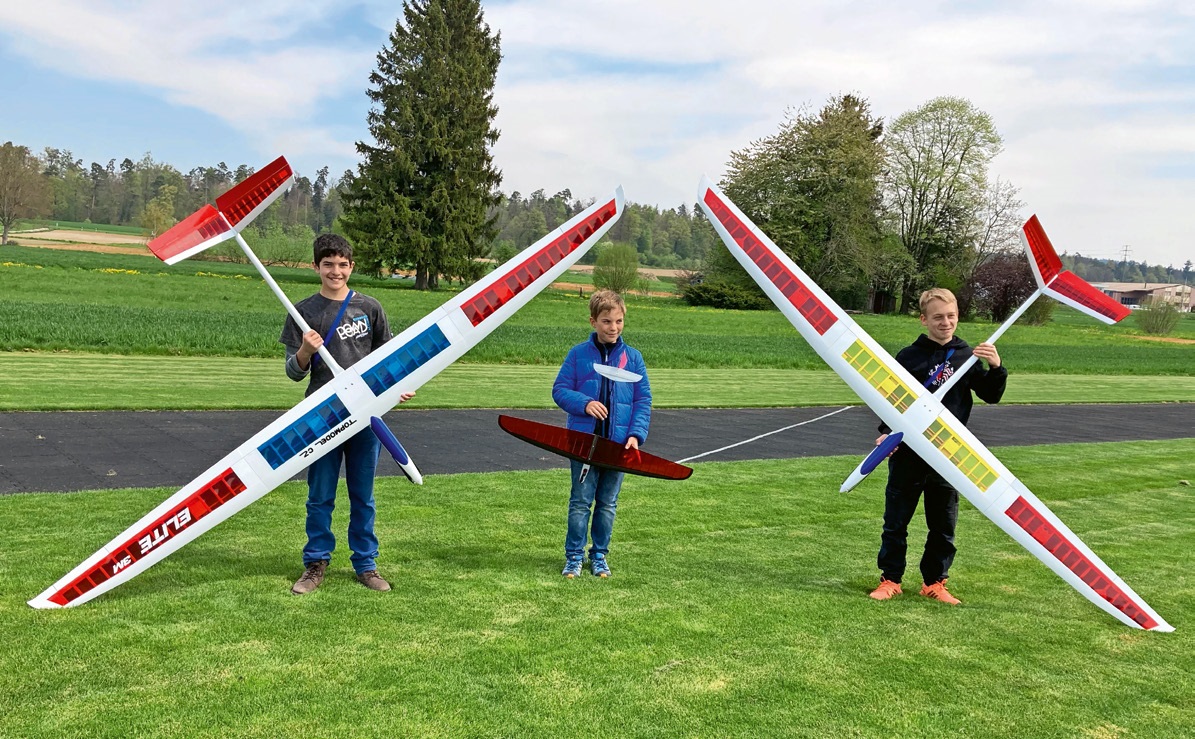
It’s worth noting that these models leave a significant gap between ready-to-fly models and those that are a bit more challenging to set up (and repair). Since these models are increasingly being used by adult members as well, clubs very often lack experienced members who can provide technical advice and support to juniors when it comes to setting up and flying in their gliders. This is not meant to be a complaint. However, it does—unfortunately—reflect my own experience.
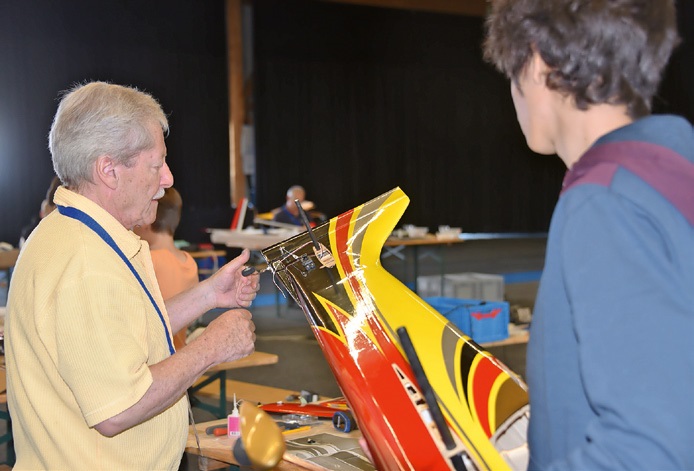
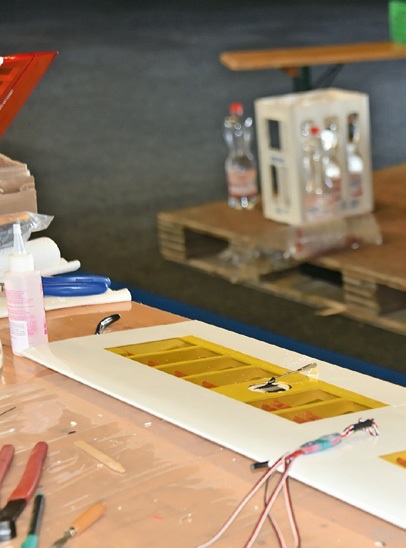
Based on the insight above, we’ve taken the following approach: At NOS, we’ve left the responsibility for model-building courses for less experienced groups entirely to the clubs. Upon request, they are provided with course models free of charge—including even the smallest models for indoor events. For several years now, the new Young SilentWings training program has been entirely focused on assembling and flying in—until they are competition-ready—more challenging models. Thanks to good organization and extensive preparatory work, the kits are assembled and ready to fly in about two days and, weather permitting, are flown in on the third day. Various rather difficult and time-consuming tasks were carried out in advance by our instructors. I’m thinking of tasks like mounting the motor mount or adjusting Bowden cables to eliminate play. In general, control linkages must be checked by the instructors. On the third day, the certificates are also presented in the presence of the parents—a ceremony whose significance for the young people should not be underestimated. The feeling of having accomplished something, documented in writing, is irreplaceable. New programs and events are in store for the aerobatic pilots.
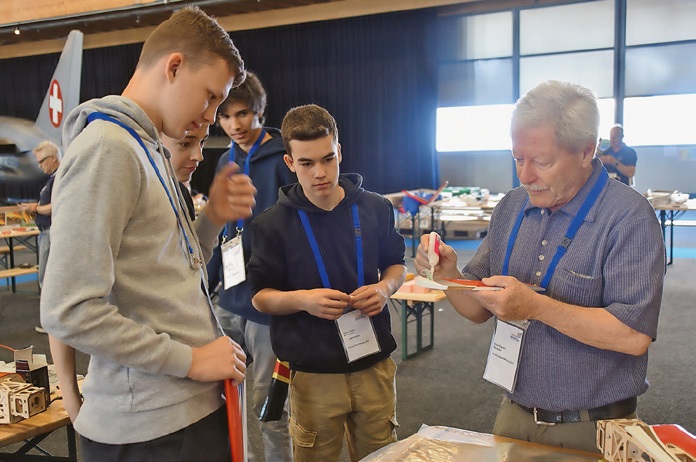
After these intense days of delving into the “inner workings” of a competition model, it’s absolutely essential to keep going. A few follow-up training sessions are indispensable. Of course, it would be a stroke of luck if additional support were available within the young person’s club. This is rarely the case, however. That’s not to say that the club members lack the will. Rather, I see the wide variety of models and the distance from competitive flying as the cause. Participating in one or even several competitions in the same year has always been the norm. The F5J juniors from Young SilentWings remain, to this day, the only juniors at the Swiss F5J Championships...
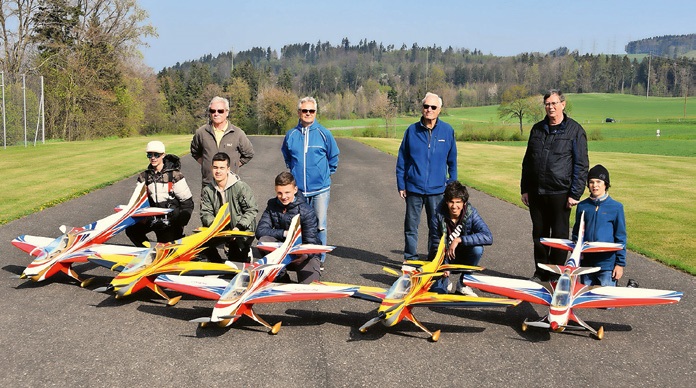
The new F5J electric flight class, which officially includes a separate junior class, seems to us to be better suited for promoting junior participation. Light gliders with plastic fuselages and ribbed wings and tail surfaces have proven to be ideal entry-level models. Anyone who turns their nose up at this should know that one of our junior pilots won a top-1,000 finish with this model at the European Championships in Bulgaria—and did so right in the midst of high-end models flown by Eastern European F5J youth! Another class featuring highly sophisticated aerobatic models (F3A) and even more demanding maneuver programs was practically thrust upon us: Even with slightly smaller aerobatic models—the right choice is crucial—perfect aerobatics, including FAI maneuvers, can be performed. Our hypothesis was confirmed. The juniors were flying beautiful maneuvers in a short time and, after one or two years, developed into mature competition pilots.
This entire event would not have been possible without the tremendous support of the Dübendorf Aviation and Air Defense Museum. Even the generous amount of space provided within the exhibition hall is unparalleled. Many thanks to everyone involved—you’re amazing! Coaching a group of young model airplane pilots as they set up their models and practice flying requires well-qualified instructors. This is by no means a given. I would like to express my heartfelt thanks to them. Promoting sports requires a certain degree of continuity and stability. Short-lived initiatives do more harm than good. Ultimately, the entire project is only financially feasible thanks to generous grants from the sports associations SMV, ZKS, and NOS.
*Note: I'd be happy to provide detailed information about the NOS project "Young SilentWings." Questions can also be forwarded to our directors. editor@modellflugsport.ch*


News from HEBU

TEAM MANAGER "THIS" BOSSHARD
 Rodito Nussbaumer

YOU KNOW WHAT I MEAN? 125 YEARS OF THE SWISS AERO CLUB
 Emil Giezendanner

HORIZON HOBBY/LEMACO NEWS: MICRO OV-10 BRONCO 645 MM BY E-FLITE

PRIDE AND GOOD IDEAS
 Markus Nussbaumer

34th HAHNENMOOS ALPINE MODEL AIRPLANE CAMP
Res Dauwalder
TRY-OUT DAY AT MFV WETTINGEN
Urs Keller
F3A EUROPEAN CHAMPIONSHIPS IN ST-MACAIRE, FRANCE
 Matthias Bosshard

52. 2026 ALPS CUP
Emil Giezendanner
ATOM, THE NEW DOUBLE-DECKER FROM CPLR
Matthias Bosshard
SUMMER FUN 2026 AT MG USTER
Martin Wunderli
What's New at Leomotion.com

COUPE DES ALPES – OBSERVE AND LEARN
Rodito Nussbaumer
TWIN TOWN PARTNERSHIP
Wolfgang Voeller
BY YOUTH, FOR YOUTH
Lorena Betschen
CORSAIR F4U – A WARBIRD WITH A MEMORABLE LOOK
Jürgen Rosenberger, Jürgen Prinz
SMALL, MODEL-LIKE SAILBOATS
Res Dauwalder
WELCOME, NEW MEMBER!
Andrea Bolliger
FREE FLIGHT IN THE MIDDLE OF SUMMER
Urs Muntwyler
EURO CONTEST GLIDER ACRO TOUR AUSTRIA 2026

INSIGHTS INTO THE HISTORY OF SEAPLANES

THE PC-21 STORY
Emil Giezendanner
NEWS FROM HEBU
 Julia Bucher

FROM 0 TO 100
Markus Nussbaumer
MEMORIES
Wolfgang Völler
NOS REGION – A HUB FOR ELECTRIC AVIATION
Emil Giezendanner
DO YOU KNOW WHAT I MEAN IN THE LAND OF SMILES?
Emil Giezendanner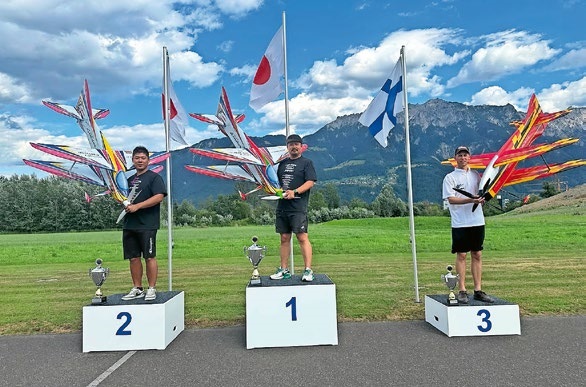
A SPECTACULAR F3A WORLD CUP IN THE PRINCIPALITY OF LIECHTENSTEIN
Emil Giezendanner