
Why keep it simple when you can make it complicated?
Dear Reader,
Recently, a specialty retailer remarked that many of his customers would like to use an airfield without having to join a club. They find that process tedious and complicated. Just as customers can easily purchase a model airplane or helicopter, complete with an RC system, for a few hundred francs, using the airfield should also be a completely ordinary consumer service.
I’ll readily admit that larger model flying groups organized under club regulations usually have to invest not only in the operation and maintenance of their infrastructure but also in ensuring their organization runs as smoothly as possible. Furthermore, democratically run clubs tend to have more complicated and cumbersome decision-making processes. There are also sometimes imbalances between costs and benefits. However, experience shows that operating company-owned airfields isn’t so simple either; because as soon as a motley crew of individualistic model aviators shows up, it’s hardly feasible without certain rules and restrictions—aside from official regulations. What brings joy to one model aviator can quickly become a nuisance to a neighbor. This may be one of the reasons why there are so few company-owned airfields—and, unfortunately, why some attempts have failed miserably. Anyone out and about on a nice weekend can easily see that far more airplanes and helicopters are changing hands than new members are joining our clubs, even though many of them haven’t had to complain about a lack of new members in recent years. Unfortunately, even we model aviation individualists are herd animals, in that some clubs are almost overrun while others barely scrape by. These spirals can turn upward or downward: successfully managed clubs can afford better infrastructure, which attracts more members, allowing them to invest even more in their airfield—which makes them even better known—and so on—and vice versa. However, as soon as interest in the club consists
(still) consists of being able to drive to the airfield as unhindered as possible at any time and reach the runway with as dry a foot as possible, then experience shows that at the slightest problem with the airfield, the whole thing quickly falls apart. Quite simply because the other, social aspect of the club—namely, camaraderie, solidarity, and a shared commitment to the hobby and the airfield—has been sacrificed to consumerism and user selfishness.
Most sporting successes—right up to world championship titles—were only made possible by the training grounds maintained and provided by a club. Despite all the drawbacks and weaknesses of our club system, I believe in the “model flying group” as a successful model—especially when I see how committed, modern, and intelligent the responses to societal challenges consistently are.
Best regards
, Emil Ch. Giezendanner

News from HEBU

TEAM MANAGER "THIS" BOSSHARD
 Rodito Nussbaumer

YOU KNOW WHAT I MEAN? 125 YEARS OF THE SWISS AERO CLUB
 Emil Giezendanner

F3A EUROPEAN CHAMPIONSHIPS IN ST-MACAIRE, FRANCE
 Matthias Bosshard

52. 2026 ALPS CUP
Emil Giezendanner
PRIDE AND GOOD IDEAS
 Markus Nussbaumer

ATOM, THE NEW DOUBLE-DECKER FROM CPLR
Matthias Bosshard
CORSAIR F4U – A WARBIRD WITH A MEMORABLE LOOK
Jürgen Rosenberger, Jürgen Prinz
SUMMER FUN 2026 AT MG USTER
Martin Wunderli
TRY-OUT DAY AT MFV WETTINGEN
Urs Keller
TWIN TOWN PARTNERSHIP
Wolfgang Voeller
BY YOUTH, FOR YOUTH
Lorena Betschen
SMALL, MODEL-LIKE SAILBOATS
Res Dauwalder
What's New at Leomotion.com

HORIZON HOBBY/LEMACO NEWS: MICRO OV-10 BRONCO 645 MM BY E-FLITE

COUPE DES ALPES – OBSERVE AND LEARN
Rodito Nussbaumer
EURO CONTEST GLIDER ACRO TOUR AUSTRIA 2026

INSIGHTS INTO THE HISTORY OF SEAPLANES

34th HAHNENMOOS ALPINE MODEL AIRPLANE CAMP
Res Dauwalder
WELCOME, NEW MEMBER!
Andrea Bolliger
FREE FLIGHT IN THE MIDDLE OF SUMMER
Urs Muntwyler
THE PC-21 STORY
Emil Giezendanner
NEWS FROM HEBU
 Julia Bucher

FROM 0 TO 100
Markus Nussbaumer
MEMORIES
Wolfgang Völler
NOS REGION – A HUB FOR ELECTRIC AVIATION
Emil Giezendanner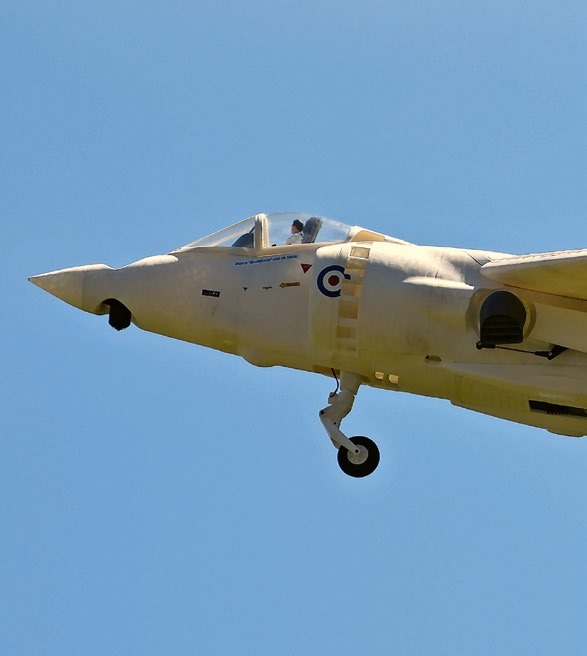
Have you almost forgotten about aircraft that take off and land vertically?
Emil Giezendanner
DO YOU KNOW WHAT I MEAN IN THE LAND OF SMILES?
Emil Giezendanner