
Accident Prevention and Advocacy in Model Aviation
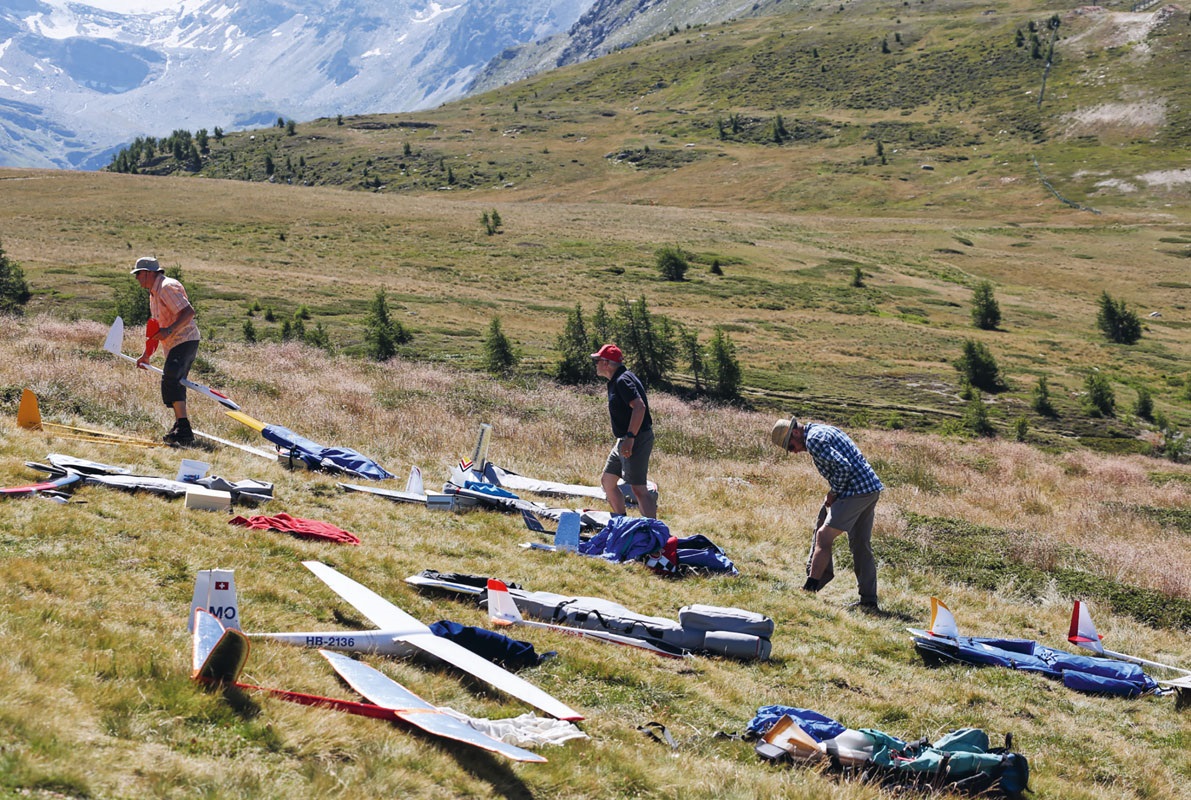
This text was inspired by various experiences and discussions with attentive model airplane pilots. This collaborative effort, published in my name as SMV President, is intended to raise awareness and promote a more proactive approach to safety. It’s actually quite clear what needs to be done to prevent accidents and avoid conflicts at slope flying sites or model airfields. There are solid guidelines on this, such as in the SMV’s Safety Compendium or in the article “The Fascination of Slope Flying” in *Modellflugsport* 3/2018. And yet accidents still happen, and tempers flare as a result. The key, then, is to put these well-known principles into practice even more effectively, to be mindful, and to live by them every day.
If you explore the literature on these topics, you’ll come across the term “airmanship.” It refers to skills, judgment, situational awareness, or simply the “right” mindset in aviation. “Airmanship is the consistent use of good judgment and well-developed skills to achieve aviation objectives.”
A crash—or even an accident involving people—is often preceded by carelessness that, in hindsight, contributed to the incident. Afterward, you often hear comments like: “I had a feeling this wouldn’t end well—he hadn’t properly checked his model before the first flight before, and others had already told him not to fly so close to us or over the heads of hikers.” Some of these incidents—which, fortunately, are usually minor—could therefore be avoided if timely and effective intervention took place. The catch lies in interpersonal dynamics:
Exerting influence takes courage, because resistance is to be expected—whether from individuals or from several people present. The stronger the foundation of trust, the lower the barrier to speaking up, whether to individuals or within a group. Anyone who fears being reprimanded or even treated with hostility in front of others will shut down. This means the opportunity to suggest improvements, actively foster a sense of community, or prevent a potential incident is lost.
Here are a few examples that justify well-intentioned interventions:
- Close and fast flybys are not announced.
- Flight continues despite an announced landing.
- The runway is not cleared immediately after landing.
- The airspace directly ahead remains occupied for a long time due to speed turns.
- The circling direction of the lead pilot is not followed.
- Pilots are so far apart that announcements cannot be heard at all when it’s windy.
- Non-flying participants are talking loudly among the pilots who are flying.
Since the dawn of aviation and for countless generations, model aircraft flying has been an important way to foster talent and passion—a benefit to society.
External factors, such as laws and regulations governing the use of airspace and land, as well as nature conservation, exert enormous pressure on model flying and call into question its benefits to society. The strain caused by overcrowding—resulting from the overuse of local recreational areas, people’s general leisure activities, and, not least, exacerbated by the COVID-19 pandemic—can put model aviation in serious jeopardy.
Careless and inconsiderate model aircraft pilots—often encountered even outside of club airfields—draw attention to themselves and, in the eyes of suspicious members of the public, bring model aviation in general into disrepute.
Especially today, when external conditions are putting pressure on us model pilots, each and every one of us is called upon to practice model flying in a civilized manner.
The more we all work together to strengthen the cultural foundations of model aviation from within, the better we can confidently withstand external pressures.
Accident prevention is at the very top of our cultural values. Serious accidents quickly make their way into the media, and the resulting damage affects not only those directly involved in the accident but model aviation as a whole.
Flying operations characterized by active communication among pilots automatically lead to greater safety and, ultimately, to more enjoyment of flying.
This point can easily be proven: Could you fly this well if you’d taught yourself everything? Would you fly just as often and enjoy it just as much if you always had to fly alone? — Exactly.
Flying in beautiful places during vacations—both at home and abroad—together with friends and new people from near and far is one of the unforgettable highlights of our diverse hobby. For example, sharing the mutual joy when we show a well-traveled lowlander how to fly safely and stress-free in the mountains. Or listening to what others love about their gliders and explaining how we’ve adapted our own for flying in the Alps. Having someone explain how to execute maneuvers that you’ve never quite managed to pull off yourself. It’s inspiring to help each other improve both technically and as pilots. Learning from one another creates the right vibe to raise a toast after flying and, in a lighthearted mood, drift from the facts into pilot slang.
This—or something similar—fosters a spirit of camaraderie, so that feedback is taken constructively and insights into one’s own behavior are incorporated. Safe flying and an open-minded approach don’t limit the experience; they enhance the value of model flying.
It’s not just about orderly operations on the hillside or at the airfield, but also about model flying as a whole.
We need to be aware that a model airplane is a
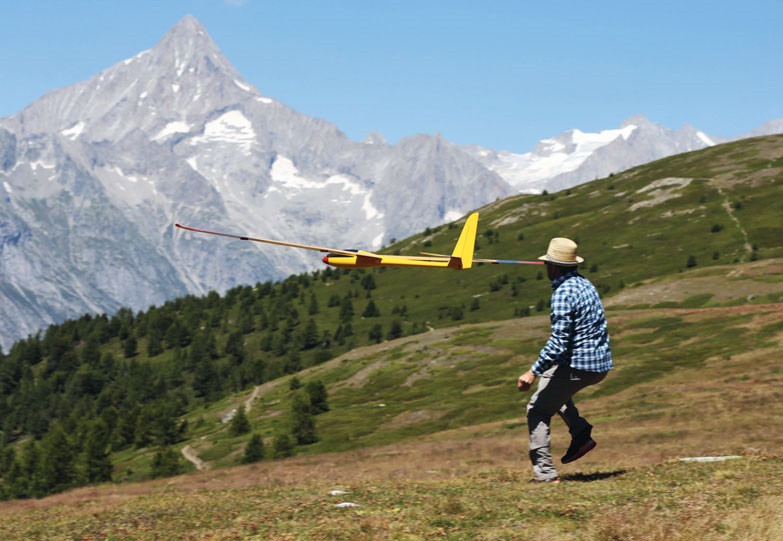
could become a dangerous device and endanger third parties. This includes everyone within the vicinity of a flying model aircraft—that is, other pilots as well as bystanders. News of accidents spreads within minutes these days through both new and traditional media. In most cases, the part of the report stating that something serious has happened is accurate. However, misinformation cannot be undone once it has been published. Therefore, we must do everything in our power to ensure that no one is harmed.
We know what needs to be done. Let’s be a little braver and bring up these sensitive topics with our colleagues while hang gliding and at the model airfield—and let’s also allow ourselves, as pilots, to be taught by others every now and then. It takes a little courage and effort, but it works and it helps us all. Above all, it increases the joy of model flying, and that is, after all, the essence of our wonderful hobby.


News from HEBU

TEAM MANAGER "THIS" BOSSHARD
 Rodito Nussbaumer

YOU KNOW WHAT I MEAN? 125 YEARS OF THE SWISS AERO CLUB
 Emil Giezendanner

HORIZON HOBBY/LEMACO NEWS: MICRO OV-10 BRONCO 645 MM BY E-FLITE

PRIDE AND GOOD IDEAS
 Markus Nussbaumer

34th HAHNENMOOS ALPINE MODEL AIRPLANE CAMP
Res Dauwalder
TRY-OUT DAY AT MFV WETTINGEN
Urs Keller
F3A EUROPEAN CHAMPIONSHIPS IN ST-MACAIRE, FRANCE
 Matthias Bosshard

52. 2026 ALPS CUP
Emil Giezendanner
ATOM, THE NEW DOUBLE-DECKER FROM CPLR
Matthias Bosshard
SUMMER FUN 2026 AT MG USTER
Martin Wunderli
What's New at Leomotion.com

COUPE DES ALPES – OBSERVE AND LEARN
Rodito Nussbaumer
TWIN TOWN PARTNERSHIP
Wolfgang Voeller
BY YOUTH, FOR YOUTH
Lorena Betschen
CORSAIR F4U – A WARBIRD WITH A MEMORABLE LOOK
Jürgen Rosenberger, Jürgen Prinz
SMALL, MODEL-LIKE SAILBOATS
Res Dauwalder
WELCOME, NEW MEMBER!
Andrea Bolliger
FREE FLIGHT IN THE MIDDLE OF SUMMER
Urs Muntwyler
EURO CONTEST GLIDER ACRO TOUR AUSTRIA 2026

INSIGHTS INTO THE HISTORY OF SEAPLANES

THE PC-21 STORY
Emil Giezendanner
NEWS FROM HEBU
 Julia Bucher

FROM 0 TO 100
Markus Nussbaumer
MEMORIES
Wolfgang Völler
NOS REGION – A HUB FOR ELECTRIC AVIATION
Emil Giezendanner
DO YOU KNOW WHAT I MEAN IN THE LAND OF SMILES?
Emil Giezendanner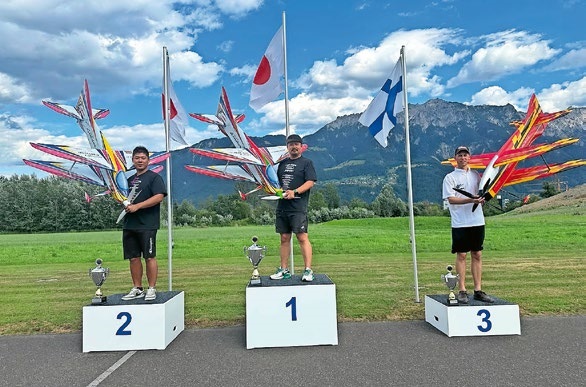
A SPECTACULAR F3A WORLD CUP IN THE PRINCIPALITY OF LIECHTENSTEIN
Emil Giezendanner