
Success Through Swiss Precision
From July 4–14, the 7th RC Jet Pilots World Championship was held at Enniskillen Airport in Northern Ireland. In the following report, we would like to focus primarily on the jet models flown by the Swiss pilots and their technology.
As expected, it quickly became clear which types of models were the most popular. Of the approximately 90 aircraft registered, 19 were BAe Hawks from Airworld and Skygate-Collection. Many other models were also already well known in the scene, such as the Albatros, Panther, and Cougar from Airworld, or the MiG-29 from Composite-ARF. It was interesting to note that five of the six Americans present opted for kit models from the American company Bob Violett (F-86 and MiG-15). These models, which are relatively small by comparison, are virtually unmatched in build quality.
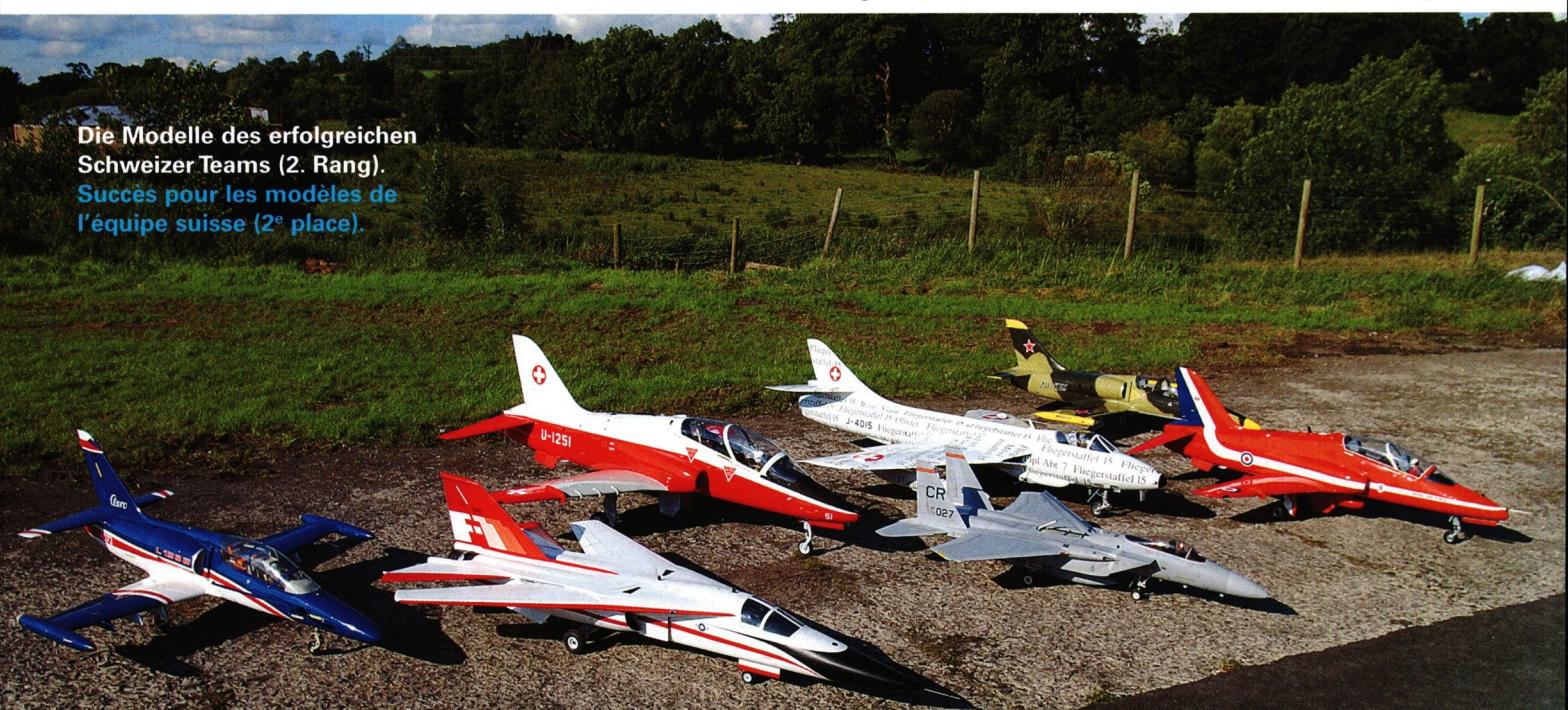
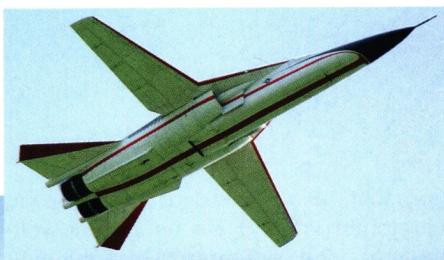
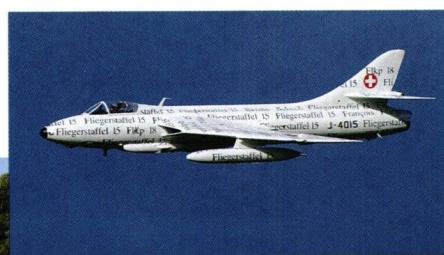
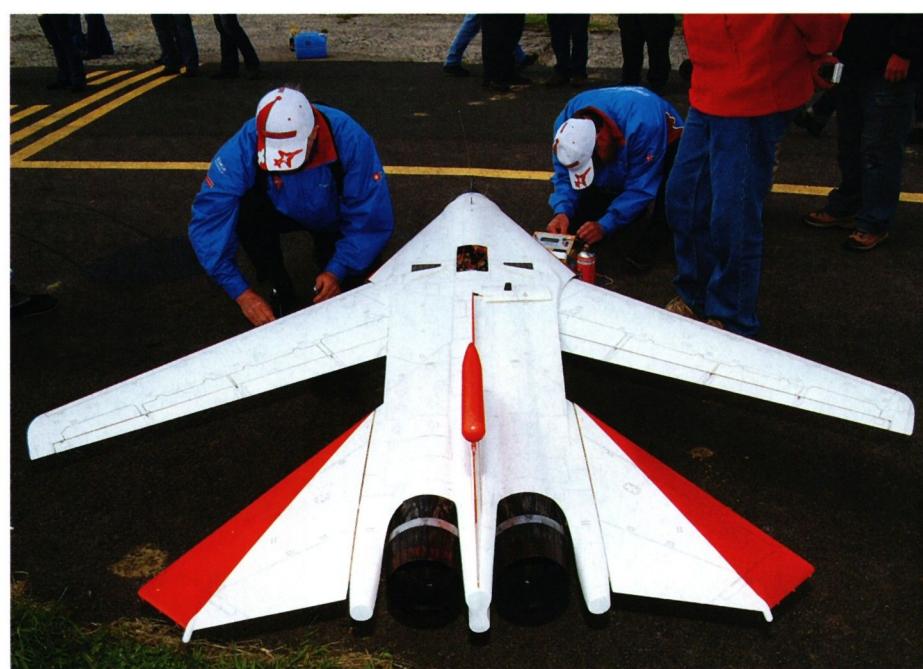
The one-of-a-kind “MB-339” by the Italian modeler De Marchis, the Hawker Hunter by Reto Senn (CH), and the F-111 by Franz Walti (CH) stood out from the crowd of kit-built models as true highlights.
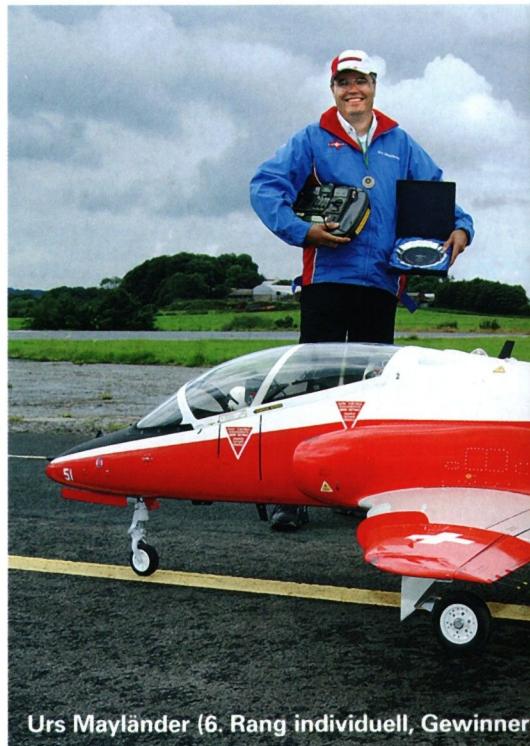
At the top of the model-building rankings were two Skygate Hawks in Swiss livery: Stephan Völker’s Hawk and the aircraft built by our Swiss team pilot, Urs Mayländer. Urs showed Stephan Völker what Swiss precision really means and, as the new world model-building champion, relegated the eventual overall winner to second place.
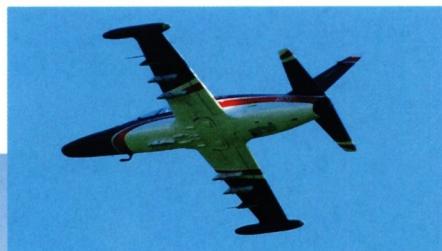
Model: Albatros L-159 by Götz
Powerplant: JetCAT P120
RC: Multiplex
Model: BAe Hawk by Skygate Collection
Engine: JetCAT P160SE
RC: Futaba
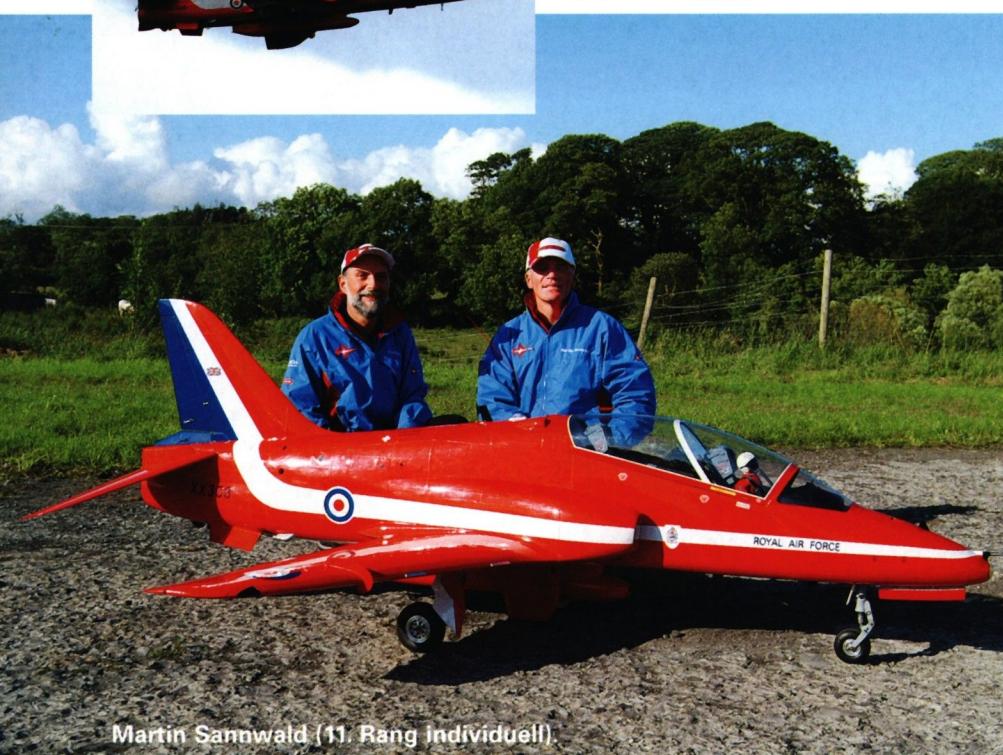
Model: BAe Hawk by Airworld
Engine: JetCAT P160
RC: Futaba
Model: F-111, built by Franz Walti
; Powerplant: AMT Olympus
; RC: Futaba
Model: F-15 by Avonds
Powerplant: JetCAT P160
RC: Graupner
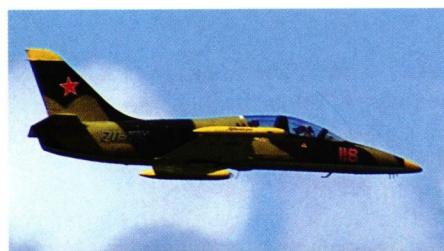
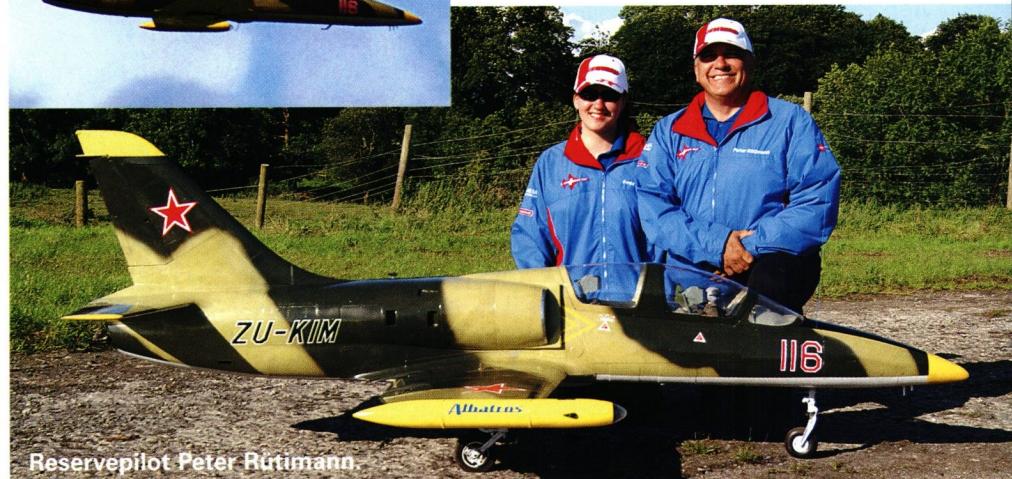
Model: L-39 Albatros by Airworld
Engine: JetCAT P160SE
RC: Futaba
Model: Hawker Hunter, built by Reto Senn and Hans Laubscher
Engine: JetCAT P160
RC: Futaba
The overall rankings largely reflected our own assessment. As with other performances that are subject to subjective evaluation, it is difficult to assess the impact of changing weather conditions during a flight run. The rotation of judges during a flight round can therefore be described as rather pointless. Furthermore, the well-known 1,000-point scoring system would be desirable as a basis for balanced evaluation criteria. It was therefore hardly surprising that the significant and, in some cases, inexplicable differences in flight scores led to discussions among the pilots. On this point, the umbrella organization IJMC needs to take action.
The eventual winner of the event and new world champion, Stephan Völker, executed his flights in impressive fashion. The calm and confidence in his performances are both unique and a sight to behold. Similarly masterful flights were seen only from the runner-up, Thomas Höchsmann (D), who, as a longtime F3A pilot, brings a solid foundation for pacing and composure in flight.
The organizational shortcomings on site—some of which were serious—were unworthy of the event. Given the naturally challenging weather conditions in Northern Ireland, it is hard to understand why 90 expensive and technically fragile scale models had to be housed in tents when there were plenty of newly built hangars available for use. The fact that the outstanding model flying club and the local airport authorities at Enniskillen Airport were clearly not on the same page does offer an explanation for such strange behavior. Nevertheless, it is unacceptable that a world championship would be held under such unfortunate circumstances, knowing that 90–100 participants from around the world—who had prepared conscientiously and at great financial expense—were expected to attend. However, it would be wrong to direct the blame solely at the organizer. The umbrella organization IJMC cannot simply shirk its responsibility by claiming, “Everything looked fine in the run-up to the event, and the project milestones were monitored and met by the organizer.” This example has shown that the IJMC’s professional and ongoing involvement is necessary and important to prevent such setbacks in the future.
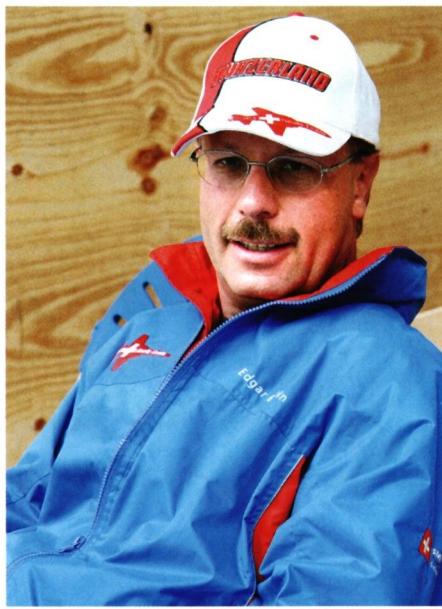
That’s why it was all the more wonderful to see how our Swiss team was led professionally and with “social sensitivity.” Evi and Edgar Bruhin, who have now served as the team manager couple for the fourth time, deserve our collective thanks for their selfless efforts. Along with the supporters and fans who traveled with the team, they were the real highlight of the World Championship for me. Evi has certainly earned the nickname “Honey Bunny”; we’re still looking for a nickname for Edgar.


News from HEBU

EURO CONTEST GLIDER ACRO TOUR AUSTRIA 2026

TEAM MANAGER "THIS" BOSSHARD
 Rodito Nussbaumer

YOU KNOW WHAT I MEAN? 125 YEARS OF THE SWISS AERO CLUB
 Emil Giezendanner

TRY-OUT DAY AT MFV WETTINGEN
Urs Keller
F3A EUROPEAN CHAMPIONSHIPS IN ST-MACAIRE, FRANCE
 Matthias Bosshard

HORIZON HOBBY/LEMACO NEWS: MICRO OV-10 BRONCO 645 MM BY E-FLITE

PRIDE AND GOOD IDEAS
 Markus Nussbaumer

BY YOUTH, FOR YOUTH
Lorena Betschen
34th HAHNENMOOS ALPINE MODEL AIRPLANE CAMP
Res Dauwalder
52. 2026 ALPS CUP
Emil Giezendanner
TWIN TOWN PARTNERSHIP
Wolfgang Voeller
ATOM, THE NEW DOUBLE-DECKER FROM CPLR
Matthias Bosshard
CORSAIR F4U – A WARBIRD WITH A MEMORABLE LOOK
Jürgen Rosenberger, Jürgen Prinz
SUMMER FUN 2026 AT MG USTER
Martin Wunderli
What's New at Leomotion.com

THE PC-21 STORY
Emil Giezendanner
COUPE DES ALPES – OBSERVE AND LEARN
Rodito Nussbaumer
SMALL, MODEL-LIKE SAILBOATS
Res Dauwalder
WELCOME, NEW MEMBER!
Andrea Bolliger
FREE FLIGHT IN THE MIDDLE OF SUMMER
Urs Muntwyler
INSIGHTS INTO THE HISTORY OF SEAPLANES

NEWS FROM HEBU
 Julia Bucher

FROM 0 TO 100
Markus Nussbaumer
MEMORIES
Wolfgang Völler
NOS REGION – A HUB FOR ELECTRIC AVIATION
Emil Giezendanner
DO YOU KNOW WHAT I MEAN IN THE LAND OF SMILES?
Emil Giezendanner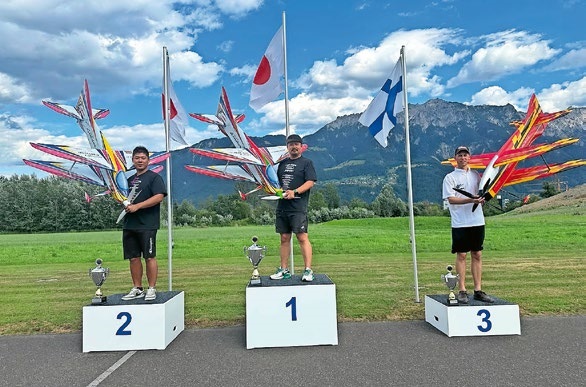
A SPECTACULAR F3A WORLD CUP IN THE PRINCIPALITY OF LIECHTENSTEIN
Emil Giezendanner