
In Celebration of MG Zurich's Anniversary
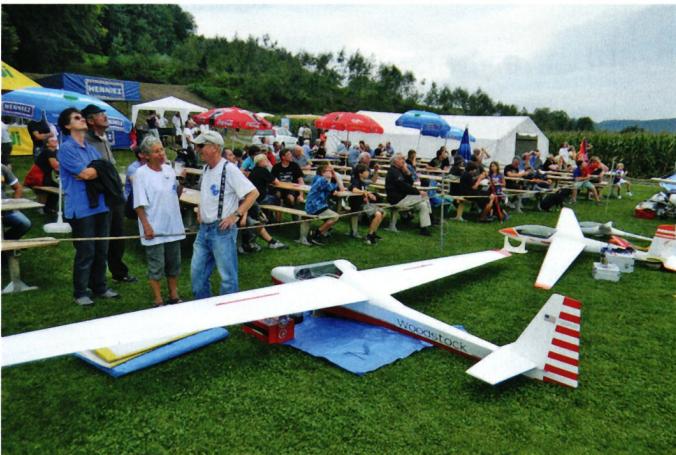
The Zurich Model Aircraft Club kicked off its 85th-anniversary celebrations with its traditional friendly flying event, the Flying Circus 2011, at its model airfield and celebrated the occasion with neighbors, landowners, municipal representatives, presidents of local clubs, and distinguished figures from the aviation community.
At the Zurich Aviation Sports Club, which had existed since 1918 for the purpose of studying and promoting aviation technology and gliding, young people who wanted to pursue model aircraft flying together also gathered. When a student became interested in aviation, he would first engage in model aircraft construction and, of course, model flying in equal measure, but he usually kept his thoughts to himself. And so it came to pass that on November 9, 1926, what is now known as the Zurich Model Flying Group was founded. At that time, it was called the “Model Aircraft Construction Association” (FMBV for short), and its objectives were: “Collective and individual construction of model airplanes, the organization of theoretical and practical courses, the hosting of competitions and field trips, and participation in air shows, gliding camps, etc.” In its founding year, 20 members were registered, and a lively model aviation scene developed among secondary school students. At that time, model aircraft building did not mean replicating an actual aircraft in reduced scale as faithfully as possible, but rather designing and building model aircraft based on one’s own ideas—models that actually flew.
With the advent of manned gliders, model aircraft flying lost its appeal. It was only thanks to a few “die-hard enthusiasts” that model aircraft flying in Zurich wasn’t completely abandoned. And so it came to pass that a small remnant of the FMBV joined forces with the glider pilots. The Zurich model aviators were even assigned a modest space in the Letten workshop of the Zurich Gliding Club so they could build their model airplanes together. The first model airplane building courses were also held there. The FMBV had thus worked to popularize model aircraft building and promoted it in daily newspapers and at air shows. From May 28 to July 18, 1933, the first exhibition covering all aviation disciplines—with the participation of aviation groups, societies, and government agencies—took place throughout the Zurich Tonhalle. The exhibition was titled “Der Flug” (The Flight). The first public model-building workshop was presented at this exhibition. The Zurich Section of the Aero-Club of Switzerland, newly founded on March 25, 1933 (today “Aero-Club Zurich, Regional Association of the Aero-Club of Switzerland”), also participated in this exhibition. This exhibition became a milestone for the model aviation movement in Switzerland. The FMBV was admitted to the Zurich Section at this exhibition. The Zurich model aviators then formed a subgroup of the Zurich Gliding Group. At the same time, they abandoned the name FMBV and opted for the designation “Modellfluggruppe Zürich,” abbreviated as MGZ. “Thus, within seven years and from humble beginnings, thanks to the initiative of a few individuals, the Zurich Model Aviation Group emerged—a group destined to play a leading and pioneering role in the movement and to provide it with decisive impetus.”1 In another context, it was stated: 1“From this day forward, the chronicler can note an uninterrupted upswing in Zurich model aviation, which led all the way to groundbreaking achievements.”1
In February 1936, the Swiss Aero Club appointed Dr. Walter Dollfus as its officially recognized model aircraft chairman, and he also took over as the new chairman of the Zurich Model Aircraft Group. At the initiative of this Zurich chairman, the FAI (Fédération Aéronautique Internationale), the “world parliament of aviation sports,” addressed model aviation for the first time. Standards and regulations were established. And with these regulations, model aviation was recognized as an international air sport. The Zurich Model Flying Group, led by its construction manager Arnold Degen, organized model flying camps, model flying conferences, competitions, and exhibitions. The biggest event was the radio-controlled model building course. Over the course of five lessons broadcast on the Bero Münster radio station, Degen introduced listeners to the secrets of model aircraft construction. In 1939, model airplanes were also built in handicrafts classes at secondary schools. The City of Zurich took an active interest in the model aviation activities of its residents and approved a grant of 3,300 Swiss francs for the trial and optional implementation of a summer course on model airplane construction in schools. The “Shell I” model airplane construction plan was printed in a run of 10,000 copies and distributed free of charge to young people. This was followed by various national events held in accordance with FAI standards, in which Zurich’s model aviators played a leading role. The MG Zurich moved into its own workshop in Zurich’s Seefeld district, which became a gathering place for Zurich’s youth interested in aviation and air sports. In this way, the MG Zurich had promoted the concept of model aviation on a broad scale and brought it to many segments of the population.
1) Tilgenkamp
In 1944, the FAI recognized the flight by Traugott Haslach of Zurich as a world record, and thus the MG Zurich produced the first world champion in model aircraft flying. For many years, the MGZ remained among the top finishers in competitions.
... he brought the balsa
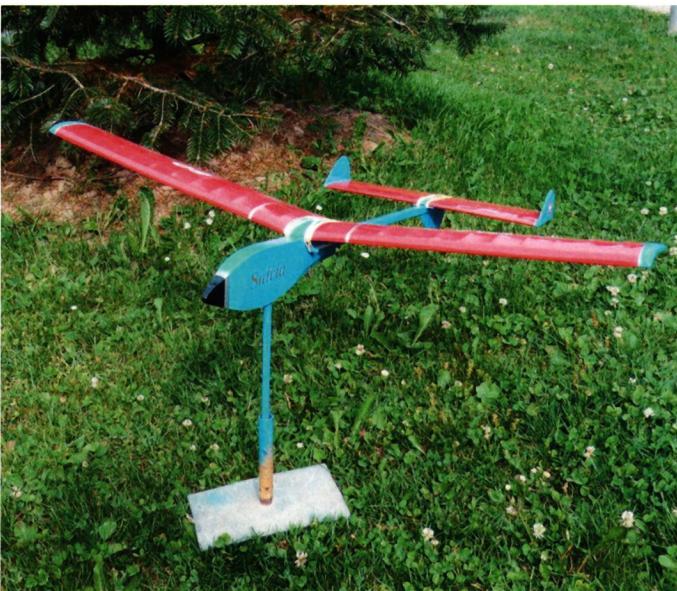
wood model Willibald Streil, a 25-year-old model builder with the Zurich Model Flying Group, was rather shy and known as an unassuming guy. One day, he arrived at the “Langer Zinggen” (now the approach path for Kloten Airport) with a model airplane that flew much farther than any of the others. Everyone marveled at how light this model was. The secret was that Willibald had built it out of balsa wood. Thus, the MG Zurich also had a balsa pioneer who later imported balsa wood into Switzerland by the traincarload. To learn why this model airplane was later christened “Salvia” and why the name Salvia made history, read the reminiscences penned by Werner Koelliker (Kö). Although the pioneering era and the many top results in competitions by the MG Zürich are a thing of the past, many of the goals from the founding days remain. Thus, in addition to participating in competitions, the club continues to make it a priority to engage in public relations and, from time to time, to organize a large model aircraft event with friends featuring modern aircraft models, as well as to collaborate with associations, interest groups, clubs, groups, and other circles interested in model flying.
Changes
: “Collective building” in the workshop no longer takes place, but the fundamental idea of “individual model aircraft construction” has remained—namely, that the person and the model aircraft form a cohesive unit. However, new awareness—
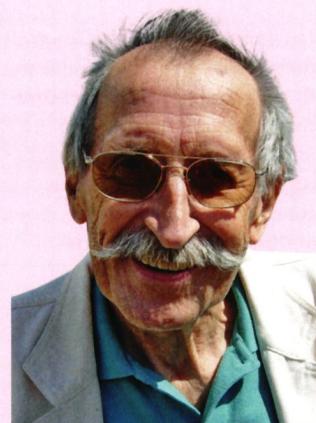
*Back in the 1940s, Dr. Willi Streil and his friends from the Zurich Model Building Club would go to “Langezingge” on weekends to fly the model airplanes they had built themselves. “Langezingge” is a large military open field near Oberglatt. It’s actually quite a distance from Zurich—about 10 kilometers. Back then, the group would go there together almost every Saturday and Sunday to enjoy their hobby. Very few model airplane enthusiasts had a car back then; those who did would carpool in a spirit of camaraderie, but the rest of the members traveled to the ideal model airfield by train or bicycle. We’d carefully carry our own model planes under our arms, in backpacks, strapped to our backs on a rack, or packed in a bike trailer. Sometimes our girlfriends and wives, kids, and even babies came along too. In the early days of model flying, entire families would often get together, get to know one another, and celebrate every successful flight together. Comradeships and friendships were formed that lasted a lifetime. Willi Streil was often there too, and one Sunday, fate struck him. On a beautiful summer day, a friend invited his girlfriend and her new friend to an airfield and brought along: a lively young girl from Oeschtrich, Christel Haberl from Göstling an der Ybbs. It immediately struck Willi that this young lady he didn’t know was deeply interested in the beautiful surroundings, in nature, plants, and above all, flowers—and, unusually for a woman at the time, even wanted to know a little more about the many she had made herself—than about his beautiful model airplane lying on the ground. Willi, not exactly known as a go-getter, seized the opportunity—as the “model shop owner emerging from his subconscious”—and explained to the young woman the meaning and joy of model building and model flying. As a gentleman, he naturally wanted to know a little more about this open-minded, kind person. She then tells him where she’s from, that she completed an apprenticeship in Villach and attended various agricultural schools in Oeschtrich and Germany; she became a gardener with heart and soul. Not long ago, she started a job at the Küderli nursery in Dübendorf. Willi enjoyed the conversation so much—and was so deeply impressed by it—that he plucked up the courage to suggest to Christel that “Let’s put the model planes aside for a moment and take a little walk together across the vast, vast meadow of the long, long ‘Langezingge.’” To his great delight, she said “of course.” He picks up his model airplane from the ground, and they walk in silence—as still as if struck by lightning—across the green meadow filled with flowers, moving farther and farther away from the airfield. From a distance, they’d spotted a large patch of land at the edge of the forest with countless beautiful blue-blooming plants. They walked straight over there, and Willi finally found his voice again and asked Christel, a bit sheepishly, what kind of little blue flowers they were. She told him: it’s meadow sage—SALVIA! As they looked deeply into each other’s eyes—long, longer—suddenly both were overcome by a feeling of love. Holding hands, with a kiss on the cheek, a great, long-lasting love story began, and the model airplane they’d brought along became the only prop. As a token of their love, Christel and Willi together named the model airplane—which had brought them so much happiness—SALVIA. Their love became a volcano! They were married on June 2, 1950.*
*And when the couple had their beautiful new house built in Steinmaur a few years later, they didn’t have to search for a name for their new home. They simply named it after the “Lange-zingge” model airplane, which still exists today. The “SALVIA,” the original Streil-Liebes model airplane, has now been partially restored so it can be presented to the members of the Zurich Model Flying Club on the occasion of its 85th anniversary. In the future, the “SALVIA” will be honored as a memento of a wonderful era in the history of the MG Züri.*
Werner Koelliker
forms of selfhood and identity have emerged. Examples include: responsibility, individuality, creativity, and self-initiative. But a sense of achievement is also part of it, although the aerodynamic, physical, technical, and craftsmanship aspects continue to play an essential role in model aviation. Through functional model building and modern radio control systems, the model aircraft builder gains tools with which to study the
behavior of the model aircraft in the air, its aerodynamic properties in practice, and the model aircraft itself under controlled conditions. This not only sets new standards in terms of diversity but also opens up new dimensions. New materials and commercially available semi-finished products now make it possible to build a scaled-down replica of an original aircraft with the greatest possible attention to detail and to fly it true to the original.
But the spirit of the times also demands its due. Time and again, it becomes apparent how quickly—virtually overnight—problems arise that can call model aviation into question. Opponents of aviation have recognized that there are sectors within aviation that are particularly vulnerable. It is therefore part of the MG Zurich’s mission to work closely with the Aero-Club of Switzerland, its
affiliated associations and other sectors of light and recreational aviation, as well as with the authorities (municipalities and cantons), and to repeatedly demonstrate that it is prepared, on the one hand, to do everything in its power to make life with model aviation as bearable as possible for opponents, but on the other hand also helps to preserve airspace, model airfields, technical facilities, etc., and to promote model flying as part of aviation sports
. Even though much has changed over the past 85 years—technologically, in terms of equipment, and organizationally—one thing has remained the same: Model flying from back then is the model flying of today and will also be the model flying of tomorrow—namely, the joy of building model aircraft, observing flight in the element of air, and cultivating a challenging leisure activity.
*René A. Schnorf, Honorary President of the MGZ*


News from HEBU

HORIZON HOBBY/LEMACO NEWS: MICRO OV-10 BRONCO 645 MM BY E-FLITE

PRIDE AND GOOD IDEAS
 Markus Nussbaumer

TEAM MANAGER "THIS" BOSSHARD
 Rodito Nussbaumer

YOU KNOW WHAT I MEAN? 125 YEARS OF THE SWISS AERO CLUB
 Emil Giezendanner

F3A EUROPEAN CHAMPIONSHIPS IN ST-MACAIRE, FRANCE
 Matthias Bosshard

ATOM, THE NEW DOUBLE-DECKER FROM CPLR
Matthias Bosshard
SUMMER FUN 2026 AT MG USTER
Martin Wunderli
TRY-OUT DAY AT MFV WETTINGEN
Urs Keller
What's New at Leomotion.com

52. 2026 ALPS CUP
Emil Giezendanner
TWIN TOWN PARTNERSHIP
Wolfgang Voeller
34th HAHNENMOOS ALPINE MODEL AIRPLANE CAMP
Res Dauwalder
CORSAIR F4U – A WARBIRD WITH A MEMORABLE LOOK
Jürgen Rosenberger, Jürgen Prinz
SMALL, MODEL-LIKE SAILBOATS
Res Dauwalder
WELCOME, NEW MEMBER!
Andrea Bolliger
FREE FLIGHT IN THE MIDDLE OF SUMMER
Urs Muntwyler
COUPE DES ALPES – OBSERVE AND LEARN
Rodito Nussbaumer
EURO CONTEST GLIDER ACRO TOUR AUSTRIA 2026

BY YOUTH, FOR YOUTH
Lorena Betschen
INSIGHTS INTO THE HISTORY OF SEAPLANES

THE PC-21 STORY
Emil Giezendanner
NEWS FROM HEBU
 Julia Bucher

FROM 0 TO 100
Markus Nussbaumer
MEMORIES
Wolfgang Völler
NOS REGION – A HUB FOR ELECTRIC AVIATION
Emil Giezendanner
DO YOU KNOW WHAT I MEAN IN THE LAND OF SMILES?
Emil Giezendanner
Have you almost forgotten about aircraft that take off and land vertically?
Emil Giezendanner