
Profile of an Unprecedented Success Story
Excerpt from the club chronicle “50 Years of MFG Liechtenstein”:
It was Günther’s wish—the eldest son of master painter Ludwig Matt from Eschen—to build and fly model airplanes. Thanks to his father’s active support, he soon caught the flying bug himself. This likely laid the foundation for the hobby and the later sport of “model flying in Liechtenstein.”
While Günther built the first tethered and free-flight models, Ludwig, together with his colleague Egon Gstöhl from Eschen, designed the first hot-air balloons made of tissue paper, which often reached great heights using a spirit lamp.
Soon, a few like-minded individuals joined the Matt duo, and shortly thereafter, they began considering the formation of a club. On May 13, 1961, the time had come. At the Hotel Linde in Schaan, the five founders—Ludwig Matt, Egon Gstöhl, Dr. Benno Matt, Paul Schnyder, and Max Thöny—along with 13 other like-minded individuals, gathered for the founding meeting of the Liechtenstein Model Flying Group (MFGL), as the club chose to be called.
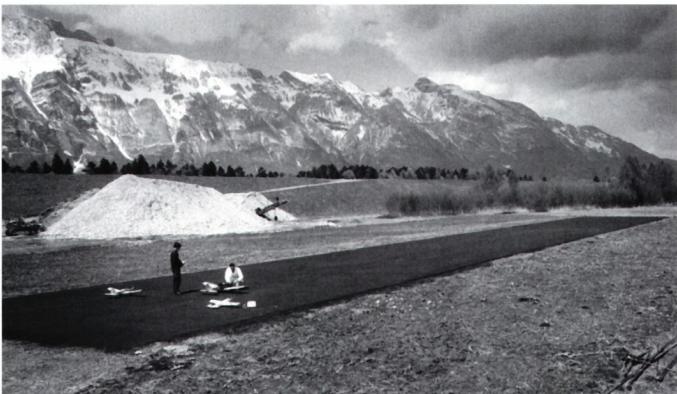
The first air show, featuring guest pilots from Austria, Germany, and Switzerland, took place as early as August 6 of that same year at the first airfield located behind what is now the “Malbuner” company. The contacts made at this air show were likely decisive for the history of the MFGL. On November 23, 1961, a lease agreement was signed with the municipality of Eschen for the current airfield, where a 10-meter-wide and 80-meter-long asphalt runway was immediately planned and built. This laid the foundation for launching the low-wing aircraft—which were state-of-the-art for their time—from a runway.
As early as the following year, on September 9, 1962, the
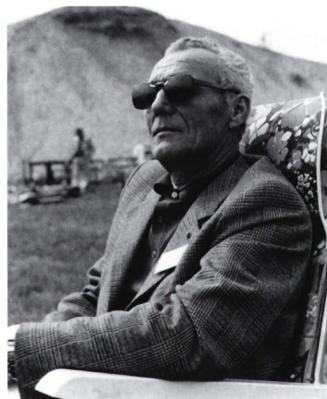
1. The first international friendly flying event was organized, in which MFGL pilots also competed against other pilots. Günther Matt took second place at that time. In the years that followed, this friendly flying event evolved into an internationally significant competition that attracted top-
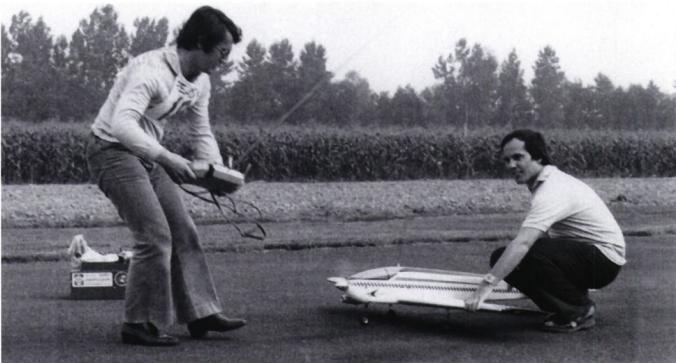
pilots from all over Europe and often from overseas as well, including world and European champions, register. In the anniversary year of 2011, this competition was held for the 46th time. In 1964, another important milestone in the history of the MFGL was reached. With the admission—
By joining the Liechtenstein National Sports Federation, the club received an important sign of recognition for this sport. When the MFGL joined the FAI (the international governing body for all air sports) in 1966, it also gained the right to help draft competition rules. Participation in European and World Championships, as well as in international competitions, was also secured. Six years after the MFGL was founded, Wolfgang Matt placed sixth among the world’s top model aircraft acrobats at the club’s first World Championship in Corsica in 1967. With the appointment of founder Ludwig Matt to the National Sports Federation on May 24, 1968, the interests of model aviation were henceforth competently represented.
In 1971, the then-Princess I. D. Gina of Liechtenstein assumed patronage of the International Friendship Flying event for the first time and donated the winner’s trophy. This tradition is continued to this day by the current Princess I. D. Marie von und zu Liechtenstein. Through regular participation in international competitions—in which Wolfgang Matt achieved a string of victories—the Liechtensteiners created ideal conditions for major international events. At the 1975 World Championship in Bern
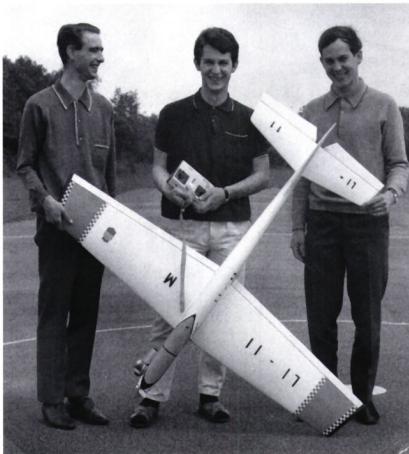
Wolfgang Matt became world champion in powered aerobatics (F3A) for the first time. The Liechtenstein national team, consisting of Wolfgang Matt, Norbert Matt, and Wieland Meier, took second place in the team competition. Since 1971, the MFGL has organized the corresponding national and club championships annually. However, the MFGL has gained international significance not only in competition but also in the field of judging. With Egon Gstöhl, Max Eichmann, Adolf Keutschegger, Toni Böller, Sigi Beck, and Hermann Kleeb, the MFGL was able to provide qualified judges for World and European Championships as well as international competitions. Another very important chapter in the MFGL’s history was written when, in July 1994, the MFGL hosted the European—
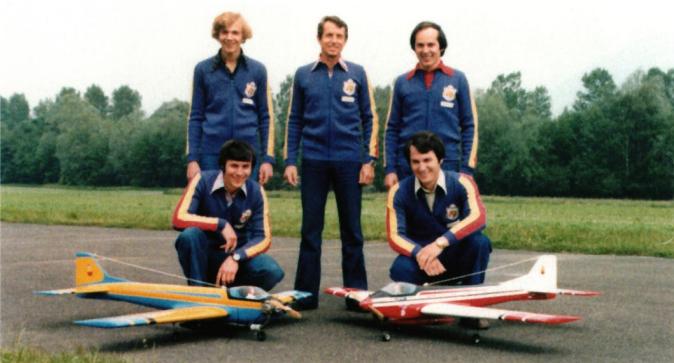
In the years since the MFGL was founded, annual maintenance and expansions of the airfield in Rheinau-Benden have transformed it into a model airfield with exemplary infrastructure. The children’s playground and the barbecue area are often frequented not only by the pilots but also by their wives and children, as well as friends. Regular public events, such as the annual air show and periodic exhibitions, have helped finance the maintenance of the airfield (the grounds and buildings) as well as its expansions. Following an initial renovation of the runway and clubhouse in 1981–1982, the airfield was expanded in 1993–1994 through many hours of volunteer work to become the facility it is today. With the installation of water, electricity, telephone, and gas services on the grounds, as well as the addition of a fully equipped kitchen, the MFGL can be proud of an airfield with first-class infrastructure. In 2003, the clubhouse was expanded with a permanent canopy, which serves as a shelter for the models in rainy weather and is used as a covered restaurant for visitors during events at the airfield. The passing of our long-time honorary president and founding member, Ludwig Matt, on December 12, 1987, was a great loss. However, his ideals and vision for model aviation will certainly live on in his spirit.
At regular monthly meetings held from March through October—primarily at the clubhouse on the airfield—members gather to handle day-to-day administrative matters. These meetings are supplemented by expert presentations, model flying theory, slide shows, or informal technical discussions. Just as our airfield hosts the annual Summer Night Festival, December brings St. Nicholas’ Evening, during which, in a lighthearted manner, one or two members learn from St. Nicholas what “misdeeds” they’ve committed over the past year—whether in flying or social settings. The official conclusion of each club year is marked by the statutorily required and well-attended annual meeting, followed, of course, by a dinner. It is the sincere desire of all MFGL members to thank the founders and pioneers of the MFGL for their work in the spirit of meaningful leisure activities and a wonderful sport.
In F3A powered aerobatics, the MFGL has made a name for itself not only throughout Europe but also worldwide
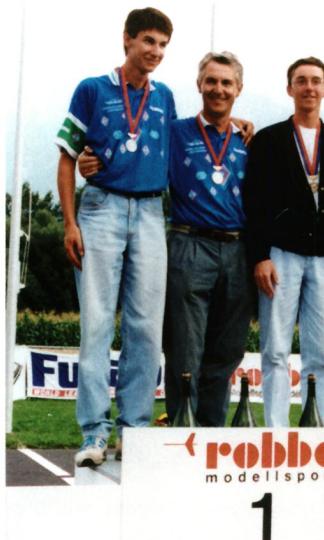
and has influenced the competitive landscape through its great successes since its founding. These successes are attributable to the spirit of camaraderie and teamwork, as well as the support of many volunteers. His brother, Günther Matt—now president of the MFGL—played a particularly active role in the construction of Wolfgang Matt’s many model airplanes, and numerous volunteers have consistently helped resolve technical problems. Also worth mentioning is the competitive training, which has taken place throughout all the
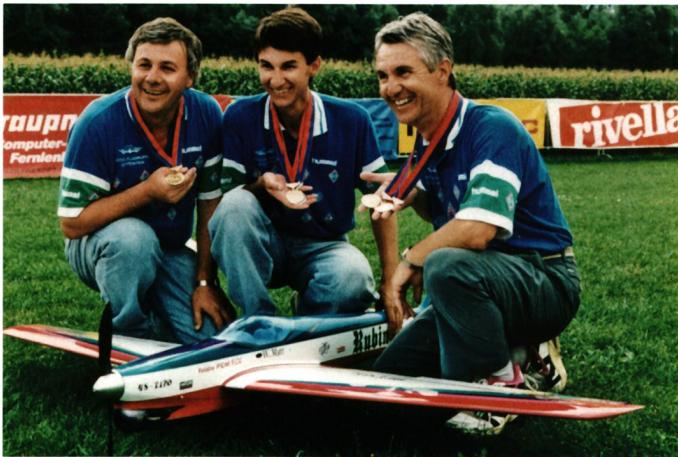
For years, it was led by the MFGL’s internationally trained judges. Wolfgang Matt won two world championship titles, was runner-up six times, earned four World Championship bronze medals, and achieved numerous top-ten finishes. Wolfgang’s son, Roland Matt, won a World Championship bronze medal at a young age (2005). The team results at World Championships are also enough to make even the biggest nations green with envy: 2nd place in 1975; 4th place in 1993; 3rd place in 1997 and 2005. Pilots Wieland Meier, Günther Marxer, Ludwig Matt Jr., Peter Kunkel, Nobert Matt, Roland Matt, and Nick Schädler made decisive contributions to these major team successes. The Liechtensteiners have also set the standard at the 15 F3A European Championships held to date: five titles, four runner-up finishes, and two bronze medals for Wolfgang, and one title, four runner-up finishes, and two bronze medals for Roland. In addition, there have been several European team champions and runners-up. The Matts have achieved a whole series of other successes in powered aerobatics worldwide, such as at the Tournaments of Champions (TOC) in Las Vegas (USA), where Roland and Wolfgang celebrated several second-place finishes and one third-place finish. At this year’s World Championships in the U.S., both competitors from Liechtenstein—Stefan Kaiser and Wolfgang Matt—finished in the top ten.
As early as 1964, Günther Matt won the Hubacher precision landing competition in his first attempt. The Weissfluh Cup in Davos is a very popular and successful competition for Liechtenstein pilots; in 1988, pilots Fidel Frick, Werner Batliner, and Bruno Sawatzki took the top three spots. That same year, at the CD Cup in
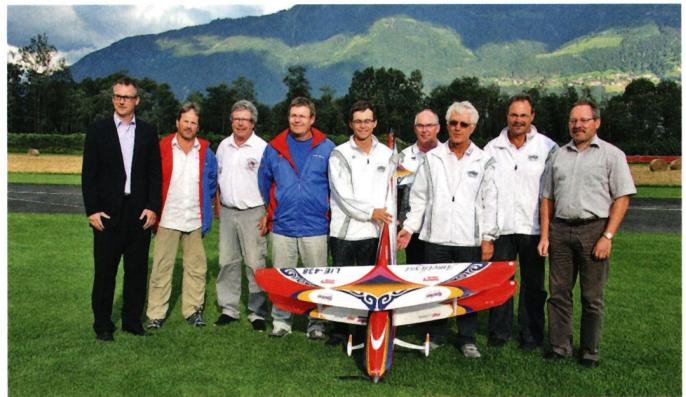
Bischofszell, pilots Paul Koch, Bruno Sawatzki, Fidel Frick, and Willi Mathis achieved a major success by taking the top four spots. Over the past ten years, Fidel Frick and Robert Cames have competed in a total of four World Championships. After initially finishing in the middle of the pack, Fidel Frick celebrated a surprising success by taking third place at the 2007 F3B World Championships in Emmen. Since 1999, turbine-powered model airplanes have also been flown at the Benden model airfield. The pioneers in this field were Ludwig Matt Jr., Hansruedi Baumgartner, Markus Schweizer, and Raimund Wehrle, who were the first members of the club to familiarize themselves with the new technology. Raimund Wehrle is currently actively involved in jet flying. As a member of the Swiss national team, he competed in the last two Jet World Masters in Israel (2009) and the U.S. (2011), where he finished 9th in the 20-kg class as the top performer on his team.
One of the biggest “revolutions in model aviation” is the development of electric flight, which has made rapid progress over the past 10 years. Thanks to the development of new, high-performance, lightweight batteries (“Lipos”), this propulsion system has become attractive for model aviation—and the MFGL is no exception. Today, only a few aircraft with internal combustion engines can be found at the MFGL airfield; the majority (about 80%) have come to appreciate the advantages of electric propulsion.
The MFGL has also always made an effort to showcase itself at events and gatherings outside the model airfield. In recent years, MFGL pilots have participated in the following events:
- Opening of the LIE Games in 1999
- Regular sports courses as part of the LOSV’s recreational sports program
- Air shows at the municipal sports festivals in Eschen and Schaan
- Indoor flight demonstration during the volleyball cup semifinals in Schaan in 2008
- Project day at the Liechtenstein Gymnasium and for 10th-grade students
- Aerial display during the opening of the new recreational facility in Gamprin in 2011
- Indoor flight demonstration at the 2011 LIE Games at the Judo-dokas
Since 1998, the MFGL has maintained a website ([www.mfgl.li](http://www.mfgl.li)), and since 2003, the MFGL has had its own song.


News from HEBU

TEAM MANAGER "THIS" BOSSHARD
 Rodito Nussbaumer

YOU KNOW WHAT I MEAN? 125 YEARS OF THE SWISS AERO CLUB
 Emil Giezendanner

HORIZON HOBBY/LEMACO NEWS: MICRO OV-10 BRONCO 645 MM BY E-FLITE

PRIDE AND GOOD IDEAS
 Markus Nussbaumer

TRY-OUT DAY AT MFV WETTINGEN
Urs Keller
F3A EUROPEAN CHAMPIONSHIPS IN ST-MACAIRE, FRANCE
 Matthias Bosshard

52. 2026 ALPS CUP
Emil Giezendanner
ATOM, THE NEW DOUBLE-DECKER FROM CPLR
Matthias Bosshard
SUMMER FUN 2026 AT MG USTER
Martin Wunderli
What's New at Leomotion.com

TWIN TOWN PARTNERSHIP
Wolfgang Voeller
34th HAHNENMOOS ALPINE MODEL AIRPLANE CAMP
Res Dauwalder
CORSAIR F4U – A WARBIRD WITH A MEMORABLE LOOK
Jürgen Rosenberger, Jürgen Prinz
SMALL, MODEL-LIKE SAILBOATS
Res Dauwalder
WELCOME, NEW MEMBER!
Andrea Bolliger
FREE FLIGHT IN THE MIDDLE OF SUMMER
Urs Muntwyler
COUPE DES ALPES – OBSERVE AND LEARN
Rodito Nussbaumer
EURO CONTEST GLIDER ACRO TOUR AUSTRIA 2026

BY YOUTH, FOR YOUTH
Lorena Betschen
INSIGHTS INTO THE HISTORY OF SEAPLANES

THE PC-21 STORY
Emil Giezendanner
NEWS FROM HEBU
 Julia Bucher

FROM 0 TO 100
Markus Nussbaumer
MEMORIES
Wolfgang Völler
NOS REGION – A HUB FOR ELECTRIC AVIATION
Emil Giezendanner
DO YOU KNOW WHAT I MEAN IN THE LAND OF SMILES?
Emil Giezendanner
Have you almost forgotten about aircraft that take off and land vertically?
Emil Giezendanner