
The Dream of Flying and the Hybrid Aircraft
The core of my hybrid project is to combine two completely different types of aircraft: The proposed model is designed to function both as a conventional fixed-wing aircraft and as a canard, and to be able to “transform” from one type to the other in flight. This will enable it to fly in the opposite direction while remaining fully maneuverable in every configuration, including takeoff and landing.
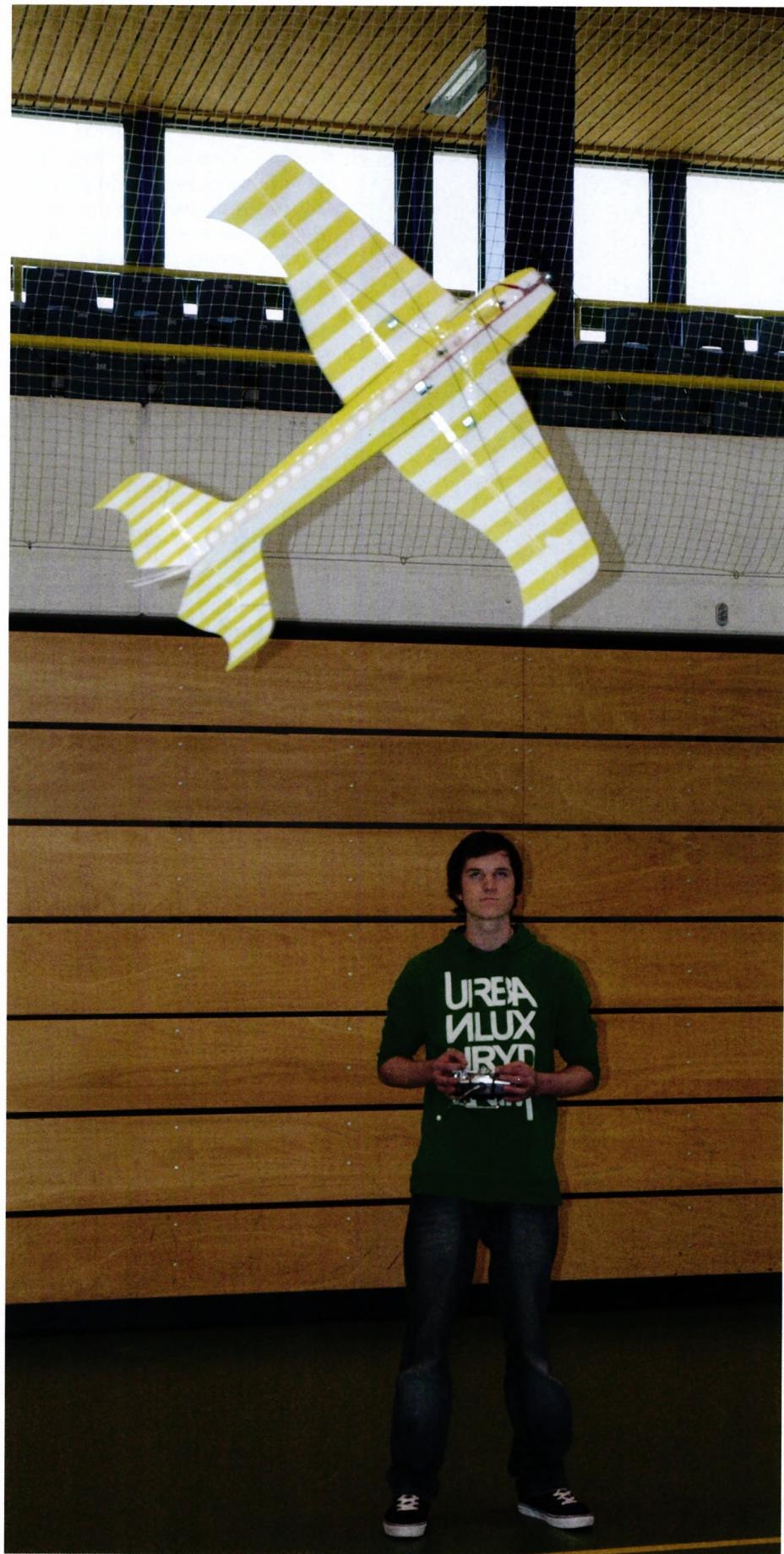
The idea of flying backward originated in the field of indoor model aircraft flying. The goal here is to fly a prescribed routine inside a gymnasium. The biggest enemies of these model aircraft are the gym floor, the walls that are closing in ever faster, and gravity. Even today, the search continues for the most effective way to slow the aircraft down during a vertical nosedive in order to gain more time. This led to the idea of preventing acceleration through a slight thrust reversal. Just for fun, people began adjusting the propeller blades until they generated enough forward thrust to fly backward. However, flying backward proved impossible to control. The planes constantly somersaulted during this maneuver, and the control surfaces had no effect. The most famous “pseudo-reverse-flight” aircraft is called the Nippel 4D from Slow-Fly-World. The ingenious thing about this aircraft is the idea of mounting the propulsion system not at the nose, but in the center of the aircraft. This way, the propulsive force acts at the aircraft’s center of gravity, resulting in more stable—though not perfect—reverse flight. These attempts to solve the problem using variable-pitch propellers have always impressed me. What bothered me, however, was the fact that none of these models could fly backward in a controlled manner. For this reason, I began to implement my idea of combining a fixed-wing aircraft with a canard into my own experimental model. The initial tests with this hybrid prototype were not very successful. Only after countless modifications and test flights was I able to get the model to fly in both directions.
The design and construction of this aircraft took a long time. In terms of working hours, I’ve spent over 400 hours in my basement so far. This is a huge effort for a prototype whose airworthiness wasn’t certain from the start. I fabricated all the parts of the aircraft myself, except, of course, for the basic electronic components. To ensure that the parts matched the plans exactly and functioned smoothly, I designed many of them using CAD software and then milled them on a CNC milling machine from EAS. The actual machining took very little time. Drawing the parts on the computer, on the other hand, took much longer. In total, I designed around 80 parts for this aircraft—both two- and three-dimensional—on the computer and manufactured them using a computer-controlled milling machine. Since I needed precise parts and often had to produce individual elements multiple times, this was the only option.
A great deal of mechanical and electronic systems are required to handle the abrupt change in direction while in flight. There are five elements on the aircraft that must be adjusted during flight: the wings, the propellers, the winglets, the tail landing gear, and the center of gravity.
Wing Mechanics: The wing is the main mechanical component. A 3-mm carbon-fiber tube serves as both the pivot axis and the sole point of attachment for the wing to the fuselage. One servo is installed per wing, capable of performing a rotational movement of up to 120° with a torque of 0.4 Nm. Since the wing can only rotate through an angle of just under 60°, it is hinged with a corresponding lever arm ratio of 1:2. Although this results in only half the travel, it provides twice the force. Thus, during the swivel, a torque of approximately 0.8 Nm acts on the wing.
Center of Gravity Shift: The same servo simultaneously controls the center of gravity shift. For this purpose, a mechanism was developed that, with minimal friction, moves the drive battery and, if necessary, additional weights a distance of 40 cm along the aircraft’s longitudinal axis, always in the opposite direction to the wing, because the wing’s own weight influences the position of the center of gravity as it moves. Since this has an adverse effect on flight characteristics, this change must be optimized again using the weight-shift mechanism.
Extending the Winglets: Another very important mechanical device is responsible for extending the winglets in the canard configuration. For this purpose, a carbon-fiber tube—aligned parallel to the fuselage during the canard phase—was embedded at the wing tips to serve as a pivot. The winglets are attached to this tube. Deployment and locking are controlled by an additional servo. Using a variety of pulleys, springs, and Kevlar cables, the winglets can be raised for canard flight and retracted and locked into place again for normal flight.
Rear landing gear: The rear landing gear, which serves as the nose landing gear in the canard configuration, is also controlled by the winglet servo. This pivoting mechanism is relatively simple. A turntable, to which a Kevlar tube is attached, is connected via a cable and can thus be rotated by 90°. The mechanism for the tail wheel is more complicated: At the end of this Kevlar tube is a ball-bearing mount that ensures the wheel’s caster and its nearly frictionless rotational movement. Since the axis of rotation of this mount must always be perpendicular to the ground for optimal tracking, a mechanism was needed to counteract the rotational movement of the Kevlar tube and thus keep the axis perfectly aligned at all times.
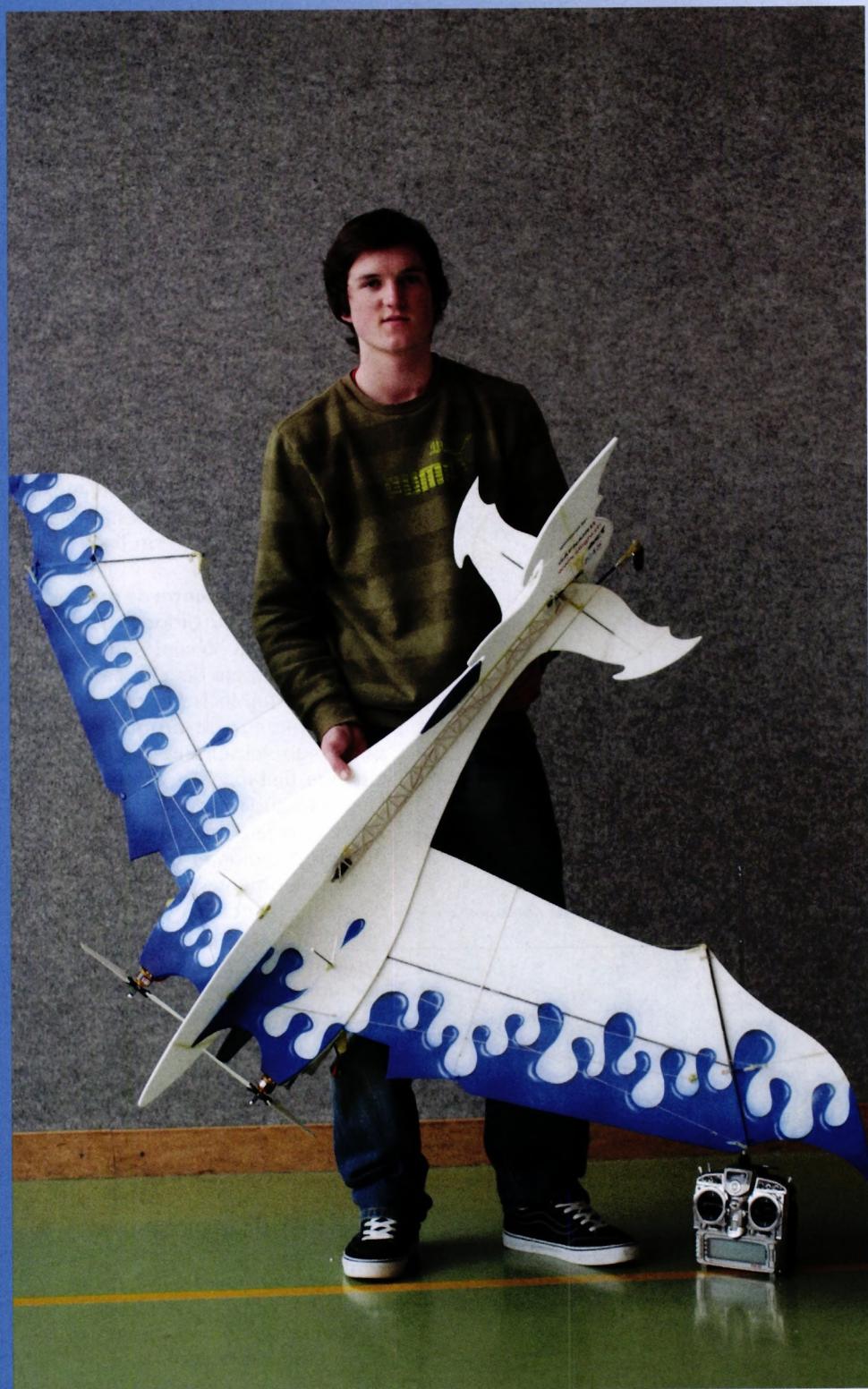
Fabian Gafner of the Hinwil Model Aircraft Club is one of the original Depron designers and builders. He began developing such models as a teenager and sold them to supplement his allowance. Toward the end of high school, Fabian designed and built the Dikranos as his graduation project. This project earned him the top grade of 6. At the same time, he received various awards, including the “Impuls-Mittelschule” award at ETH, and he also received the rating “Excellent” for his project at “Schweizer Jugend forscht.” As a reward, he will now present his airplane in Paris at the European Youth Research Competition. *Ed.*
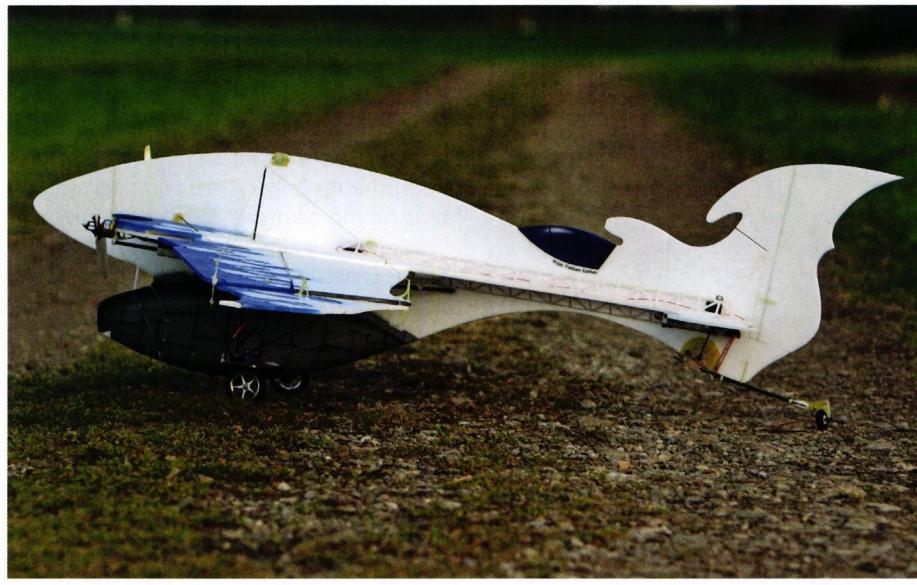
The futuristic-looking Dikranos.
Controlling my own design is by no means as easy as it seems at first glance. The elevator is the only control surface on the aircraft that retains its function in every phase of flight. The only requirement that must be met here is a balanced surface on both sides of the pivot so that the control surface does not flip over when the airflow direction is reversed. The rudder, on the other hand, presents the first set of problems. In the canard configuration, it operates exactly the opposite way and must be reversed. The canard flight phase also presents another problem. Since the engines are located at the tail in this configuration, the control surfaces are no longer exposed to the propeller wash and are ineffective at low speeds. If you want to steer the aircraft on the ground, you would first have to get it moving, which is often not possible. Since the aircraft is equipped with two engines, it is possible to use an electronic mixer to increase the power to one engine as soon as the rudder is actuated. To steer to the right, the left engine must deliver more power so that the aircraft moves in the desired direction due to the asymmetric thrust, and vice versa.
The final control surfaces needed for handling around all axes are the ailerons. They are typically found as flaps on the trailing edge of the wing. Since such ailerons are not suitable for backward flight, I had to resort to twist control. A cable control system pulls on the wing tips, causing the wing to twist outward and thus create a larger or smaller angle of attack. This is controlled by two servos with the necessary force. This is the only way to achieve effective lateral control without simultaneously compromising the stability of the wings.
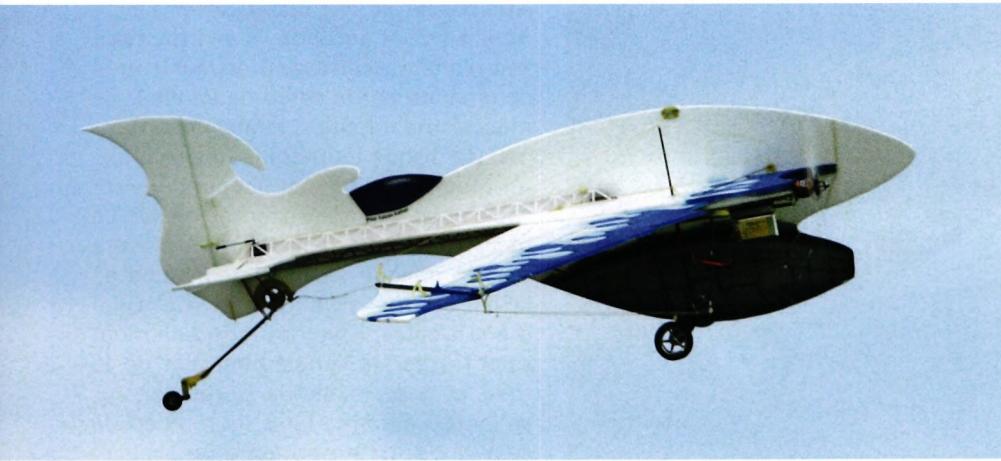
Dikranos on a "normal" flight.
All components are programmed before the first test runs. For example, the direction of rotation was reversed on one of the motors so that the propellers’ torques would cancel each other out. For the initial functional tests and takeoff attempts, I needed a long, hard-surfaced runway, since the engines’ power seemed insufficient for a takeoff from a grass runway. The first day at the airfield was a disaster, as the weather—with its strong Bise wind—threw a wrench in my plans. During the first takeoff attempt, a sudden gust of wind caused the plane to flip over. Even before it had taken to the air for the first time, it had already sustained a few scratches.
The second attempt, in calmer weather, was also unsuccessful. The plane initially lifted off the ground slowly and steadily, but after a few meters it suddenly veered to the right and spun 180°. The resulting stall on the wings caused it to crash to the ground. I concluded that during a sideways veer, the large surface area at the front of the fuselage covers the rudder surface, thereby neutralizing its effect. To fix this problem, the rudder was enlarged during repairs. With this improvement, I then attempted another flight test—this time successfully. The aircraft took off very steadily and continued flying in a controlled manner. Although its longitudinal stability was still not perfect, it was at least possible to recover from any instability time and again. The remaining control surfaces responded flawlessly. Since the model was flying in the forward configuration, I now dared to attempt the decisive maneuver: switching to the canard configuration in flight. This time, despite the Bise wind, the aircraft took off very steadily and gained altitude very quickly. After just a short time, it was flying high enough to perform the maneuver. I flipped the switch on the remote control; the motors roared briefly, the wing moved into its new position, and the winglets extended. The aircraft hovered in place for a moment, lowered its nose, and picked up speed in the opposite direction. The transition was complete. The canard configuration was also extremely stable in the air and responded to all control inputs. However, I didn’t want to land in canard configuration, as the nose landing gear could have snapped off on the grass runway. So I switched back to the normal configuration. After a transition without any loss of altitude, I was able to land the aircraft smoothly on the runway. After this successful maiden flight, it was high time to give my homemade aircraft a name. Ultimately, I settled on “Dikranos,” a term from Greek that translates to “two-headed.” “Dikranos” is fitting in that this aircraft, in a figurative sense, has two faces. The reference to the mythological figure of Icarus is also entirely intentional. Both aspects are connected to the dream of flying.
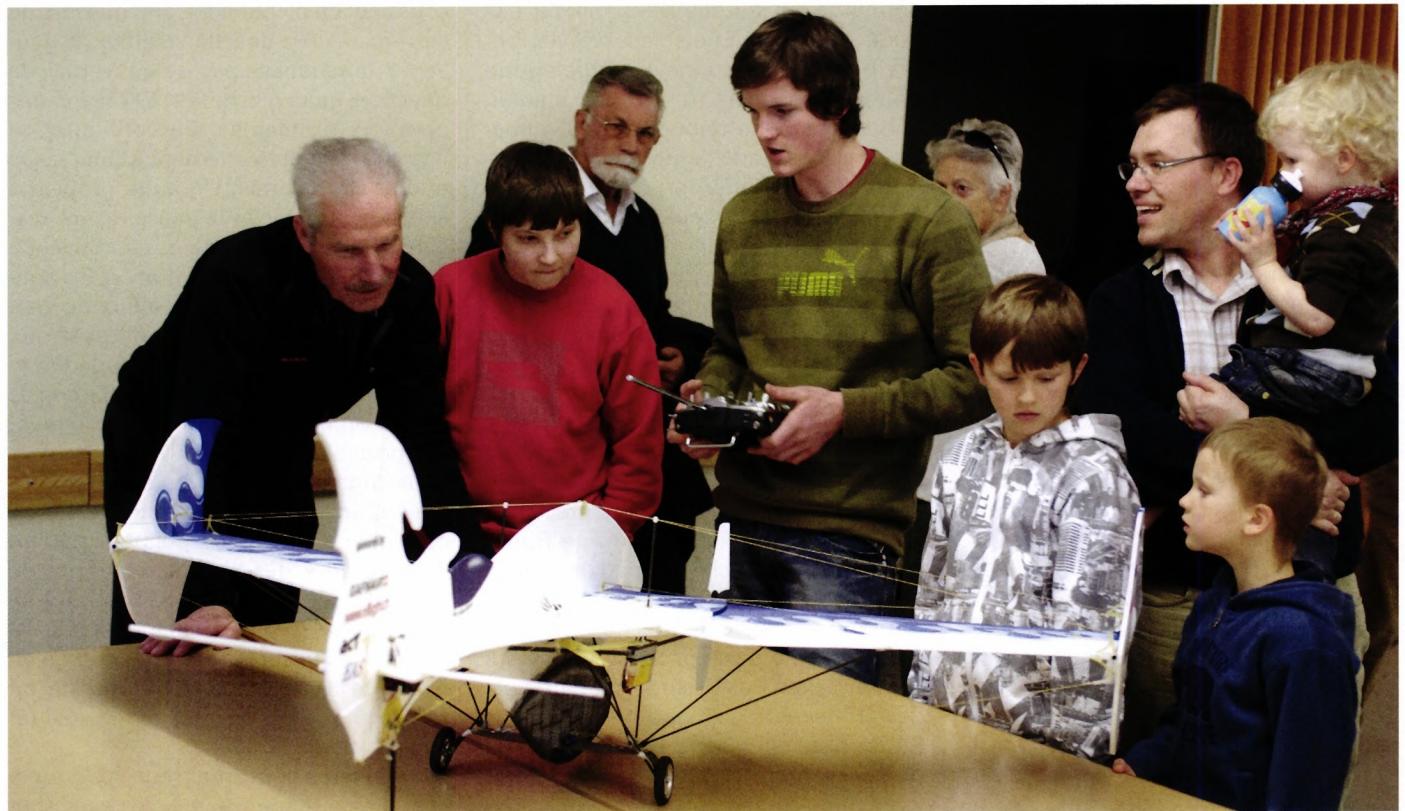
The designer explains the mechanics of his Dikranos to the audience.
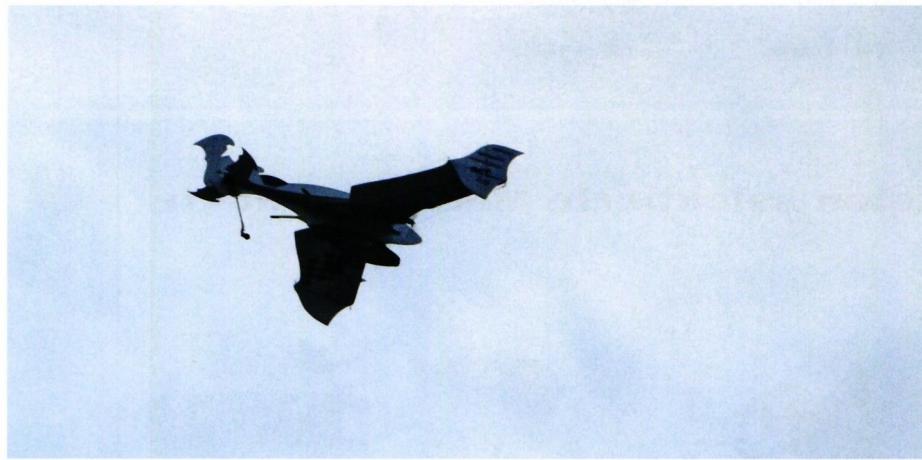
Dikranos in a "duck" flight.

News from HEBU
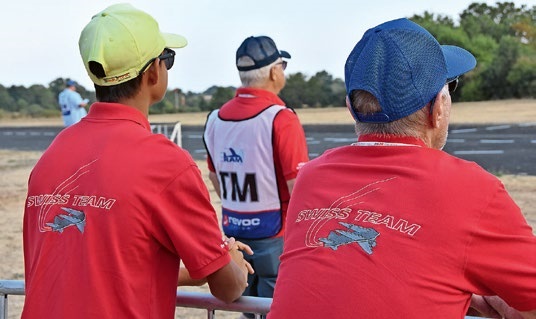
TEAM MANAGER "THIS" BOSSHARD
 Rodito Nussbaumer
YOU KNOW WHAT I MEAN? 125 YEARS OF THE SWISS AERO CLUB
 Emil Giezendanner
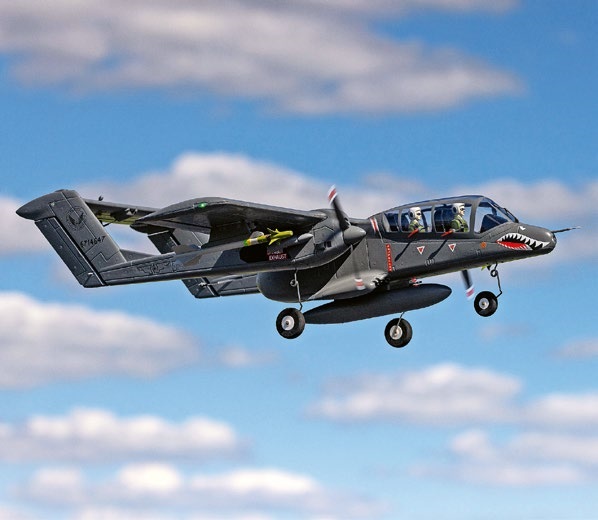
HORIZON HOBBY/LEMACO NEWS: MICRO OV-10 BRONCO 645 MM BY E-FLITE
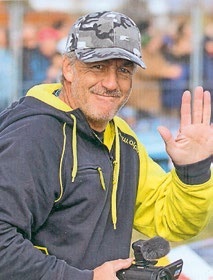
PRIDE AND GOOD IDEAS
 Markus Nussbaumer
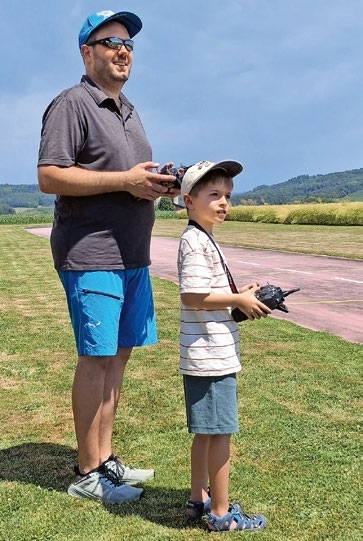
TRY-OUT DAY AT MFV WETTINGEN
Urs Keller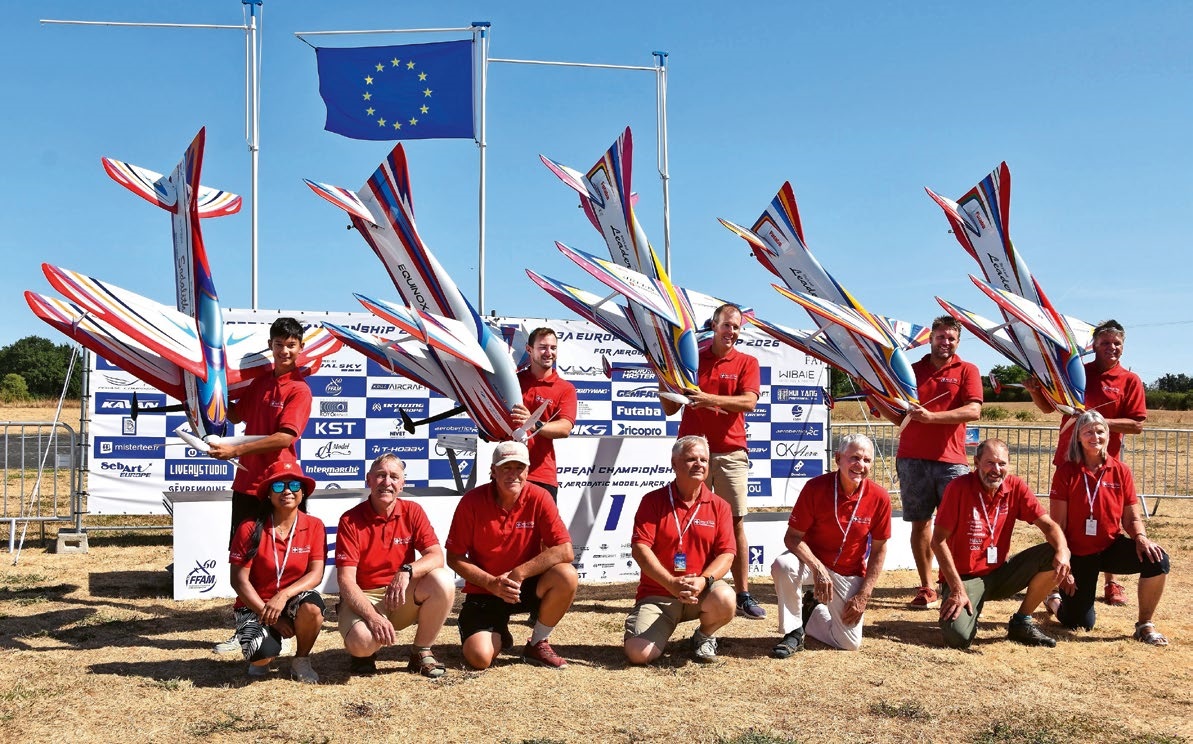
F3A EUROPEAN CHAMPIONSHIPS IN ST-MACAIRE, FRANCE
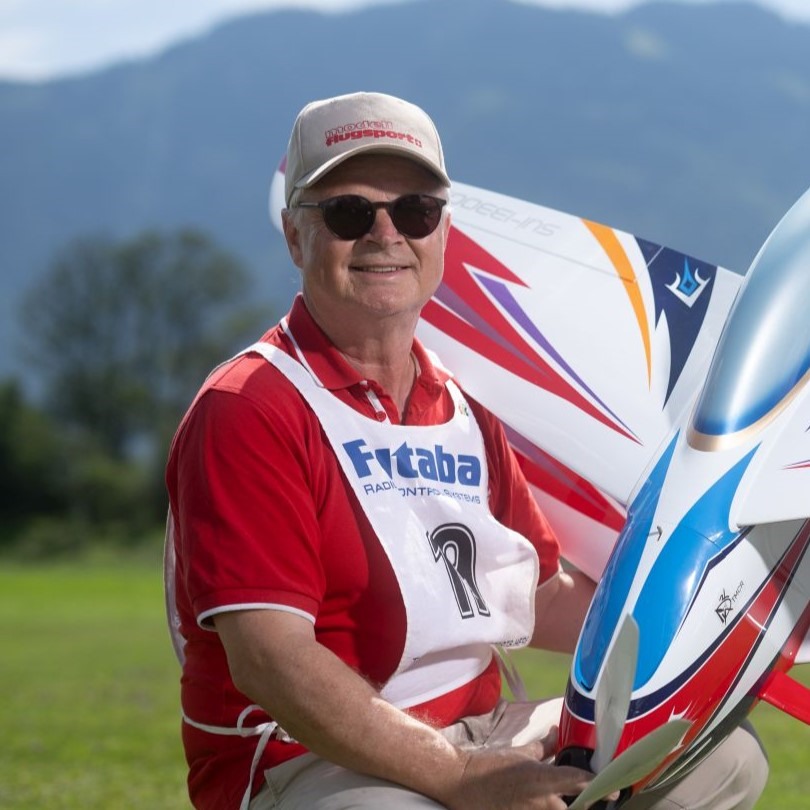 Matthias Bosshard
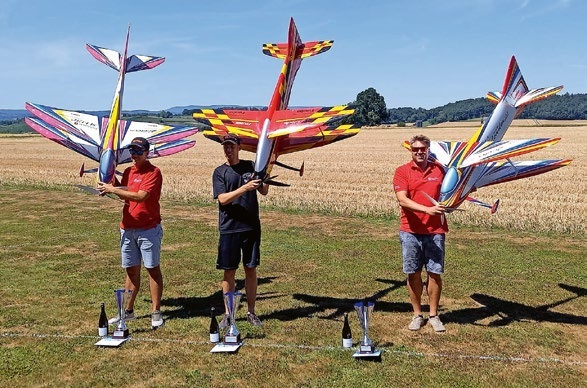
52. 2026 ALPS CUP
Emil Giezendanner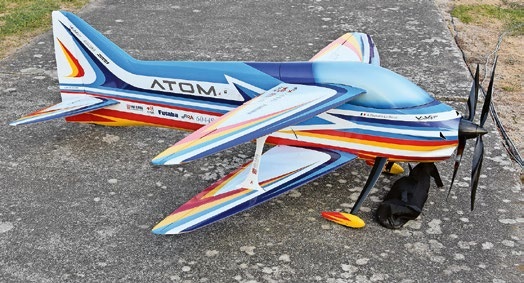
ATOM, THE NEW DOUBLE-DECKER FROM CPLR
Matthias Bosshard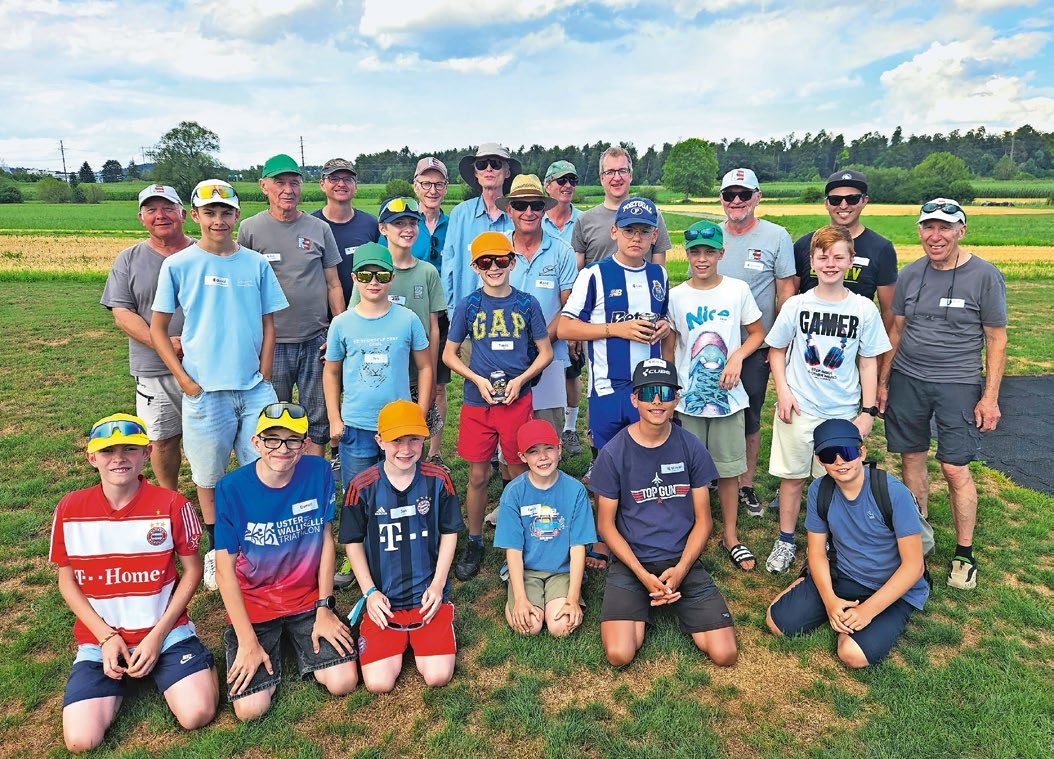
SUMMER FUN 2026 AT MG USTER
Martin Wunderli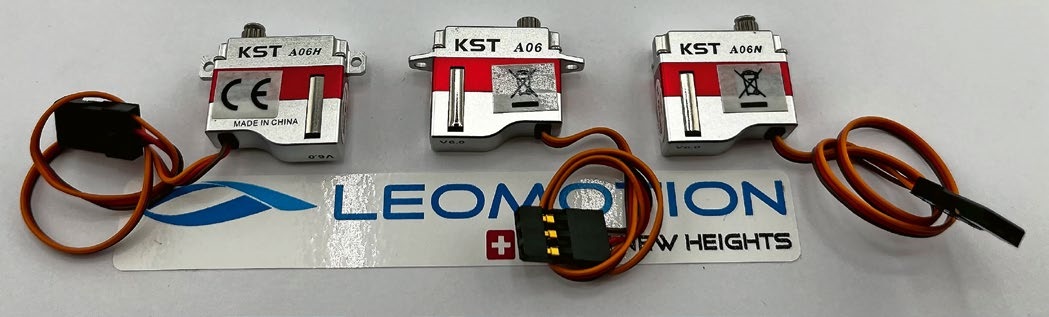
What's New at Leomotion.com
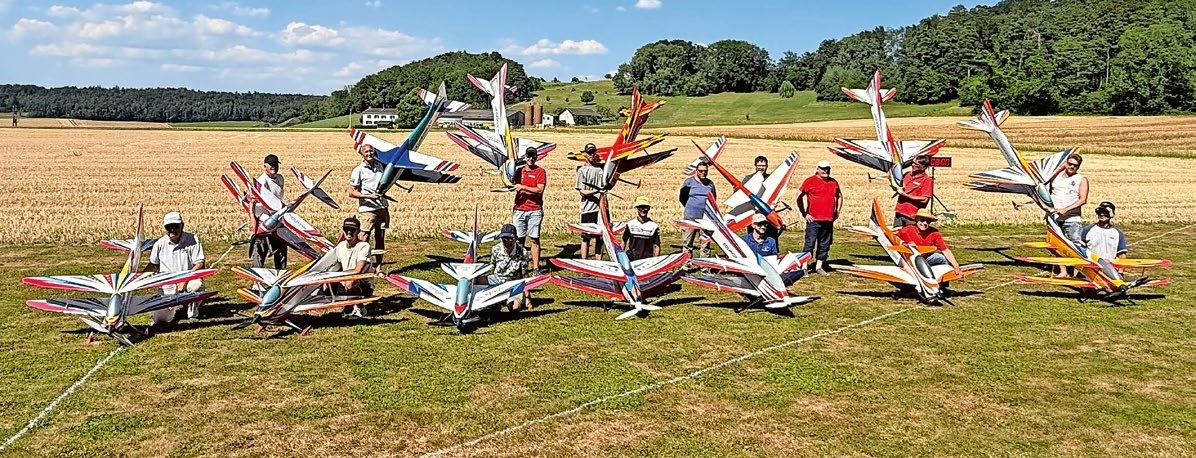
COUPE DES ALPES – OBSERVE AND LEARN
Rodito Nussbaumer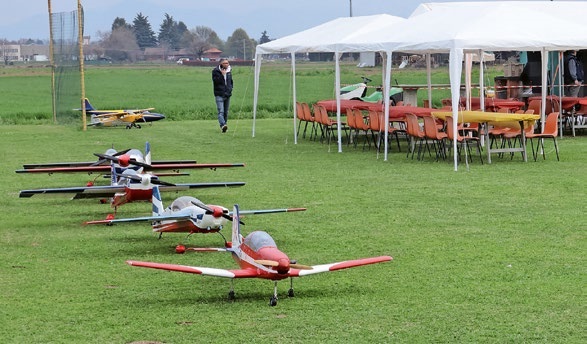
TWIN TOWN PARTNERSHIP
Wolfgang Voeller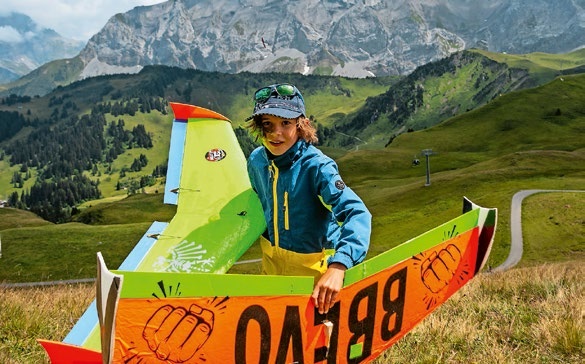
34th HAHNENMOOS ALPINE MODEL AIRPLANE CAMP
Res Dauwalder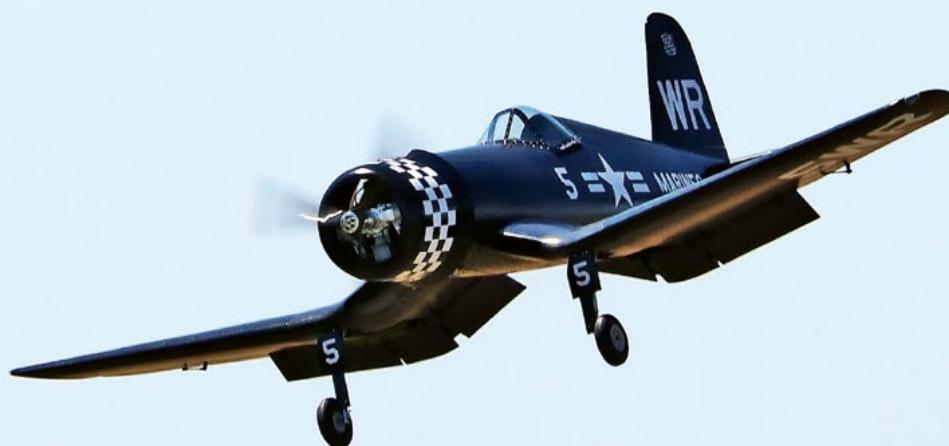
CORSAIR F4U – A WARBIRD WITH A MEMORABLE LOOK
Jürgen Rosenberger, Jürgen Prinz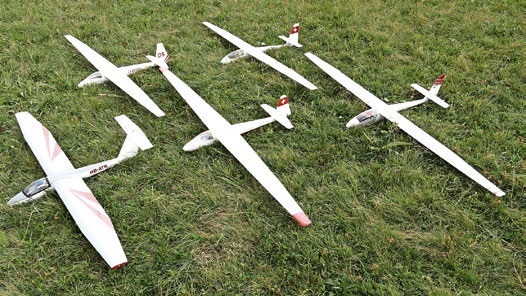
SMALL, MODEL-LIKE SAILBOATS
Res Dauwalder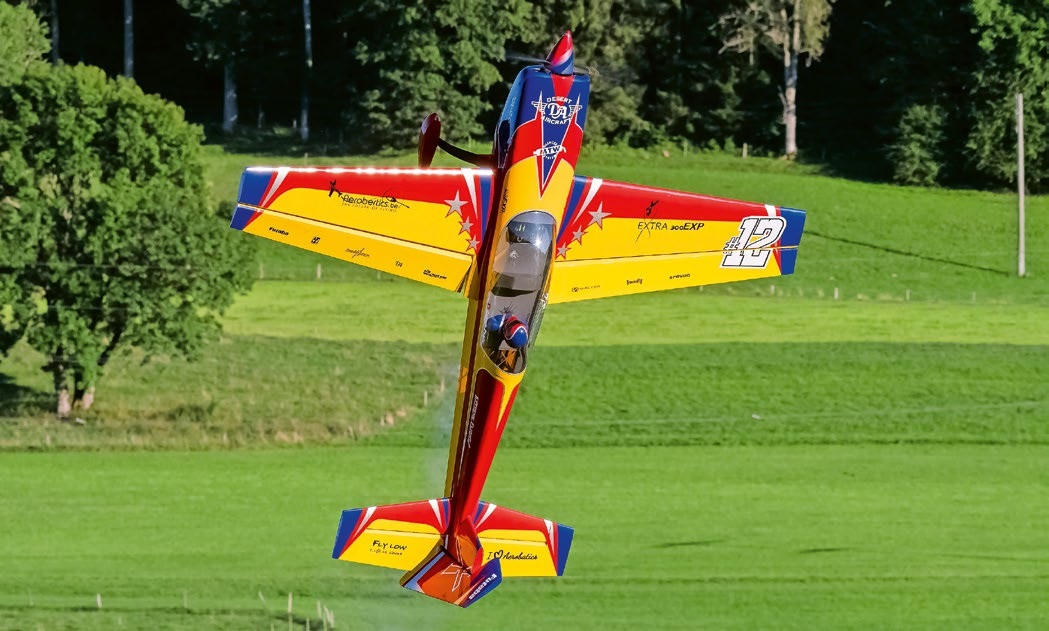
WELCOME, NEW MEMBER!
Andrea Bolliger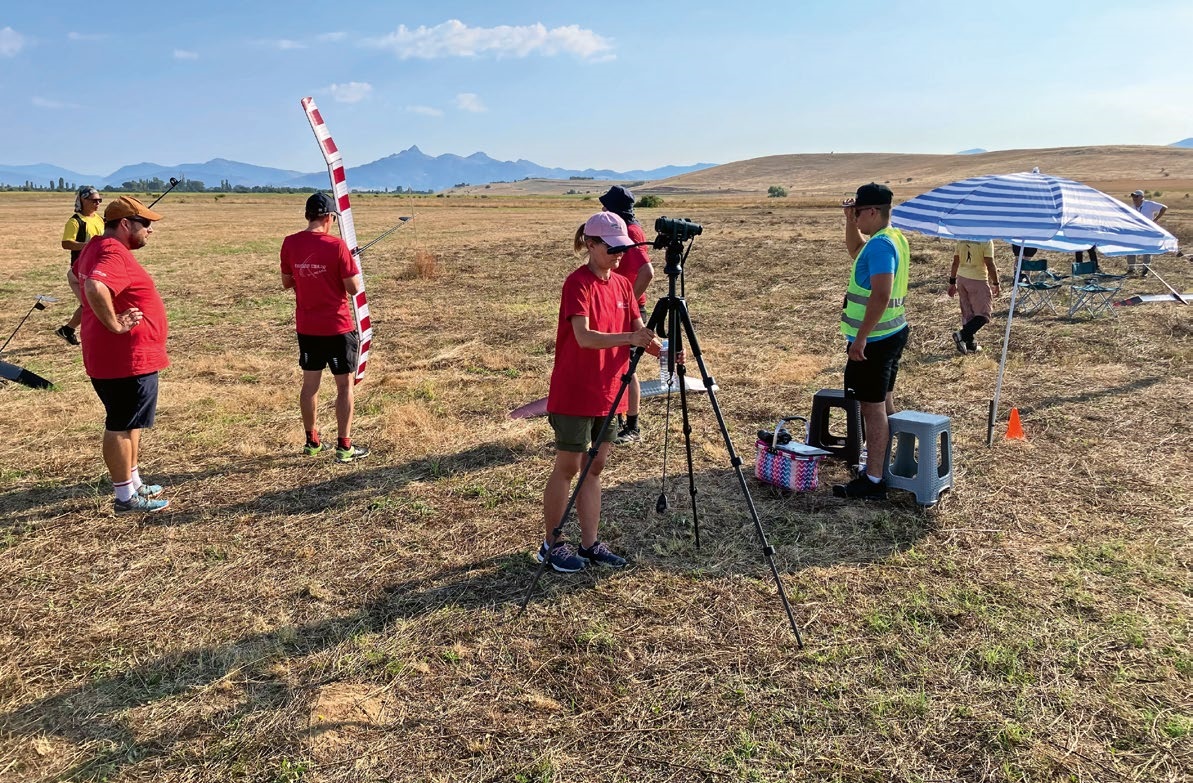
FREE FLIGHT IN THE MIDDLE OF SUMMER
Urs Muntwyler
EURO CONTEST GLIDER ACRO TOUR AUSTRIA 2026
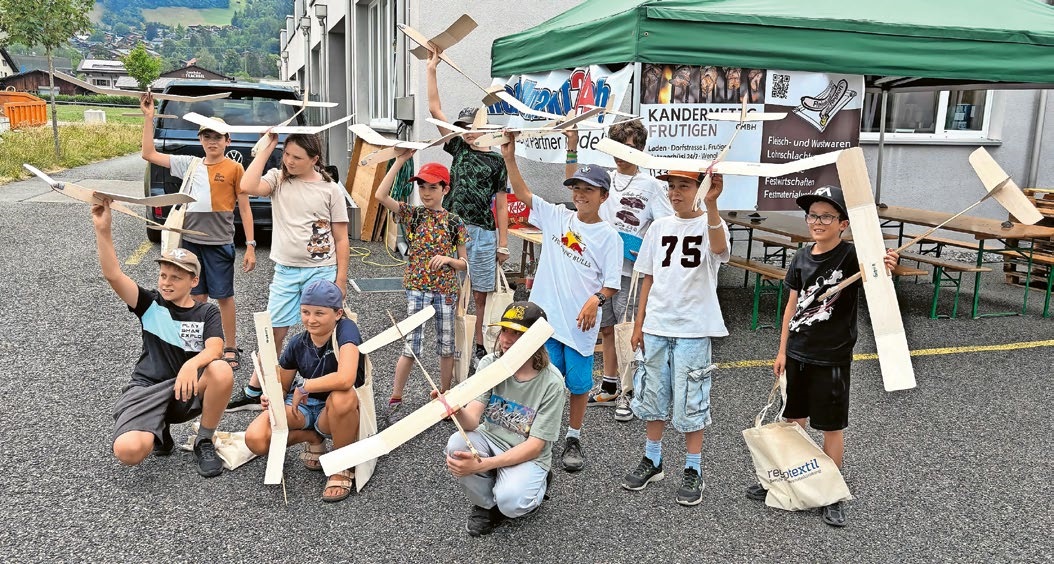
BY YOUTH, FOR YOUTH
Lorena Betschen
INSIGHTS INTO THE HISTORY OF SEAPLANES
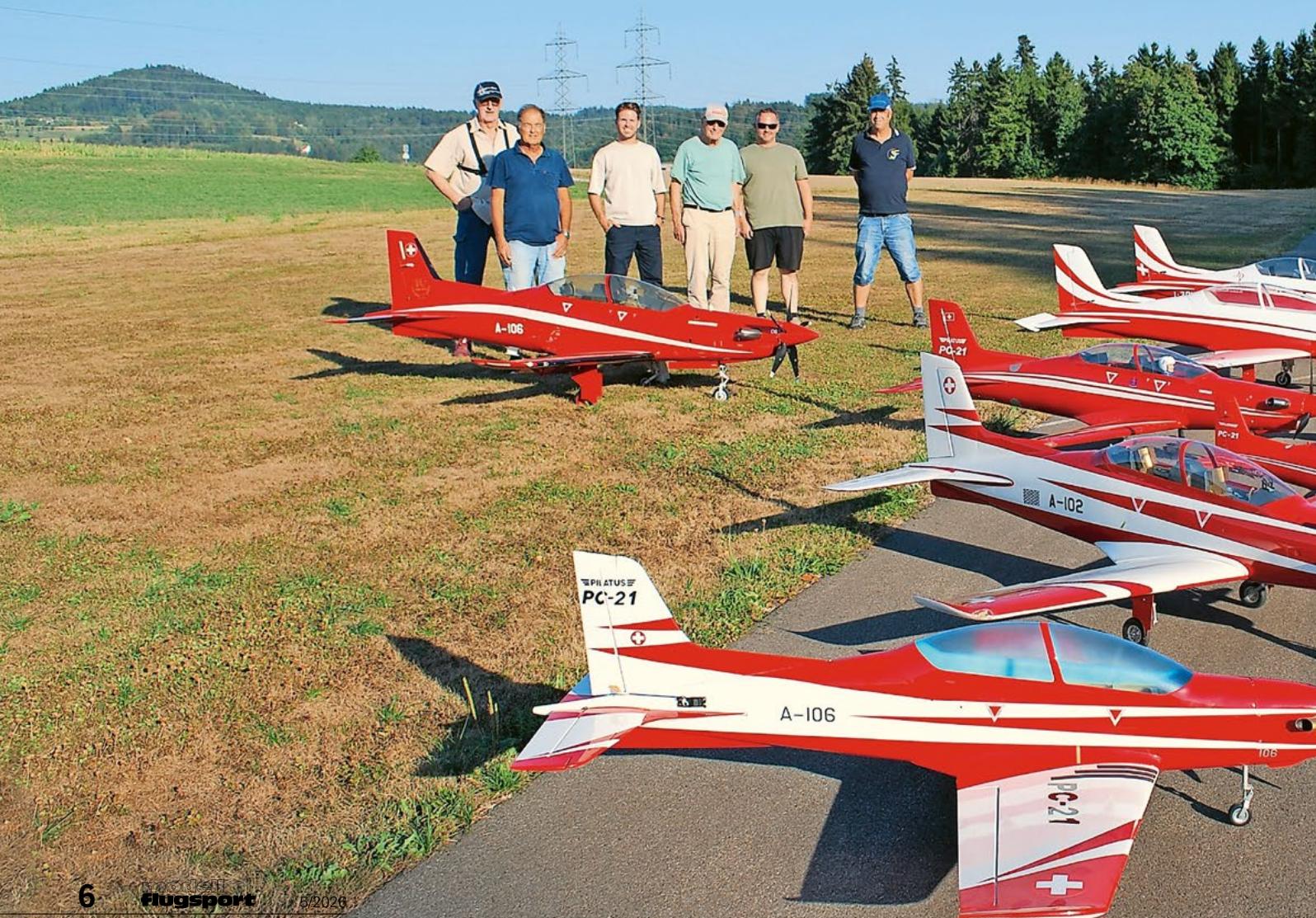
THE PC-21 STORY
Emil Giezendanner
NEWS FROM HEBU
 Julia Bucher
FROM 0 TO 100
Markus Nussbaumer
MEMORIES
Wolfgang Völler
NOS REGION – A HUB FOR ELECTRIC AVIATION
Emil Giezendanner
DO YOU KNOW WHAT I MEAN IN THE LAND OF SMILES?
Emil Giezendanner
A SPECTACULAR F3A WORLD CUP IN THE PRINCIPALITY OF LIECHTENSTEIN
Emil Giezendanner