
1975 World Free Flight Championships in Plovdiv, Bulgaria
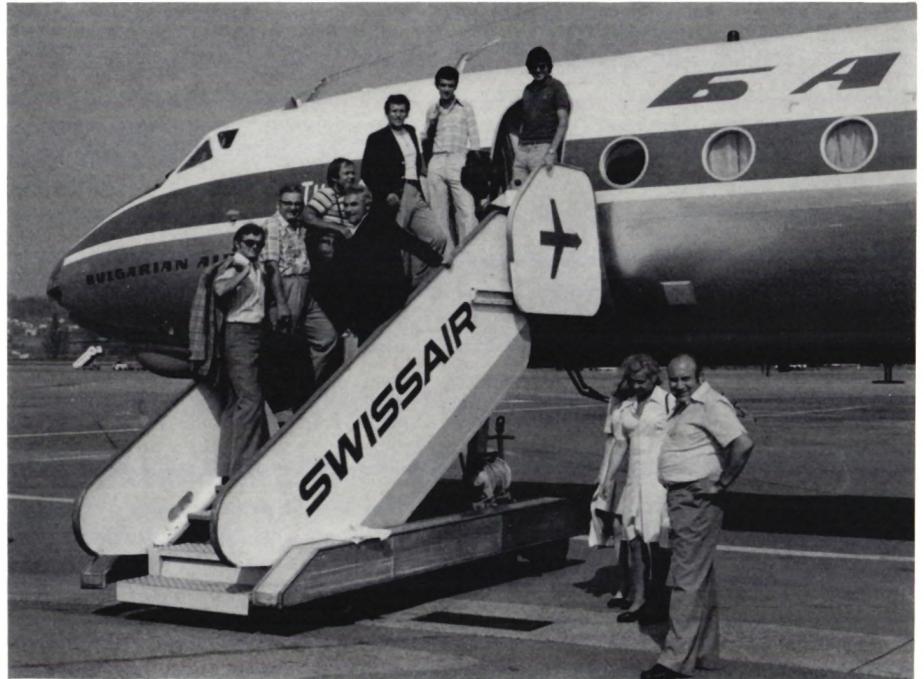
Part of the team at the start in Kloten. From top to bottom: Siebenmann, Bucher, Tschuor, Maurer, Haller, Schenker, and Meier as a supporter.
A spectacular opening ceremony. 60,000 spectators watch skydivers, aerobatic displays, and tethered flight demonstrations.
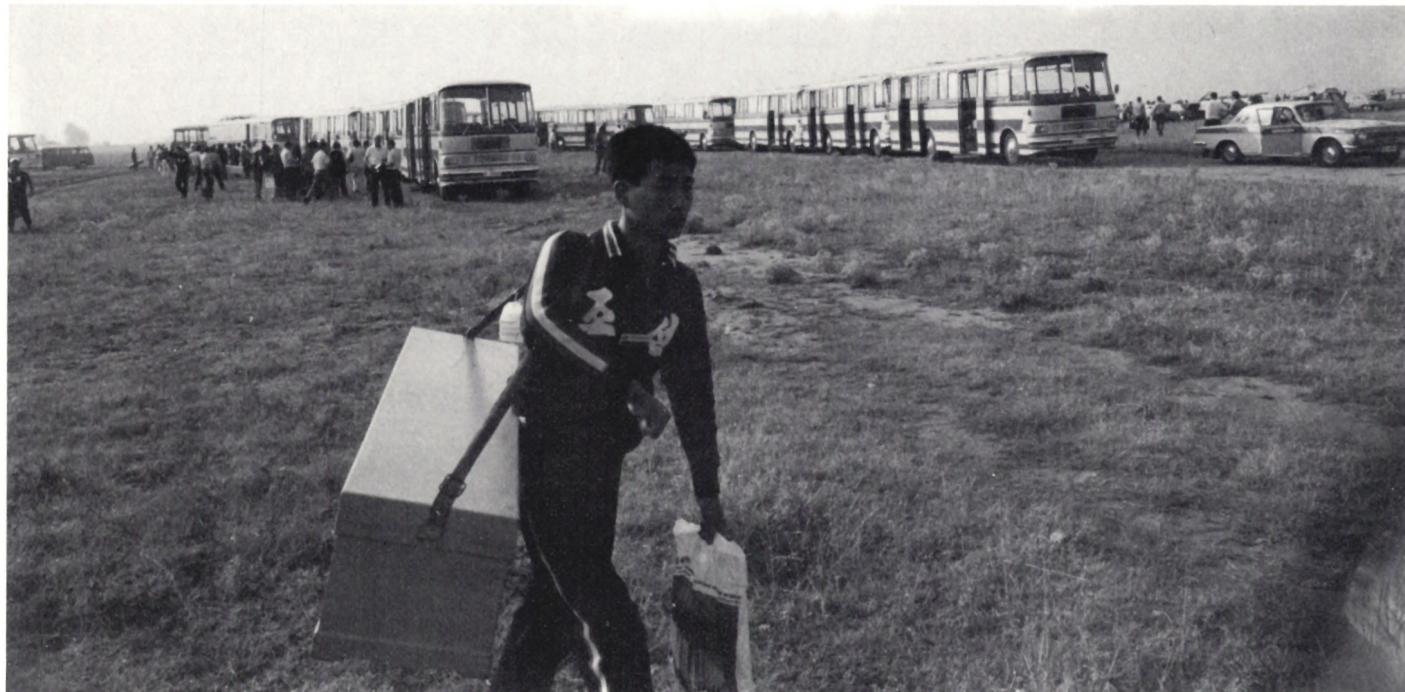
Seventeen buses were used to transport the competitors. Leading the way was a patrol car with its blue lights flashing, guiding the line of model airplanes.
Hans Reifler had to constantly fine-tune his new rubber-powered model airplanes. He’s only been flying rubber-powered models for a year!
It was essential to keep a close eye on the competition so as not to miss out on the sometimes rare launch opportunities.
Our “Gümmeler” in Action
Fritz Gänsli, Dübendorf
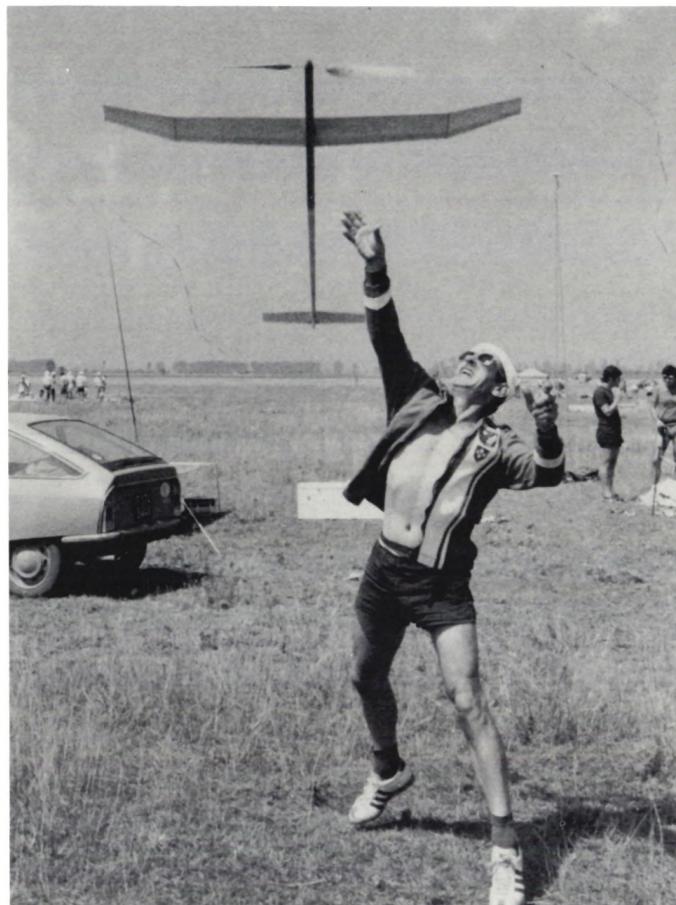
Hans Reifler, Affoltern a/A
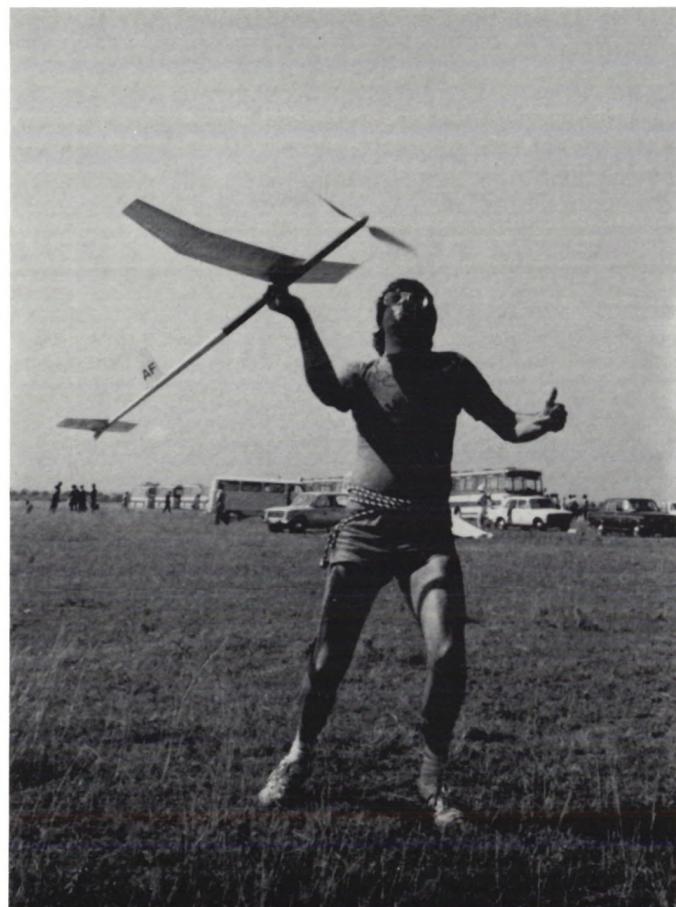
Dieter Siebenmann, Affoltern am Attau
F1B World Champion Paik Chang Sun of North Korea at the awards ceremony
78 participants,
29 nations
, 14 in the fly-off
1. Paik Chang Sun, North Korea 1260 + 240 + 300 + 303
2. Bob White, USA 1260 + 240 + 300 + 281
3. Hans Zachalmel, Austria 1260 + 240 + 300 + 280
4. Kim In Sul, North Korea 1260 + 240 + 300 + 243
5. Albrecht Oschatz, East Germany 1260 + 240 + 300 + 235
6. Roberto Artidi, Italy 1260 + 240 + 300 + 222
7. Geze Vincze, Romania 1260 + 240 + 300 + 214
8. Hugo Benedini, Argentina 1260 + 224
9. Jack McGillivray, Canada 1260 + 212
10. Reiner Hofsass, Germany 1260 + 199
- also:
25. Dieter Siebenmann, Switzerland 1216
29. Hans Reifler, Switzerland 1212
34. Fritz Gänsli, Switzerland 1195
| Teams: | |
| 1. North Korea | 3,715 |
| 2. Poland | 3674 |
| 3. Canada | 3,667 |
| Also: 9. Switzerland | 3,623 |
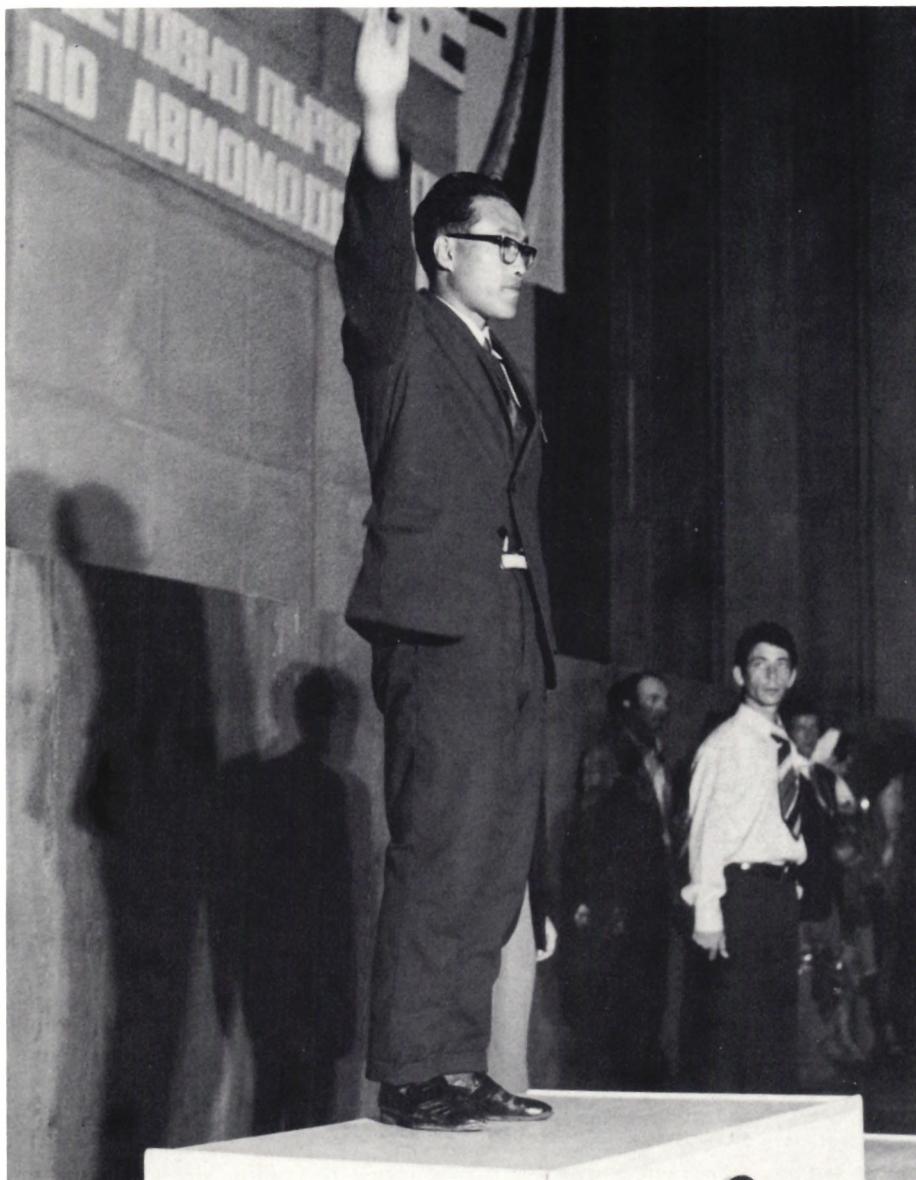
North Korea, the most successful team at the 1975 World Cup
Our A2 boys, showing great fighting spirit. From left to right: Tschuor, Bucher, and Haller
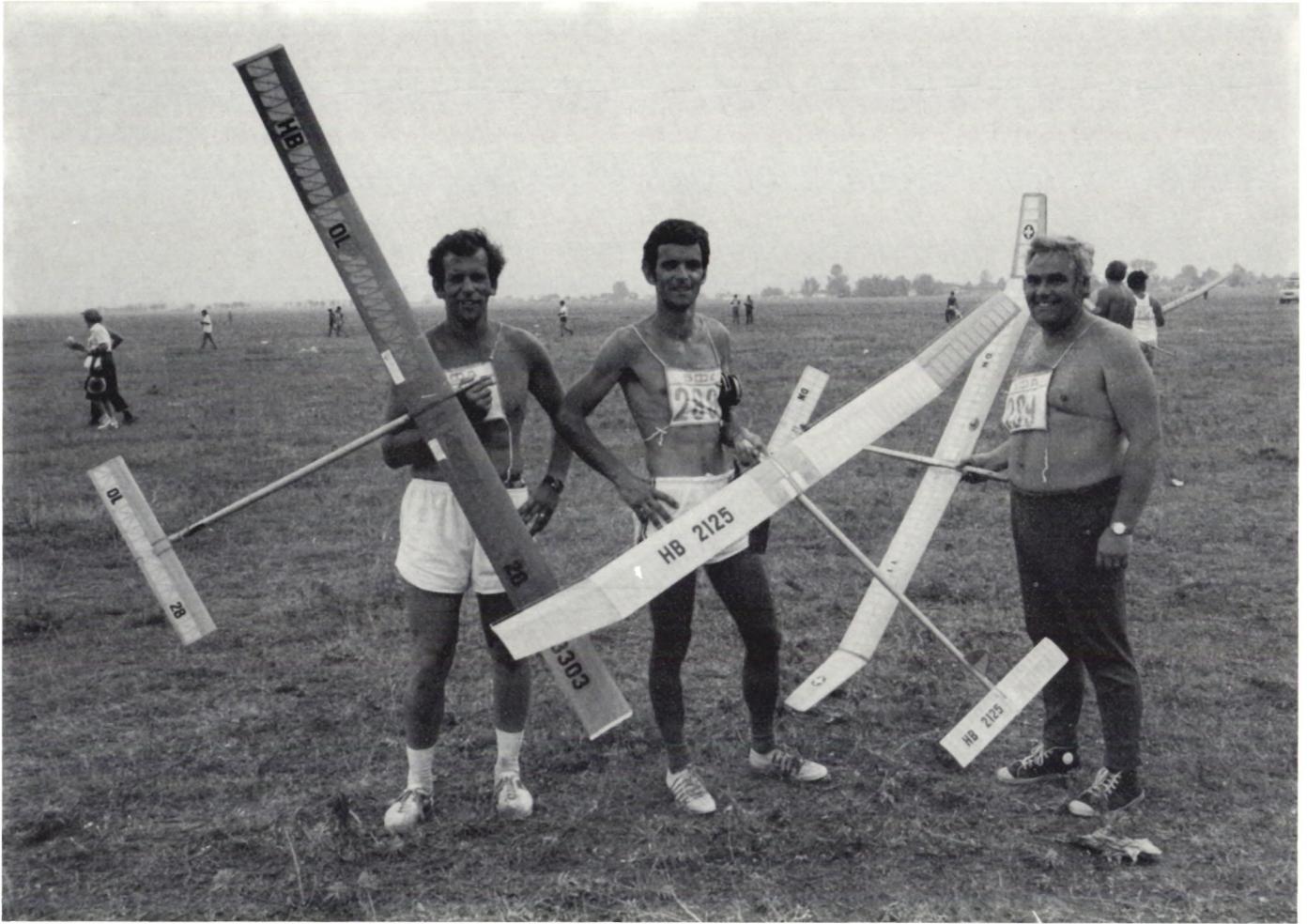
Line check. An electric car horn sounded when a 2-kg force was applied.
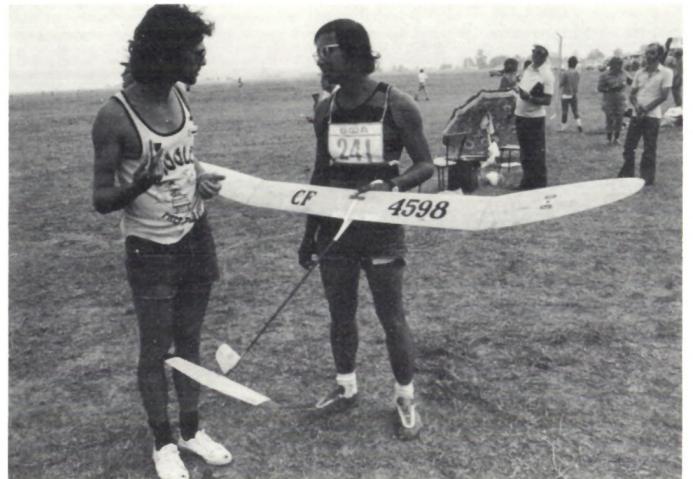
DeMello CANADA here discussing the sport. He is also a member of the national indoor flying team.
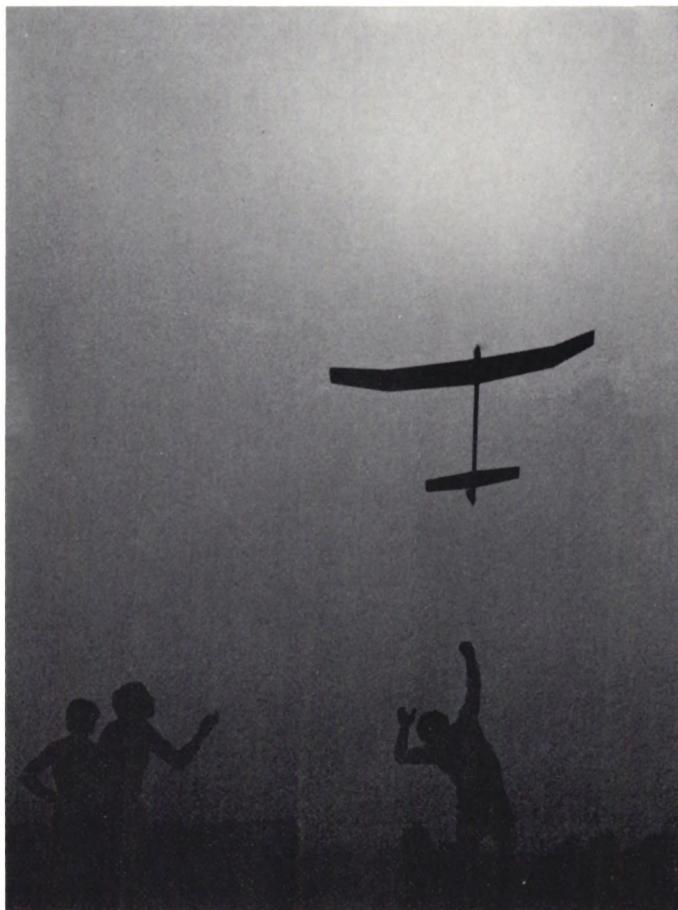
Just one more meter, and this model will undergo a drastic reduction in wingspan. The owner of this model prefers to remain anonymous.
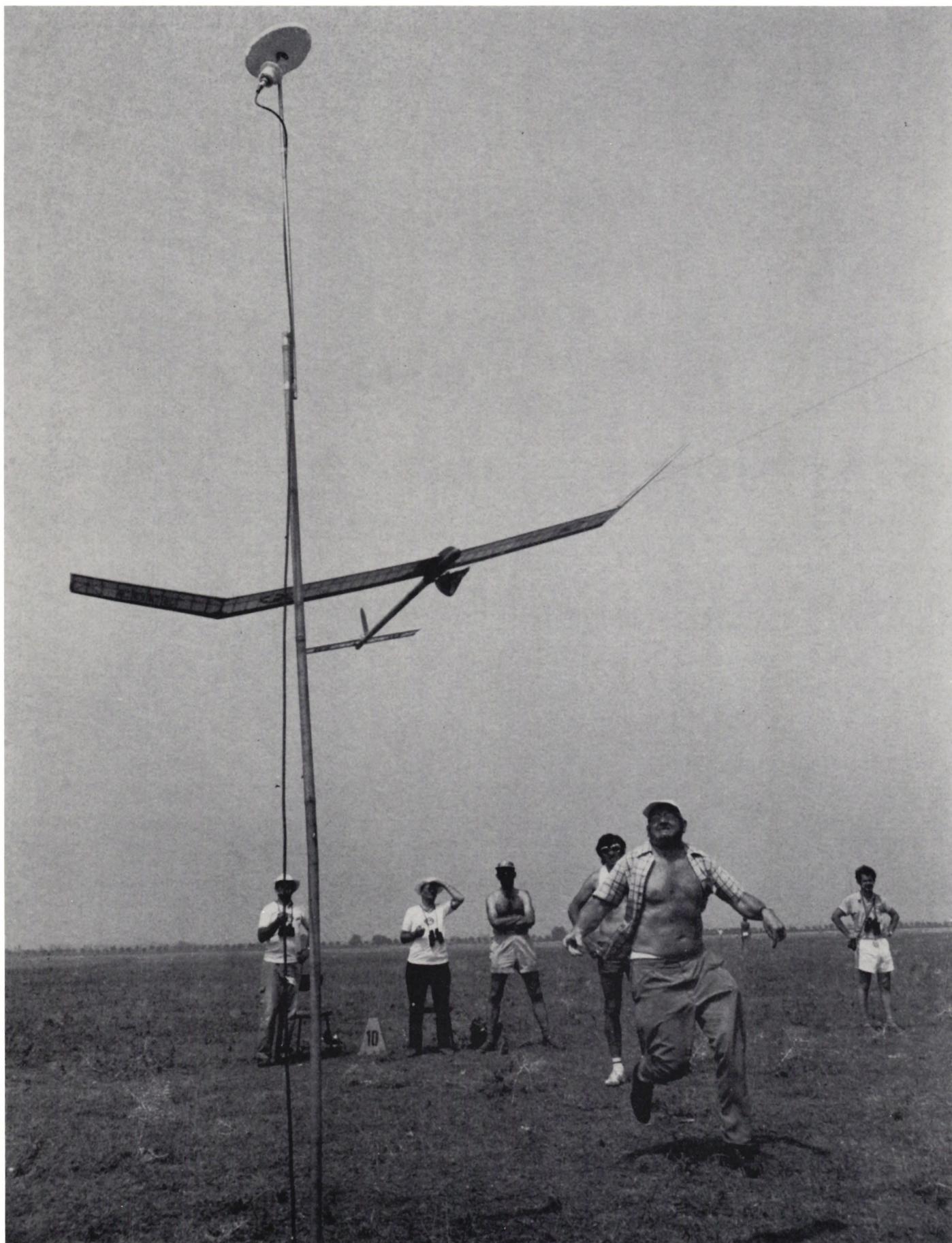
A major “downdraft debacle.” Sometimes this was the way to avert a hopeless crash.
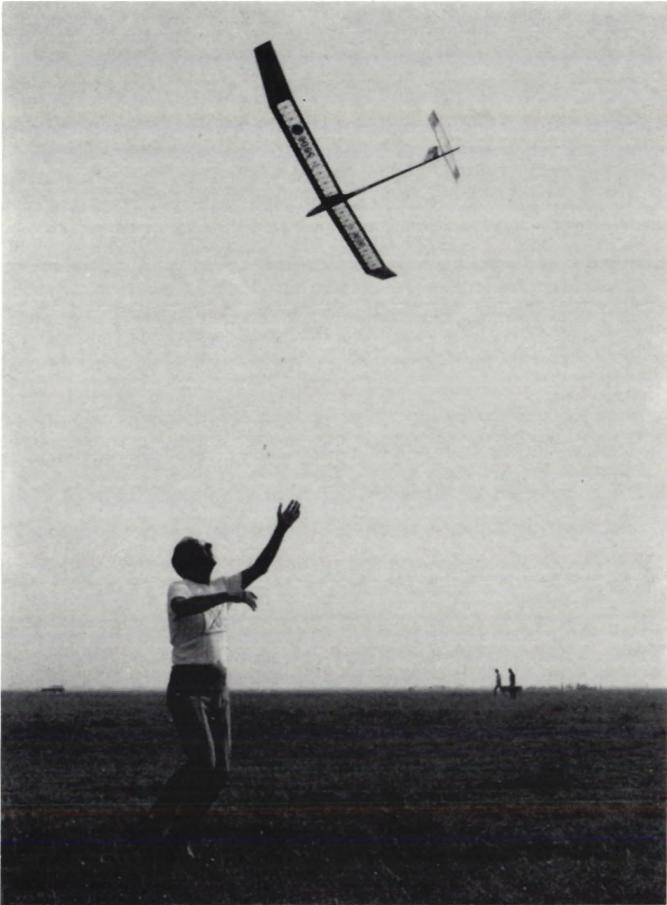
The Blessing of the Thermal Brake.
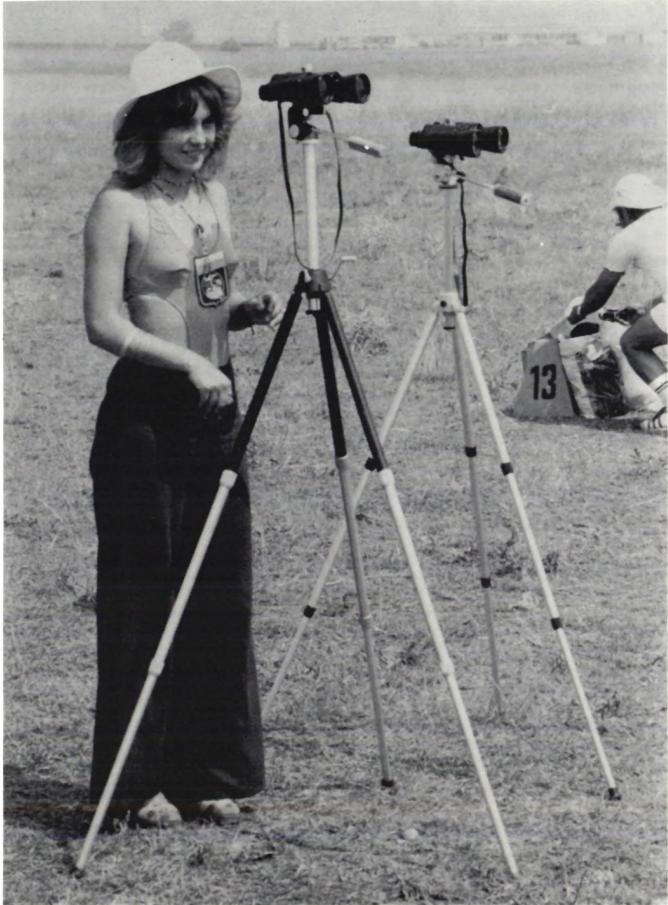
The official interpreter for the competition organizers.
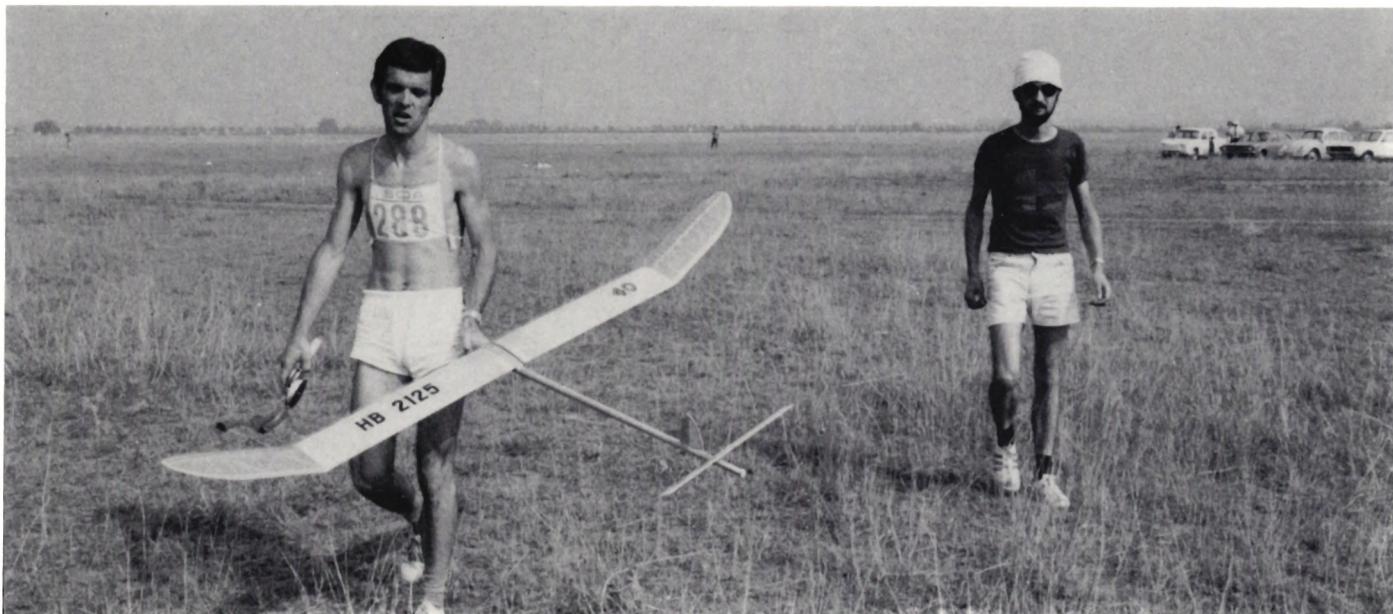
Toni Bucher is coming off a strong performance. He finished in a very respectable 9th place.
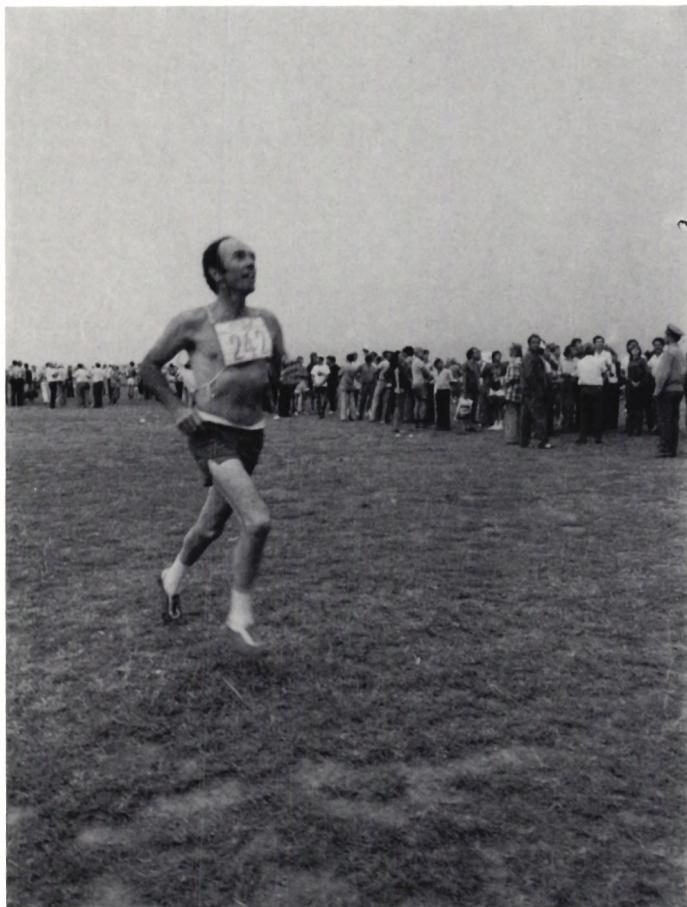
Peter Allnutt as a marathon runner. At that point, he still thought he had won. He finished as the runner-up in the world championships.
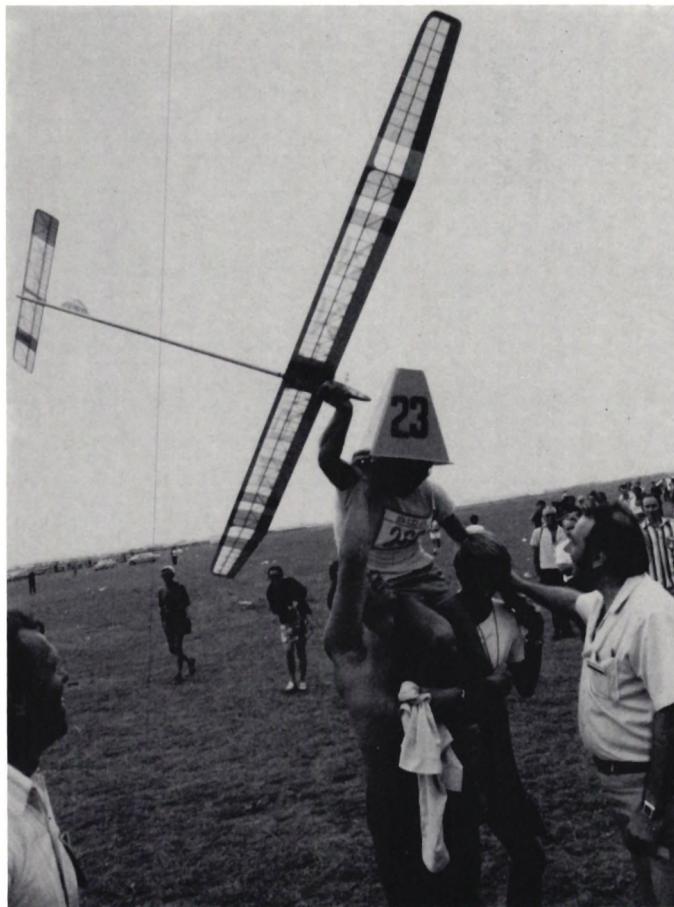
World Champion Viktor Tchop of the USSR was celebrated in style.
See page 15 for the F1A rankings!
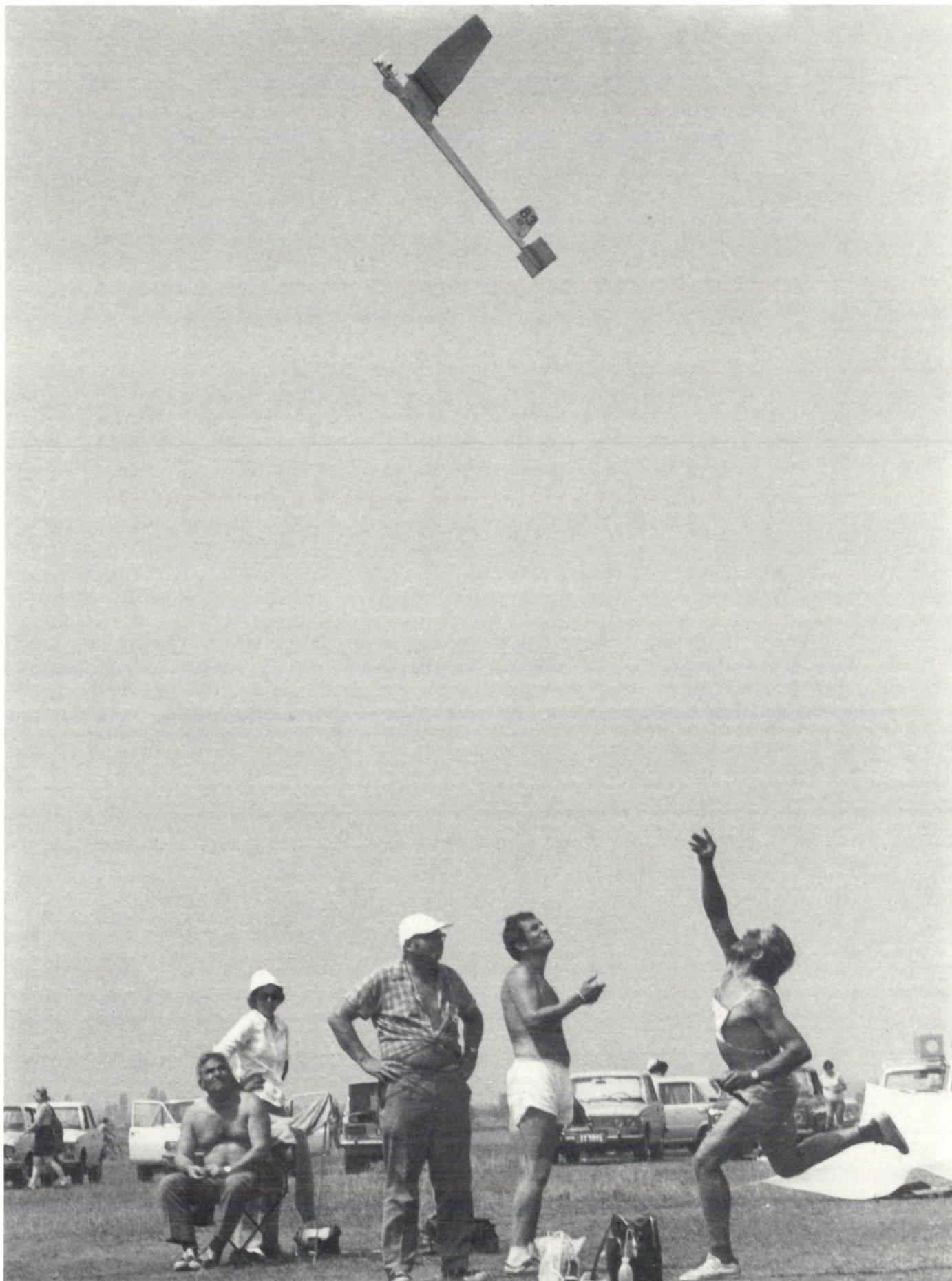
As a former javelin thrower, Peter Maurer gave his model an extraordinary initial push! He finished in 15th place!
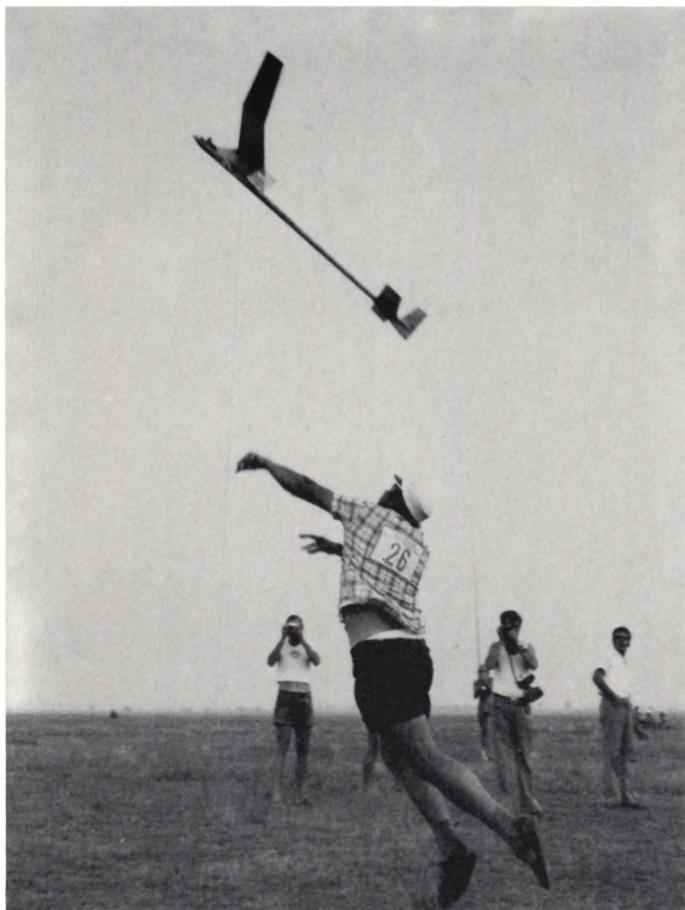
Some preliminary races. Siegfried Reda/West Germany in 4th place
The engines run at between 22,000 and 27,000 rpm.
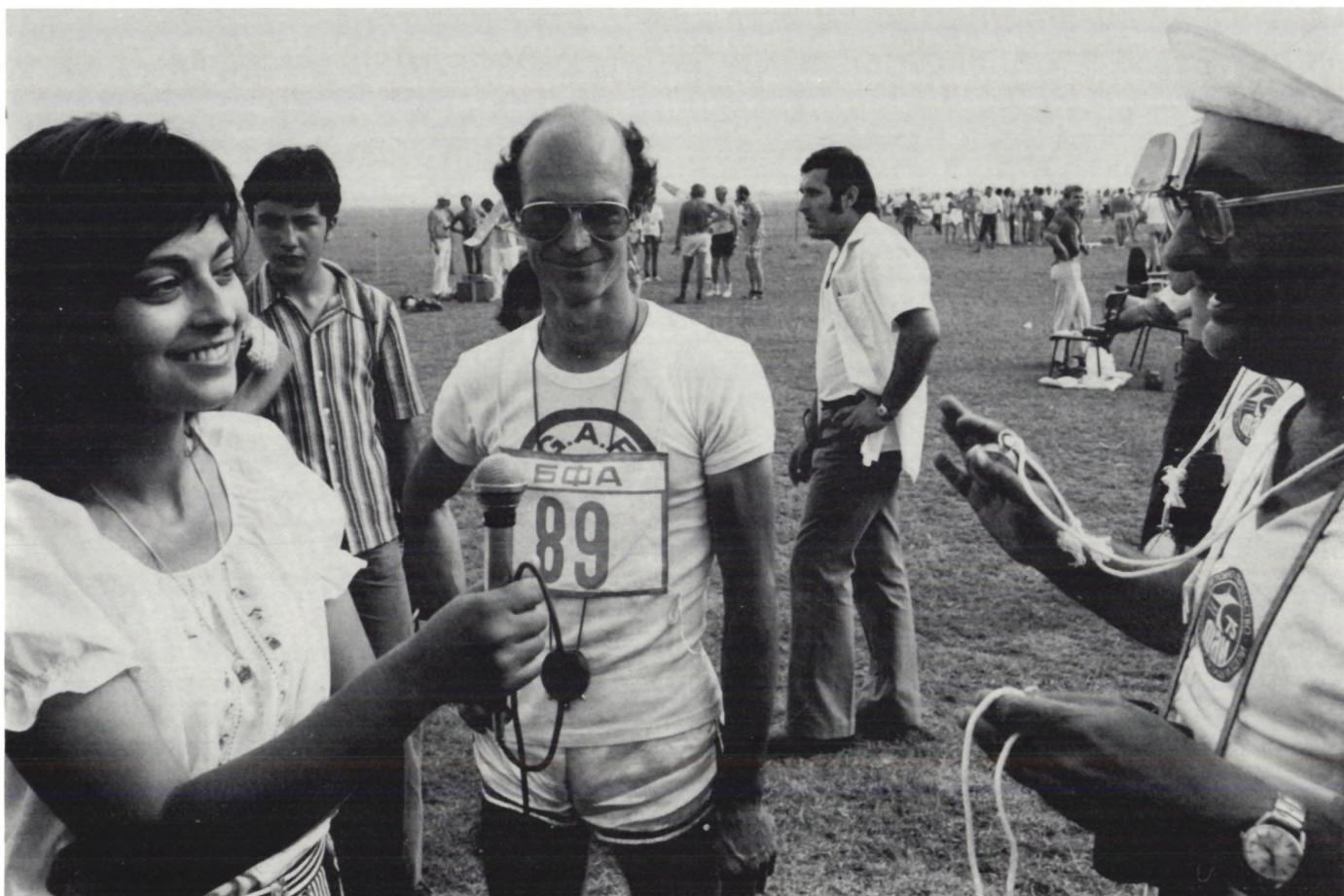
Urs Schaller fought his way to 6th place. He always had a large audience. In terms of design and finish, his models are among the very best! A question from the Bulgarian TV reporter to Urs Schaller: “Why do you fly model airplanes?”
What's going through the minds of these Bulgarian farmers?
92 participants,
31 nations
, 42 in the fly-off
1. Viktor Tchop, USSR 1260 + 240 + 300
2. Peter Allnutt, Canada 1260 + 240 + 131
3. Dietmar Henke, GDR 1260 + 233
4. Ivan Horeisi, Czechoslovakia 1260 + 224
5. J. P. Challin, France 1260 + 210
6. Anton Widensek, Yugoslavia 1260 + 203
7. Mariano Fernandez, Spain 1260 + 191
8. Wieslaw Korczak, Poland 1260 + 186
9. Anton Bucher, Switzerland 1260 + 182
also:
62. Walter Haller, Switzerland 1166
83. G. Tschuor, Switzerland 1034
Teams:
1. USSR 3780 (Maximum)
2. North Korea 3780 (Maximum)
3. East Germany 3772
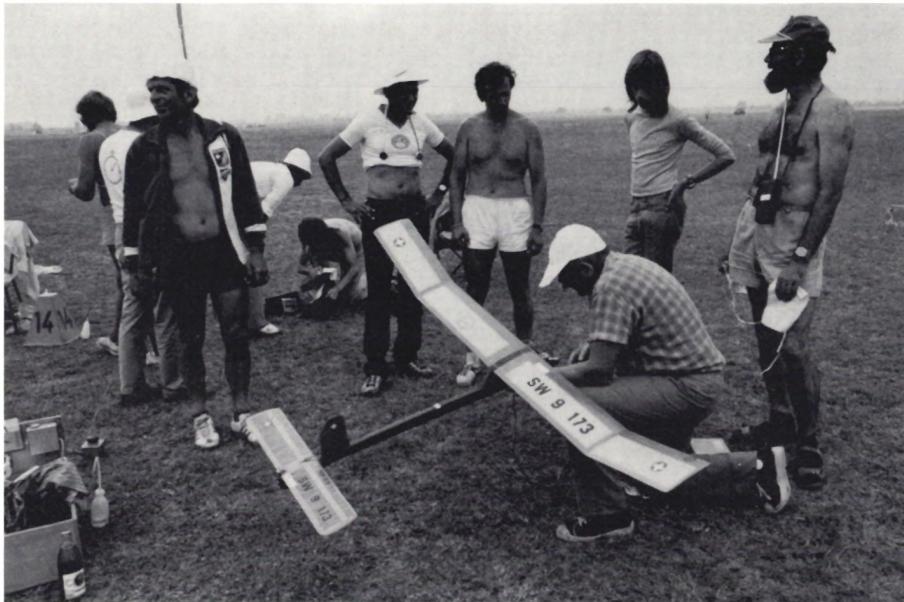
Ruedi Schenker finished 27 seconds behind the leaders and placed 50th. On the far right is team manager Hans Schmid.
77 participants; 40 placed
in the first tiebreaker
, 33 in the second tiebreaker
, 20 in the third tiebreaker
; 29 nations
1. Lars Olofson, Sweden 1260 + 180 + 180 + 158
2. Eugenij Verbitzki, USSR 1260 + 180 + 180 + 148
3. M. S. Burns, Canada 1260 + 180 + 180 + 141
4. Siegfried Reda, Germany 1260 + 180 + 180 + 130
5. Reinhard Truppe, Austria 1260 + 180 + 180 + 130
6. Urs Schaller, Switzerland 1260 + 180 + 180 + 128
7. Sing Sang Gul, North Korea 1260 + 180 + 180 + 119
8. Mirko Bjelatag, Yugoslavia 1260 + 180 + 180 + 115
9. Cenok Paek, Czechoslovakia 1260 + 180 + 180 + 112
10. Andreas Mecchner, Hungary 1260 + 180 + 180 + 111
Also:
15. Peter Maurer, Switzerland 1260 + 180 + 180 + 99
50. Rudolf Schenker, Switzerland 1233
Teams:
1. Austria 3786
2. Czechoslovakia 3780
3. USSR 3780
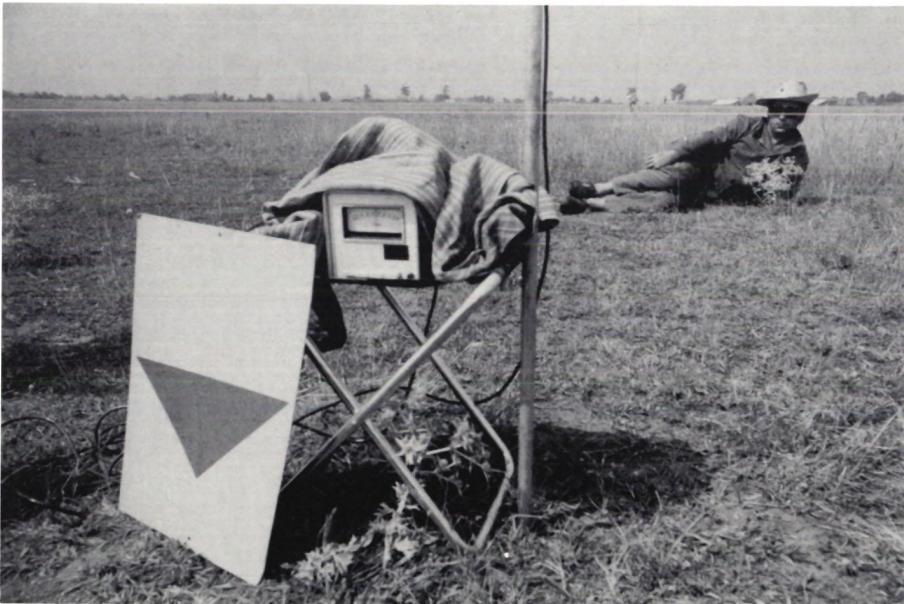
The Swiss team used a new type of thermal detector for the first time. The initial results looked promising!
If you’d like to learn more about these World Championships, check out the excellent report by D. Siebenmann in Aero Revue 10/75 (Ed.)


News from HEBU

TEAM MANAGER "THIS" BOSSHARD
 Rodito Nussbaumer

HORIZON HOBBY/LEMACO NEWS: MICRO OV-10 BRONCO 645 MM BY E-FLITE

PRIDE AND GOOD IDEAS
 Markus Nussbaumer

YOU KNOW WHAT I MEAN? 125 YEARS OF THE SWISS AERO CLUB
 Emil Giezendanner

TRY-OUT DAY AT MFV WETTINGEN
Urs Keller
F3A EUROPEAN CHAMPIONSHIPS IN ST-MACAIRE, FRANCE
 Matthias Bosshard

ATOM, THE NEW DOUBLE-DECKER FROM CPLR
Matthias Bosshard
SUMMER FUN 2026 AT MG USTER
Martin Wunderli
What's New at Leomotion.com

52. 2026 ALPS CUP
Emil Giezendanner
TWIN TOWN PARTNERSHIP
Wolfgang Voeller
34th HAHNENMOOS ALPINE MODEL AIRPLANE CAMP
Res Dauwalder
CORSAIR F4U – A WARBIRD WITH A MEMORABLE LOOK
Jürgen Rosenberger, Jürgen Prinz
SMALL, MODEL-LIKE SAILBOATS
Res Dauwalder
WELCOME, NEW MEMBER!
Andrea Bolliger
FREE FLIGHT IN THE MIDDLE OF SUMMER
Urs Muntwyler
COUPE DES ALPES – OBSERVE AND LEARN
Rodito Nussbaumer
EURO CONTEST GLIDER ACRO TOUR AUSTRIA 2026

BY YOUTH, FOR YOUTH
Lorena Betschen
INSIGHTS INTO THE HISTORY OF SEAPLANES

THE PC-21 STORY
Emil Giezendanner
NEWS FROM HEBU
 Julia Bucher

FROM 0 TO 100
Markus Nussbaumer
MEMORIES
Wolfgang Völler
NOS REGION – A HUB FOR ELECTRIC AVIATION
Emil Giezendanner
DO YOU KNOW WHAT I MEAN IN THE LAND OF SMILES?
Emil Giezendanner
Have you almost forgotten about aircraft that take off and land vertically?
Emil Giezendanner