
3.2 RC Remote Controls (U.S.)
Orbit Electronics Inc. was founded in California by Bob Dunham as early as 1954. By the late 1950s, Orbit Reed systems were already the best-selling remote controls on the American continent.
Reed systems operate using different audio frequencies, each assigned to a specific channel. On the receiver side, Orbit typically used a reed relay to detect this tone and forward the command to the servo. This allowed skilled pilots to fly even complex multi-channel models perfectly through maneuvers using short control pulses.
Around 1963, Orbit introduced one of the first analog proportional systems, the 3+1. However, Orbit did not manage the transition to the proportional era very well. Phil Kraft’s systems were simply too dominant. Nevertheless, a sensation in the form of the Orbit Elite was announced as late as March 1975. It was the first transmitter with a small LCD display, intended to be launched at a price lower than that of Kraft’s Signature Series. Only two prototypes of the Orbit Elite were ever produced. At Christmas 1975, all Orbit employees received a letter announcing the company’s closure at the end of the year.
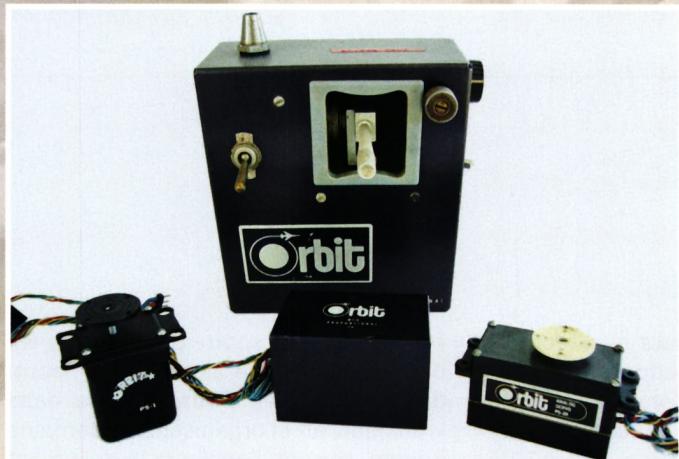
One of the very first proportional systems ever: the Orbit 3+1.
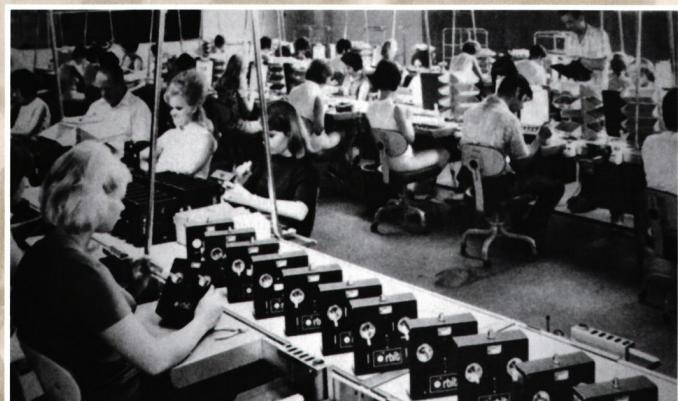
In Switzerland, Orbit systems were distributed by the Streil company. In 1963, a complete 10-channel system—including a transmitter, receiver, and 5 Bonner Transmite servos—cost Fr. 1,850.—.
Bob Dunham himself was a gifted pilot and won the U.S. championship title in multi-channel aerobatics from 1957 to 1959. This allowed him to compete in the first RC1 (F3A) World Championship in Dübendorf in 1960. He finished in 10th place due to an engine stall. His low-altitude backflights over the Dübendorf runway after the competition are legendary and still a topic of conversation today. The Americans’ Ed Kazmirski won this first World Championship with his Orion model and an Orbit system.
urs@leodolter.ch – www.leodolter.ch

EURO CONTEST GLIDER ACRO TOUR AUSTRIA 2026

THE PC-21 STORY
 Emil Giezendanner

TWIN TOWN PARTNERSHIP
 Wolfgang Voeller

SUMMER FUN 2026 AT MG USTER
Martin Wunderli
CORSAIR F4U – A WARBIRD WITH A MEMORABLE LOOK
Jürgen Rosenberger, Jürgen Prinz
52. 2026 ALPS CUP
Emil Giezendanner
YOU KNOW WHAT I MEAN? 125 YEARS OF THE SWISS AERO CLUB
Emil Giezendanner
News from HEBU

TEAM MANAGER "THIS" BOSSHARD
Rodito Nussbaumer
ATOM, THE NEW DOUBLE-DECKER FROM CPLR
 Matthias Bosshard

F3A EUROPEAN CHAMPIONSHIPS IN ST-MACAIRE, FRANCE
Matthias Bosshard
INSIGHTS INTO THE HISTORY OF SEAPLANES

WELCOME, NEW MEMBER!
Andrea Bolliger
What's New at Leomotion.com

PRIDE AND GOOD IDEAS
 Markus Nussbaumer

SMALL, MODEL-LIKE SAILBOATS
Res Dauwalder
FREE FLIGHT IN THE MIDDLE OF SUMMER
Urs Muntwyler
BY YOUTH, FOR YOUTH
Lorena Betschen
HORIZON HOBBY/LEMACO NEWS: MICRO OV-10 BRONCO 645 MM BY E-FLITE

COUPE DES ALPES – OBSERVE AND LEARN
Rodito Nussbaumer
34th HAHNENMOOS ALPINE MODEL AIRPLANE CAMP
Res Dauwalder
TRY-OUT DAY AT MFV WETTINGEN
 Urs Keller

NEWS FROM HEBU
 Julia Bucher

NOS REGION – A HUB FOR ELECTRIC AVIATION
Emil Giezendanner
MEMORIES
 Wolfgang Völler

70 YEARS OF THE NIDWALDEN MODEL AIRPLANE CLUB
Martin Barmettler
A SPECTACULAR F3A WORLD CUP IN THE PRINCIPALITY OF LIECHTENSTEIN
Emil Giezendanner
FROM 0 TO 100
Markus Nussbaumer