
Drive Hat-Trick
Optimized Drive System from Hacker
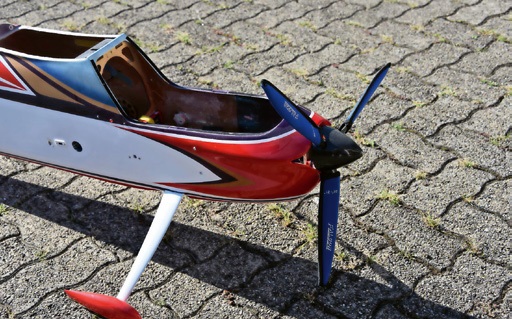
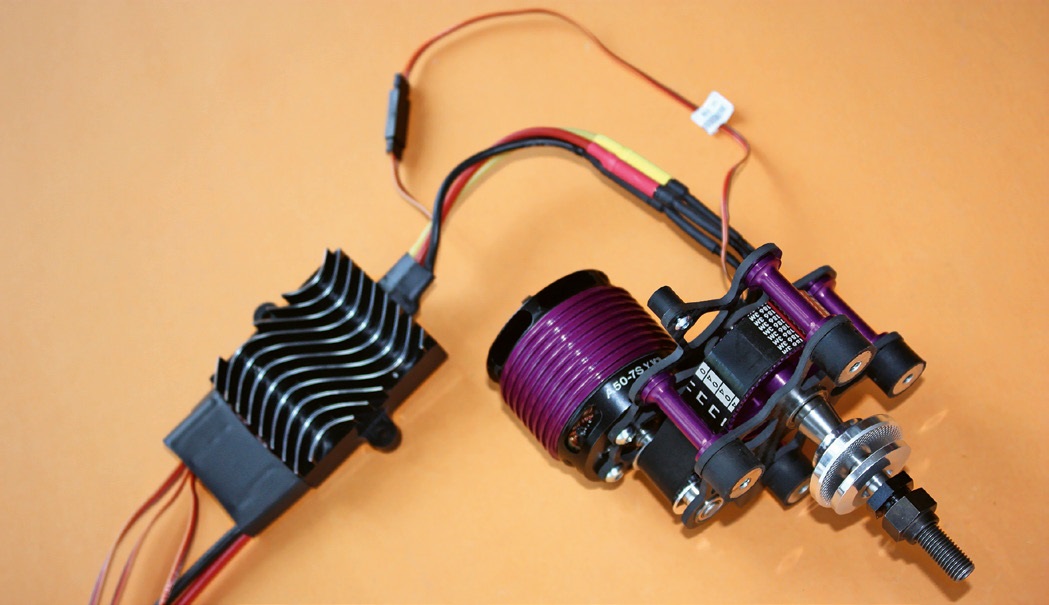
For a long time, it seemed as though not much progress could be made in the field of electric aircraft propulsion. LiPo batteries, MOSFET power electronics, brushless motors—anything goes—even vertical flight, if desired. But development doesn’t have to end in a dead end. Even good things can be further developed—and sometimes even improved. Some time ago, Hacker Brushless Motors launched a new F3A aerobatic powerplant that seems to support this theory. Behind the somewhat cumbersome name A50-7S Y Turbado Senstrol 3.2:1 XGear lies a propulsion system for F3A models that represents more than just a step in the right direction toward the future.
Some things are called by the wrong name but are still understood correctly, because everyone knows what’s meant. For example, a screwdriver doesn’t “pull” screws, and a wood-burning stove shouldn’t be made of wood. Speed controllers for fixed-wing models also fell into this category until now. They’re called “regulators,” but they’re usually “controllers.” They’re used to adjust the speed of the drive motor.
If the pilot pushes the throttle stick (yet another incorrect choice of words) forward, the motor receives more voltage and thus spins faster. How fast depends not only on the stick position but also on other factors: number of cells, motor type (kv), propeller size, and current airspeed.
“Regulation,” on the other hand, would mean using the stick position to set a target RPM that is independent of the factors mentioned above—
is controlled according to the specified parameters and—as far as possible—maintained. This is also the origin of the term “controller,” which is colloquially used in similarly unrelated contexts. True speed control has so far been limited to the helicopter sector, where the rotor speed is intended to remain constant regardless of pitch adjustment and flight maneuvers.
The fact that fixed-wing models are now also benefiting from true speed control is due to the new F3A aerobatics program, which
rewards a flying style in which upward and downward maneuvers are flown at as consistent a speed as possible. Constant-speed flight, in other words! This requires—among other things—that the propeller speed remain unaffected, regardless of whether the model is climbing and the propeller is being slowed down more, or descending and being propelled by the airflow. To venture a comparison—albeit a slightly flawed one: The work of a “real” rotary—
The speed controller works much like a car’s cruise control, which maintains a constant speed regardless of inclines or declines—as long as the engine can manage it. Going downhill, a modern cruise control system first uses engine braking and, if that’s not enough, finally applies the brakes. This happens in a very similar way—only slightly more efficiently—with the electric engine brake, which in this case recovers energy, feeding braking energy back into the battery. Whether this represents a significant contribution to extending flight time, however, remains to be seen.
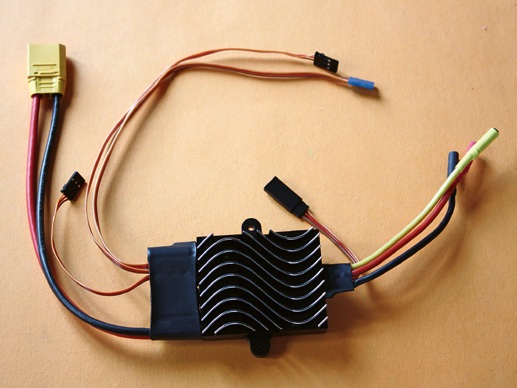
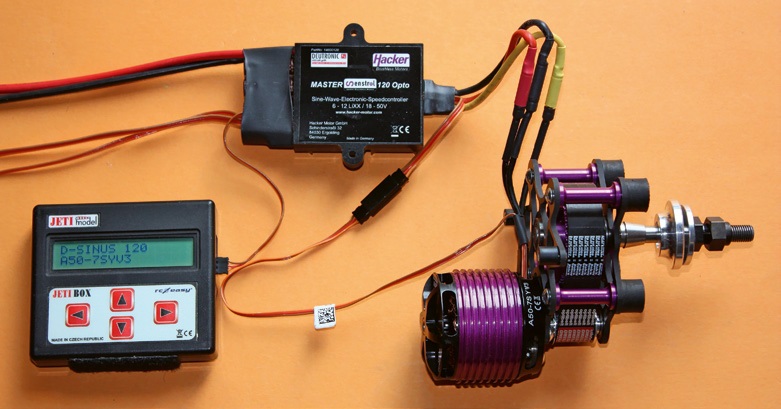
Setting rules requires the ability to verify compliance with specifications. This necessitates a feedback channel. In the A50-7SY drive combination, this feedback is transmitted via an additional cable that connects the motor to the controller using a JR cable. The additional data channel also helps—as will be shown in the next section—with commutation. The data is provided by a motor identification chip in which the relevant motor parameters have been pre-programmed by the manufacturer. The motor temperature is constantly monitored via this channel (limits can be adjusted). You can also adjust the dynamics—that is, the speed at which the throttle stick’s movement is to be implemented. You can choose whether the RPM
should be kept constant or whether the torque should be maintained. In the latter case, a current limit kicks in, which prevents overload even if the propeller is too large. And finally, the Turnado Senstrol controller can, of course, also be operated in the traditional “chopper mode.” As is customary with Hacker, programming is carried out via a Jeti-Box using five different modes. The factory default setting (Mode 1) already includes the option to select all three operating modes via a three-position switch.
When a magnetized rotor rotates, a voltage is induced in the coils surrounding it. This voltage, which is generated by the motor in proportion to its speed, is also referred to as counter-EMF. In the absence of distorting influences, this voltage has a sinusoidal waveform. To operate a motor with good efficiency, the controller must apply a voltage that matches this induced voltage as closely as possible in both shape and magnitude. This is only partially achievable with conventional technology, since the battery simply supplies DC voltage. The controller technology used to date is only capable of converting this battery voltage into a voltage range that is more or less wide—
to divide the voltage blocks so that they are applied to the motor coils alternately with different polarity. This is called block commutation. However, the voltage blocks generated in this way are approximately rectangular in shape, so that the two pulse shapes only partially overlap.
In addition to its simplicity, this method offers the advantage of generating only minimal switching losses in the controller’s transistors, which has a positive effect on the required cooling area. However, one should not rejoice too soon, as the heat losses are simply shifted to the motor.
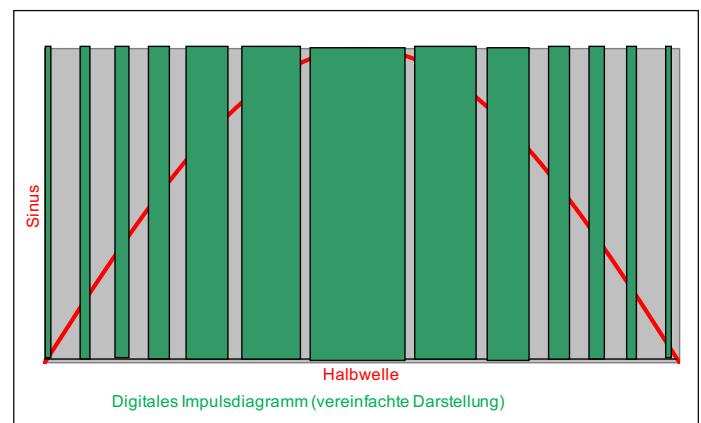
The goal of converting DC voltage into a sinusoidal AC voltage with low losses
cannot—as already indicated—be achieved without additional effort. This involves chopping these voltage blocks—as it were, under a magnifying glass—into even finer segments and subjecting them to pulse-width modulation (PWM). The sine half-wave is generated with the help of the motor’s inductance by varying the duty cycle: initially short pulses that gradually lengthen until they reach the peak, and then shorten again on the falling edge. It stands to reason that this must result in additional switching losses in the controller. In return, the motor receives a voltage that better matches its counter-EMF. →
So is it just a loss-inducing transfer station between the controller and the motor? Not quite—especially if you value high motor torque over a longer period of time, sinusoidal commutation is advantageous. Of course, it’s more complex from a circuit design perspective and can no longer be implemented without a corresponding rotor position sensor in the motor. Since a more detailed explanation would go beyond the scope of this publication, those interested are referred to the following link: <https://support.maxongroup.com/hc/de/articles/360006288554-St%C3%A4rke-eines-BLDC-EC-Motors-bei-Sinuskommutierung>
An additional advantage of sinusoidal commutation is the associated reduction in drive noise. You have surely already noticed that brushless motors—
These motors—particularly those with multiple poles, large diameters, and an open design—tend to “sing” when the rotor is in certain positions. This acoustic effect has been used as a programming aid since the dawn of electronic control technology. However, the “speaker” in the engine requires additional energy and should remain quiet during actual operation.
Partly for this reason, aerobatic pilots also describe this particular propulsion system as pleasantly quiet in operation. Of course, the predominant use of three-bladed propellers also contributes to this. In the currently regulated 10-second setups, these propellers have a diameter of 20" and a pitch of up to 15". In commercial applications, noise reduction is of far greater importance. After all, who wants a machine that’s constantly singing to you?
Until the beginning of the 21st century, the mechanical reduction gearbox was virtually indispensable for high-performance
, mechanical reduction gearboxes were virtually indispensable. This changed for the first time with the advent of LRK external-rotor motors starting in 2000. The increased torque required for the use of efficient propellers was now, so to speak, delivered right to your doorstep. Simple gearbox designs became obsolete. Specialized applications have survived, mostly in the form of high-quality planetary gear sets. After all, it’s still better (and usually cheaper) to maximize an electric motor’s performance by operating closer to its speed limit than to have to increase the motor’s size. Despite the additional gears and gearbox frames, this can actually save weight—if you approach it the right way. Ultimately, this type of speed adjustment also allows the motor to operate closer to its maximum efficiency, which naturally saves energy and reduces motor heating. However, this approach isn’t without its drawbacks, as this type of drive system proves to be
less flexible in terms of speed compared to direct-drive systems; you’re limited to a narrower speed range.
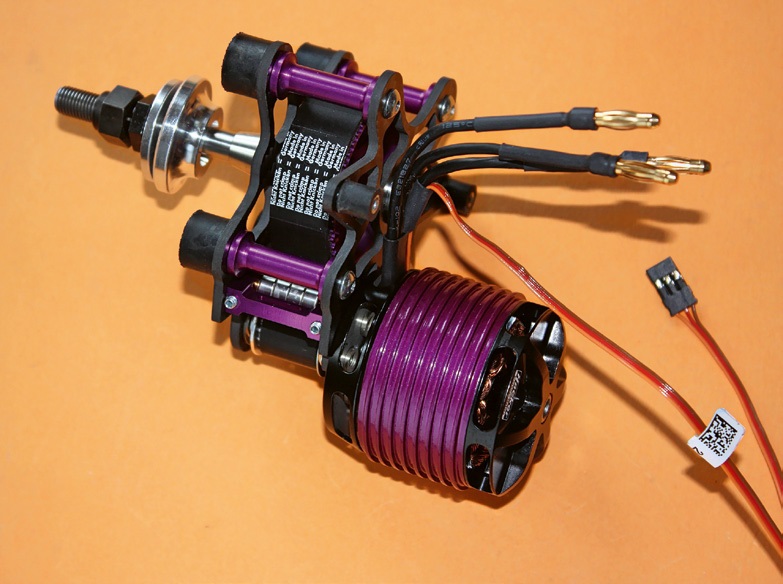
Hacker opted for a toothed belt drive. It reduces the motor speed by a ratio of 3.2:1. A 16-mm-wide Optibelt belt with a tooth pitch of 2.5 mm is used. Timing belt drives are low-maintenance and run quietly, provided the speed remains within limits. This applies to the A50-7S Y Turnado Senstrol 3.2:1 XGear drive system, as a maximum motor speed of 9,000 rpm can be considered moderate. Thanks to bearing shells made of 2.5-mm carbon fiber material and aluminum gears with a material-saving milled design on the large gear, the increase in weight remains minimal. Due to the nature of the system, users of a timing belt reduction must accept a slightly larger shaft offset. Here, it amounts to 42 mm. To ensure sufficient wrap around the small pulley, a belt tensioner consisting of four ball bearings is used. Installation is carried out using rubber-elastic elements, so that noise levels are also kept to a minimum—
The A50-7S Y Turnado Senstrol 3.2:1 XGear from Hacker undoubtedly represents a real breakthrough in electric model propulsion technology for aerobatics. In addition to the position control function, it is now possible to truly regulate—and thus also limit—speed or torque,
which reduces the risk of mismatching, for example due to oversized propellers. Thanks to sinusoidal commutation, the external rotor motor used can be further optimized for quieter operation and higher specific torque. The use of a weight- and noise-optimized toothed belt reduction ratio allows for the use of a smaller motor, which—despite its increased efficiency—
particularly benefits from the cooling airflow within the model. Thanks to the gearbox, the comparatively small motor (50 series) can replace larger motors (e.g., 80 series) in this application.
All in all, a triple leap forward. In some circles, this is also referred to as a “hat trick.”


News from HEBU

TEAM MANAGER "THIS" BOSSHARD
 Rodito Nussbaumer

YOU KNOW WHAT I MEAN? 125 YEARS OF THE SWISS AERO CLUB
 Emil Giezendanner

F3A EUROPEAN CHAMPIONSHIPS IN ST-MACAIRE, FRANCE
 Matthias Bosshard

52. 2026 ALPS CUP
Emil Giezendanner
PRIDE AND GOOD IDEAS
 Markus Nussbaumer
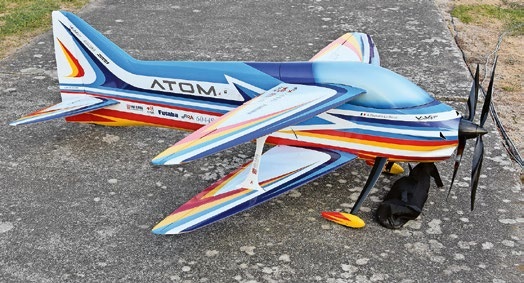
ATOM, THE NEW DOUBLE-DECKER FROM CPLR
Matthias Bosshard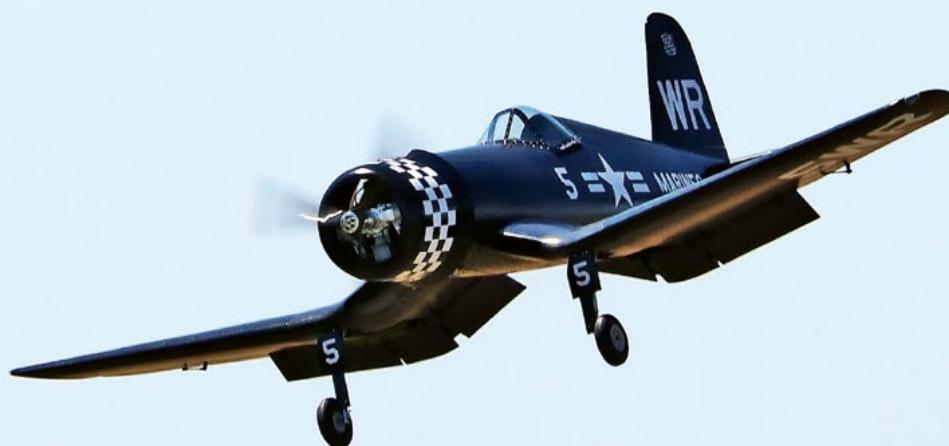
CORSAIR F4U – A WARBIRD WITH A MEMORABLE LOOK
Jürgen Rosenberger, Jürgen Prinz
SUMMER FUN 2026 AT MG USTER
Martin Wunderli
TRY-OUT DAY AT MFV WETTINGEN
Urs Keller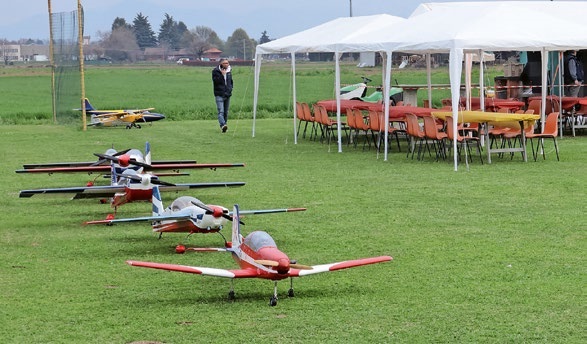
TWIN TOWN PARTNERSHIP
Wolfgang Voeller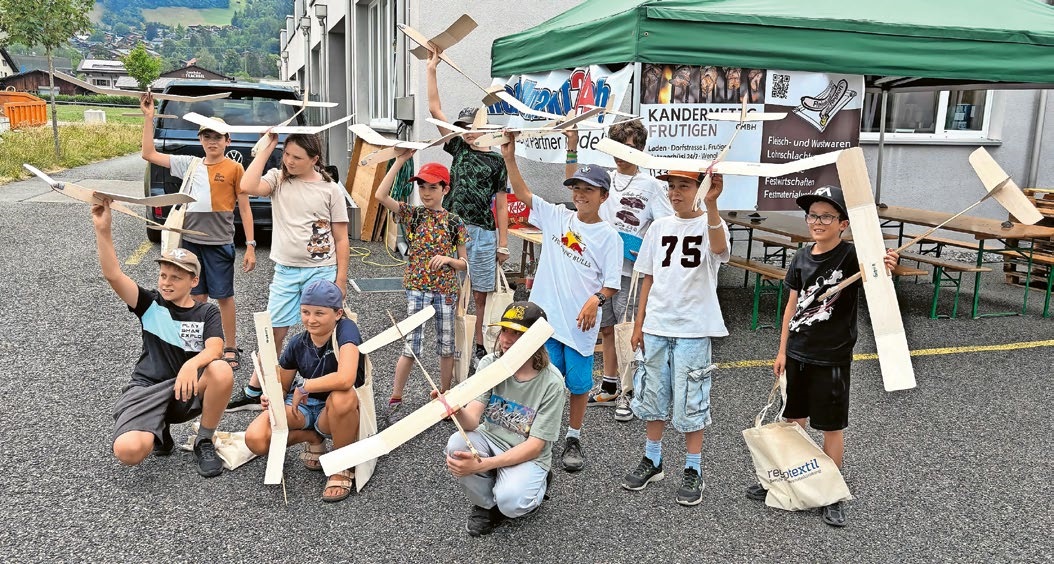
BY YOUTH, FOR YOUTH
Lorena Betschen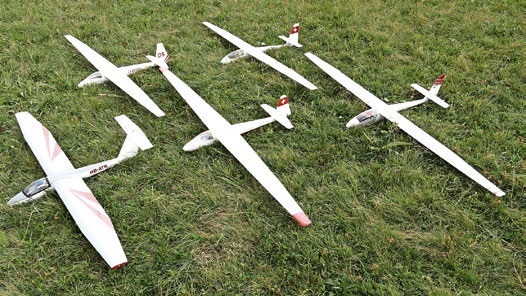
SMALL, MODEL-LIKE SAILBOATS
Res Dauwalder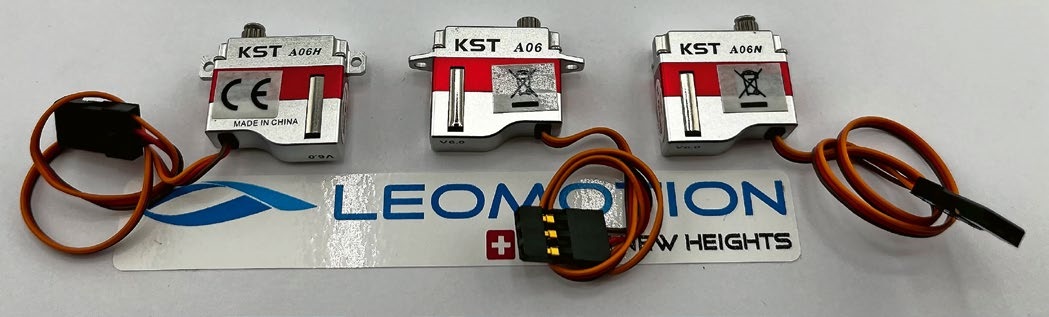
What's New at Leomotion.com
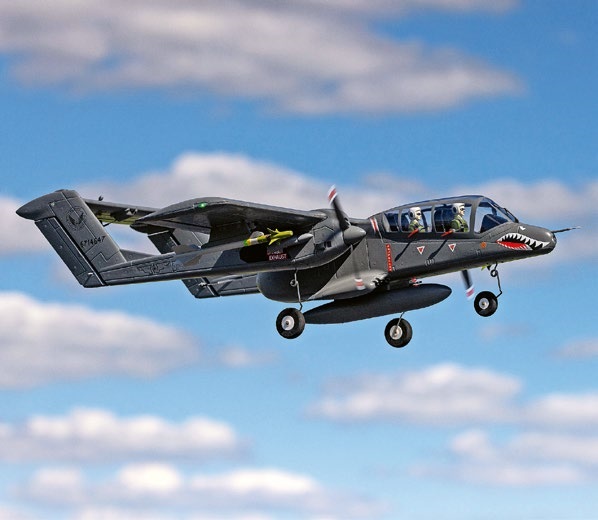
HORIZON HOBBY/LEMACO NEWS: MICRO OV-10 BRONCO 645 MM BY E-FLITE

COUPE DES ALPES – OBSERVE AND LEARN
Rodito Nussbaumer
EURO CONTEST GLIDER ACRO TOUR AUSTRIA 2026
INSIGHTS INTO THE HISTORY OF SEAPLANES

34th HAHNENMOOS ALPINE MODEL AIRPLANE CAMP
Res Dauwalder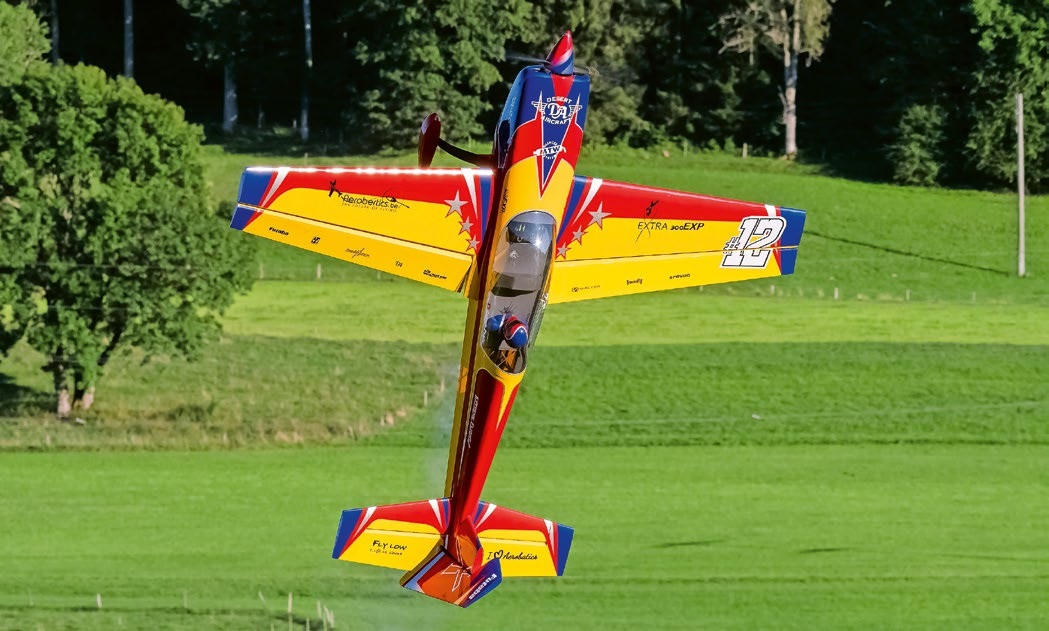
WELCOME, NEW MEMBER!
Andrea Bolliger
FREE FLIGHT IN THE MIDDLE OF SUMMER
Urs Muntwyler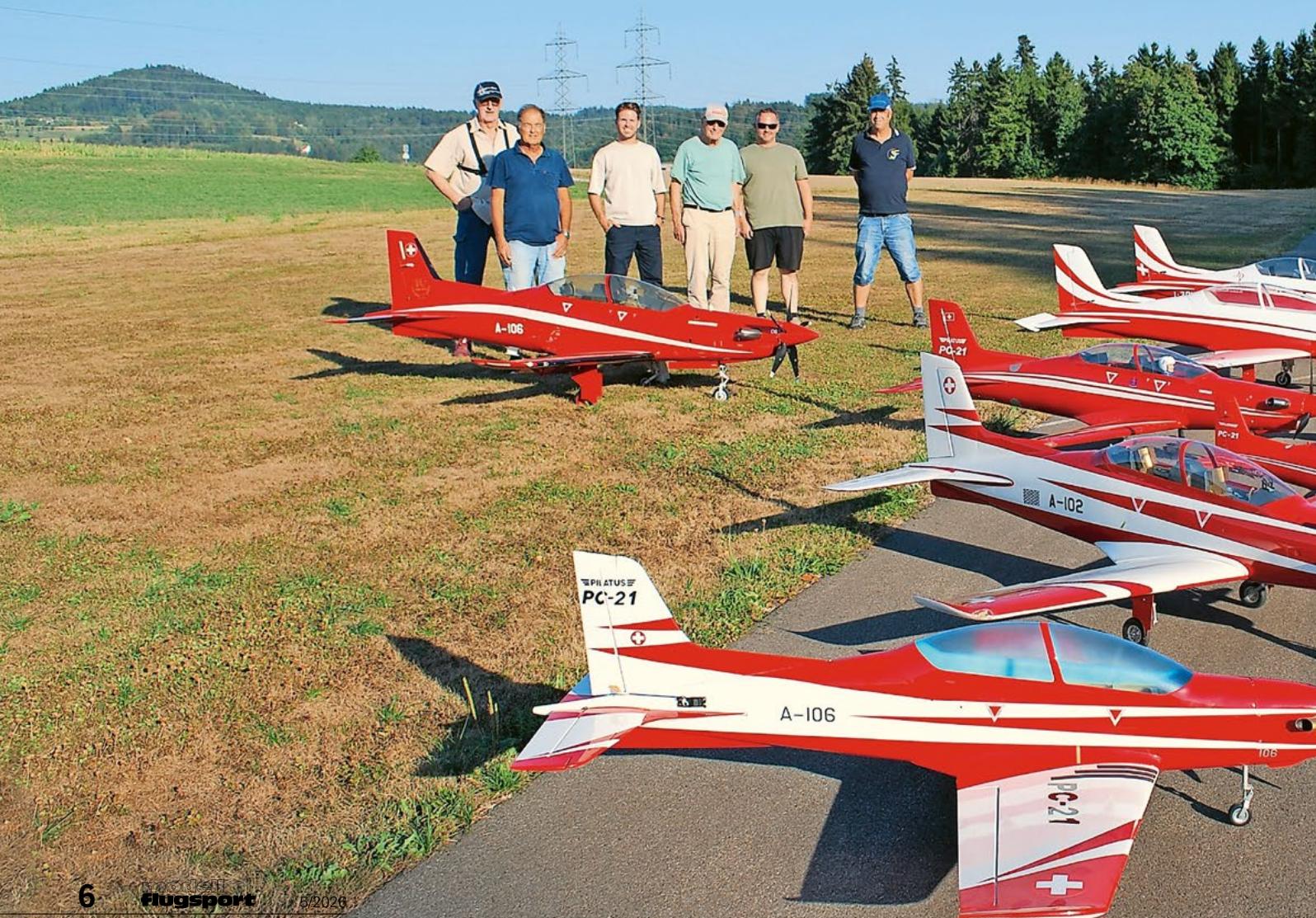
THE PC-21 STORY
Emil Giezendanner
NEWS FROM HEBU
 Julia Bucher

FROM 0 TO 100
Markus Nussbaumer
MEMORIES
Wolfgang Völler
NOS REGION – A HUB FOR ELECTRIC AVIATION
Emil Giezendanner
Have you almost forgotten about aircraft that take off and land vertically?
Emil Giezendanner
DO YOU KNOW WHAT I MEAN IN THE LAND OF SMILES?
Emil Giezendanner