
Memories, memories
Memories, memories—
I carry you in my
heart—And you bring
back to life—All my dreams
of happiness...
It’s strange—Johnny Hallyday sang that, even though he’d never experienced a lockdown! Maybe he thought, like every generation, that things were better back then. There’s a certain nostalgia in the air these days among model airplane enthusiasts, and we’re seeing a resurgence of a few “cult” planes. Just mentioning the stars of our early days in our clubs—the Amigo II, the Dandy, the Topsy, the Cirrus—quickly gets people talking and brings back memories. I’ve enjoyed unfolding the plans for the models from that era, studying them, and wondering how to bring them back into fashion a bit.
The Linth Model Club published an article in the latest
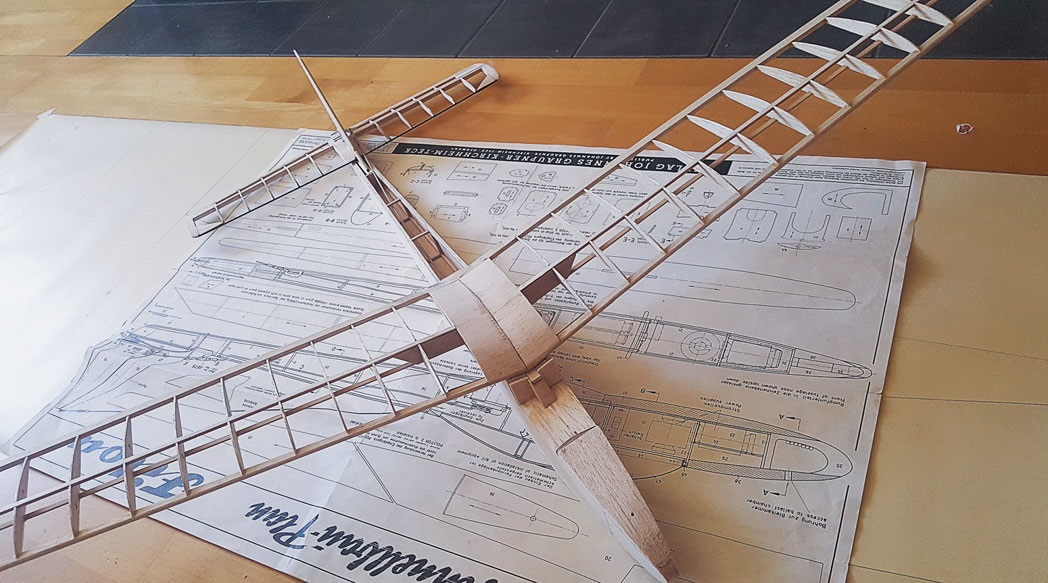
issue of MFS about a working group that met every two weeks to bring the Graupner Cirrus back to life under the expert guidance of Sepp and Christoph Mächler. They created a Slack group where everyone could post updates on their build and ask any questions they might have. Not everyone has the same amount of time available, so this allows each person to build at their own pace. We’re talking about a project requiring about 100 hours of work. The decision was to preserve the retro look while using modern materials. A lot of preliminary work went into creating a fuselage mold to replace the original brittle ABS with fiberglass. We opted to use carbon fiber in the stringers and formwork to allow for a thinner profile and improve the glider’s performance. A huge amount of preparation work was required before the class began.
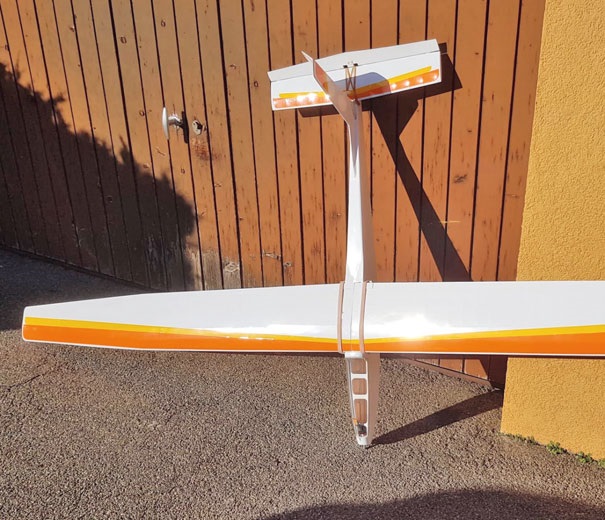
Other individual projects have been carried out in French-speaking Switzerland. It is important for these builders to make themselves known. To recreate the past
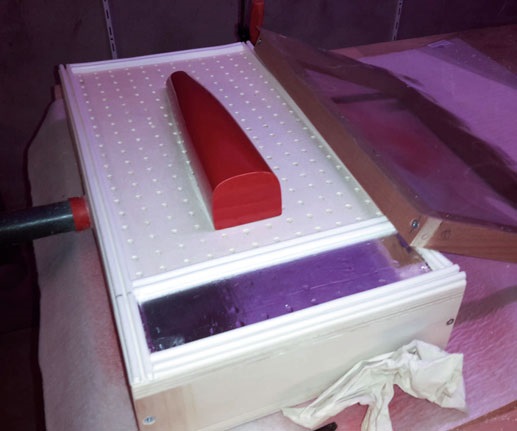
using new technology, certain skills must be acquired. One obstacle, for example, is the simple transparent glass roof of a model: for some, this is a task
For some, it's easy; for others, it's helpful to set up a small vacuum-forming setup and conduct their own experiments.
It is often straightforward to replicate the typically very rectangular shapes of the wooden fuselages from that era. But CAD design and cutting via milling or laser are now among the modern possibilities. Fablabs will be a great help, as they have the expertise and digital cutting tools. But if you need to make a fuselage mold, it’s best to check first to see if one already exists—it’ll save you a lot of work!
As for the wings, I’ve already mentioned in these columns a design software program accessible to everyone: Winghelper. With it, you can either print your ribs to scale on paper or, with no extra effort, export the cutting files.
A vintage model aircraft meet-up is scheduled for Saturday, August 29, at the Vuillerens airfield. Let’s hope this event can take place in compliance with health and safety guidelines and social distancing rules, of course.


News from HEBU

TEAM MANAGER "THIS" BOSSHARD
 Rodito Nussbaumer

YOU KNOW WHAT I MEAN? 125 YEARS OF THE SWISS AERO CLUB
 Emil Giezendanner

HORIZON HOBBY/LEMACO NEWS: MICRO OV-10 BRONCO 645 MM BY E-FLITE

PRIDE AND GOOD IDEAS
 Markus Nussbaumer

34th HAHNENMOOS ALPINE MODEL AIRPLANE CAMP
Res Dauwalder
TRY-OUT DAY AT MFV WETTINGEN
Urs Keller
F3A EUROPEAN CHAMPIONSHIPS IN ST-MACAIRE, FRANCE
 Matthias Bosshard

52. 2026 ALPS CUP
Emil Giezendanner
ATOM, THE NEW DOUBLE-DECKER FROM CPLR
Matthias Bosshard
SUMMER FUN 2026 AT MG USTER
Martin Wunderli
What's New at Leomotion.com

THE PC-21 STORY
Emil Giezendanner
COUPE DES ALPES – OBSERVE AND LEARN
Rodito Nussbaumer
TWIN TOWN PARTNERSHIP
Wolfgang Voeller
EURO CONTEST GLIDER ACRO TOUR AUSTRIA 2026

BY YOUTH, FOR YOUTH
Lorena Betschen
CORSAIR F4U – A WARBIRD WITH A MEMORABLE LOOK
Jürgen Rosenberger, Jürgen Prinz
SMALL, MODEL-LIKE SAILBOATS
Res Dauwalder
WELCOME, NEW MEMBER!
Andrea Bolliger
FREE FLIGHT IN THE MIDDLE OF SUMMER
Urs Muntwyler
INSIGHTS INTO THE HISTORY OF SEAPLANES

NEWS FROM HEBU
 Julia Bucher

FROM 0 TO 100
Markus Nussbaumer
MEMORIES
Wolfgang Völler
NOS REGION – A HUB FOR ELECTRIC AVIATION
Emil Giezendanner
DO YOU KNOW WHAT I MEAN IN THE LAND OF SMILES?
Emil Giezendanner
A SPECTACULAR F3A WORLD CUP IN THE PRINCIPALITY OF LIECHTENSTEIN
Emil Giezendanner