
Diverse Educational Pathways in Aviation
About two-thirds of our professionals completed their basic vocational training through an apprenticeship, and many of them—in addition to gaining in-depth practical experience—have progressed to the most demanding roles through subsequent continuing education.
Today, young professionals are faced with an almost endless array of opportunities for continuing professional development. In particular, the programs offered as part of so-called higher vocational education are often known only to those in the know. Higher vocational education includes the federal diplomas—the Federal Certificate of Competence—as well as higher vocational schools (HF). Those interested in aviation can find the latter educational option at Zurich Airport.
In addition to universities of applied sciences (FH), which require a vocational baccalaureate for admission, higher vocational schools (HF) have gained tremendous importance in recent years. Graduates of HF programs can be found in virtually every sector of the economy. The spectrum ranges from nursing, caregiving, and therapeutic professions to
Business, business administration, transportation, and tourism, all the way through to engineering. Most HF programs are designed to be taken while working, allowing students to continuously test and apply their theoretical knowledge in practice and to support themselves financially. Part-time programs last three years, while full-time programs last two years, although the latter do not cover all fields of study. The enormous potential inherent in this educational—
Vocational Training and Continuing Education in the Aerospace Industry (in very simple terms)

Unfortunately, the potential of this educational model is unjustly underestimated—especially abroad.
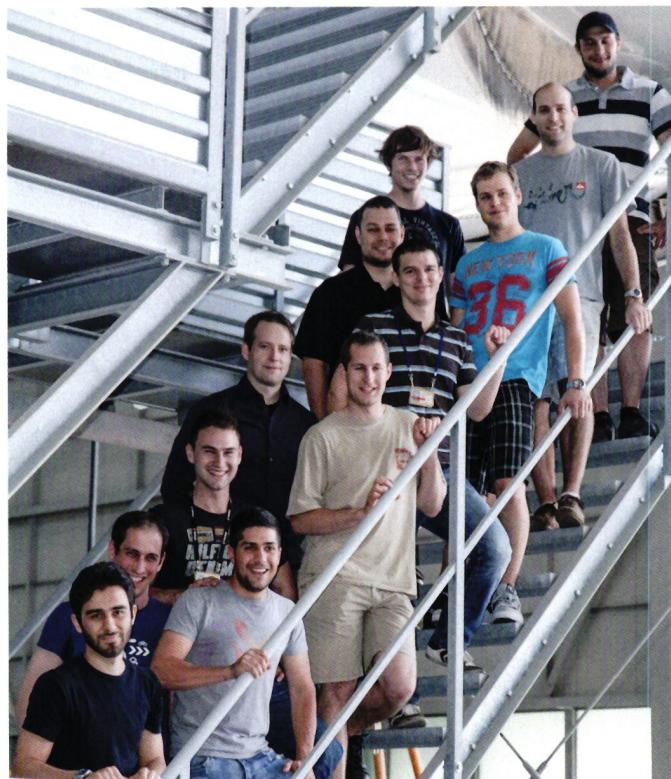
As soon as they enter the SR Technics Training Center, FTS students step into the world of the airport. To access the buildings within the airport’s security zone, they go through security checks at the entrance. On their way to their classrooms, they then encounter the unvarnished reality of everyday work in aircraft maintenance at every turn. In numerous workshops, individual components are overhauled; in the hangars, aircraft are undergoing maintenance and overhaul; and in the offices, staff calculate, design, plan, organize, communicate, and sell.
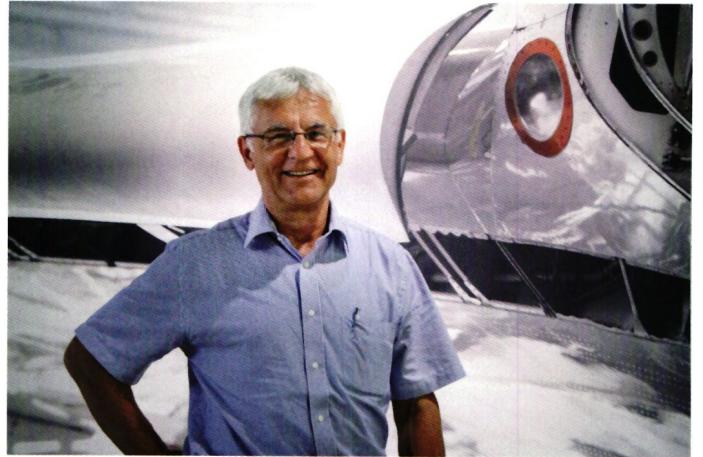
Willy Sonderer heads the Aircraft Technician School, which is located in the seemingly endless facilities of SR Technics at Kloten Airport. He also serves as the head of basic vocational training (formerly vocational apprenticeship) at SR Technics. “Although the Aircraft Technician School is small,” says Willy Sonderer, “it has
"the great advantage of hands-on learning. For example, when the course covers engines, the classroom is quickly transformed into an engine workshop, and students can put what they've learned to the test in a practical setting."
Like all higher vocational schools, enrollment at the FTS requires completion of basic vocational training—or, in short, an apprenticeship. Anyone wishing to enter the field of aircraft engineering should have a basic technical education and a strong interest in the world of aviation. Many students have already completed their basic vocational training in the aircraft industry or are already holding positions of responsibility there. Anyone who chooses this program should be aware that—in addition to classes at school—they will need to invest a significant amount of their free time.
As with all levels of vocational education and training, the federal government is also responsible for training programs at higher technical colleges . This means that the Federal Office for Vocational Education and Training (BBT) issues guidelines regarding admission requirements, program duration, costs, and so on. The program to become a Certified Aircraft Technician at the FTS in Kloten is designed for working professionals and begins once a year in the fall. During the first two semesters of the 6-semester program, students primarily review and deepen their understanding of foundational subjects such as mathematics, physics, German, and English, as well as process management and business administration . The actual challenging aviation-related subjects—such as design and strength of materials, materials science, fluid mechanics, thermodynamics, structures, and engines—follow. Semester grades determine admission to the next semester, and the two subsequent preliminary diploma exams determine admission to the diploma exams.
Technicians with a Higher Vocational Diploma (HF) in Aircraft Technology are responsible for
Training and Continuing Education at SR Technics
Quote from the website: “SR Technics is one of the world’s leading independent providers of technical services in civil aviation. The group offers airlines comprehensive, customized solutions for the technical maintenance of aircraft fleets, aircraft components, and engines, as well as VIP completion services. It is headquartered at Zurich Airport.”
SR Technics is not only the largest industrial company in the Zurich Unterland region but, as a provider of basic vocational training for a dozen occupations and with over 160 apprentices, is also among the leading companies in vocational training in the canton of Zurich and likely throughout Switzerland as well. Furthermore, the SR Technics training center also trains apprentices from other aviation companies such as JET Aviation and Swiss, and offers specialized courses for the vocational examination and licensing (EASA Part-66) to become an aircraft mechanic. Running an aircraft technician school is the logical consequence of the company’s training-oriented business strategy.
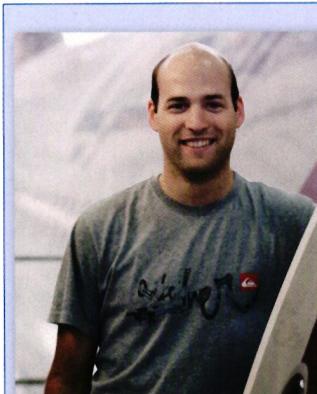
He is 27 years old and has completed an apprenticeship as a polymechanic. He has been working as a licensed (B1) aircraft mechanic at SR Technics since 2004. His part-time schedule, consisting of 80% shift work, allows him enough time to devote to his studies. He sees his future in the fields of engineering and planning.
Trained to assume leadership responsibilities. Since aircraft engineering is one of the most versatile fields in the aviation industry, a well-trained specialist has access to an almost unlimited number of specializations, ranging from aircraft engines to avionics, hydraulics, and aircraft structures. In addition, there are career opportunities in design, quality assurance, or as an instructor—for example, in pilot training, etc.
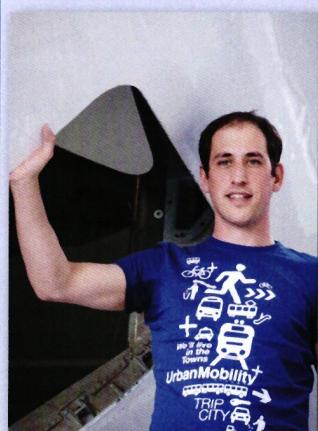
He is 27 years old and works as a trained electrician at the Pilatus factory. As a former conscript in the Air Force in Payerne, he has focused his entire career on aviation. His work involves both the production of the PC-12 and the maintenance of the entire fleet. He works 80% of full-time hours. He would like to move into project management in the future.
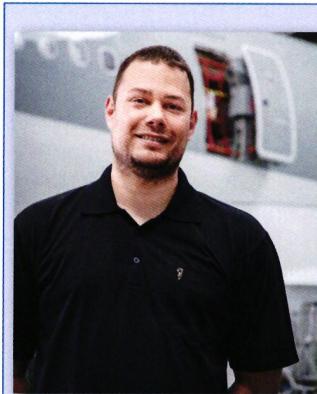
The trained electroplater is 30 years old and works at SR Technics in engine repair development. Until he graduates in 2013, he will be working part-time at 90% capacity. He appreciates the camaraderie in his class. Everyone helps each other out.
Higher Vocational Schools (HF) offer a wide range of post-diploma programs (NDS), for example in business administration, marketing, controlling, etc. Those who are willing to continue their studies have the opportunity to enter the first semester of the aviation program at ZHAW Winterthur, www.engineering.zhaw.ch/studium/bachelor/aviatik, and complete a Bachelor’s degree in Aviation there. ■
E. Giezendanner


News from HEBU

TEAM MANAGER "THIS" BOSSHARD
 Rodito Nussbaumer

YOU KNOW WHAT I MEAN? 125 YEARS OF THE SWISS AERO CLUB
 Emil Giezendanner

F3A EUROPEAN CHAMPIONSHIPS IN ST-MACAIRE, FRANCE
 Matthias Bosshard

HORIZON HOBBY/LEMACO NEWS: MICRO OV-10 BRONCO 645 MM BY E-FLITE

PRIDE AND GOOD IDEAS
 Markus Nussbaumer

34th HAHNENMOOS ALPINE MODEL AIRPLANE CAMP
Res Dauwalder
TRY-OUT DAY AT MFV WETTINGEN
Urs Keller
52. 2026 ALPS CUP
Emil Giezendanner
EURO CONTEST GLIDER ACRO TOUR AUSTRIA 2026

ATOM, THE NEW DOUBLE-DECKER FROM CPLR
Matthias Bosshard
CORSAIR F4U – A WARBIRD WITH A MEMORABLE LOOK
Jürgen Rosenberger, Jürgen Prinz
SUMMER FUN 2026 AT MG USTER
Martin Wunderli
What's New at Leomotion.com

THE PC-21 STORY
Emil Giezendanner
COUPE DES ALPES – OBSERVE AND LEARN
Rodito Nussbaumer
TWIN TOWN PARTNERSHIP
Wolfgang Voeller
BY YOUTH, FOR YOUTH
Lorena Betschen
SMALL, MODEL-LIKE SAILBOATS
Res Dauwalder
WELCOME, NEW MEMBER!
Andrea Bolliger
FREE FLIGHT IN THE MIDDLE OF SUMMER
Urs Muntwyler
INSIGHTS INTO THE HISTORY OF SEAPLANES

NEWS FROM HEBU
 Julia Bucher

FROM 0 TO 100
Markus Nussbaumer
MEMORIES
Wolfgang Völler
NOS REGION – A HUB FOR ELECTRIC AVIATION
Emil Giezendanner
DO YOU KNOW WHAT I MEAN IN THE LAND OF SMILES?
Emil Giezendanner
A SPECTACULAR F3A WORLD CUP IN THE PRINCIPALITY OF LIECHTENSTEIN
Emil Giezendanner