
Scale Models


Scale models are built either using model kits or construction plans purchased from specialty stores, or—especially for higher-level competitions—based on the builder’s own research and self-drawn construction plans.
In a competition, judges evaluate both the accuracy of the replica and the model’s in-flight performance. For the latter, the pilot can put together a flight program consisting of several basic maneuvers that matches the chosen prototype.
Specially trained experts serve as judges for the construction evaluation; they are largely unbiased and primarily look for deviations from the original.
The basis for the judges’ evaluation is documentation—including plans, photos, color samples, etc.—that the participant must provide.
F4C stands for the classic international discipline of scale-accurate radio-controlled replicas. The maximum takeoff weight here, excluding fuel or the power battery, is 12 kg, which requires extremely lightweight construction depending on the scale of the replica.
Noise levels are also subject to certain limits—as is the case in virtually all areas of model aviation—and compliance with these limits is verified using sophisticated technology.
Judging consists of a static evaluation of the replica’s accuracy and a total of three scored flights.
Regardless of the final ranking in a competition, most modelers would not dare to fly these designs, as the construction effort often amounts to thousands of hours!
F4C Large and similar disciplines feature particularly large-scale replicas with a maximum takeoff weight of 30 kg.
One of the most significant trends involves the construction of warbirds—that is, vintage fighter aircraft and bombers—which are replicated not so much for their original operational purposes but rather for their historical significance in the development of manned aviation.
The large scale of these replicas—with wingspans starting at two meters and engines exceeding 100 ccm and delivering several PS—gives the models flight characteristics that make them appear particularly realistic in the air.
It goes without saying that the construction and operation of these models place special demands on the technology involved.
Jets represent the newest class within the realm of scale replicas.
They are powered by jet turbines, which run on gas during startup and switch to kerosene once they reach operating temperature. Electrically powered turbines—so-called “electrompellers”—are also becoming increasingly common.
As with their full-scale counterparts, jet propulsion enables flight speeds far exceeding those typical of propeller-driven aircraft. For this reason alone, the construction and operation of these models require particular care.
Special attention must be paid to the integrated electronic systems for turbine control and the often complex pneumatic systems for operating retractable landing gear and the wheel brakes required due to static thrust.
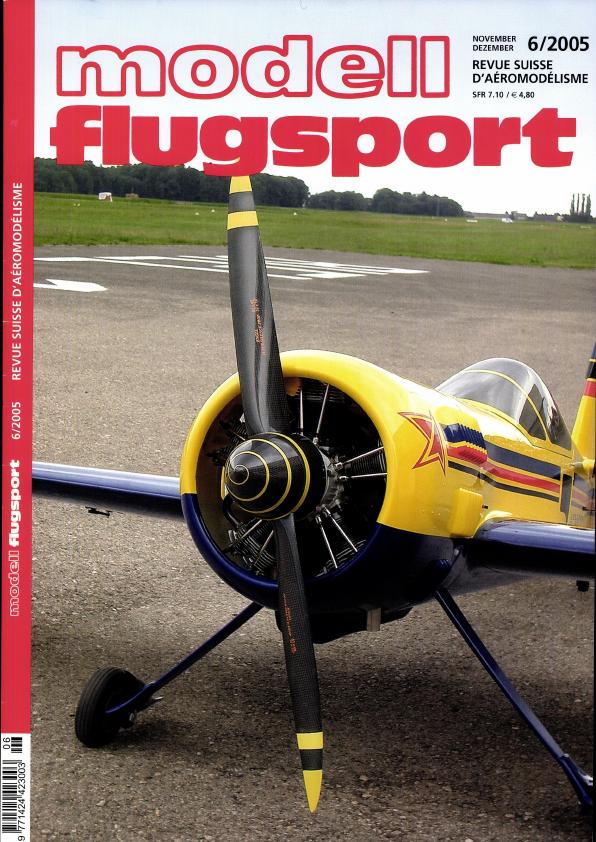

EURO CONTEST GLIDER ACRO TOUR AUSTRIA 2026

THE PC-21 STORY
 Emil Giezendanner

TWIN TOWN PARTNERSHIP
 Wolfgang Voeller

SUMMER FUN 2026 AT MG USTER
Martin Wunderli
CORSAIR F4U – A WARBIRD WITH A MEMORABLE LOOK
Jürgen Rosenberger, Jürgen Prinz
52. 2026 ALPS CUP
Emil Giezendanner
YOU KNOW WHAT I MEAN? 125 YEARS OF THE SWISS AERO CLUB
Emil Giezendanner
News from HEBU

TEAM MANAGER "THIS" BOSSHARD
Rodito Nussbaumer
ATOM, THE NEW DOUBLE-DECKER FROM CPLR
 Matthias Bosshard

F3A EUROPEAN CHAMPIONSHIPS IN ST-MACAIRE, FRANCE
Matthias Bosshard
INSIGHTS INTO THE HISTORY OF SEAPLANES

WELCOME, NEW MEMBER!
Andrea Bolliger
What's New at Leomotion.com

PRIDE AND GOOD IDEAS
 Markus Nussbaumer

SMALL, MODEL-LIKE SAILBOATS
Res Dauwalder
FREE FLIGHT IN THE MIDDLE OF SUMMER
Urs Muntwyler
BY YOUTH, FOR YOUTH
Lorena Betschen
HORIZON HOBBY/LEMACO NEWS: MICRO OV-10 BRONCO 645 MM BY E-FLITE

34th HAHNENMOOS ALPINE MODEL AIRPLANE CAMP
Res Dauwalder
COUPE DES ALPES – OBSERVE AND LEARN
Rodito Nussbaumer
TRY-OUT DAY AT MFV WETTINGEN
 Urs Keller

NEWS FROM HEBU
 Julia Bucher

NOS REGION – A HUB FOR ELECTRIC AVIATION
Emil Giezendanner
MEMORIES
 Wolfgang Völler

70 YEARS OF THE NIDWALDEN MODEL AIRPLANE CLUB
Martin Barmettler
A SPECTACULAR F3A WORLD CUP IN THE PRINCIPALITY OF LIECHTENSTEIN
Emil Giezendanner
FROM 0 TO 100
Markus Nussbaumer