
Our "Yes" and "No" to Performance
Dear Reader
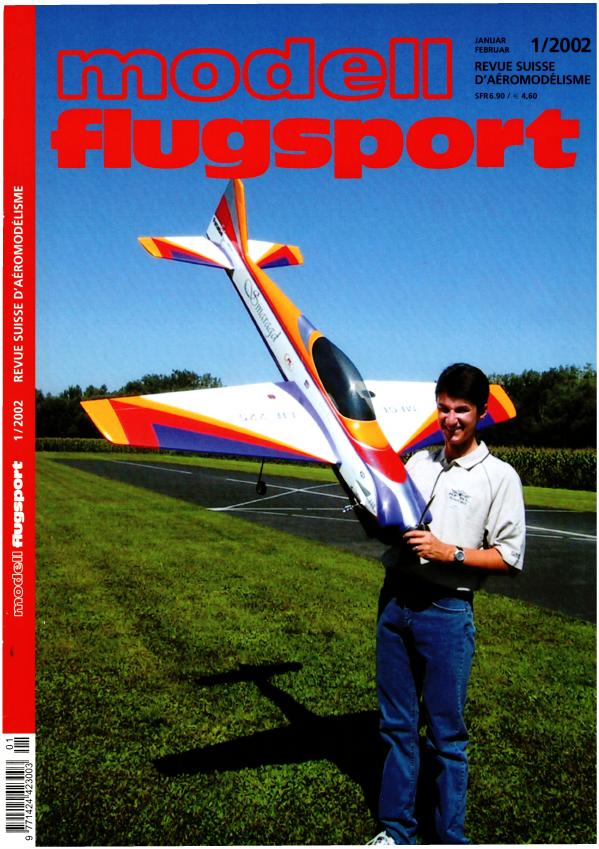
The cover story of this issue is dedicated to RC aerobatics. RC aerobatics—or remote-controlled aerobatics with combustion-engine models, known as F3A for short—is the oldest FAI World Championship category for RC models. Whatever your stance on model flying as a competitive sport, aerobatics has always been a very special challenge, whether with manned aircraft or model airplanes. Even the casual hobbyist can’t resist conjuring up the occasional maneuver in the sky. At air shows, aerobatics—sometimes of the very finest quality—are also performed by people who are never seen at championships. Performing an artistic routine with a glider model in front of an audience—accompanied by music and smoke, and culminating in an elegant precision landing—requires at least as much training and experience as competing in official events. In elite sports, the goal isn’t just rankings and medals, but also the certainty of having achieved something
accomplished something worthwhile. This kind of athletic satisfaction, however, hardly differs from the good feeling after a challenging slope-soaring flight or a controlled jet landing. Without a doubt, there are certain differences between the personality profiles of competitive and recreational model aviators. But it is equally certain that such differences are often exaggerated. The question of whether it is competitive or recreational sport is just as pointless in model flying as it is in other recreational areas. On the other hand, competitive sport must be clearly defined as such—and, conversely, of course, so must the hobby. There is nothing worse than a vague, half-hearted approach in this regard. Competitive sports are always based on recognized rules established by regional, national, or international sports organizations. In friendly hobby competitions—which hold a significance in terms of flying, technical skill, and social interaction that should not be underestimated—the participants set their own rules. Even the sports associations themselves are torn between high-level competition and
or performance and enjoyment. Modern and successful organizations have long recognized that keeping up on the international stage tolerates no half-measures, and once a commitment to competitive sports is made, clear divisions of responsibility are established. Thus, in most sports federations, the entire process of promoting young talent and guiding them to the top takes place within the cantonal or regional associations, and only the support and promotion of international teams generally fall directly under the purview of the national organizations. Such solutions will also have to be implemented in the Aero-Club, which, as is well known, claims sole authority over sports. It goes without saying that more of its financial resources will have to be channeled into sports. As I have tried to explain using the example of modern sports federations, it does not have to undertake this task alone but must rely on its regional federations; after all, decentralizing tasks in a sensible way also means saving costs.
Sincerely,
Emil Ch. Giezendanner

EURO CONTEST GLIDER ACRO TOUR AUSTRIA 2026

THE PC-21 STORY
 Emil Giezendanner

TWIN TOWN PARTNERSHIP
 Wolfgang Voeller

SUMMER FUN 2026 AT MG USTER
Martin Wunderli
CORSAIR F4U – A WARBIRD WITH A MEMORABLE LOOK
Jürgen Rosenberger, Jürgen Prinz
52. 2026 ALPS CUP
Emil Giezendanner
YOU KNOW WHAT I MEAN? 125 YEARS OF THE SWISS AERO CLUB
Emil Giezendanner
News from HEBU

TEAM MANAGER "THIS" BOSSHARD
Rodito Nussbaumer
ATOM, THE NEW DOUBLE-DECKER FROM CPLR
 Matthias Bosshard

F3A EUROPEAN CHAMPIONSHIPS IN ST-MACAIRE, FRANCE
Matthias Bosshard
INSIGHTS INTO THE HISTORY OF SEAPLANES

WELCOME, NEW MEMBER!
Andrea Bolliger
What's New at Leomotion.com

PRIDE AND GOOD IDEAS
 Markus Nussbaumer

SMALL, MODEL-LIKE SAILBOATS
Res Dauwalder
FREE FLIGHT IN THE MIDDLE OF SUMMER
Urs Muntwyler
BY YOUTH, FOR YOUTH
Lorena Betschen
HORIZON HOBBY/LEMACO NEWS: MICRO OV-10 BRONCO 645 MM BY E-FLITE

COUPE DES ALPES – OBSERVE AND LEARN
Rodito Nussbaumer
34th HAHNENMOOS ALPINE MODEL AIRPLANE CAMP
Res Dauwalder
TRY-OUT DAY AT MFV WETTINGEN
 Urs Keller

NEWS FROM HEBU
 Julia Bucher

NOS REGION – A HUB FOR ELECTRIC AVIATION
Emil Giezendanner
MEMORIES
 Wolfgang Völler

70 YEARS OF THE NIDWALDEN MODEL AIRPLANE CLUB
Martin Barmettler
A SPECTACULAR F3A WORLD CUP IN THE PRINCIPALITY OF LIECHTENSTEIN
Emil Giezendanner
FROM 0 TO 100
Markus Nussbaumer