
Just how wild are the “Wild Ones”?
Dear Reader
, In the good old days, everyone seemed to know who was meant when people spoke of “savages.” People’s thoughts turned to natives of distant continents or Daniel Defoe’s Robinson Crusoe, who one day discovers traces of “savages” on his lonely Caribbean island.
If you search for “Wild Ones” today, you’ll find thousands of them: young rebels with their wild fashion—but on closer inspection, they’re mostly wimps. Even in model aviation, the term “Wilde” doesn’t seem to be clearly defined. While some use “Wilde” to describe the youth who fly helicopters around chaotically, model aviators organized in clubs and associations use the term “Wilde” to refer to their unorganized colleagues. After a young man recently asked us politely about our frequencies while we were hang gliding, and we quickly brought up the topic of “2.4 GHz”—which solves (almost) all problems—I didn’t find the guy all that “wild” at all, and a lengthy conversation ensued, as is often the case among model aviators. What problems do our non-organized colleagues face? First of all, the exact same legal requirements apply to them—such as mandatory insurance, weight limits, restrictions around airports and airfields, etc. Then there are the problems with flying sites—less so for hang gliders and helicopters—the never-ending search for suitable launch sites, mowed meadows, and paved roads, as well as dealing with sensitive neighbors. These concerns are not unlike our own, with the major difference being that we can’t move our equipment every weekend. It quickly became clear to me that “wild flying” not only brings freedom but also requires a high degree of personal responsibility—and even a bit of courage and dedication. Yes, I can even muster some admiration for those who consciously choose not to get involved in a club, especially when I hear from our club boards that they’re increasingly dealing with colleagues who take the easy and convenient route to “protected flying areas” by joining a group and believe that paying their membership dues fulfills all their club obligations. They haven’t grasped the very simple concept that using the infrastructure is not the same as being involved in the club.
Today, the willingness to get involved in clubs is generally on the decline. In addition, more and more new organizations are springing up. All of this affects more than just model flying. Our greatest opportunity for now is our airfields. However, we must assume that it’s not just individuals “flying wild,” but that—as time goes on—more and more actual scenes with more or less permanent flying sites are emerging. These scenes operate independently, spontaneously, frequently change, and are short-lived—just like the new media. This doesn’t make collaboration easy. Nevertheless, we must learn to live with them while simultaneously considering alternative forms of organization. I wish us all the best of luck in this endeavor.
Best regards
, Emil Ch. Giezendanner

News from HEBU

PRIDE AND GOOD IDEAS
 Markus Nussbaumer

TEAM MANAGER "THIS" BOSSHARD
 Rodito Nussbaumer

YOU KNOW WHAT I MEAN? 125 YEARS OF THE SWISS AERO CLUB
 Emil Giezendanner

F3A EUROPEAN CHAMPIONSHIPS IN ST-MACAIRE, FRANCE
 Matthias Bosshard

HORIZON HOBBY/LEMACO NEWS: MICRO OV-10 BRONCO 645 MM BY E-FLITE

ATOM, THE NEW DOUBLE-DECKER FROM CPLR
Matthias Bosshard
SUMMER FUN 2026 AT MG USTER
Martin Wunderli
52. 2026 ALPS CUP
Emil Giezendanner
TWIN TOWN PARTNERSHIP
Wolfgang Voeller
CORSAIR F4U – A WARBIRD WITH A MEMORABLE LOOK
Jürgen Rosenberger, Jürgen Prinz
SMALL, MODEL-LIKE SAILBOATS
Res Dauwalder
TRY-OUT DAY AT MFV WETTINGEN
Urs Keller
WELCOME, NEW MEMBER!
Andrea Bolliger
What's New at Leomotion.com

COUPE DES ALPES – OBSERVE AND LEARN
Rodito Nussbaumer
EURO CONTEST GLIDER ACRO TOUR AUSTRIA 2026

BY YOUTH, FOR YOUTH
Lorena Betschen
INSIGHTS INTO THE HISTORY OF SEAPLANES

34th HAHNENMOOS ALPINE MODEL AIRPLANE CAMP
Res Dauwalder
THE PC-21 STORY
Emil Giezendanner
FREE FLIGHT IN THE MIDDLE OF SUMMER
Urs Muntwyler
NEWS FROM HEBU
 Julia Bucher

FROM 0 TO 100
Markus Nussbaumer
MEMORIES
Wolfgang Völler
NOS REGION – A HUB FOR ELECTRIC AVIATION
Emil Giezendanner
DO YOU KNOW WHAT I MEAN IN THE LAND OF SMILES?
Emil Giezendanner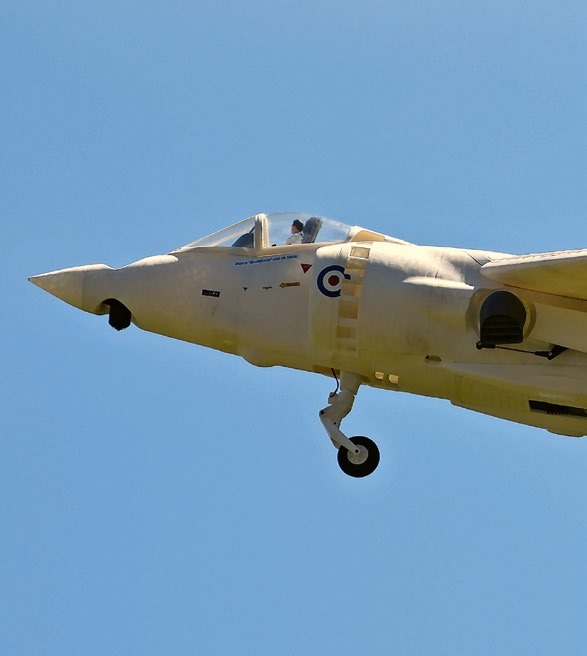
Have you almost forgotten about aircraft that take off and land vertically?
Emil Giezendanner