
DE HAVILLAND Venom Mk 4 DH112, No. 6 Squadron, RAF
Finally, the moment of truth: the flight
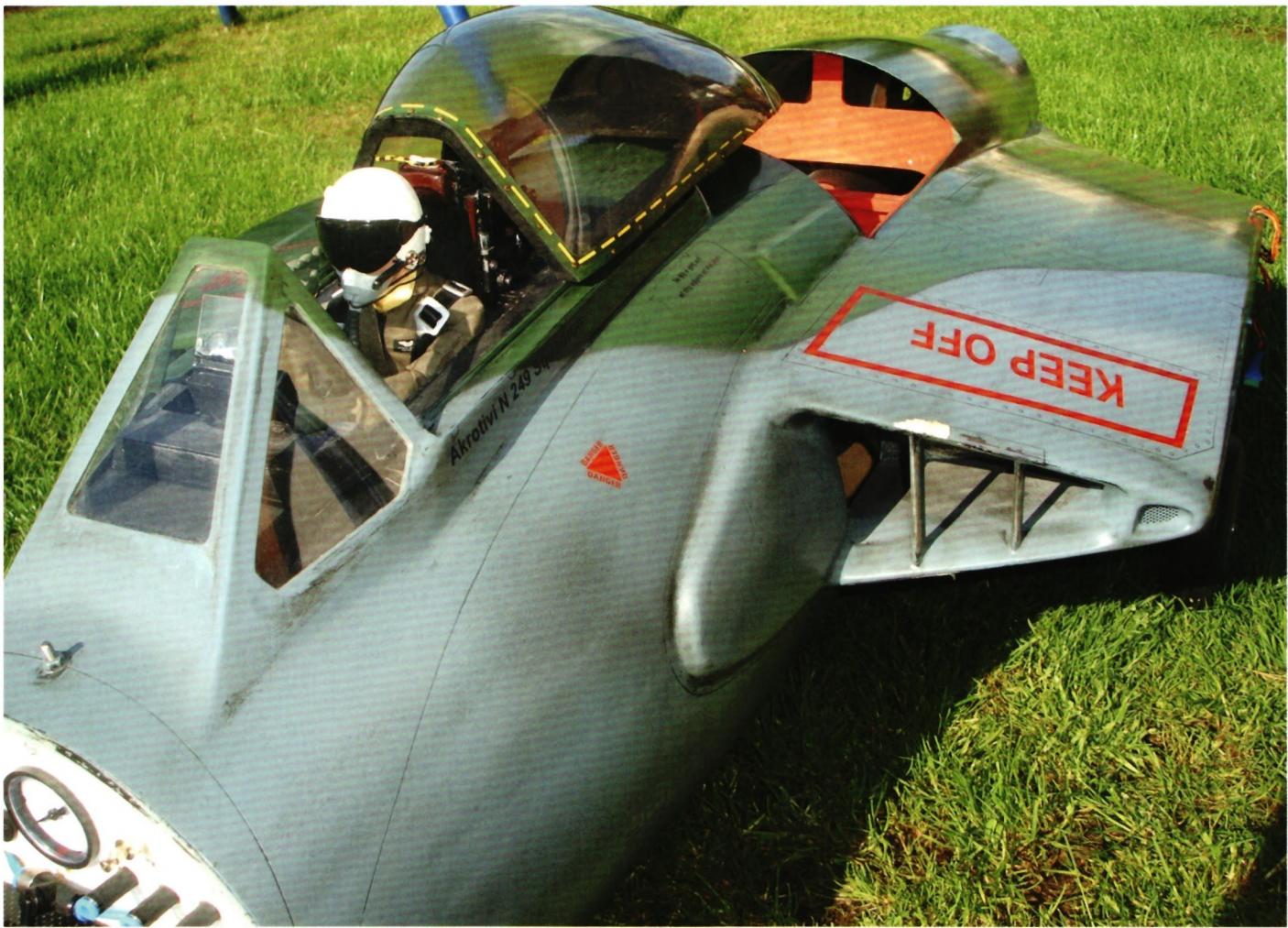
. Yes, all my calculations, tests, and musings—along with my friends’ theories—will be put to the test in the minutes of flight to come. No more excuses: the model is ready, the weather is good, my friends are getting impatient, and the bottles are chilled. Model at the end of the runway, throttle wide open—I release the brakes. The Venom accelerates well on our paved runway. And, oh surprise, after just 50 meters, it’s already climbing as if drawn into its element, without changing its attitude. Next comes leveling off, retracting the landing gear, and accelerating. It’s flying! The handling is a delight: smooth, responsive, and fluid… certainly true to the real thing. A few
trim adjustments, and the joy of flight is already there to make you forget the hours of building. After 10 minutes of flight, it’s time to return to planet Earth. Throttle back, landing lights out and on, flaps half-extended. The nose is already diving. That’s a good sign… followed by the approach pattern, flaps extended to the maximum, throttle at idle. It’s gliding, gliding, and it just keeps on gliding! The Venom then unleashes its secret weapon: aerodynamic brakes on the trailing edge of the wing that tilt like a glider’s air brakes. And it works! The landing is quick but acceptable for a first flight. The flight characteristics are aston-
| Delivered: | Shipped in 1996 from Suez |
| Wingspan: | 3.2 m |
| Weight: | 25 kg |
| Engine: | Cat P160 jet engine. |
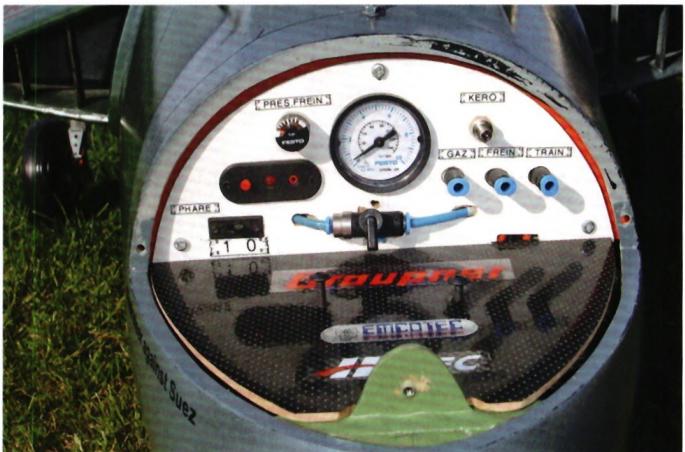
| Functions: | ailerons, elevator, throttle, landing gear, flaps, air brakes, wheel brakes, wheel steering, headlights |
| Construction: | Fiberglass fuselage and spar; wing made of foam, balsa, and fiberglass |
| Build time: | 1,500 hours |
Graupner 35 MHz radio + S-PCM 20
receiver. Battery: 2× 7.2 V for the receiver, 7.2 V for the turbine, and 9.6 V for the headlights.
Video: www.rcjet.ch or www.youtube.com: chapi venom
nantes for a fully loaded plane. The wide, high-lift wings typical of the first jets of the 1960s are a major factor in this.
In conclusion, I would say that designing a model from scratch—whether small or large—remains a wonderful and educational challenge.
and exciting. This plane was also born out of a sense of community. I’d like to thank my friends who have always helped me with my projects.
Laurent Chaperon,
St-Gingolph
lchapi@bluewin.ch


News from HEBU

TEAM MANAGER "THIS" BOSSHARD
 Rodito Nussbaumer

YOU KNOW WHAT I MEAN? 125 YEARS OF THE SWISS AERO CLUB
 Emil Giezendanner

HORIZON HOBBY/LEMACO NEWS: MICRO OV-10 BRONCO 645 MM BY E-FLITE

PRIDE AND GOOD IDEAS
 Markus Nussbaumer

34th HAHNENMOOS ALPINE MODEL AIRPLANE CAMP
Res Dauwalder
TRY-OUT DAY AT MFV WETTINGEN
Urs Keller
F3A EUROPEAN CHAMPIONSHIPS IN ST-MACAIRE, FRANCE
 Matthias Bosshard

52. 2026 ALPS CUP
Emil Giezendanner
ATOM, THE NEW DOUBLE-DECKER FROM CPLR
Matthias Bosshard
SUMMER FUN 2026 AT MG USTER
Martin Wunderli
What's New at Leomotion.com

COUPE DES ALPES – OBSERVE AND LEARN
Rodito Nussbaumer
TWIN TOWN PARTNERSHIP
Wolfgang Voeller
BY YOUTH, FOR YOUTH
Lorena Betschen
CORSAIR F4U – A WARBIRD WITH A MEMORABLE LOOK
Jürgen Rosenberger, Jürgen Prinz
SMALL, MODEL-LIKE SAILBOATS
Res Dauwalder
WELCOME, NEW MEMBER!
Andrea Bolliger
FREE FLIGHT IN THE MIDDLE OF SUMMER
Urs Muntwyler
EURO CONTEST GLIDER ACRO TOUR AUSTRIA 2026

INSIGHTS INTO THE HISTORY OF SEAPLANES

THE PC-21 STORY
Emil Giezendanner
NEWS FROM HEBU
 Julia Bucher

FROM 0 TO 100
Markus Nussbaumer
MEMORIES
Wolfgang Völler
NOS REGION – A HUB FOR ELECTRIC AVIATION
Emil Giezendanner
DO YOU KNOW WHAT I MEAN IN THE LAND OF SMILES?
Emil Giezendanner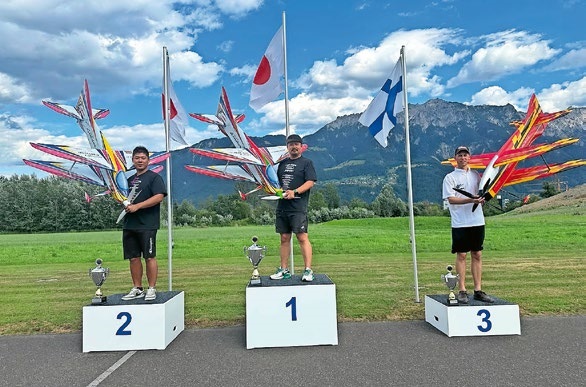
A SPECTACULAR F3A WORLD CUP IN THE PRINCIPALITY OF LIECHTENSTEIN
Emil Giezendanner