
Radio Monitoring
An interview in the PTT magazine with the head of the Radio Monitoring Section of the PTT Radio and Television Department
PZ: Terms such as “control” or “surveillance” have a somewhat unpleasant connotation in common parlance because they might suggest paternalism or oversight.
Mr. Künzle: The Telegraph and Telephone Communications Act reserves for the PTT the exclusive right to establish and operate facilities of any kind used for the transmission of electrical and radio signals, images, or sound. The PTT is authorized by law to transfer this right to private entities by granting them licenses. As a result, approximately 26,000 licenses have been issued in Switzerland today for the operation of well over 74,000 private transmitting and receiving facilities. These licenses are subject to certain conditions that the licensee must comply with. Our task, on behalf of the PTT as the “administrator” of the telecommunications spectrum, is to ensure that these licensing provisions are observed.
The near-field direction finder is used to determine the direction from which a transmitter is broadcasting.
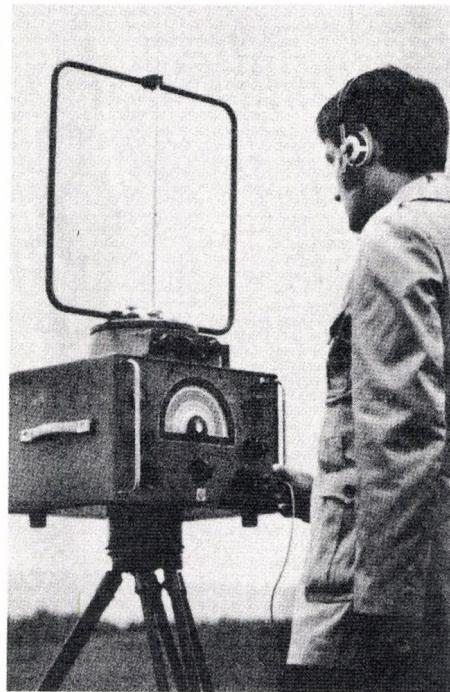
PZ: As long as broadcasting equipment is more or less freely available in our country, there’s certainly a temptation to indulge in an interesting hobby using such devices.
K: The situation becomes less harmless when smuggling rings and burglary gangs use such devices to carry out their activities. However, detecting and preventing such illegal broadcasting activity is only one of the tasks of our service. The transmission channels available to the various radio services are already very limited, and they are becoming even more so year by year. It is therefore another task to ensure that licensees do not violate radio discipline, use equipment for purposes not authorized by their licenses, or unnecessarily occupy frequencies, etc. Finally, it is also our duty to assist in identifying transmitters that interfere with PTT-owned or licensed equipment and, if the source of interference is located in Switzerland, to take the necessary measures to eliminate the source of interference. This task is particularly important when vital services such as air traffic control, the police, etc., are affected.
PZ: It therefore follows naturally that, in order to be effective, monitoring of the frequency spectrum must be carried out around the clock. How is your department organized from a technical standpoint?
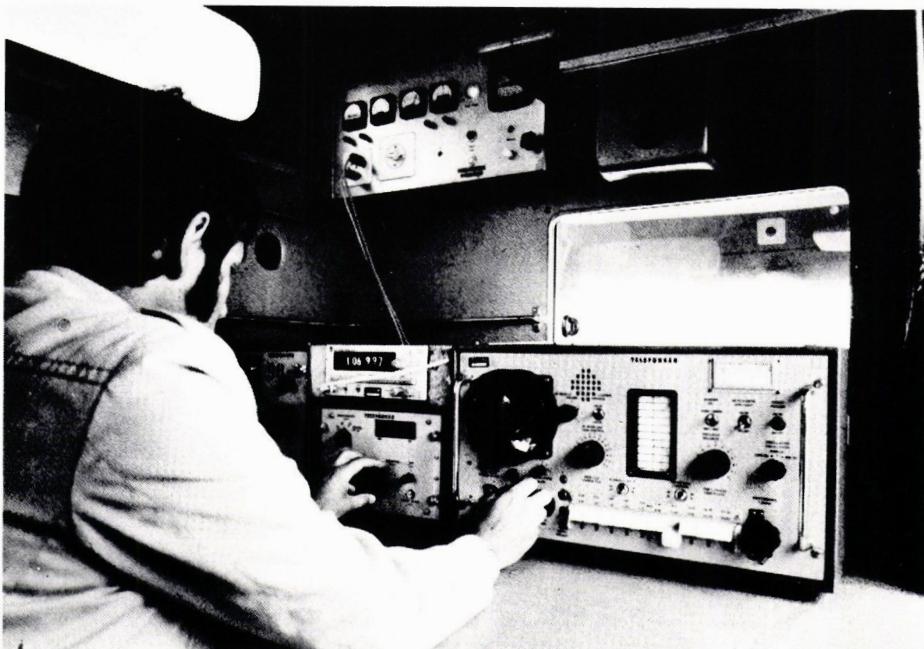
K: To carry out its tasks, radio monitoring has a range of specialized receivers and equipment at its disposal. For monitoring tasks, these are highly sensitive specialized receivers that cover the entire frequency range to be monitored, from long waves to decimeter waves. We have five manned stations and several unmanned stations distributed throughout the country, which are used to monitor local radio traffic. The receivers installed at these stations are connected to the manned stations via telephone lines. The receivers can be turned on and off via telephone, and the intercepted transmissions can be listened to.
PZ: What happens if you detect an illegal transmitter?
K: The radio monitoring unit not only has highly sensitive receivers but also various types of direction-finding equipment that enable transmitters to be located quickly. For wide-area direction-finding, the measuring stations in the west, north, east, and south of the country operate in coordination with the central office in Bern. They allow the location of an unknown transmitter to be narrowed down to a relatively small area. Mobile direction-finding equipment is then used to determine the exact location. If necessary, with the assistance of law enforcement agencies, such transmitters are dismantled, the equipment is confiscated, and the owners are prosecuted.
PZ: This list of duties shows that the work of radio monitoring is quite varied. Does the service require its personnel to have specialized knowledge?
K: Certainly. Above all, knowledge in the areas of licensing, radio communication regulations, the administration of justice, high-frequency technology, direction-finding, cartography, Morse code, and—last but not least—foreign languages is essential. Ko
From PTT-Zeitung 7/75
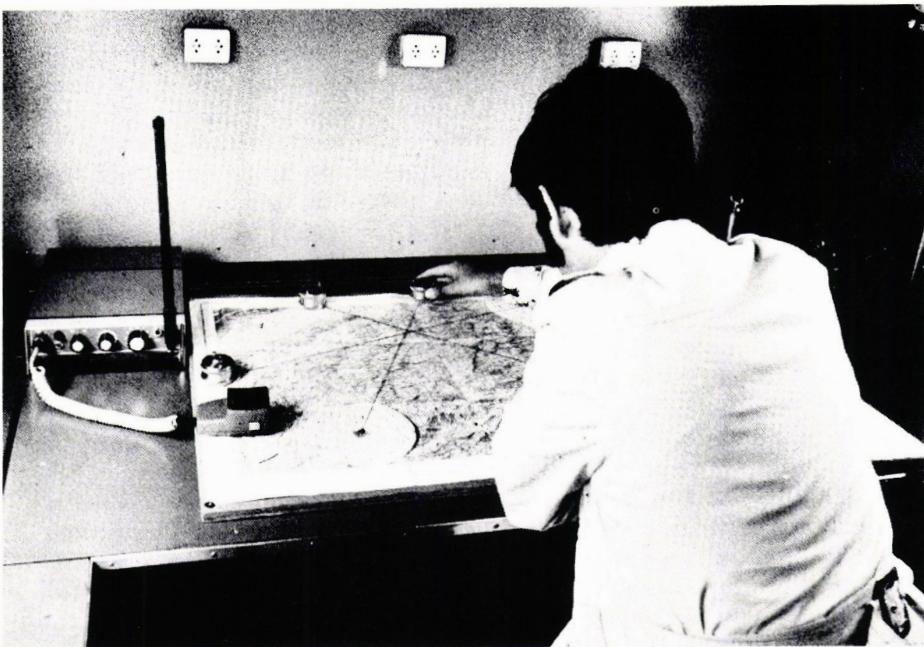
To locate a transmitter, multiple bearings are taken from different locations. The data reported by the bearing stations is plotted on a map and analyzed.


News from HEBU

TEAM MANAGER "THIS" BOSSHARD
 Rodito Nussbaumer

YOU KNOW WHAT I MEAN? 125 YEARS OF THE SWISS AERO CLUB
 Emil Giezendanner

HORIZON HOBBY/LEMACO NEWS: MICRO OV-10 BRONCO 645 MM BY E-FLITE

PRIDE AND GOOD IDEAS
 Markus Nussbaumer

34th HAHNENMOOS ALPINE MODEL AIRPLANE CAMP
Res Dauwalder
TRY-OUT DAY AT MFV WETTINGEN
Urs Keller
F3A EUROPEAN CHAMPIONSHIPS IN ST-MACAIRE, FRANCE
 Matthias Bosshard

52. 2026 ALPS CUP
Emil Giezendanner
ATOM, THE NEW DOUBLE-DECKER FROM CPLR
Matthias Bosshard
SUMMER FUN 2026 AT MG USTER
Martin Wunderli
What's New at Leomotion.com

THE PC-21 STORY
Emil Giezendanner
COUPE DES ALPES – OBSERVE AND LEARN
Rodito Nussbaumer
TWIN TOWN PARTNERSHIP
Wolfgang Voeller
EURO CONTEST GLIDER ACRO TOUR AUSTRIA 2026

BY YOUTH, FOR YOUTH
Lorena Betschen
CORSAIR F4U – A WARBIRD WITH A MEMORABLE LOOK
Jürgen Rosenberger, Jürgen Prinz
SMALL, MODEL-LIKE SAILBOATS
Res Dauwalder
WELCOME, NEW MEMBER!
Andrea Bolliger
FREE FLIGHT IN THE MIDDLE OF SUMMER
Urs Muntwyler
INSIGHTS INTO THE HISTORY OF SEAPLANES

NEWS FROM HEBU
 Julia Bucher

FROM 0 TO 100
Markus Nussbaumer
MEMORIES
Wolfgang Völler
NOS REGION – A HUB FOR ELECTRIC AVIATION
Emil Giezendanner
DO YOU KNOW WHAT I MEAN IN THE LAND OF SMILES?
Emil Giezendanner
Have you almost forgotten about aircraft that take off and land vertically?
Emil Giezendanner