
Gliding until I drop
For a good ten years now, a handful of members of the MG Affoltern have been traveling to the west coast of Denmark for a week each spring to fly model gliders. This year, six pilots set out with 42 models and two cars.
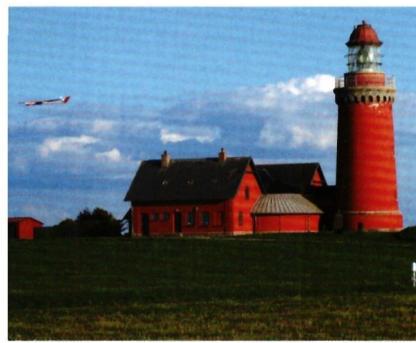
For the trip to Hamburg, we take the car train from Lörrach, traveling through the night so we arrive in northern Germany well-rested in the morning, before continuing the rest of the way on our own. The total travel time is about 18 hours, after which you’ll arrive in Bovbjerg relaxed and without any traffic jams. Our tried-and-true airfield with a vacation home is located on the west coast of Denmark, about 400 km north of Hamburg. Our lodging during this time is a summer house located 30 meters behind the cliff, right in front of the flying field on the North Sea. The launch site is about 80 meters above sea level and cannot be compared at all to gliding in the mountains. The wind blows directly from the sea onto the cliff, providing our models with unique lift that, depending on wind strength, extends from sea level up to about 100 meters above the cliff. This leaves us with 180 meters of vertical space and almost unlimited lateral space for flying. It’s a one-of-a-kind experience and opens up a whole new perspective when, for example, you can fly a roll at eye level or a loop that’s significantly lower than the pilot’s position, with the sea as a backdrop. This way, the upper half of the wing also comes into view during “normal” flight—not just when the model is waiting on the ground. After performing one or more maneuvers in succession, you simply pull the model up, and you’re ready for the next maneuvers—for hours on end without a single refueling stop. The only one who needs to refuel now and then is the pilot—or, at most, the receiver battery, as we’ll see in this
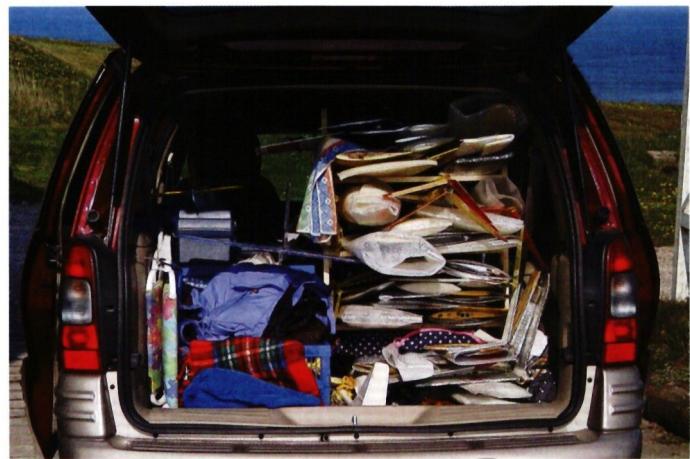
This became clear once again this year.
Depending on wind strength, different models are used. From simple EPP models suitable for all wind speeds to full fiberglass/carbon-fiber models, everything flies here as long as the wind direction and strength are right. Models with a wingspan of up to three meters are easy to fly. Any larger than that, and they become unwieldy; the challenge lies in getting the large model to the launch site unscathed in such strong winds, let alone launching it. Theoretically, daily flight times of 17 hours (5 a.m. to 10 p.m.) are possible. The only limits are set by the pilot himself or, rather, by the receiver’s battery.
Landing is also the most challenging part here—not because of space constraints, as there’s plenty of that, but because of the invisible downdrafts and vortexes that form due to the cliffs. It’s possible that the model could suddenly flip onto its back within half a second,
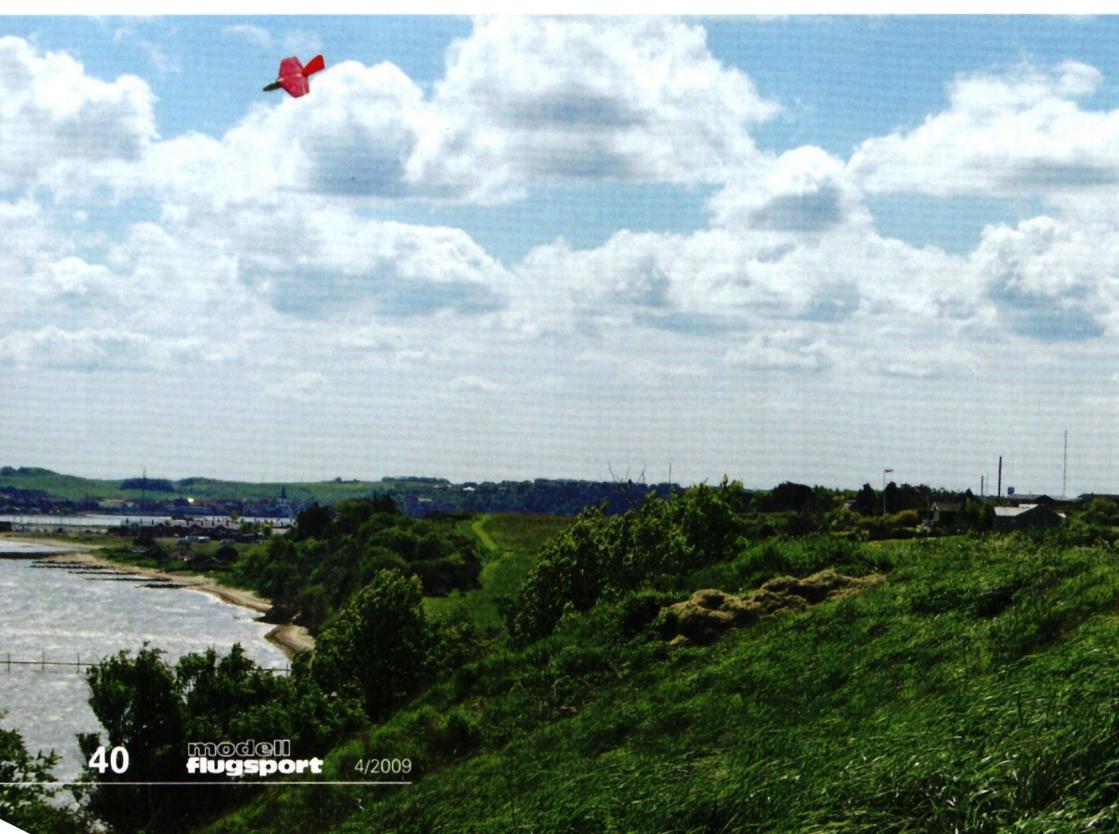
and that’s two meters above the ground if you don’t countersteer in time and correctly. The stronger the wind, the more intense and unpredictable the wind conditions are during the approach. Landing demands the pilots’ full concentration once again. That can be difficult after more than three hours of flying.
It’s helpful to have enough models with you to handle the different wind speeds, and it’s also possible that you might wreck one during landing or during an “air battle” with your friends after a lull, when everyone’s itching to fly again.
This year, we had moderate westerly winds for the first three days; afterward, the wind shifted to the northeast while simultaneously weakening. Due to these conditions, we had to move to a different cliff, located about a 15-minute drive away. In case there was absolutely no wind, we had our electric gliders on hand—which we’d naturally brought along for just such situations. We certainly couldn’t complain about a lack of flights this year either. We flew every day until we dropped—though that never actually happened, since we’d gather beforehand for an aperitif to refuel before heading back out to fly acrobatics.
Martin Schneebeli,
MG Affoltern

EURO CONTEST GLIDER ACRO TOUR AUSTRIA 2026

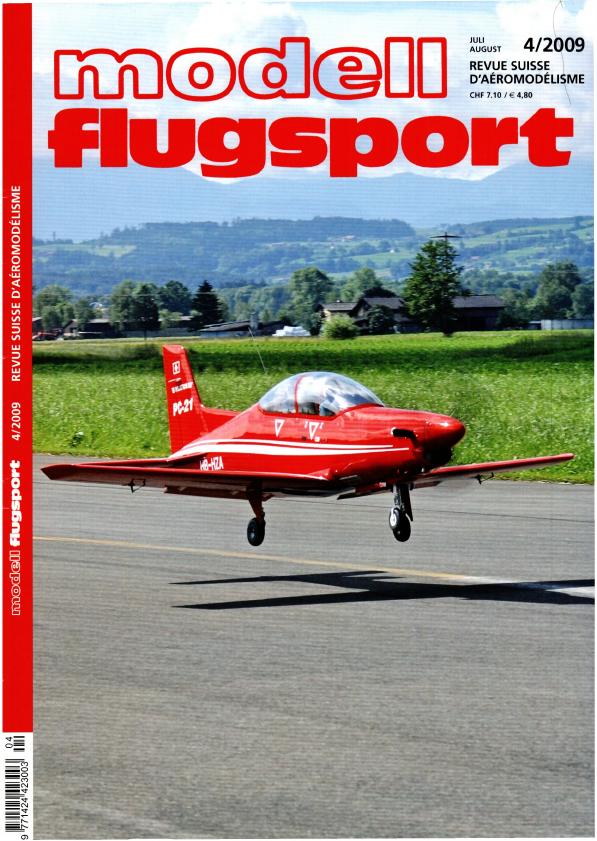
THE PC-21 STORY
 Emil Giezendanner

TWIN TOWN PARTNERSHIP
 Wolfgang Voeller

SUMMER FUN 2026 AT MG USTER
Martin Wunderli
CORSAIR F4U – A WARBIRD WITH A MEMORABLE LOOK
Jürgen Rosenberger, Jürgen Prinz
52. 2026 ALPS CUP
Emil Giezendanner
YOU KNOW WHAT I MEAN? 125 YEARS OF THE SWISS AERO CLUB
Emil Giezendanner
News from HEBU

TEAM MANAGER "THIS" BOSSHARD
Rodito Nussbaumer
ATOM, THE NEW DOUBLE-DECKER FROM CPLR
 Matthias Bosshard

F3A EUROPEAN CHAMPIONSHIPS IN ST-MACAIRE, FRANCE
Matthias Bosshard
INSIGHTS INTO THE HISTORY OF SEAPLANES

WELCOME, NEW MEMBER!
Andrea Bolliger
What's New at Leomotion.com

PRIDE AND GOOD IDEAS
 Markus Nussbaumer

SMALL, MODEL-LIKE SAILBOATS
Res Dauwalder
FREE FLIGHT IN THE MIDDLE OF SUMMER
Urs Muntwyler
BY YOUTH, FOR YOUTH
Lorena Betschen
HORIZON HOBBY/LEMACO NEWS: MICRO OV-10 BRONCO 645 MM BY E-FLITE

34th HAHNENMOOS ALPINE MODEL AIRPLANE CAMP
Res Dauwalder
COUPE DES ALPES – OBSERVE AND LEARN
Rodito Nussbaumer
TRY-OUT DAY AT MFV WETTINGEN
 Urs Keller

NEWS FROM HEBU
 Julia Bucher

NOS REGION – A HUB FOR ELECTRIC AVIATION
Emil Giezendanner
MEMORIES
 Wolfgang Völler

70 YEARS OF THE NIDWALDEN MODEL AIRPLANE CLUB
Martin Barmettler
A SPECTACULAR F3A WORLD CUP IN THE PRINCIPALITY OF LIECHTENSTEIN
Emil Giezendanner
FROM 0 TO 100
Markus Nussbaumer