
A New Dimension for Seasoned Landlubbers
After the 2010 seaplane season, one thing was clear: flying over water—this rediscovered passion for the water—is on the rise.
Water flying is all about nature. Winter scenes also have a very special beauty. However, flying in sub-zero temperatures is not necessarily recommended, as the Bowden cables could freeze.
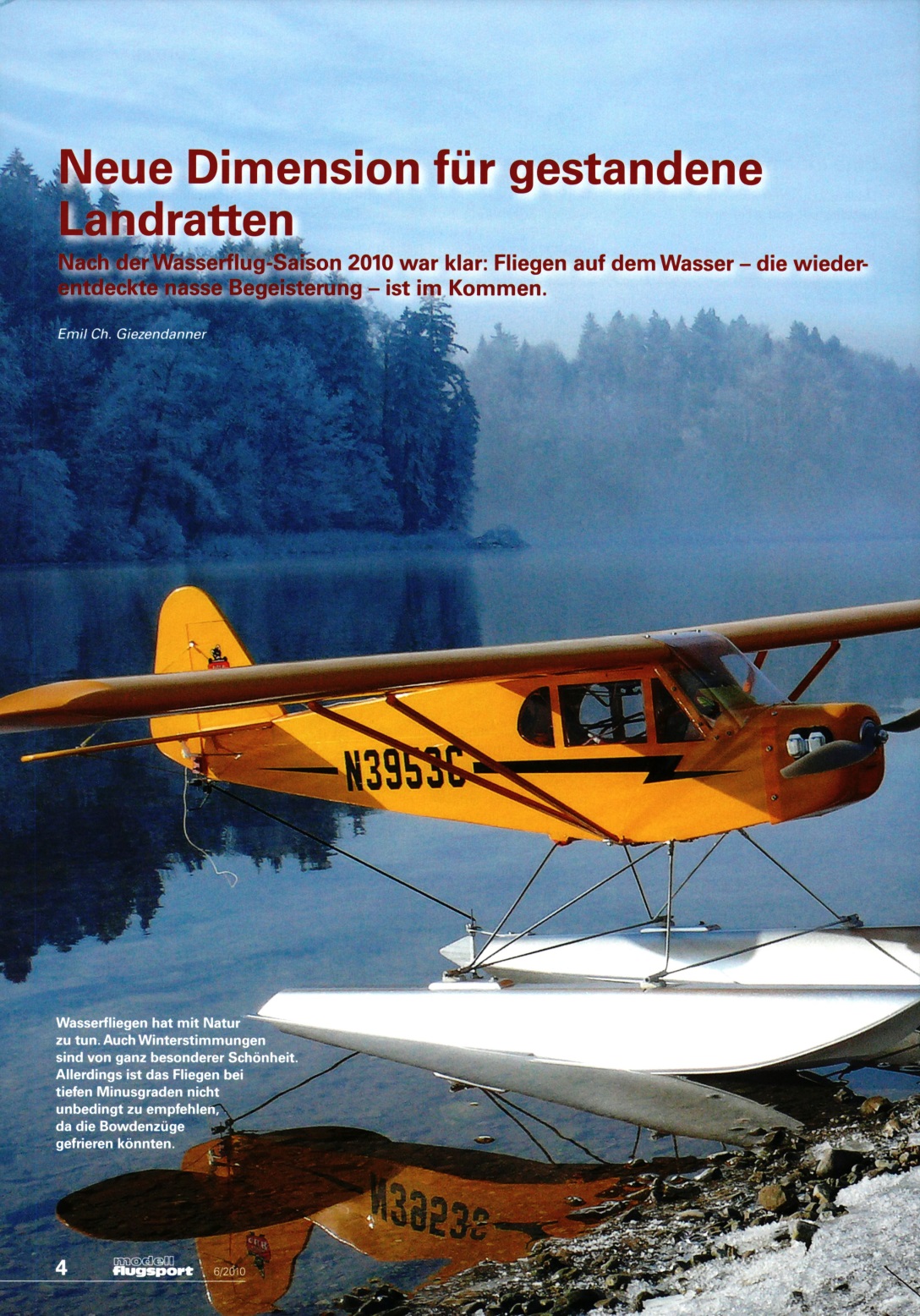
Water flying is all about nature. Winter scenes, too, have a very special beauty. However, flying in sub-zero temperatures is not necessarily recommended, as the Bowden cables could freeze.
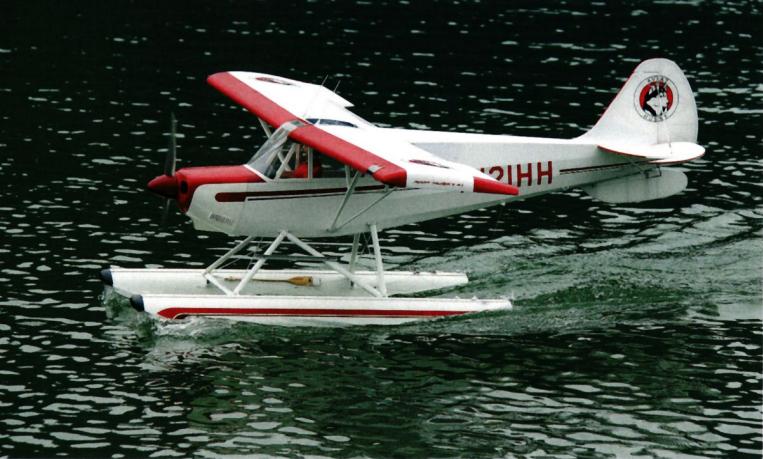
While individual model airplane enthusiasts have always regularly engaged in seaplane flying, the spread of electric propulsion in recent years has led to a growing following for this beautiful and nature-oriented hobby.
Flying—or, more precisely, taking off and “landing” on the water—naturally takes place on and over bodies of water. In areas where these bodies of water are specially protected, we should therefore avoid flying model aircraft over them whenever possible. On bodies of water with motorboat traffic and other recreational activities, this isn’t a problem as long as we follow a few rules. For many people, model flying is associated with nature and the countryside, fresh air, and a wide variety of weather conditions. With seaplane flying, all these factors are felt even more intensely, and for pilots, every flight becomes an unforgettable experience.
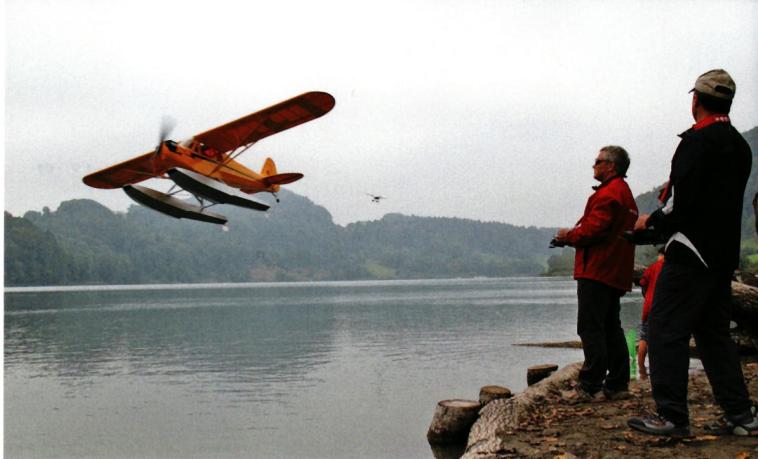
In seaplane flying, takeoff and “landing”—or rather, touching down on the water—are among the most wonderful experiences and sources of joy. Even those whose aircraft has taken a hard hit from the water—requiring a rescue operation—will find it impossible to resist this magic. Once in the air, the sensation of flight is hardly any different from that on a slope or over a runway. Floats can affect the aircraft’s flight characteristics—but that’s just a matter of getting used to it. Once in the air—whether taking off from a runway, water, or snow—seaplanes behave no differently anyway.
Aside from a few suppliers of floats in various sizes and a (still) modest selection of foam seaplanes from Asia, seaplane modeling is virtually nonexistent—compared to coaxial helicopters, warbirds, and foam jets. The selection of kits for larger seaplanes isn’t exactly plentiful either. This is a great opportunity for designers, model builders, and even scale specialists. There are practically no limits to creativity and craftsmanship in the seaplane sector—and you won’t have to worry about seeing a foam version of this or that model on the beach as early as next weekend.
Seaplane competitions have been around for many years. Most often, they involve aerobatic maneuvers or replicas that closely resemble the originals. Incidentally, competitions that focus on meters and seconds run counter to the philosophy of seaplane flying. Here, tranquility, a relaxed atmosphere, and relaxation take center stage. A dedicated seaplane scale-model scene has developed on Lake Constance. Dornier has served as a sort of “cradle” for this seaplane community. The editorial team looks forward to continuing to receive great reports on seaplane models. Good luck—and better a leak in the float than in your head.
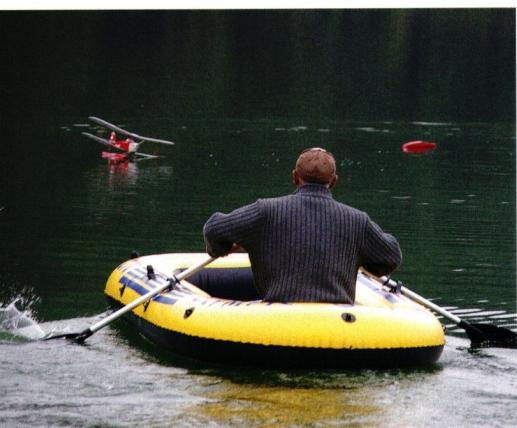
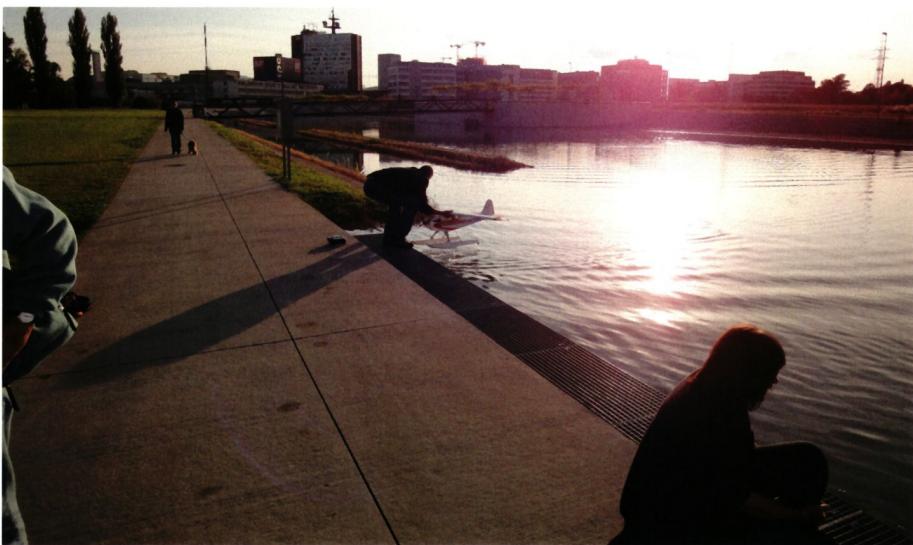
Ever since the end of the 2010 swimming season, something unusual has been happening at Glattpark Lake. Every late Friday afternoon, a small group of enthusiasts from MG Zurich—namely, the “Water Flying Interest Group”—meets to indulge in their newly discovered hobby: model aircraft flying on water.
This is made possible above all by modern electric flight; otherwise, it would be hard to imagine such a thing in the recreational area of the Glattpark development. We’re very pleased to see how well this is received by passersby, and we’re always happy to hear comments about the low noise level and our disciplined flying. We’ve also noticed the curiosity and acceptance of the local ducks, who seem hardly bothered by our activities.
Conclusion: It’s wonderful that we can pursue our fascinating hobby even almost in the heart of Zurich. This, as already mentioned, is thanks in part to the modern “foam planes” (but not only!) and, above all, to the great advances in electric flight.
May the good spirits continue to look favorably upon us.
Walti Wuhrmann, MG Zurich
www.rc.wasserflieger.at www.modellbau-zentral.ch
www.rc-wasserflug.de
www.vth.-verlag.de
www.vth.de
www.aerodesign.de


News from HEBU

EURO CONTEST GLIDER ACRO TOUR AUSTRIA 2026

TEAM MANAGER "THIS" BOSSHARD
 Rodito Nussbaumer

YOU KNOW WHAT I MEAN? 125 YEARS OF THE SWISS AERO CLUB
 Emil Giezendanner

TRY-OUT DAY AT MFV WETTINGEN
Urs Keller
F3A EUROPEAN CHAMPIONSHIPS IN ST-MACAIRE, FRANCE
 Matthias Bosshard

HORIZON HOBBY/LEMACO NEWS: MICRO OV-10 BRONCO 645 MM BY E-FLITE

PRIDE AND GOOD IDEAS
 Markus Nussbaumer

BY YOUTH, FOR YOUTH
Lorena Betschen
34th HAHNENMOOS ALPINE MODEL AIRPLANE CAMP
Res Dauwalder
52. 2026 ALPS CUP
Emil Giezendanner
TWIN TOWN PARTNERSHIP
Wolfgang Voeller
ATOM, THE NEW DOUBLE-DECKER FROM CPLR
Matthias Bosshard
CORSAIR F4U – A WARBIRD WITH A MEMORABLE LOOK
Jürgen Rosenberger, Jürgen Prinz
SUMMER FUN 2026 AT MG USTER
Martin Wunderli
What's New at Leomotion.com

THE PC-21 STORY
Emil Giezendanner
COUPE DES ALPES – OBSERVE AND LEARN
Rodito Nussbaumer
SMALL, MODEL-LIKE SAILBOATS
Res Dauwalder
WELCOME, NEW MEMBER!
Andrea Bolliger
FREE FLIGHT IN THE MIDDLE OF SUMMER
Urs Muntwyler
INSIGHTS INTO THE HISTORY OF SEAPLANES

NEWS FROM HEBU
 Julia Bucher

FROM 0 TO 100
Markus Nussbaumer
MEMORIES
Wolfgang Völler
NOS REGION – A HUB FOR ELECTRIC AVIATION
Emil Giezendanner
DO YOU KNOW WHAT I MEAN IN THE LAND OF SMILES?
Emil Giezendanner
A SPECTACULAR F3A WORLD CUP IN THE PRINCIPALITY OF LIECHTENSTEIN
Emil Giezendanner