
14th Jet World Masters 2023, Rivanazzano, Italy – From the Perspective of the Jet Scale Team Manager
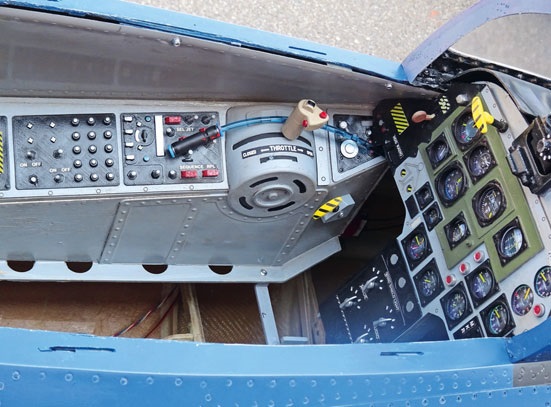
In 2022, the Jet Scale rules were completely revised. The flight scoring criteria were made more challenging, as pilots must now fly at least two completely different flight programs. In addition, turn maneuvers are now included in the scoring and must be performed appropriately on an aerobatic-capable model. The complexity of the build evaluation has been scaled back. Only a maximum of 12 photos are required, along with views from the side, top, and front. Complexity has been set aside. Only precision counts now: craftsmanship, overall realism, and craftsmanship for the cockpit. All of this gives participants with kit-built models better chances again, as it has leveled the playing field at the top of the construction scoring.
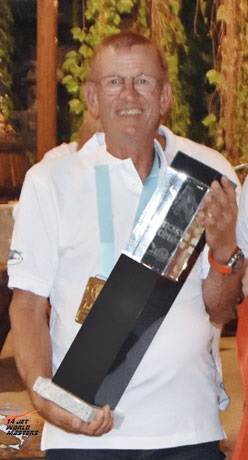
The team’s preparations began with a training session over Easter in Italy. The focus was on model setup, flight axis, and aerobatic maneuvers. Here, our coach Martin Lüthi—who has extensive competition experience and is well-versed in model setup—had the primary task of training the pilots. Adrian, with his extensive experience in electronics, worked with each pilot to optimize gyro, flight mode, and mixer settings.
We held a second three-day training session in June in St. Stephan, where we rented the airfield for three days. Each pilot brought their competition flight programs and preliminary construction documentation. Heinz Schär was able to recruit four judges to evaluate the flights and the construction documents. Based on the detailed briefing (involving the judges, pilots, and coach), Martin worked with the pilots to refine their flight programs. By Sunday, virtually all pilots had revised their programs, which were then practiced intensively once more. Michael Bucher went through the construction documentation with the pilots, pointing out errors and areas for improvement.
Yes, we did some advance planning and calculations. We deliberately had Adrian and Andreas compete in different classes so they wouldn't be competing directly against each other. We also calculated that with two top results in both classes and the other pilots who could finish in the top 10, it might be possible for the first time to win the team competition. The plan worked out. We also had a stroke of luck in the midst of misfortune. One of the Hawk pilots, due to sheer nervousness, extended the flaps on his model instead of retracting them. This led to a situation where, during the “half-reverse Kuban Night” maneuver, airflow was not reaching the elevator. Thanks to his composure in the situation—by easing off the throttle—he managed to bring the plane back up from behind the trees. The second Hawk lost its canopy. Heat-related issues and material expansion were to blame. Both the equipment and the pilots were pushed to their limits. Yes, it was tough to keep a clear head and perform well in nearly 40 °C heat. Thanks to our thorough preparation, including many discussions, we managed to pull it off. Thank you to all the team pilots, our coach, and the helpers who always did so much preparation work and hauled equipment and drinks. It’s clear: Together, we’re strong. Thanks also to our association, which provides financial support for our sport.
Reto Senn, Team Manager
, Swiss Jet Scale Team
The entire competition was marked by incredible heat. With temperatures nearing 40 °C, the sun beat down on people and equipment alike.

The 14th Jet World Masters 2021 was originally planned to take place in Austria, but the event had to be canceled there due to the COVID-19 pandemic and a lack of funding. Then the French were awarded the contract to host the 2023 JWM in France, but shortly after New Year’s, the organizing committee pulled the plug because they couldn’t secure a budget. What now? The International Jet Model Committee, led by Reto Senn, was able to organize a scaled-down Jet World Masters in Italy in collaboration with Mauro Pirotti. Thanks to Mauro Pirotti’s good connections, a suitable airfield with a hangar was found in Rivanazzano/Vaughera.
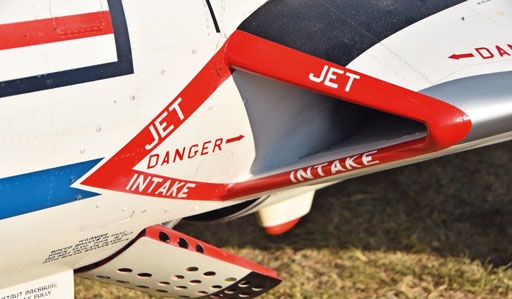
As Reto Senn explained in his report on the Jet World Championship, the rules were adjusted slightly for this championship. The goal was to give pilots’ performance greater weight and to simplify the construction of scale jets somewhat. Nevertheless, it’s important to pay attention to details for the build evaluation, because it’s called “scale jet,” which means the model should replicate an original jet as closely as possible. A new Turboprop category has been introduced. On the one hand, this broadens the field of participants and increases the diversity of the championship. For this inaugural event, seven pilots were already able to participate. Due to the war between Russia and Ukraine, the Russian team is absent from the competition in Italy for political reasons. On the one hand, this means that some pilots and impressive models will not be present; on the other hand, the Russian team has decided not to return the challenge trophies, forcing the IJMC to purchase new ones.
The entire competition was marked by incredible heat. With temperatures nearing 40 °C, the sun beat down on both people and equipment. As a result, the pilots had to contend with the exceptionally high temperatures, which sometimes led to careless mistakes during preparation or the flights. In the turboprop category, it quickly became clear that the Swiss pilots, flying their Pilatus PC-21s, were contenders for the top spots. They laid the groundwork with excellent flight performance and very good models. As a result, they achieved outstanding finishes: 2nd place (Reynold Augsburger) and 3rd place (Hans Wüthrich).
In the 15-kg category, Adrian Senn was in a class of his own, and it quickly became clear that he would take the title. His model and outstanding flight performance—three best flights in the 15-kg class (3rd place among all pilots)—were an unbeatable combination and extremely important for the team standings.
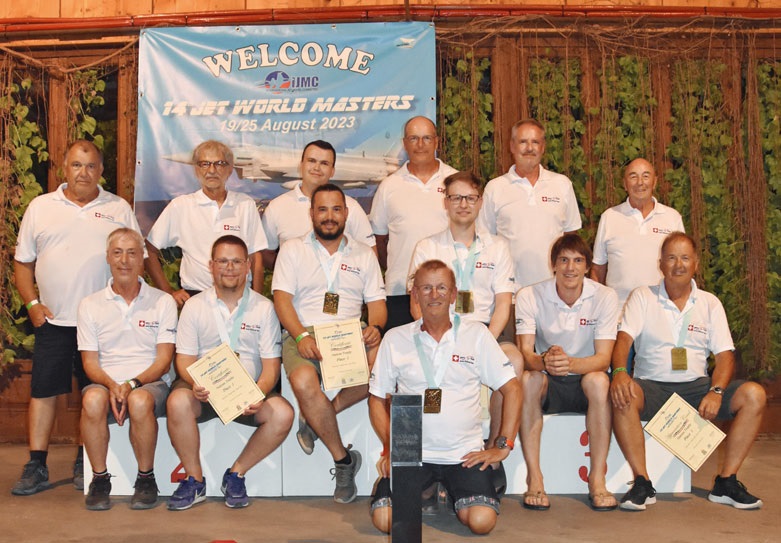
The 20-kg category was very exciting, as it became clear that the construction evaluation would likely be the deciding factor for victory. Andreas Schär was the best pilot among all 49 participants at this championship and, thanks to the construction points for his Vampire, ultimately finished an outstanding second behind the well-deserved winner, Frank Westerholt from Germany. Thanks to Pascal Thoma’s fifth-place finish, the Swiss team secured its first-ever victory in the team standings. The Swiss team continues to hold its own among the world’s best in the scale jet scene. We can look forward to the next Jet World Masters, which is expected to take place in Finland in 2025. Also worth mentioning is the visit by Faruk Yeginsoy, the SMV’s sports director, who made a point of visiting the successful Swiss Jet Scale Team in Rivanazzano for a day. All rankings can be found on the SMV website under “Sports Results.”


News from HEBU

TEAM MANAGER "THIS" BOSSHARD
 Rodito Nussbaumer

YOU KNOW WHAT I MEAN? 125 YEARS OF THE SWISS AERO CLUB
 Emil Giezendanner

HORIZON HOBBY/LEMACO NEWS: MICRO OV-10 BRONCO 645 MM BY E-FLITE

PRIDE AND GOOD IDEAS
 Markus Nussbaumer

34th HAHNENMOOS ALPINE MODEL AIRPLANE CAMP
Res Dauwalder
TRY-OUT DAY AT MFV WETTINGEN
Urs Keller
F3A EUROPEAN CHAMPIONSHIPS IN ST-MACAIRE, FRANCE
 Matthias Bosshard

52. 2026 ALPS CUP
Emil Giezendanner
ATOM, THE NEW DOUBLE-DECKER FROM CPLR
Matthias Bosshard
SUMMER FUN 2026 AT MG USTER
Martin Wunderli
What's New at Leomotion.com

COUPE DES ALPES – OBSERVE AND LEARN
Rodito Nussbaumer
TWIN TOWN PARTNERSHIP
Wolfgang Voeller
BY YOUTH, FOR YOUTH
Lorena Betschen
CORSAIR F4U – A WARBIRD WITH A MEMORABLE LOOK
Jürgen Rosenberger, Jürgen Prinz
SMALL, MODEL-LIKE SAILBOATS
Res Dauwalder
WELCOME, NEW MEMBER!
Andrea Bolliger
FREE FLIGHT IN THE MIDDLE OF SUMMER
Urs Muntwyler
EURO CONTEST GLIDER ACRO TOUR AUSTRIA 2026

INSIGHTS INTO THE HISTORY OF SEAPLANES

THE PC-21 STORY
Emil Giezendanner
NEWS FROM HEBU
 Julia Bucher

FROM 0 TO 100
Markus Nussbaumer
MEMORIES
Wolfgang Völler
NOS REGION – A HUB FOR ELECTRIC AVIATION
Emil Giezendanner
DO YOU KNOW WHAT I MEAN IN THE LAND OF SMILES?
Emil Giezendanner
A SPECTACULAR F3A WORLD CUP IN THE PRINCIPALITY OF LIECHTENSTEIN
Emil Giezendanner